EPA estimated that replacing the nation's sanitary sewer collection systems could cost $1 trillion to $2 trillion, but many sewer problems in Michigan can be corrected without full replacement. A camera inspection is the only reliable way to know what's happening inside your line, and checking before digging can save homeowners thousands in unnecessary excavation.
You may be dealing with slow drains, a toilet that gurgles, or wastewater rising through a basement floor drain. Those symptoms can come from a simple blockage, but they can also point to a damaged private sewer lateral running from your home to the municipal connection. In Macomb, Oakland, and Wayne counties, the right decision depends on the defect, the pipe's condition, the route beneath your property, and who owns the section that failed.
A professional sewer line replacement assessment should answer four practical questions: Is the pipe blocked or structurally damaged? Can it be repaired or rehabilitated? Does the work cross into a sidewalk or street? What permits and restoration responsibilities apply?
Table of Contents
- Why Your Sewer Line Might Need Replacement
- Common Causes of Sewer Line Failure in Southeast Michigan
- Trenchless Sewer Replacement vs Open-Cut Excavation
- The Sewer Line Replacement Process Step by Step
- Permits, Responsibility, and What to Expect Timeline-Wise
- When to Call a Licensed Plumber for Sewer Line Service
Why Your Sewer Line Might Need Replacement
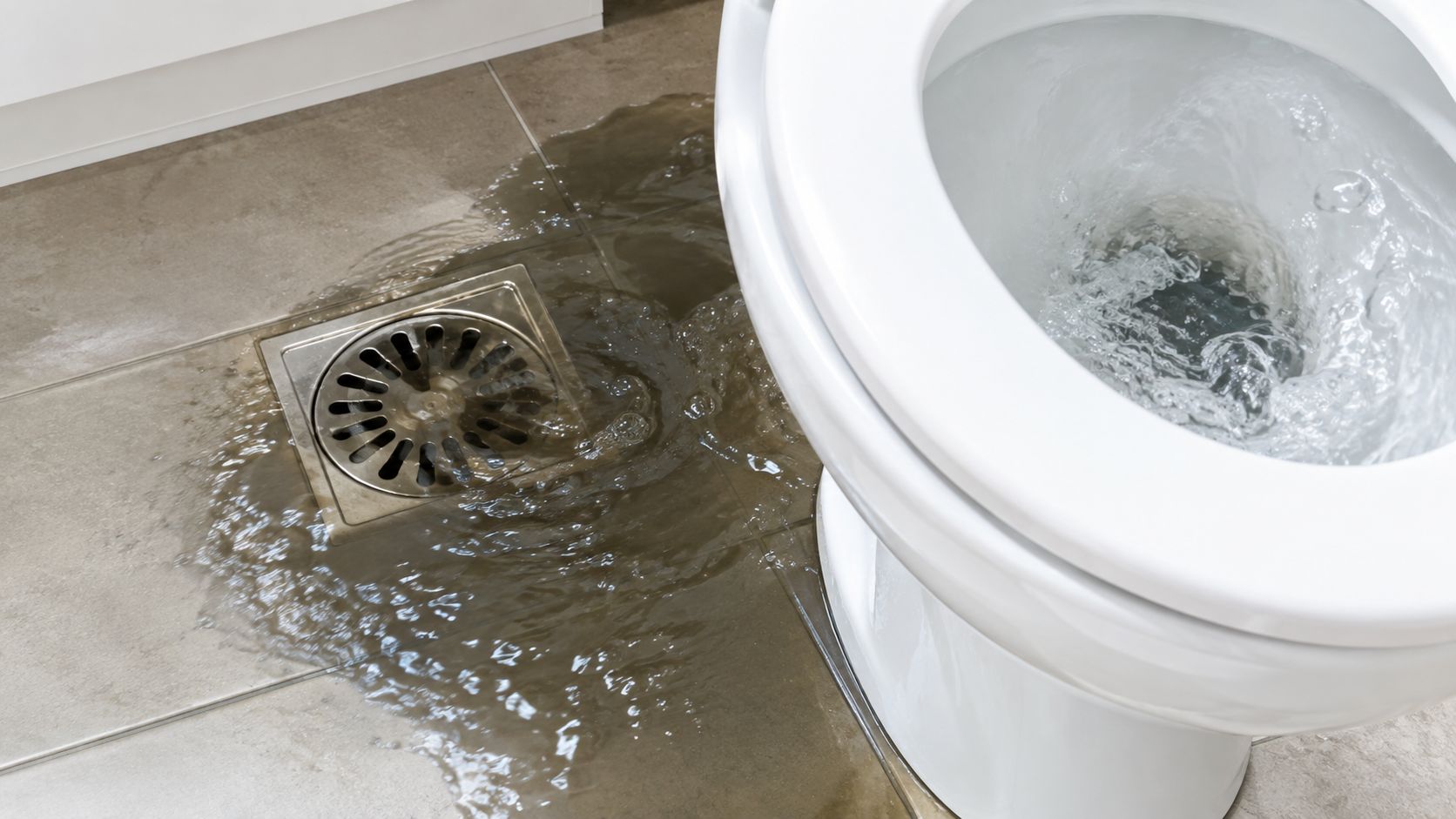
A homeowner in Sterling Heights notices that the kitchen sink drains slowly. A few days later, the bathroom toilet bubbles when the washing machine runs. Then a sewage odor appears near the basement floor drain. It's easy to treat each symptom as a separate plumbing nuisance, but several fixtures acting up together often point farther downstream, in the main building sewer or private lateral.
The first step isn't excavation. It's diagnosis. A plumber can clear a stoppage, use a sewer camera to inspect the pipe, and determine whether roots, deposits, a displaced joint, a fracture, or a collapse is causing the restriction. A cleanout can also provide the access needed for inspection and maintenance. Homeowners unfamiliar with this access point can review what a sewer cleanout is and how it helps.
The warning signs deserve attention
Watch for a pattern rather than one isolated symptom:
- Multiple slow drains: Several fixtures draining poorly can indicate a main-line restriction.
- Gurgling toilets: Trapped air may be moving around a blockage or damaged section.
- Sewage odors: Odors near a basement, cleanout, or yard can indicate leakage or poor flow.
- Floor drain backups: Wastewater coming up through a basement drain needs prompt professional attention.
- Recurring stoppages: If drain cleaning restores flow only temporarily, the underlying pipe may need inspection.
Under the ground, older pipes can crack, shift, deform, or allow roots to enter through joints. A blockage may be the visible symptom while the actual concern is a weakened pipe wall. Ignoring repeated warnings can lead to basement flooding, contaminated surfaces, damaged flooring, and disruption for a household or business.
Practical rule: Don't authorize full sewer line replacement because of a backup alone. Ask to see the camera footage and the exact location of the defect first.
Common Causes of Sewer Line Failure in Southeast Michigan
Southeast Michigan properties experience several conditions that can affect underground sewer lines. The same symptom may come from different causes, so a plumber should identify the failure mechanism rather than recommend replacement based only on pipe age.
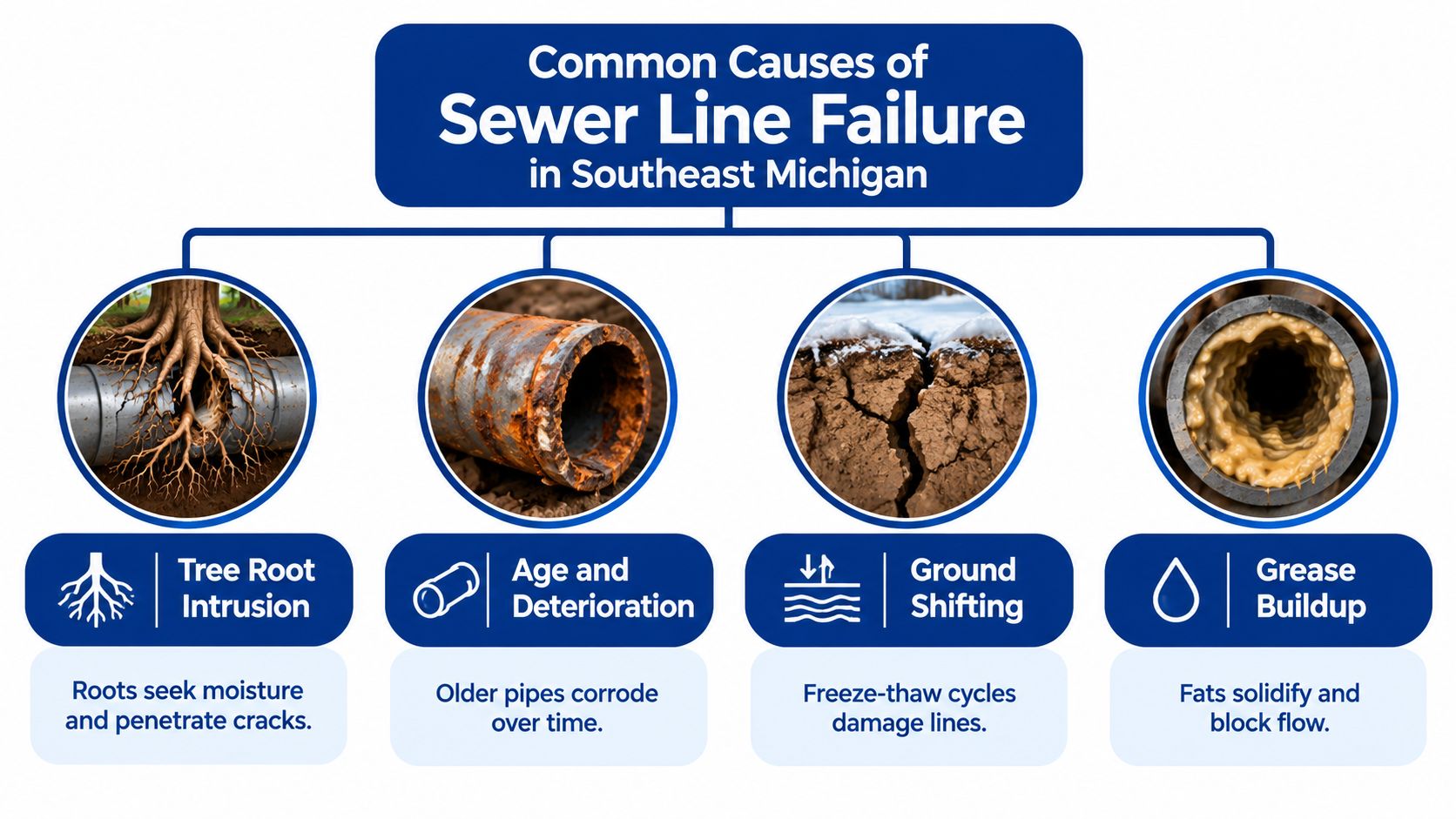
Four problems plumbers look for
Tree root intrusion starts when roots find moisture around a small crack or joint. As the roots grow inside the line, they catch paper and other waste, restrict flow, and can worsen the original opening. A camera inspection can show whether roots are occupying one joint or extending through a longer damaged section.
Age and deterioration are common in older neighborhoods around Fraser, Clinton Township, Troy, Macomb, and Shelby Township. Sewer materials don't all fail in the same way. Some develop cracks, some corrode, and some lose their shape or alignment. The Environmental Protection Agency reported that 57.5% of surveyed sewer system assets were between 21 and 100 years old, including 41.1% between 21 and 50 years old and 16.8% older than 51 years, based on an asset-management fact sheet from the EPA. The agency also noted that sewer collection assets are generally assumed to have a useful life of about 100 years.
Ground movement can affect a line when soil shifts during freeze-thaw cycles or after periods of heavy rain. Michigan winters and wet spring conditions can expose weaknesses in an already cracked or poorly supported pipe. The camera may reveal offset joints, fractures, or a section that has settled below the intended grade.
Grease and deposits can narrow the passage and create recurring backups, particularly in restaurants and commercial kitchens. Cleaning or hydro jetting may solve the obstruction when the pipe remains structurally sound. It won't correct a collapsed or badly deformed line.
A camera report should identify the defect by location and describe what the technician sees. Root intrusion, corrosion, cracks, deformation, offset joints, infiltration, and surcharge evidence each point toward a different response. That information helps separate drain cleaning from spot sewer repair, rehabilitation, or full sewer line replacement.
Trenchless Sewer Replacement vs Open-Cut Excavation
There isn't one universally superior replacement method. Pipe bursting can reduce surface excavation, while open-cut work provides direct access to the entire route. The existing alignment, soil, depth, utility clearance, pipe size, and condition determine which approach makes sense.
With pipe bursting, a hydraulic or pneumatic expansion head travels through the host pipe. It fractures or displaces the old pipe while pulling a replacement pipe into position. The EPA identifies a typical application range of approximately 100 to 600 millimeters, or 4 to 24 inches, and reports a typical production rate of about 30 meters, or 100 feet, per hour, although actual progress depends on site conditions and obstructions. The agency's pipe bursting fact sheet also emphasizes the need for CCTV inspection, utility review, service disconnection, access pits, testing, and lateral reconnection.
| Factor | Trenchless Pipe Bursting | Open-Cut Excavation |
|---|---|---|
| Surface disruption | Usually limited to access pits, subject to site conditions | Requires a trench along much or all of the route |
| Restoration | May reduce lawn, driveway, sidewalk, or pavement restoration | Requires backfill and restoration over the excavated path |
| Work planning | Needs accurate alignment, utility mapping, and lateral identification | Provides direct visual access to the pipe and surrounding soil |
| Pipe condition | Works best when the route can accept the bursting head and new pipe | Handles collapsed, badly misaligned, or inaccessible sections more directly |
| Capacity changes | May accommodate a replacement pipe when the corridor allows | Makes relocation or substantial redesign more practical |
| Main trade-off | Less excavation, but ground displacement and clearance matter | More disruption, but greater control over damaged sections |
When open-cut work is the safer choice
Open excavation may be more appropriate where the line has collapsed, the grade is wrong, the route must be relocated, or nearby utilities leave inadequate clearance for bursting. It can also make sense when service connections are unusually complex or the existing alignment is badly mislocated.
Trenchless work isn't automatically cheaper, and excavation isn't automatically wasteful. A practical comparison of trenchless sewer repair options should include restoration, access, permits, traffic control, and the condition of the host pipe, not just the installation method. Rehabilitation can reduce excavation and environmental disturbance when the existing geometry and structure can support it, but a collapsed or severely deformed pipe may not be a suitable host, as discussed in EPA sewer rehabilitation guidance.
The Sewer Line Replacement Process Step by Step
A well-managed project follows a visible sequence. The homeowner should understand what the plumber found, why the selected method fits, and what will happen before the crew opens the ground.
Start with a camera inspection. The technician traces the line, records the condition, and identifies the defect's location. Ask for the footage or a clear explanation of the findings.
Confirm utilities and access. The crew reviews the route, marks nearby utilities, identifies laterals, and determines whether access pits or a full trench are required.
Coordinate the permit. Michigan generally requires a plumbing permit before sewer replacement work begins. The permit may be issued to a licensed plumbing contractor or to a homeowner installing the system, but the enforcing agency and inspection requirements should be confirmed before work starts. The state's plumbing permit information distinguishes replacement work from simple stoppage clearance.
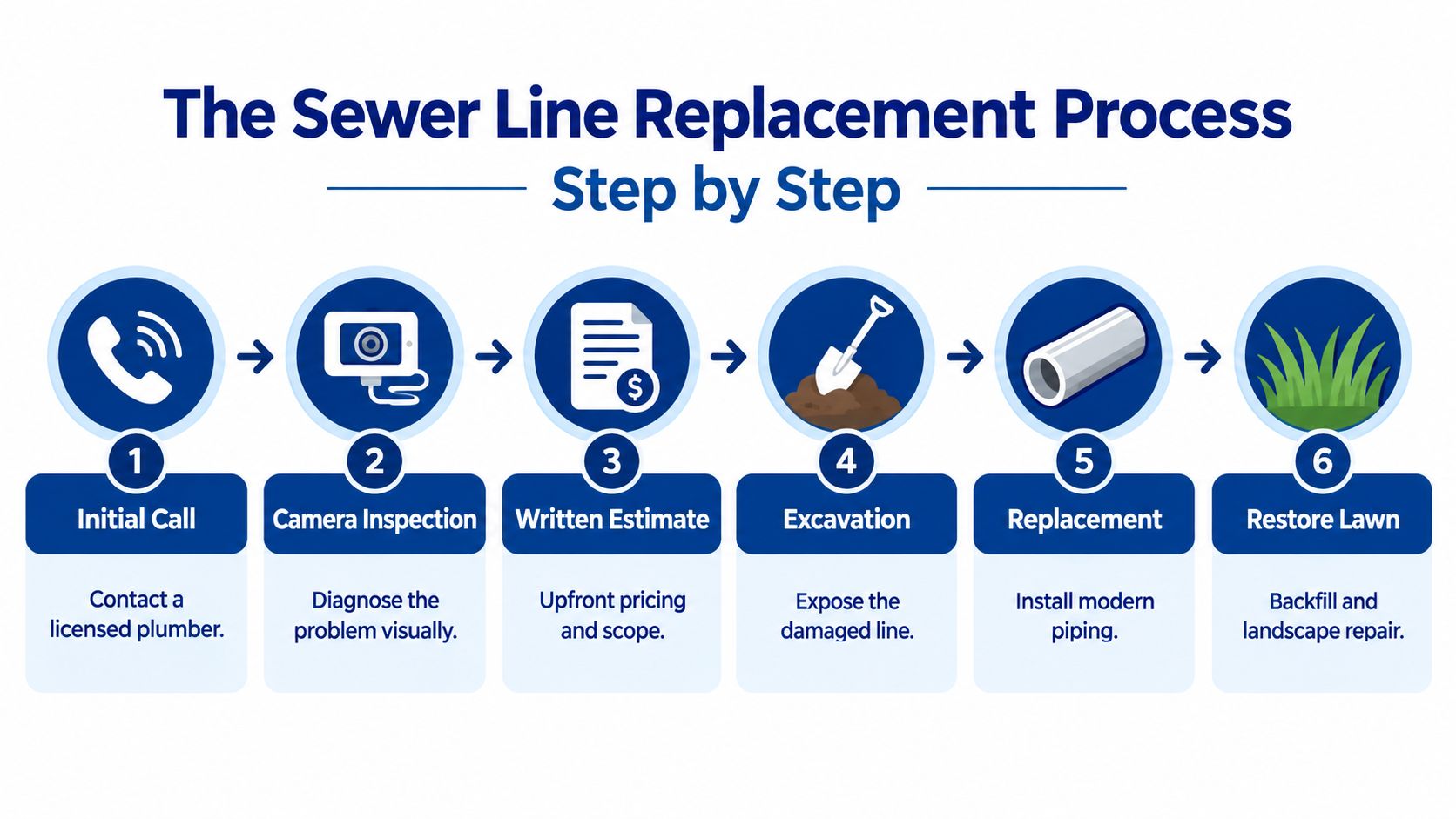
Prepare the site. Depending on the method, the crew establishes access pits or excavates along the damaged route. Bypass pumping may be needed to maintain flow during construction.
Install and test the replacement. The plumber inserts the new pipe or completes the selected rehabilitation. Pressure or leakage testing, where appropriate, helps verify the installation before the trench is closed.
Reconnect and verify. Service laterals are reconnected, the area is backfilled, and a post-work camera inspection confirms continuous flow and workmanship. Restoration may include soil, grass, concrete, asphalt, or other affected surfaces.
The timeline depends on permit review, pipe depth, soil, weather, utility conflicts, access, and the selected method. A reputable contractor should provide a written scope and estimate before work begins, not rely on a vague promise made while standing beside a backup.
The following video gives homeowners a visual introduction to the type of work involved:
Permits, Responsibility, and What to Expect Timeline-Wise
The administrative side can be just as important as the pipe installation. Michigan generally requires a plumbing permit for sewer replacement, and responsibility can change depending on whether the failed section is a private lateral, a municipal connection, or part of the public sewer main.
Many homeowners assume the city automatically pays for any sewer pipe beneath a street. That isn't a safe assumption. Los Angeles County, for example, places responsibility for the entire lateral on the property owner, including the public right-of-way, while Fairfax County treats the building lateral as part of the home. Michigan municipalities can divide responsibility differently, so obtain written confirmation from the local authority before authorizing excavation.
Detroit provides a useful example of why location matters. A sewer service repair permit is required for work on private property or in the public right-of-way, and a right-of-way permit is required when work enters that area. Detroit also requires inspection and approval by a Detroit Water and Sewerage Department inspector before backfilling, according to Detroit's sewer permit guidance.
A practical planning checklist
- Ask who owns the failed section: Get the boundary in writing, especially where the line crosses a sidewalk or street.
- Confirm permits: Ask which agency issues the permit and who will schedule the inspection.
- Separate the estimate: Request separate descriptions for pipe work, excavation, restoration, permits, and contingency work.
- Plan for access: Move vehicles and protect areas the crew needs to reach.
- Ask about bypassing: The plumber should explain how household or business wastewater will be managed during construction.
Camera inspection can often be arranged as the first service visit, but permit timing and construction scheduling vary. The work itself may be straightforward or may require additional preparation when the line is deep, obstructed, or close to other utilities. Restoration also depends on whether the affected surface is lawn, concrete, asphalt, or landscaping.
National renewal needs show why an accurate scope matters. EPA estimated $1 trillion to $2 trillion in total replacement costs for sanitary collection systems, and reported approximately 40,000 sanitary sewer overflow events annually. The same assessment reported that stoppages and collapses were increasing by approximately 3% per year. The American Society of Civil Engineers reported that utilities spent more than $3 billion in 2019 to replace nearly 4,700 miles of wastewater pipeline, equivalent to more than $18 per wastewater customer, as documented in the EPA collection-system assessment. Homeowners can use this sewer replacement cost guide to understand why site conditions matter more than a generic quote.
When to Call a Licensed Plumber for Sewer Line Service
Call a licensed plumber when several fixtures back up, sewage enters a basement drain, odors persist after cleaning, or the same sewer blockage keeps returning. A main sewer problem affects more than one fixture, and continuing to use large amounts of water can make a backup worse.
A qualified professional should be able to provide:
- Camera documentation: You should see where the defect is and understand whether it's a blockage, root intrusion, fracture, deformation, or collapse.
- A written estimate: The scope should identify the proposed method and distinguish repair, replacement, excavation, permits, testing, and restoration.
- Permit familiarity: Local requirements differ across Macomb, Oakland, and Wayne counties, especially when work reaches a right-of-way.
- Insurance and licensing information: Verify that the contractor is properly qualified for the work and carries appropriate coverage.
- A second opinion when needed: Major excavation deserves a measured decision, especially when the first recommendation doesn't include camera evidence.
DIY drain chemicals won't correct a collapsed lateral, and a contractor promising a dramatic discount without inspecting the pipe isn't giving you enough information to approve major work. Drain cleaning or hydro jetting can be the right answer for roots, grease, or deposits in a sound line, while pipe repair or replacement may be necessary for structural failure.
Jays Plumbing and Sewer handles sewer camera inspections, sewer repair, excavation, and sewer line replacement for residential and commercial properties. Homeowners and property managers in Fraser, Sterling Heights, Clinton Township, Troy, Macomb, and Shelby Township can call 586-634-3450 for a free evaluation and an honest assessment of the sewer line's condition.
Call Jays Plumbing and Sewer at 586-634-3450 to schedule a sewer camera inspection, repair assessment, or replacement consultation. The team can also help with drain cleaning, emergency plumbing, leak detection, sump pump repair, water heater service, and residential or commercial plumbing throughout Macomb, Oakland, and nearby Wayne County communities.
