
A cold shower on a January morning in Sterling Heights or Clinton Township usually starts with one question: is the water heater broken, or is this a smaller problem that can be repaired? The answer isn't always obvious, especially when the unit still produces some hot water.
Most water heaters give warning signs before they stop working completely. A careful look at the symptoms, the tank's age, the leak location, and the repair history can help you make a calm decision. This guide explains what those signs mean, what a professional checks, and when water heater repair makes more sense than replacement for homes and businesses in Macomb, Oakland, and Wayne counties.
Table of Contents
- Why Water Heater Problems Catch Homeowners Off Guard
- Warning Signs Your Water Heater Is Failing
- Common Causes of Water Heater Trouble
- How a Professional Diagnoses a Water Heater
- Deciding Between Water Heater Repair and Replacement
- Water Heater Temperature Settings and Scald Safety
- Emergency Water Heater Help in Macomb and Oakland County
- Frequently Asked Questions About Water Heater Repair
Why Water Heater Problems Catch Homeowners Off Guard
A puddle beside the water heater can turn an ordinary morning into a hurried decision. Is the water coming from a loose connection, a relief valve, or the tank itself? The answer affects whether you shut off the supply and power immediately, monitor the area, or arrange routine water heater repair.
Michigan winter adds pressure. Colder incoming water and heavier household use can expose a weak component sooner. In Macomb and Oakland County, freezing weather can also affect installation timing. A replacement may require planning around access, venting, permits, and parts availability, rather than treating every failure as an instant tank swap.
A heater that still produces some hot water may need only a thermostat, heating element, burner, dip tube, valve, or sediment-related repair. Water escaping from the tank body points to a different decision. The moisture's location matters more than the puddle's size.
ENERGY STAR data reported that approximately 27 million U.S. households had storage water heaters more than 10 years old, while nearly 2.5 million water heaters could fail in a typical year. These figures describe the United States, but they support planned inspection of older equipment.
Before dispatch, photograph the leak, model label, connections, and any error display without touching unsafe parts. In Michigan, the temperature and pressure, or T&P, relief valve must discharge safely, so never cap or block its pipe. If water is spreading, shut off the heater's energy source and water supply if you can do so safely, then contact a licensed professional. Jays Plumbing and Sewer is one local option for diagnosis and service across Macomb, Oakland, and Wayne counties.
Warning Signs Your Water Heater Is Failing
Read your water heater the way a mechanic reads an engine. Changes in sound, temperature, color, and moisture can reveal whether a component needs attention or whether the tank itself is nearing the end of its useful life.
Start with the symptoms you can observe
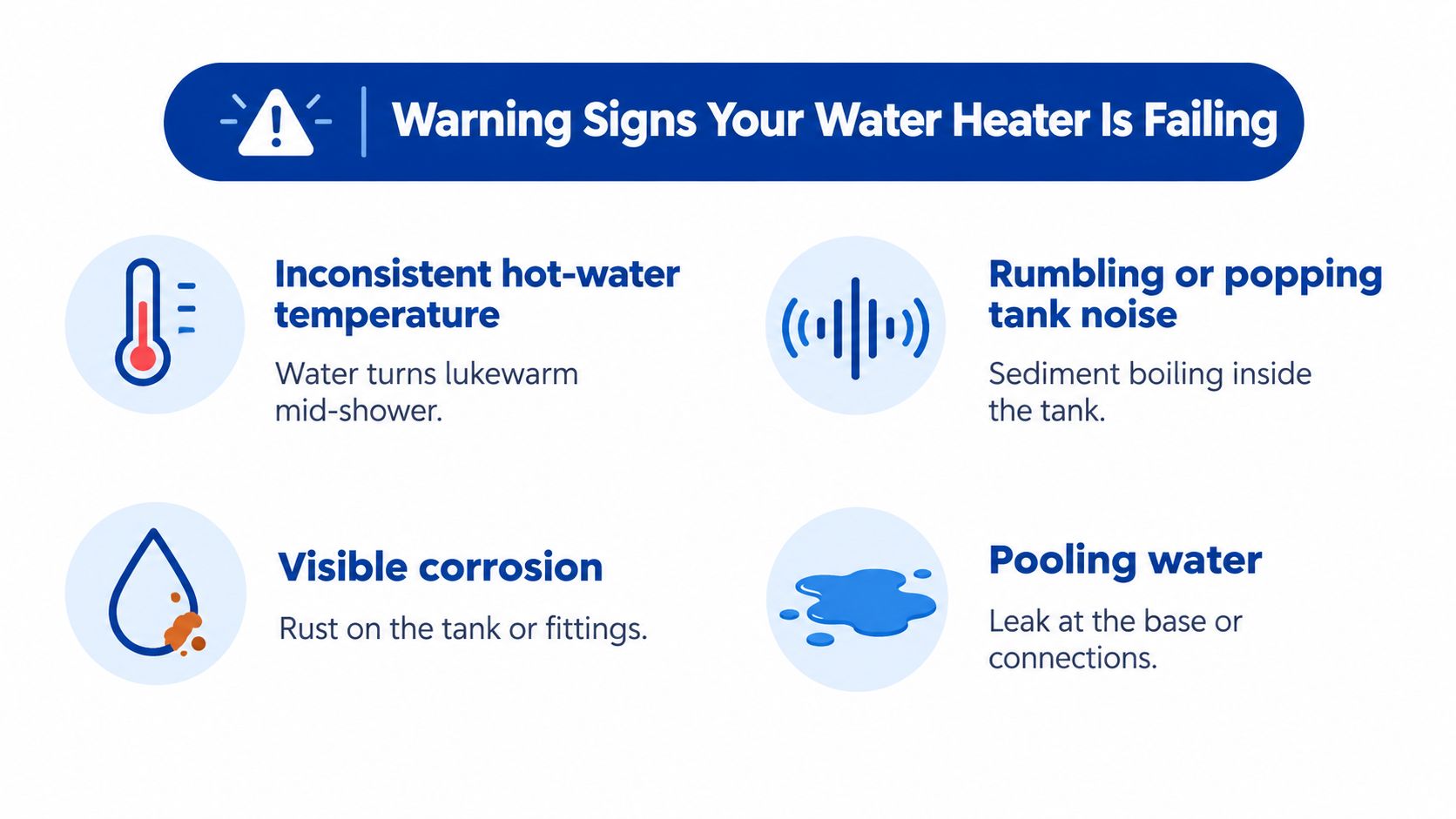
- Inconsistent temperature: Water that turns lukewarm during a shower may point to a thermostat, heating element, dip tube, mixing valve, or sediment problem. This is usually a “call this week” issue unless the household has no usable hot water.
- Rumbling or popping: A tank that sounds like a kettle often has mineral sediment at the bottom. The burner or element heats through that layer, which can reduce recovery and put extra strain on the equipment.
- Visible corrosion: Rust on fittings may indicate a replaceable connection or valve. Rust on the tank body is more concerning because the tank lining may be deteriorating.
- Rusty or cloudy hot water: If discoloration appears only at hot-water fixtures, the heater may have internal corrosion or a depleted protective component. A plumber can determine whether the problem is inside the tank or in the piping.
- Reduced recovery: If the heater used to supply several showers but now runs out quickly, it may not be heating properly, or the household demand may exceed the system's current output.
- Moisture at the base: Water around the tank bottom or a wet floor should be treated as a same-day concern. A fitting can sometimes be repaired, but a tank seam or body leak generally can't be sealed reliably.
For more troubleshooting context, see this guide to a gas water heater that isn't heating water. Don't remove covers, handle wiring, or work around a gas control to investigate the cause. Photograph the area, keep people away from standing water, and arrange service if the moisture continues.
Common Causes of Water Heater Trouble
The symptom usually makes more sense once you understand what happens inside the tank. Gas and electric models use different heating components, but both can suffer from mineral buildup, control failures, corrosion, and age-related wear.
Sediment is the familiar kettle problem. Minerals settle at the bottom of a storage tank. When heat reaches the water trapped beneath that layer, the tank may pop or rumble. Flushing can help in suitable circumstances, but an older tank with hardened buildup may not respond well to aggressive cleaning.
A failed heating element affects an electric unit, while a dirty or malfunctioning burner affects a gas unit. Either problem can cause slow recovery or a complete lack of hot water. These parts are usually repairable when the tank itself remains sound.
The thermostat acts like a control switch. It tells the system when to heat and when to stop. If it loses calibration or fails to cut out, the water may be too cool, too hot, or inconsistent. A broken dip tube can also send incoming cold water into the wrong part of the tank, leaving the shower lukewarm even when the heater appears to run.
Corrosion has a different meaning
The anode rod is a sacrificial component. It attracts corrosive activity so the steel tank has more protection, much like a replaceable filter protects another system from harmful material. Once that protection is depleted, corrosion can progress inside the tank.
Michigan water conditions and cold winter inlet temperatures can make sediment and recovery complaints more noticeable. A professional considers the water source, household demand, fuel type, tank condition, and maintenance history rather than replacing a part based on noise alone.
A failed element, thermostat, valve, or other accessible component may support water heater repair. A tank body leak, extensive corrosion, or repeated failures often points toward replacement because repairing one part won't restore the tank's structural condition.
How a Professional Diagnoses a Water Heater
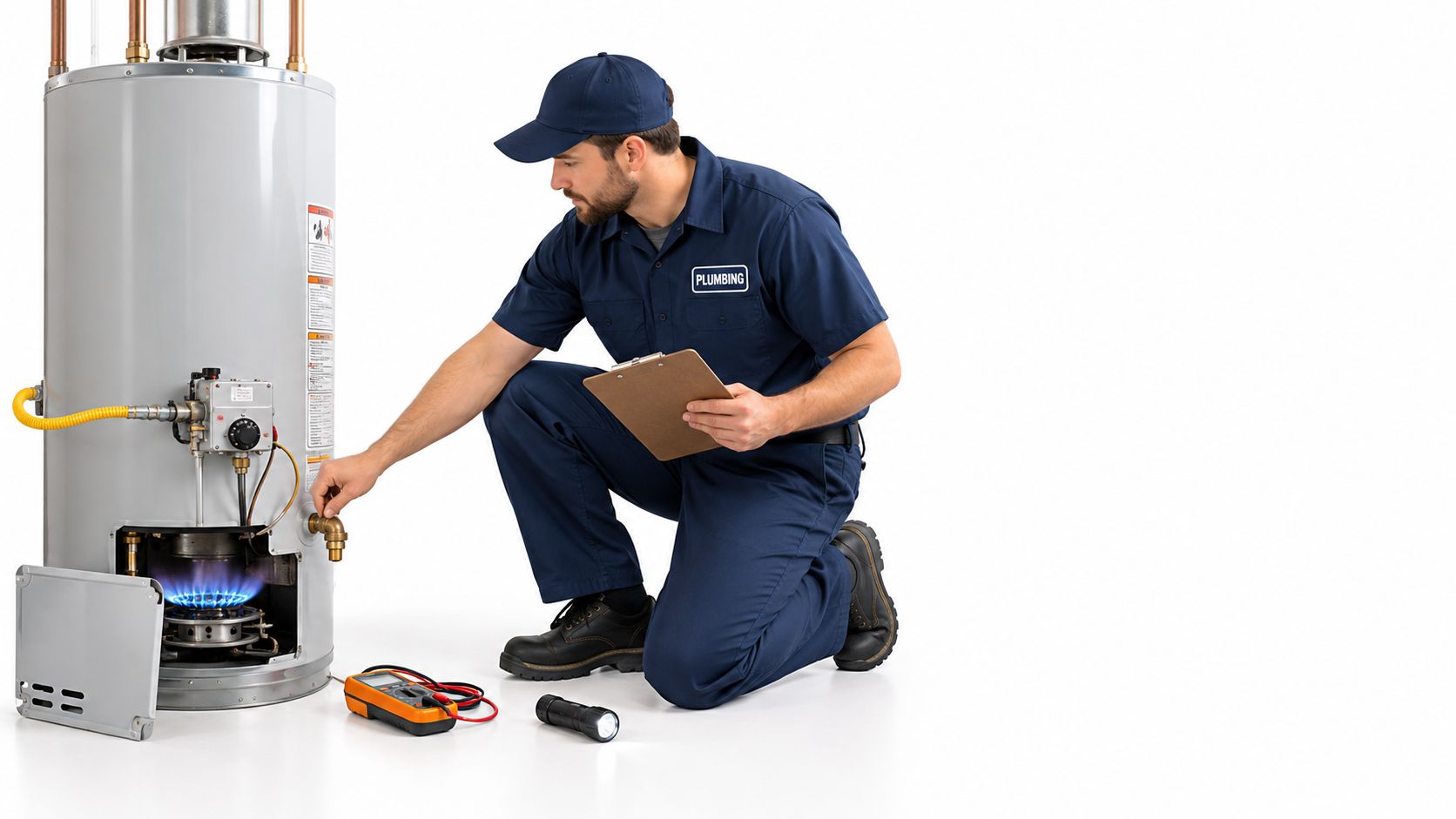
A shower turns cold halfway through, or a small puddle appears beside the tank. Before dispatch, photograph the rating label, fuel connections, control panel, visible leak, and surrounding venting. These images help a plumber bring suitable parts and identify safety concerns before arriving.
Separating delivery from efficiency
The first question is whether the heater fails to deliver enough hot water or uses more energy than expected. A delivery problem produces lukewarm water, short showers, or slow recovery. An efficiency problem may still provide hot water, but the unit runs often or loses heat while idle.
A technician asks when the symptom began, whether it is constant, and whether noise, moisture, discoloration, or unusual utility use appeared. They compare those answers with the unit's age, fuel type, household demand, and maintenance history.
The DOE water heater framework treats performance as more than burner or element output. Recovery, standby loss, and cycling behavior can all affect the result. A tank with damaged insulation, a loose access cover, exposed hot-water piping, or continuously running recirculation may waste heat even when the heating component works.
A professional may check:
- Recovery time: How quickly the unit restores hot water after use.
- Heating operation: Whether the burner or element operates correctly.
- Thermostat behavior: Whether the control reaches its setting and shuts off.
- Delivered temperature: Whether the fixture receives the expected heat.
- Heat loss: Whether the tank, covers, piping, or recirculation system sheds unnecessary heat.
- Capacity and demand: Whether the tank suits the property's busiest period.
The DOE water heater information guide explains why energy use belongs in the diagnosis, especially when a homeowner is comparing repair choices. The guide also discusses heat-pump technology and electric-resistance systems, giving technicians context for efficiency recommendations without making efficiency the only deciding factor.
For a gas or electric unit in Michigan, the technician also checks visible venting, wiring, shutoff access, and the temperature-and-pressure relief valve. Do not remove covers or test controls yourself. You can safely read the label, note the fuel type and thermostat setting, and organize symptoms with this hot water heater troubleshooting guide before the appointment.
Deciding Between Water Heater Repair and Replacement
The honest answer depends on four things: age, leak location, repair history, and operating performance. A replaceable component on a sound tank is a different decision from a leaking tank body.
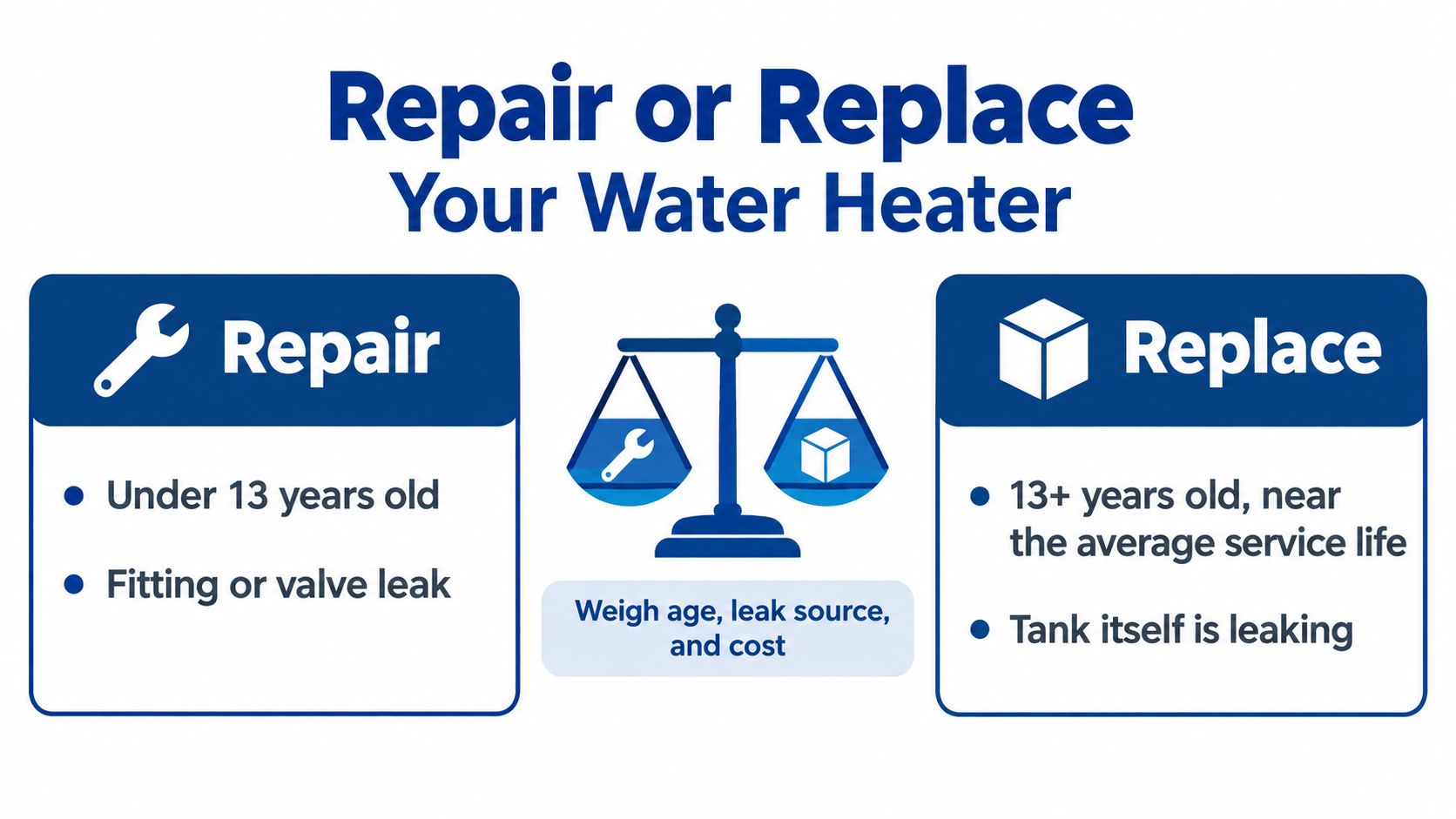
A conventional storage water heater lasts about 13 years on average, according to ENERGY STAR replacement guidance. Age isn't an automatic order to replace, but it changes how much confidence you can place in another repair. A newer tank with one failed element may have plenty of useful service left. An older tank with corrosion and repeated faults may justify planning a replacement before it fails during a winter weekend.
| Decision Factor | Repair Usually Makes Sense | Replacement Usually Makes Sense |
|---|---|---|
| Age and condition | The tank is relatively young and has no structural corrosion | The unit is near or beyond its average service life and shows broader wear |
| Leak source | A fitting, valve, or accessible connection is leaking | The tank body, seam, or base is leaking |
| Repair history | One isolated component has failed | Repairs keep recurring or several systems are deteriorating |
| Performance | The unit can meet demand after a component repair | Recovery remains poor, energy waste is high, or capacity no longer fits use |
| Installation planning | Existing fuel, venting, electrical, and space conditions remain suitable | A more efficient model requires changes that should be evaluated before installation |
Consider two common examples. A six-year-old electric heater with a failed element, a dry tank, and no visible corrosion is a reasonable repair candidate. A 14-year-old tank that is weeping from its seam is a replacement candidate because the tank itself has lost its integrity.
Don't rush the emergency choice
At least 75% of California water-heater replacements occur during emergencies, according to a recent market evaluation. The figure is California-specific, but the decision pressure is familiar in Michigan. When a tank is leaking, homeowners may accept the first available unit without checking space, electrical requirements, condensate drainage, permits, or fuel compatibility.
Before dispatch, photograph:
- The rating label: Capture model information, fuel type, and tank details.
- The surrounding area: Show doors, walls, shelves, drains, and available working space.
- The connections: Photograph the water, gas, vent, electrical, and relief-valve arrangement without touching them.
- The damage: Include the moisture source and any affected floor or nearby equipment.
A heat-pump model may reduce operating energy, but it can require panel work, condensate management, ducting, or space adjustments. The same market evaluation found that at least 29% of homes could readily accommodate heat-pump water heaters, while installers reported ductwork needs in 31% of installations. The cheapest same-day swap isn't always the lowest-cost choice if the equipment is poorly sized or unsuitable for the room.
For component maintenance and anode-rod considerations, review this water heater anode replacement resource.
Water Heater Temperature Settings and Scald Safety
Turning the thermostat higher is a common response to lukewarm water, but it can hide the underlying problem. A faulty thermostat, mixing valve, dip tube, sediment layer, or heating component may be reducing usable hot water. Raising the setting without diagnosing that fault can create a burn hazard.
The Consumer Product Safety Commission recommends 120°F, or approximately 49°C, as a residential starting point to reduce or eliminate most tap-water scald injuries. The same guidance states that even water at 120°F can cause a third-degree burn after approximately five minutes of exposure. Burn risk depends on both temperature and contact time, especially for children, older adults, and anyone with limited mobility.
Temperature also involves microbial control, standby loss, and distribution piping. Technical guidance identifies approximately 80°F to 120°F as the range where Legionella grows best and notes that storage at or above 140°F can help keep parts of a plumbing system above about 124°F. Higher storage temperatures increase scald risk and heat loss, so institutional or higher-risk settings require careful design, circulation, and a functioning thermostatic mixing valve.
For a typical home, follow the manufacturer's instructions and local requirements. A professional should confirm thermostat calibration and delivered temperature instead of just turning a dial upward.
Emergency Water Heater Help in Macomb and Oakland County
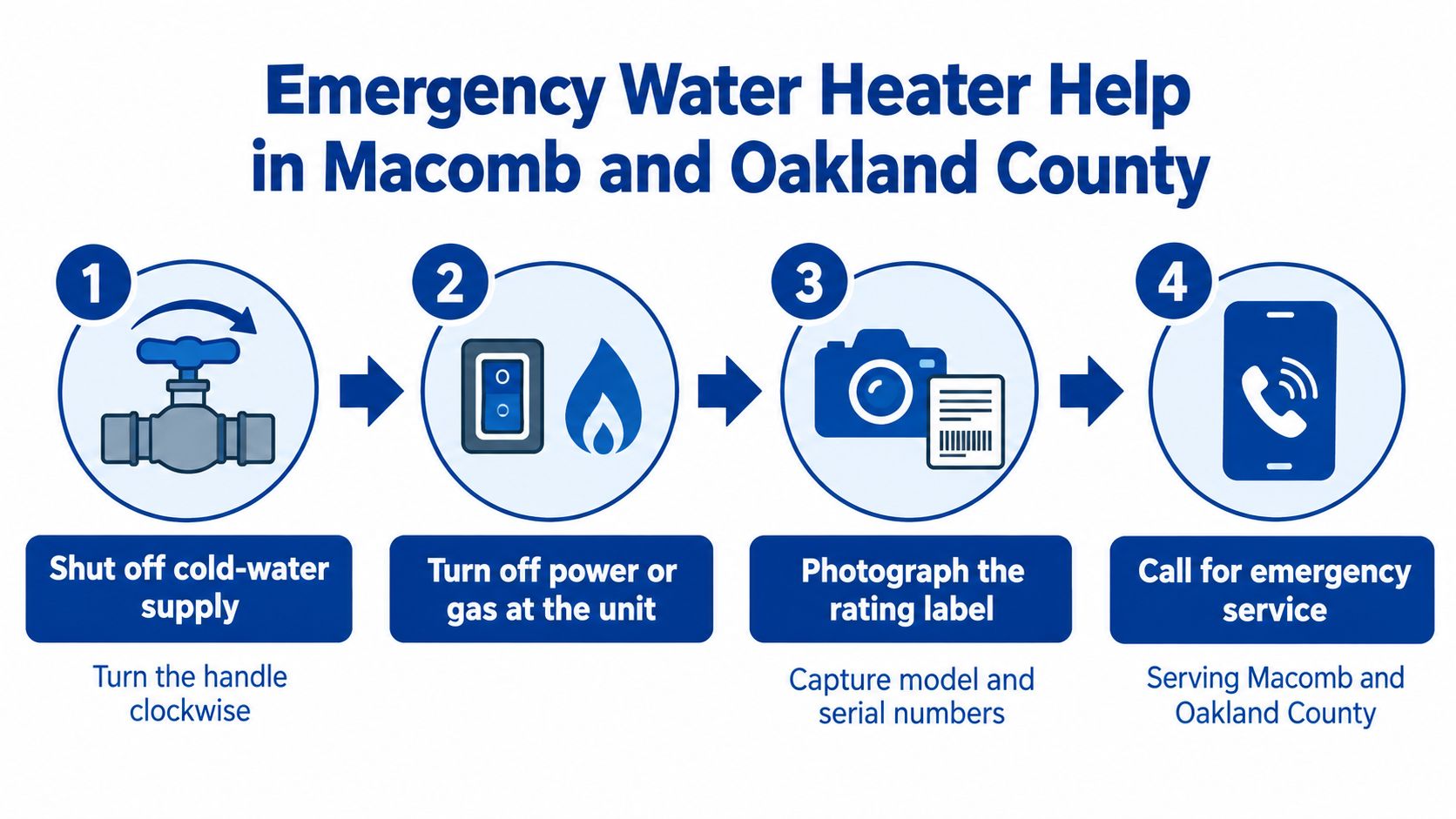
A leaking or failed water heater needs orderly action, not panic. If water is actively escaping, keep children and pets away, especially if the water may be hot.
- Shut off the cold-water supply if you can identify the valve and reach it safely.
- Turn off power or gas at the unit only if the shutoff is accessible and the area is dry. Stay away from wet electrical equipment.
- Photograph the rating label and damage before dispatch, including the surrounding space and visible connections.
- Call for professional service and describe whether the issue is no hot water, a fitting leak, a tank leak, or water near electrical components.
Michigan installation rules require storage water heaters to have an approved temperature-and-pressure relief valve. Under the applicable requirements, it must be set at no more than 210°F and no more than the manufacturer's rated working pressure or 150 psi, whichever is lower, as explained in the Michigan water heater code requirements. Never cap, block, remove, or disable this valve during water heater repair or replacement.
Jays Plumbing and Sewer provides 24-hour service, 365 days a year, for residential and commercial customers. The company offers job-based upfront pricing, free estimates, shoe covers, drop cloths, follow-up calls, and senior and military discounts. Its service area includes Fraser, Sterling Heights, Clinton Township, Troy, Macomb, Shelby Township, and surrounding communities in Macomb, Oakland, and Wayne counties.
Call Jays Plumbing and Sewer at 586-634-3450 for water heater repair or replacement when a leak, cold water, or unsafe condition can't wait.
Frequently Asked Questions About Water Heater Repair
How long does a repair appointment take?
The time depends on the symptom and whether the needed component is available. A straightforward thermostat, element, valve, or connection problem may be handled during the visit, while a replacement requires equipment selection, access planning, and installation. Same-day service can often restore hot water when the diagnosis and parts fit the situation, but a professional should confirm the timeline after inspecting the unit.
What does annual maintenance involve?
Maintenance may include checking for leaks and corrosion, evaluating sediment, inspecting the anode rod, testing the temperature-and-pressure relief system, and reviewing temperature operation. Flushing isn't appropriate in every condition, particularly when an older tank has significant internal deterioration, so the plumber should assess the unit first.
What should landlords and property managers do differently?
Keep an equipment inventory with installation dates, fuel type, model information, and prior repairs. Schedule assessments before winter demand peaks, and give tenants a clear way to report temperature changes, unusual noise, rusty water, or moisture. The same approach helps small businesses, restaurants, offices, real estate agents, and home buyers avoid making a replacement decision without knowing the system's condition.
Call 586-634-3450 with any water heater repair, replacement, or maintenance question. Jays Plumbing and Sewer is happy to help and offers free estimates.
Jays Plumbing and Sewer provides water heater repair, replacement, maintenance, leak detection, and related residential and commercial plumbing service across Macomb, Oakland, and Wayne counties. Visit Jays Plumbing and Sewer to learn more or request service for your home or property.
