
The best drain cleaning method isn't the same for a fresh toilet clog, a recurring main-line backup, a restaurant grease problem, or an older sewer line. A plunger may solve one. A mechanical auger may open another. Repeated backups often need a camera inspection before anyone chooses between snaking, hydro-jetting, sewer repair, or replacement.
A practical ranking should consider effectiveness, pipe condition, safety, long-term results, and the location of the blockage. A method that works well in a bathroom sink may be the wrong choice for a commercial kitchen or a basement floor drain. Michigan winters, heavy rain, older piping, frozen debris, and sewer backups also affect what Macomb County, Oakland County, and Wayne County properties need.
This guide ranks eight options by the type, severity, location, and recurrence of the clog. You'll see when a simple homeowner response is reasonable, why chemical cleaners are usually a poor choice, when a snake makes sense, and why professional diagnostics matter for recurring problems. If you need help choosing the right approach, call Jay's Plumbing and Sewer at 586-634-3450.
Table of Contents
- 1. Professional Hydro-Jetting Service
- 2. Drain Snake Tool
- 3. Enzymatic Drain Cleaner
- 4. Professional Sewer Camera Inspection
- 5. Professional Plumbing Service with Full System Assessment
- 6. Plunger
- 7. Chemical Drain Cleaner
- 8. Preventive Drain Maintenance Program
- Top 8 Drain Cleaning Methods Compared
- Choose the Method That Solves the Cause
1. Professional Hydro-Jetting Service
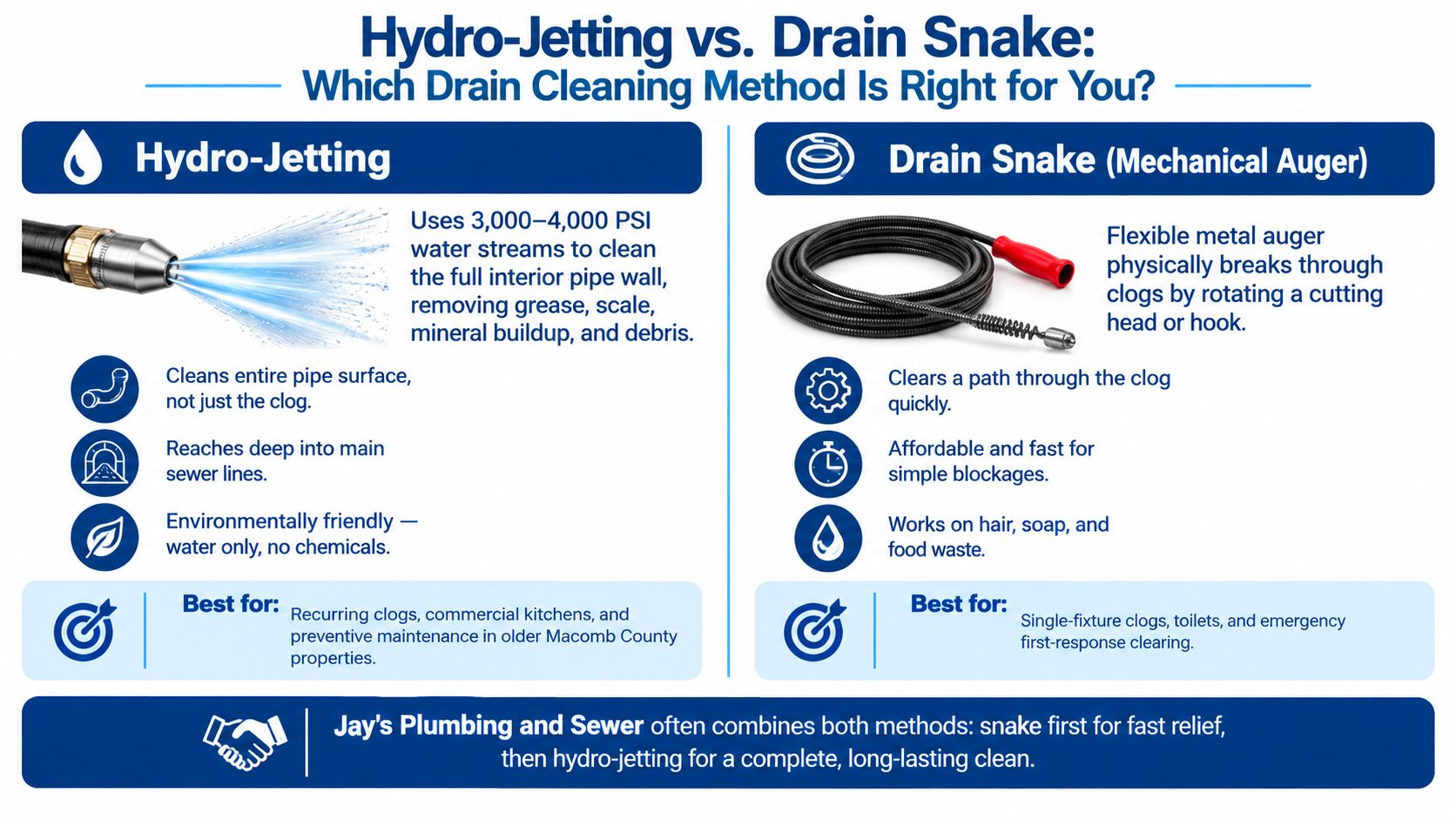
A hydro-jetter is not the right answer for every clog. It ranks first when grease, scale, sediment, or other buildup coats the inside of a drain or sewer line and keeps returning after a cable opening. A specialized nozzle sends high-pressure water through the pipe, scouring the walls and carrying loosened material out of the line instead of leaving residue behind.
Sewer jetters commonly operate at up to 4,000 PSI, with flow rates of about 2 to 25 gallons per minute. The nozzle sprays partly backward at an angle between 20 and 45 degrees, helping it move through the pipe while cleaning the surrounding walls. Industry guidance on sewer jetter operation explains why pressure alone does not define the process. Nozzle design, water volume, the access point, and pipe condition all affect the result.
Where hydro-jetting earns its place
Hydro-jetting fits problems such as:
- Commercial kitchen lines: Restaurant grease and food residue can return quickly after a cable only opens a narrow passage.
- Main sewer lines: Homes in Sterling Heights, Fraser, Clinton Township, or Macomb may have buildup beyond the reach of a tool used on one branch drain.
- Basement floor drains: A backup can point to accumulation farther along the main line, particularly after heavy rain.
- Recurring blockages: If the same line slows again after snaking, washing the pipe walls can remove more of the material causing the restriction.
A fresh, localized sink clog may justify a homeowner response. A recurring backup, several affected fixtures, or a commercial line calls for diagnostics and service across Macomb, Oakland, or Wayne County.
Inspect fragile, damaged, or collapsed lines with a camera before introducing high-pressure water. Jetting cleans the pipe, but it does not repair roots, offset joints, corrosion, cracks, or a partial collapse. See how hydro-jetting works for a clearer process explanation. Jay's Plumbing and Sewer can combine camera-guided diagnostics with jetting for residential and commercial drain cleaning.
2. Drain Snake Tool
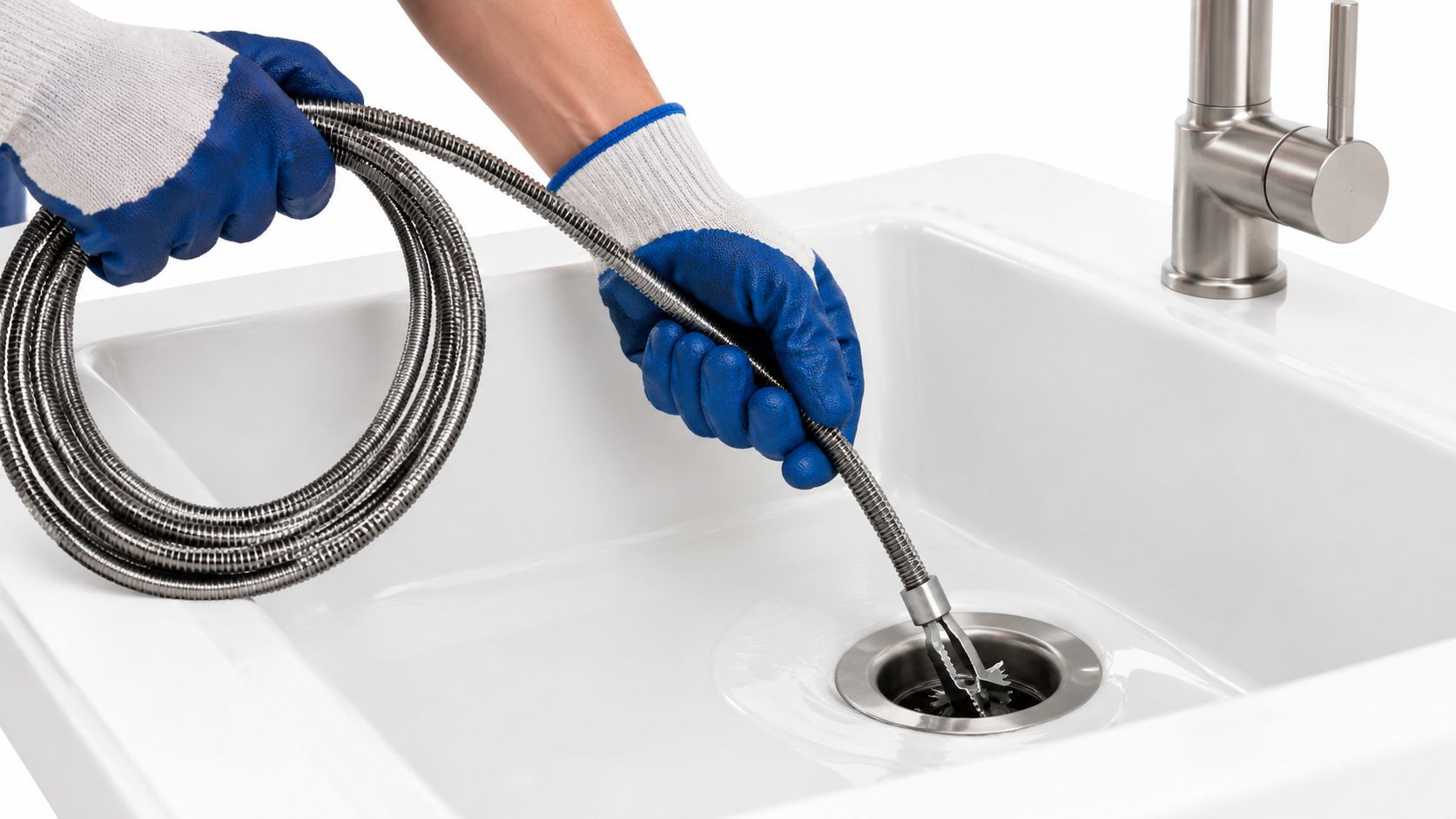
A drain snake, or mechanical auger, is usually the practical choice for a localized blockage within the cable's reach. Its flexible metal cable carries a cutting head, hook, or auger tip into the pipe. As the cable rotates, the head breaks through material or catches debris for removal.
The right snake depends on the fixture and obstruction. A small hand auger can clear hair and soap from one bathroom sink or shower. A toilet auger is better for a localized toilet backup because it is designed to protect the fixture. Motorized equipment reaches farther and handles tougher obstructions in branch drains and some main lines. It reopens the blocked path without sending high-pressure water through the entire pipe.
A fresh clog affecting one fixture is a reasonable homeowner project when the blockage feels soft and the tool moves normally. Use a plunger first when appropriate, then work the cable gently. Protect your hands and eyes, and stop if the auger catches hard. Forcing it can damage a fitting, make the cable difficult to retrieve, or push material farther into the system.
Snake the line when the pattern fits the tool:
- Hair and soap buildup: A single slow bathroom drain in a Clinton Township home may respond well to a small auger.
- Food residue: A Sterling Heights rental kitchen drain may need cable work when a plunger cannot shift the blockage.
- Branch-line obstruction: Clearing one secondary drain can show whether the problem remains isolated or extends toward the main sewer.
- Frozen debris: Michigan winter conditions may require equipment and access beyond a basic hand tool.
Cable work can provide only temporary relief. A snake may pierce grease, roots, or compacted material while leaving residue attached to the pipe wall. If the same drain clogs again, or several fixtures back up, repeated snaking is the wrong next move. Properties in Macomb, Oakland, or Wayne County may need a camera inspection or professional service to locate the restriction and check the line's condition.
3. Enzymatic Drain Cleaner
A slowly draining shower, rental bathroom, or office kitchen line is a reasonable place for an enzymatic drain cleaner. These products use enzymes and bacteria to break down organic material such as hair, food residue, soap buildup, and grease over time. That slow action makes them a maintenance choice, not an emergency response. They will not clear a fully blocked drain or sewage rising through a floor drain.
Use an enzyme treatment while water still moves through the pipe and the buildup is gradual. It helps limit organic accumulation between cleanings, but it cannot correct a damaged, misaligned, or poorly graded pipe. Homeowners with older plumbing often choose this approach to avoid aggressive chemical formulations. For properties with septic systems, check the label for specific compatibility before using the product.
A few practical checks matter:
- Water still drains: Flow gives the treatment contact with organic residue. A completely stopped drain needs a different response.
- The problem is gradual: An enzyme product fits light recurring buildup, not a line that repeatedly fails after cleaning.
- Pipe safety is a concern: Avoid combining treatments, especially an enzyme product and a caustic cleaner.
- A septic system is involved: Follow the manufacturer's directions and confirm that the product suits the system.
Use only the amount and contact time stated on the label. Some products call for warm water, but the instructions determine the correct method. Drain screens provide more dependable prevention by catching hair and food before they enter the pipe.
Practical rule: Enzymatic cleaner supports prevention when drainage remains open. Recurring clogs still require an explanation of the line's condition.
Stop using a maintenance product if the drain stops completely, several fixtures slow down, or sewer odors appear. A plumber may need a snake, camera, hydro-jetter, or repair based on the obstruction and pipe condition. In Fraser, Troy, Shelby Township, and other Macomb, Oakland, and Wayne County properties, a local fixture clog and a main sewer problem can look similar at first. Recurrence or multiple affected fixtures justify professional diagnostics rather than another treatment bottle.
4. Professional Sewer Camera Inspection
A camera inspection earns its place when a drain problem keeps returning, reaches several fixtures, or may sit in the sewer line. A waterproof camera on a flexible rod sends live images to a monitor above ground, showing conditions a visual walkthrough cannot. This explanation of sewer camera inspections outlines the process and explains why a camera can reveal information that plunging or snaking cannot.
The inspection may identify cracks, root intrusion, bellies, offset joints, corrosion, blockages, and partial collapses. That distinction matters because grease, roots, mineral deposits, and a collapsed section require different next steps. A camera does not replace cleaning, but it can prevent the wrong cleaning method from being repeated.
For a homeowner facing one isolated, first-time slow drain, a plunger or drain snake may be a reasonable first response. A camera becomes more useful when the same line fails again, several fixtures back up together, or a quick opening does not explain the recurrence. In Fraser, Troy, Shelby Township, and other Macomb, Oakland, and Wayne County properties, those signs justify checking the line rather than buying another treatment or scheduling blind excavation.
A sewer camera inspection can also inform larger property decisions. It may help locate a damaged section before excavation, support a repair-versus-replacement discussion, or give a buyer, seller, or real estate agent clearer information during a transaction. Basement backups after heavy rain deserve the same attention if they return.
Jay's Plumbing and Sewer provides video camera sewer inspection for homeowners, property managers, and commercial customers. Ask whether the recording can be retained for property records, particularly before sewer repair, a home purchase, or another major plumbing decision.
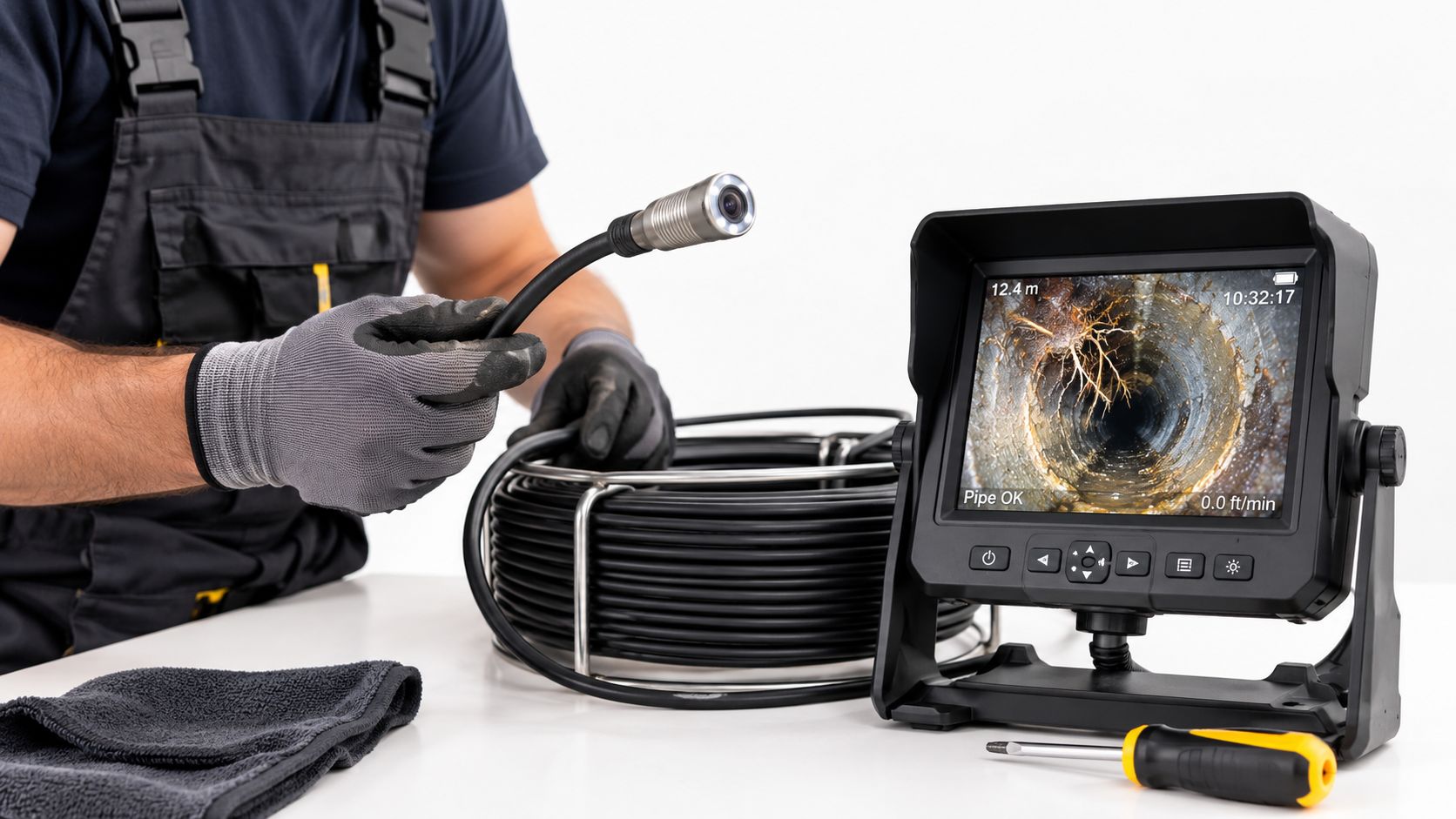
A short visual demonstration can show how technicians inspect a line before recommending cleaning or repair.
5. Professional Plumbing Service with Full System Assessment
A recurring drain problem often needs a system assessment, not another quick treatment. A professional plumber checks the affected fixture, nearby drains, cleanouts, pipe access, backup history, and visible leakage or damage. Those findings help distinguish a local clog from a larger plumbing or sewer problem.
This service makes sense after temporary fixes fail, when a property manager is coordinating work across rental units, or when a business cannot afford repeated downtime. The visit may also uncover related work, including sewer repair, pipe repair, leak detection, sump pump repair, or commercial plumbing maintenance.
A useful assessment should leave you with clear answers:
- What the technician found: The obstruction may be hair, grease, roots, sediment, a foreign object, or something that requires further diagnosis.
- Why the selected tool fits: A snake, jetter, camera, or repair method should suit both the blockage and the pipe's condition.
- What happens next: Restoring flow today and reducing the chance of another failure are separate decisions.
- What the work costs: Jay's Plumbing and Sewer lists job-based upfront pricing and free estimates among its service practices.
- How the area is protected: Shoe covers, drop cloths, and cleanup matter in homes, offices, and rental properties.
The EPA sewer overflow information summarized in this drain-cleaning reference reports that sanitary sewer overflows occur at a scale of 23,000 to 75,000 events each year in the United States, releasing about 3 to 10 billion gallons annually, with a substantial share caused by blockages. That makes recurring blockage prevention relevant to property operations and public infrastructure, not only household convenience.
For an emergency plumber in Clinton Township or a scheduled assessment in Troy, Macomb, Fraser, or Shelby Township, professional service provides a plan based on the whole system. Choose this option when recurrence, multiple affected fixtures, or uncertain pipe conditions make a fixture-level fix unreliable.
6. Plunger
A plunger earns its place as the first response when one sink, tub, shower, or toilet suddenly drains slowly. The rubber cup creates pressure and suction at the opening, often shifting a soft, nearby obstruction without chemicals or powered equipment. That makes it a sensible homeowner option for a fresh, localized clog.
Use the tool designed for the fixture. A flat-bottomed cup plunger seals against sinks, tubs, and showers. A flange plunger extends into a toilet bowl and usually forms a more reliable seal there. The wrong shape can waste time and make a minor blockage appear more serious.
Before plunging, add enough water to cover the cup's rim. Press down firmly, then pull up in a steady rhythm while keeping the seal intact and limiting splashing. Test the fixture afterward. Normal drainage that stays normal suggests the obstruction was local.
Stop after a few reasonable attempts if the water remains slow or returns quickly. Repeated plunging can move symptoms without addressing a blockage farther along the branch line.
A plunger has clear limits. It will not remove tree roots, repair a damaged sewer, correct a pipe belly, or clear heavy buildup deep in the system. If several fixtures back up, or wastewater rises in a basement drain when another fixture runs, the property needs diagnosis rather than more force. That applies to homes, rentals, and businesses across Macomb, Oakland, and Wayne County.
A plunger is a sensible first response to a fresh fixture clog. It is not a substitute for finding the cause of a recurring backup.
Keep one in the bathroom and another near the kitchen. If plunging fails, call a plumber before trying harsh chemicals. A professional can determine whether the problem belongs to the fixture, the branch drain, or the main sewer line, then match the next method to the actual blockage.
7. Chemical Drain Cleaner
Chemical drain cleaners rank near the bottom because convenience can bring safety and pipe risks. Products such as Drano and Liquid-Plumr contain caustic or acidic ingredients that may dissolve organic material, create heat, or attack mineral deposits. They can open a small blockage, yet they often leave hazardous residue and do not explain why the clog developed.
The risk increases with repeated use, especially in older plumbing. Strong chemicals may damage vulnerable pipe materials, worsen an existing defect, and create a more dangerous working environment for the plumber. If a product sits in a fully blocked drain, it can splash back during plunging, trap removal, or cable work.
If chemicals are already in the line, stop there. Do not mix drain products, since the substances can produce dangerous fumes or reactions. Keep children and pets away, follow the product's safety instructions, and tell the plumber exactly what was used before service begins.
Chemical cleaners are poor choices in several situations:
- The drain is completely blocked: Concentrated chemical may remain in the fixture or pipe.
- A sewer line is involved: A bottle cannot identify roots, collapse, corrosion, or an offset joint.
- The clog keeps returning: Repeating the treatment postpones a proper assessment.
- A garbage disposal or septic system is connected: Compatibility and damage risks need careful consideration.
For a plain-language explanation of PVC concerns, read whether Drano is safe for PVC pipe. Mechanical cleaning or diagnostics usually provide a safer path, particularly for homes in Sterling Heights, Clinton Township, Troy, and older neighborhoods across Macomb County. Properties in Oakland or Wayne County with recurring backups also need the method matched to the blockage, not another bottle of cleaner.
8. Preventive Drain Maintenance Program
Ranked eighth, a preventive drain maintenance program is not an emergency tool. It is the right choice when a property has recurring blockages, known drainage weaknesses, or costly downtime. The plan may combine inspections, routine cleaning, drain screens, enzyme treatments, and hydro-jetting when the pipe condition supports that method.
The schedule should fit the property, not an arbitrary calendar. A restaurant in Macomb County faces more grease exposure than a Troy office building. A multi-unit property, older home, or building with basement backups may need planned inspections, while a homeowner in Fraser may need only seasonal checks and targeted service. Sterling Heights properties can also require different timing depending on pipe age, usage, and past calls.
Start with the service history. Repeated openings without a written plan usually indicate that the cause still needs attention. Pipe age and condition may call for a camera review before aggressive cleaning. Grease, wipes, roots, sand, mineral deposits, and hair each require a different prevention approach. Commercial plumbing carries different loads from residential lines, and heavy rain can expose weaknesses in sewer or basement drainage systems.
A practical program may include inspection after winter, preparation before periods of heavy rain, drain screens, grease-management procedures, and cleaning aimed at the affected line. Homeowners can handle simple screen replacement and routine cleaning when the drain is working normally. Recurring backups, several affected fixtures, or signs of a main-line problem call for diagnostics and professional service, especially across Macomb, Oakland, and Wayne Counties.
The broader drain-cleaning services market was valued at approximately USD 8.2 billion in 2024 and is projected to reach USD 12.8 billion by 2033, with a projected 5.1% CAGR from 2025 to 2033, according to the cited market forecast. For property owners, the practical point is that planned maintenance can reduce disruption where repeated emergency calls or downtime carry a high cost.
Top 8 Drain Cleaning Methods Compared
| Service | 🔄 Implementation Complexity | ⚡ Resource Requirements | 📊 Expected Outcomes (⭐) | 💡 Ideal Use Cases | ⭐ Key Advantages |
|---|---|---|---|---|---|
| Professional Hydro-Jetting Service | High, requires trained operators and pre-checks | High: truck-mounted jetter (3k–4k PSI), crew, water access | ⭐⭐⭐⭐⭐ Restores full pipe flow; removes grease/scale; long-lasting | Recurring clogs, commercial kitchens, old main sewer lines, preventive maintenance | Complete pipe-wall cleaning; reaches deep lines; water-only (eco-friendly) |
| Drain Snake Tool (Mechanical Auger) | Medium, operator skill needed; misuse risk | Low–Medium: handheld or motorized auger; portable | ⭐⭐⭐ Quickly clears a path through clogs; doesn't clean pipe walls | Single-fixture clogs, toilets, quick emergency clearing | Affordable, fast for simple blockages; portable and immediate |
| Enzymatic Drain Cleaner | Low, simple application, requires consistency | Low: product only; needs time (overnight or longer) | ⭐⭐⭐ Slow, preventive reduction of organic buildup; limited on severe clogs | Routine maintenance, septic-safe homes, odor reduction | Non-corrosive, eco-friendly, safe for pipes and septic systems |
| Professional Sewer Camera Inspection | Medium, diagnostic skill and interpretation required | Medium: camera system, locator, trained technician, inspection time | ⭐⭐⭐⭐ Accurate diagnosis; locates roots/damage; informs repair plans | Recurring backups, pre-purchase checks, planning excavations or repairs | Eliminates guesswork; documents condition; avoids unnecessary excavation |
| Professional Plumbing Service with Full System Assessment | High, comprehensive multi-skill coordination | High: licensed techs, variety of tools, 24/7 availability, warranties | ⭐⭐⭐⭐⭐ Thorough diagnosis and lasting repairs; preventive planning | Complex/recurrent issues, emergencies, commercial properties, property managers | Holistic solutions combining snaking, jetting, inspections; warranty & follow-up |
| Plunger (Cup and Flange) | Low, basic technique but needs proper seal | Very Low: inexpensive tool, homeowner-owned | ⭐⭐ Immediate relief for fresh/simple clogs; limited scope | Fresh toilet or sink backups; first-response at home | Immediate, no chemicals, easy to use and widely available |
| Chemical Drain Cleaner (Caustic/Acidic) | Low to use but high safety and damage risk | Low: store-bought bottle; safety gear advised | ⭐⭐ Fast temporary clearing for some clogs; risk of pipe damage | Generally not recommended; tempting for quick DIY fixes | Inexpensive and fast-acting on certain organic clogs (but unsafe long-term) |
| Preventive Drain Maintenance Program | Medium, requires scheduling and coordination | Medium: periodic services (jetting/snaking, camera), maintenance contract | ⭐⭐⭐⭐⭐ Reduces emergencies; extends pipe life; predictable costs | Commercial properties, rental portfolios, older homes, preventive homeowners | Prevents costly failures; priority response; documentation of system health |
Choose the Method That Solves the Cause
The best drain cleaning method depends on what the line is doing, where the blockage is located, and whether the problem has happened before. A fresh clog in one sink or tub is different from several slow drains, a toilet that gurgles, or sewage appearing in a basement floor drain.
For a minor, fresh fixture clog, try the correct plunger first. Use a cup plunger for a sink or tub and a flange plunger for a toilet. Work carefully and stop if the water doesn't return to normal. A plunger is low-risk when the problem is local, but it won't repair a damaged pipe or clear a distant main-line obstruction.
A straightforward blockage may call for professional snaking. Mechanical augers are useful for hair, soap, food waste, and other obstructions that a cable can reach. They're often a sensible choice when one fixture is affected. If the clog returns, snaking alone may be opening a path without removing the buildup that keeps collecting.
Enzymatic products belong in gradual maintenance. They may help with organic residue when water still drains, but they aren't emergency treatments and shouldn't delay diagnosis. Chemical cleaners are best avoided. Products such as Drano and Liquid-Plumr can create safety hazards, damage vulnerable plumbing, and complicate later service, especially when the drain is completely blocked.
Request a sewer camera inspection for recurring clogs, multiple affected fixtures, suspected tree roots, a real-estate evaluation, or any situation where someone is discussing excavation. The camera can show whether the line needs cleaning, repair, replacement, or a more targeted next step. It also helps prevent unnecessary digging based on assumptions.
Hydro-jetting is a strong option when grease, scale, roots, sediment, or other buildup has coated the pipe walls, provided the line is suitable for the process. A preventive maintenance program makes sense when buildup keeps returning, a commercial property needs reliable operation, or a rental building has a history of drain complaints.
Call promptly if you have a sewage backup, multiple slow drains, basement flooding, suspected frozen lines, or commercial downtime. Michigan winters and heavy rain can expose drainage weaknesses quickly, and delaying service can turn a localized blockage into water damage or a larger sewer repair.
Jay's Plumbing and Sewer provides drain cleaning, sewer repair, camera inspection, hydro-jetting, emergency plumbing, pipe repair, leak detection, sump pump repair, water heater repair, water heater replacement, garbage disposal repair, bathroom plumbing, kitchen plumbing, residential plumbing, and commercial plumbing. Call 586-634-3450 for service or a free estimate in Macomb County, Oakland County, Wayne County, Fraser, Sterling Heights, Clinton Township, Troy, Macomb, and Shelby Township.
For the right drain cleaning method, Jay's Plumbing and Sewer can assess the blockage, inspect the line, and recommend snaking, hydro-jetting, repair, or maintenance based on the actual condition of your plumbing. Call 586-634-3450 or visit Jays Plumbing and Sewer to schedule residential or commercial service in Southeast Michigan.
