A sewer line replacement averages about $3,319 nationally, but homeowners commonly see totals from $1,388 to $5,323, or roughly $60 to $250 per linear foot. A 100-foot replacement can therefore cost about $6,000 to $25,000, depending on depth, access, materials, and restoration.
You may be asking because several drains are slowing down, a basement floor drain has backed up, or a sewer camera revealed roots and a damaged pipe. In Southeast Michigan, the number on a national pricing page only gives you a starting point. The actual estimate depends on what's underground and what crews must remove to reach it.
For homeowners, property managers, real estate agents, and commercial property owners in Macomb and Oakland County, the most useful question isn't only “how much does sewer line replacement cost?” It's “what conditions will determine the price at my property?” This guide breaks down those conditions, the trade-offs between excavation and trenchless work, and when a repair may make more sense than full replacement.
Table of Contents
- Understanding the Real Cost of Sewer Line Replacement
- Key Variables That Influence Your Final Bill
- Comparing Traditional Excavation and Trenchless Methods
- The Role of Camera Inspections in Accurate Pricing
- Repair Versus Full Replacement Decisions
- Local Considerations and Professional Estimates
Understanding the Real Cost of Sewer Line Replacement
A homeowner with a failing sewer lateral often receives several different price ranges before anyone opens the ground. That can feel confusing, but the variation usually reflects different assumptions about line length, excavation, pipe condition, and surface restoration.
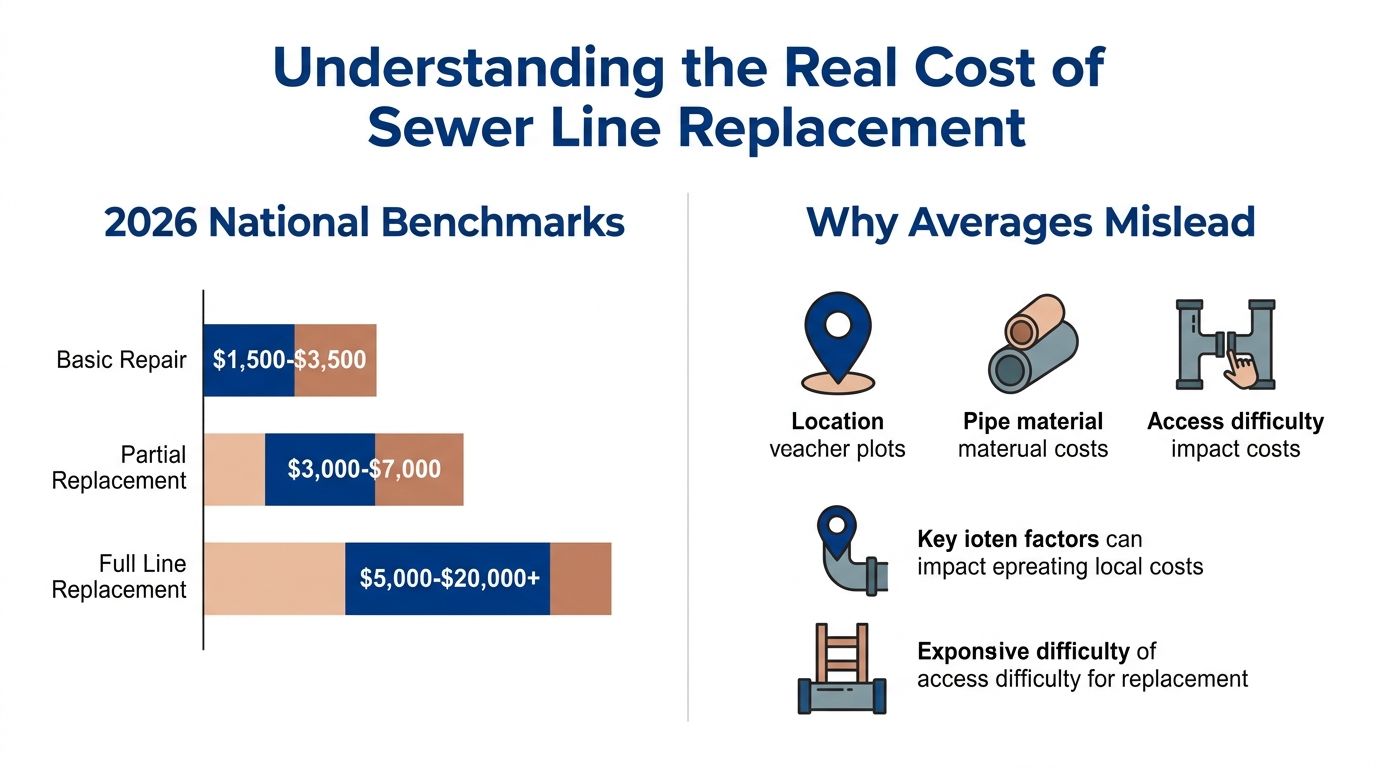
The 2026 national average is about $3,319, with a typical homeowner range of $1,388 to $5,323, according to this 2026 sewer line repair and replacement cost guide. The same guidance places complete replacement near $60 to $250 per linear foot, with a national average of about $150 per foot. At that rate, a 100-foot project could be around $15,000, but the full range could run from approximately $6,000 to $25,000.
Why the average can mislead
The national average is useful for budgeting, but it isn't a quote. A short line beneath an open lawn may stay near the lower end. A deeper line beneath a driveway, mature tree, patio, or foundation can move sharply higher because the crew must manage excavation, equipment, safety, and restoration.
Historical consumer pricing has clustered near $3,320 in 2022 and 2025, and about $3,319 in 2026, as summarized by HomeAdvisor's sewer main repair cost guide. That consistency gives homeowners a planning baseline, but it shouldn't hide the broad spread between simple work and complex full-line replacement.
More involved projects can reach $10,000 or more, particularly when digging, labor, and restoration are substantial, as described in this sewer line replacement cost overview. A quote far below the typical project range may cover cleaning, a spot repair, or only part of the line. A higher quote may include a long excavation route, difficult access, under-slab work, or rebuilding hard surfaces.
What a professional estimate should clarify
Ask whether the estimate includes:
- The affected footage: Confirm how much pipe will be repaired or replaced.
- Excavation and disposal: Find out whether digging, soil handling, and equipment are included.
- Restoration: Check whether the quote covers lawn, concrete, asphalt, landscaping, or other surfaces.
- Method selection: Ask why the plumber recommends excavation, pipe bursting, lining, or a targeted repair.
- Diagnostic evidence: Request camera footage or a clear explanation of the defect.
A project-based estimate is more trustworthy than a flat fee that ignores the property. The pipe is only one part of the job.
Key Variables That Influence Your Final Bill
Two homes in Fraser, Sterling Heights, Rochester Hills, or Troy can have similar plumbing symptoms and very different sewer replacement costs. Crews price the work around the physical conditions they must handle, not just the name of the service.
Depth and soil conditions
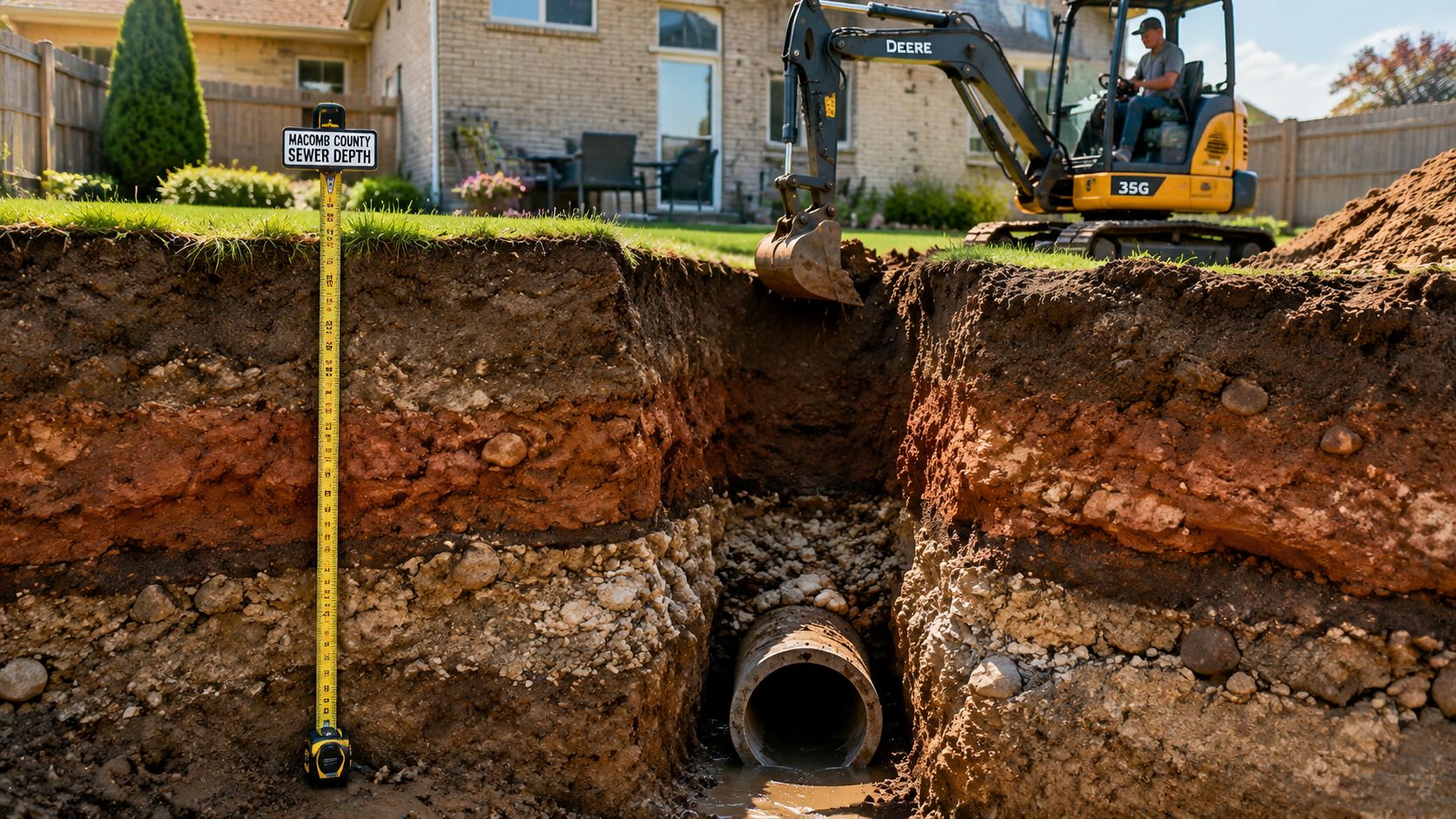
A deeper sewer line requires more excavation, more soil management, and more attention to trench safety. Michigan's frost conditions also influence how sewer systems are installed and accessed. Heavy clay, shifting ground, and wet soil can slow digging and make it harder to keep the trench stable.
Pipe depth matters even more when the line runs below a basement, retaining feature, or other structure. The plumber must determine the route before equipment arrives, because an easy front-yard dig is a different project from a narrow excavation beside a foundation.
Access and obstacles
Open grass is usually easier to reach than a line beneath a driveway or sidewalk. Fences, landscaping, sheds, large trees, and limited equipment access can add labor before the pipe is even exposed.
Tree roots deserve careful attention. Root intrusion can obstruct flow and damage joints, but removing roots from the pipe doesn't automatically correct the underlying defect. A camera inspection helps determine whether cleaning is enough or whether the line has deteriorated.
Practical rule: Ask for restoration to be listed separately from pipe work. That makes it easier to compare estimates fairly.
Surface restoration
Restoration is one of the most overlooked cost drivers. Excavation may disturb:
- Driveways and sidewalks: Concrete or asphalt replacement can require separate preparation and finishing.
- Landscaping: Shrubs, garden beds, and mature trees may need protection or removal.
- Basement and interior areas: Lines beneath slabs can require concrete removal and patching.
- Commercial surfaces: Parking areas and access routes may need scheduling around customers, tenants, or deliveries.
Pipe material and damage type also affect the recommended approach. Older cast iron, clay, or Orangeburg-style piping may present different repair limitations than modern PVC. A local drain cleaning cost guide can help separate routine cleaning from work that requires excavation, but recurring backups still deserve a sewer evaluation rather than repeated temporary clearing.
Comparing Traditional Excavation and Trenchless Methods
Traditional excavation exposes the pipe so the crew can remove and replace it directly. It remains the right choice for a collapsed line, severely damaged sections, poor alignment, or a property where surface disruption is manageable.
Trenchless methods approach the problem differently. Pipe bursting pulls a new pipe through the existing route while breaking the old pipe apart. CIPP lining places a resin-based liner inside a suitable host pipe, creating a rehabilitated passage without opening the entire length.
The method must match the pipe condition. Lining generally needs a host pipe with enough remaining structure and a route that can be cleaned and prepared. Pipe bursting needs suitable access and room for the new pipe to follow the existing path. Neither method is a universal substitute for excavation.
Replacement method cost comparison
| Method | Estimated Cost Range | Restoration Impact |
|---|---|---|
| Open-trench replacement | $8,858 to $16,327 for cited open-trench projects | Highest surface disruption because the pipe is exposed |
| Pipe bursting | $6,000 to $13,000 | Usually less excavation than full trenching, but access points remain necessary |
| CIPP lining | $7,000 to $15,000 for a 50-foot lateral | Limited surface disturbance when the pipe is suitable for lining |
These ranges come from sewer line replacement method pricing guidance. They're planning figures, not guaranteed bids, because depth, access, regional labor, and restoration can change the final scope.
Traditional replacement can appear cheaper at first when the line crosses an open lawn. Trenchless work may offer better total value when excavation would damage a driveway, patio, landscaping, or other finished surface. The right comparison includes restoration, downtime, access requirements, and the expected durability of the solution.
A professional main sewer line repair evaluation should establish whether the issue is roots, a break, corrosion, a belly, or collapse before anyone recommends a method. Cleaning a pipe that has structurally failed won't solve the problem, while excavating a line that only needs targeted rehabilitation can create unnecessary disruption.
The Role of Camera Inspections in Accurate Pricing
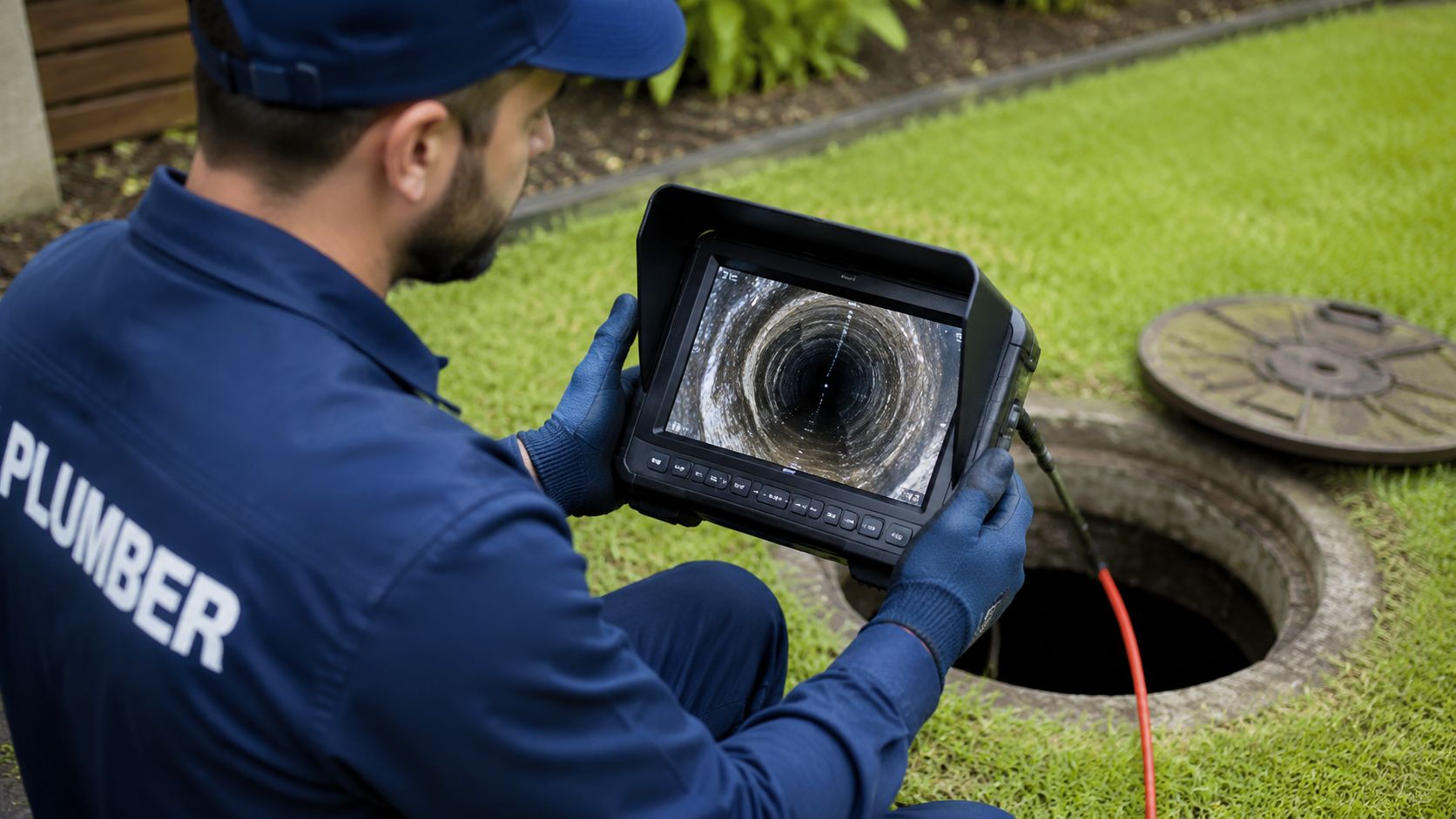
A sewer camera inspection changes the conversation from guesswork to evidence. The technician feeds a specialized camera through a cleanout or accessible fixture, watches the pipe interior, and records the condition while locating the affected section.
The video can reveal roots, grease, cracks, separated joints, corrosion, obstructions, and collapse. It also helps identify pipe material and shows whether the problem affects one location or a larger portion of the line.
What the inspection changes
Suppose several fixtures drain slowly. That symptom could come from a main-line obstruction, a localized branch drain problem, or a damaged section outside the home. Digging before locating the defect risks opening the wrong area or replacing more pipe than necessary.
The camera also helps the plumber choose tools. Root intrusion may call for high-pressure water jetting and follow-up monitoring. A localized crack might support a spot repair. Widespread corrosion or collapse may justify replacement.
For a home buyer or seller, the inspection is valuable during due diligence. A clean-looking yard doesn't confirm a healthy buried sewer, and repeated backups shouldn't be dismissed as ordinary drain clogs. A written report or saved video gives the parties a clearer basis for negotiation and planning.
Ask to see the footage: A reputable estimate should connect the recommended work to an observable condition inside the pipe.
The same diagnostic mindset applies to other hidden plumbing issues. A professional leak detection evaluation can help locate concealed water loss before a repair plan is chosen. Sewer camera work serves a similar purpose, but it focuses on the condition and route of the drain line.
The inspection doesn't eliminate every uncertainty. Excavation may still reveal soil, access, or structural conditions that weren't visible from inside the pipe. It does, however, reduce the chance of paying for a solution that doesn't match the actual defect.
Repair Versus Full Replacement Decisions
A sewer backup doesn't automatically mean the entire line needs replacement. The decision should follow the condition, location, and pattern of damage shown by inspection.
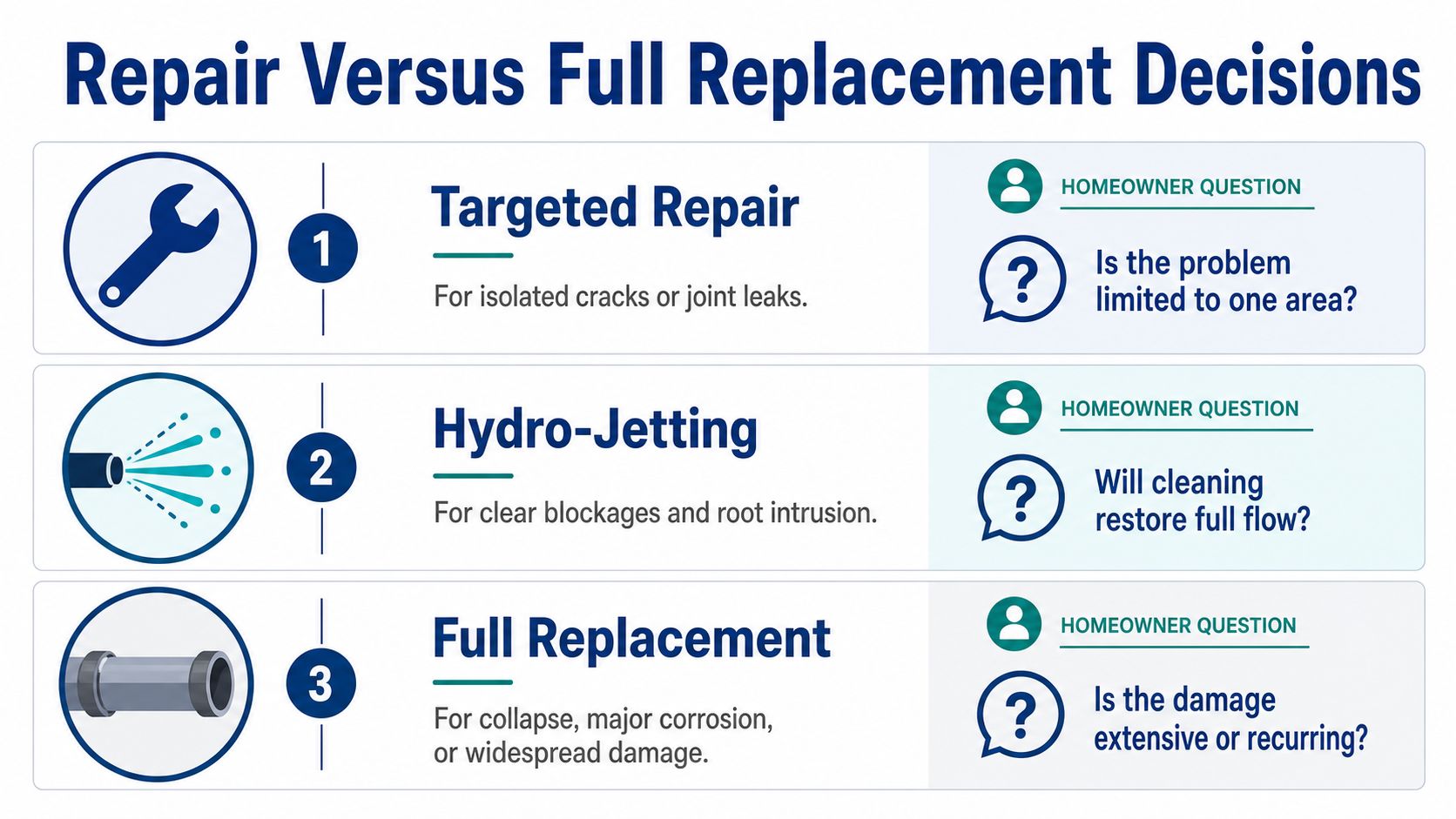
A targeted repair can make sense when the defect is isolated. The crew exposes or accesses the damaged section, replaces that portion, and leaves sound pipe in place. This approach can limit excavation when the surrounding line remains structurally reliable.
Hydro-jetting is different from repair. High-pressure water can remove grease, mineral deposits, sand, and some root growth, restoring flow through a pipe that still has adequate structural strength. It won't rebuild a collapsed wall, correct a severe belly, or permanently seal widespread deterioration.
A practical decision framework
- Targeted repair: Consider this for one confirmed crack, separated joint, or localized leak in otherwise serviceable pipe.
- Hydro-jetting: Use this when inspection supports a blockage or root intrusion without major structural failure.
- Full replacement: Choose this when the camera shows collapse, severe corrosion, or damage across much of the line.
Pipe age and material also matter. Older homes may contain cast iron, clay, or Orangeburg-style piping, each with its own failure patterns and repair limitations. Newer PVC systems may still fail from installation issues, ground movement, joint problems, or external damage, so age alone shouldn't decide the project.
Long-term test: If the same section keeps backing up after cleaning, ask whether maintenance is treating the symptom while the pipe continues to fail.
Homeowners should also consider use and risk. A property manager may value predictable service and fewer tenant disruptions. A restaurant or small business may need a plan that accounts for grease, heavy flow, and operating hours. Residential plumbing, commercial plumbing, kitchen plumbing, and bathroom plumbing don't all place the same demands on a sewer line.
Call Jay's Plumbing and sewer Now @ 586-634-3450 if you need help comparing a sewer repair, drain cleaning, or replacement recommendation.
Local Considerations and Professional Estimates
Southeast Michigan properties face conditions that make site evaluation important. Michigan winters can freeze ground and complicate excavation, while heavy rain can expose weak drainage systems through basement flooding, saturated soil, and sewer backups. Older neighborhoods in Macomb and Oakland County may also contain aging pipe materials and tight access routes between homes, garages, driveways, and mature landscaping.
A local plumber should explain the work in plain English, identify the defect with a camera when possible, and provide job-based upfront pricing rather than pretending every property fits one flat fee. Ask whether the estimate includes excavation, pipe, labor, permits where applicable, cleanup, and restoration.
Homeowners shouldn't attempt to enter trenches or excavate near buried utilities. Call a licensed professional when multiple drains back up, sewage odors persist, toilets gurgle as fixtures drain, or a yard develops unexplained wet areas. Those symptoms may require sewer repair, not another bottle of drain cleaner.
Jays Plumbing and Sewer serves residential and commercial customers from Fraser across Macomb and Oakland County, with sewer camera inspections, drain cleaning, hydro-jetting, sewer repair, replacement, emergency plumbing, sump pump repair, water heater repair, water heater replacement, pipe repair, and leak detection. The company also handles garbage disposal repair and other kitchen and bathroom plumbing needs for homes, property managers, and businesses.
Call Jay's Plumbing and sewer Now @ 586-634-3450 for a camera inspection and a clear estimate based on your actual line, access, and restoration needs.
Call Jay's Plumbing and sewer Now @ 586-634-3450 to discuss sewer line replacement, repair, or inspection for your Southeast Michigan property. Visit Jays Plumbing and Sewer to request service for residential or commercial plumbing and get practical guidance before excavation begins.
