
A cold Michigan morning can turn a routine spring cleanup into an unexpected plumbing call. You remove the garden hose and find that the outside faucet won't stop dripping, or you notice water staining inside the basement wall below the spigot. The visible faucet may look fine, but the damaged section is often hidden inside the wall.
Learning how to protect outside faucets from freezing starts with one practical idea: remove trapped water before insulation becomes part of the conversation. That approach applies to homes, rentals, small businesses, and commercial properties across Macomb County, Oakland County, and Wayne County, including Fraser, Sterling Heights, Clinton Township, Troy, Macomb, and Shelby Township.
Table of Contents
- The Spring Surprise Why Outdoor Faucets Fail in Winter
- The Correct Shutdown and Drainage Sequence
- Choosing Between Simple Covers and Frost-Free Upgrades
- Proper Cover Installation and Material Selection
- Final Winterization Checklist and Maintenance
- Troubleshooting and When to Call a Professional
The Spring Surprise Why Outdoor Faucets Fail in Winter
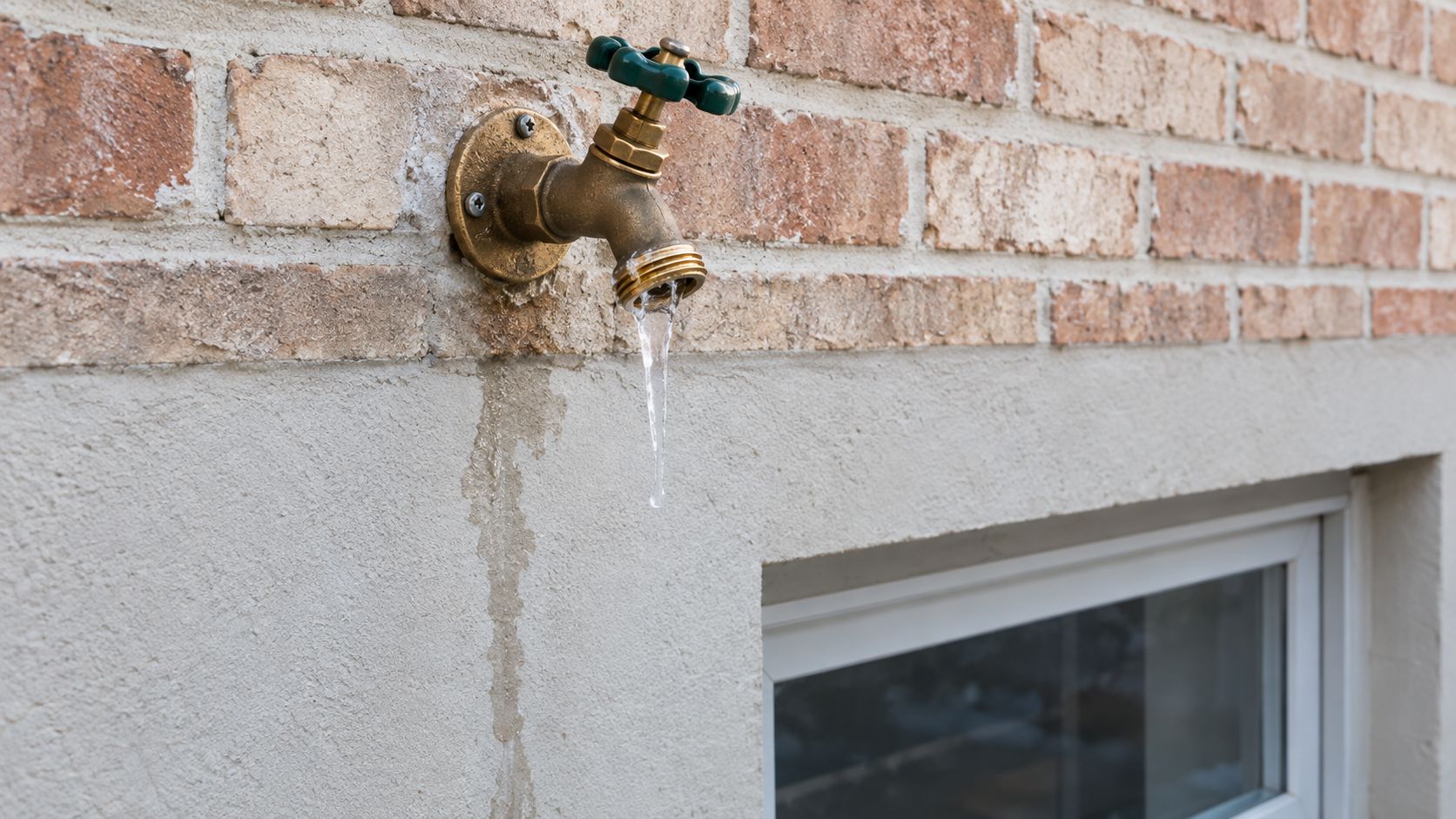
The spring surprise often begins without warning. A homeowner turns on an exterior faucet after the snow clears, hears water moving inside the wall, and then notices moisture near the basement ceiling or foundation. The failure may have started months earlier, when water remained inside a standard hose bib or the connected hose prevented the line from draining.
The hidden valve matters
A traditional hose bib often places its shutoff valve close to the cold exterior wall. When water remains on the exterior side of that valve, freezing temperatures can cause the water to expand. That pressure can split the faucet, the connected pipe, or the supply line inside the wall.
A frost-free sillcock uses a different arrangement. Its shutoff valve sits several inches inside the heated wall cavity, allowing water to drain back away from the exposed spout after the faucet closes. The protected valve remains in warmer framing, reducing the chance that residual water freezes and expands enough to split the pipe, as explained in this trade explanation of frost-free faucet design.
Practical rule: A cover protects the faucet from cold air. Drainage removes the water that can freeze.
That distinction is why a foam cap alone isn't a complete winter plan. If your exterior line has a standard hose bib, the pipe run inside the wall may still be vulnerable. Homeowners planning repairs or inspections can also review this guide to burst pipes during winter before the next deep freeze.
The Correct Shutdown and Drainage Sequence
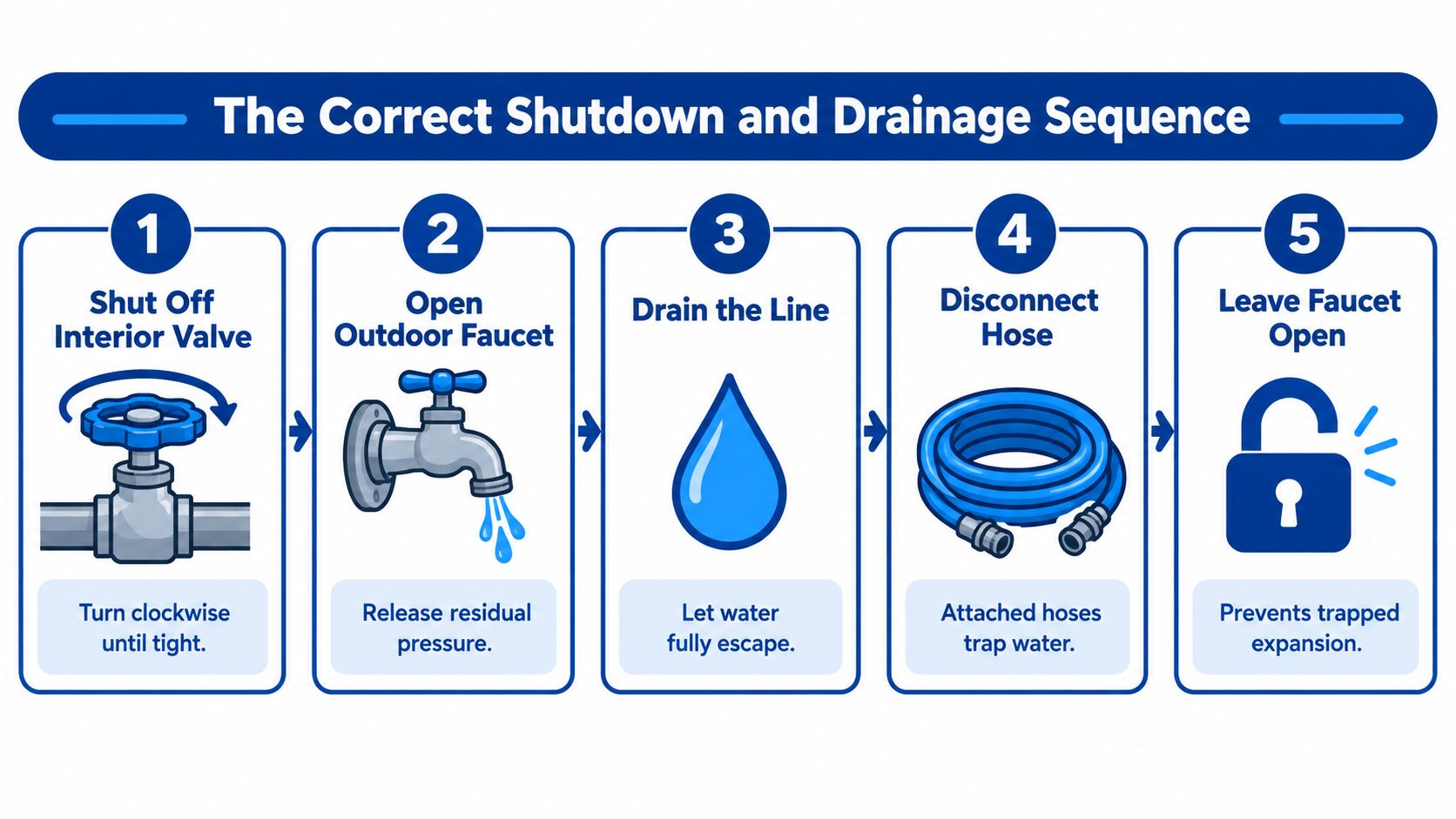
Before installing a cover, shut down and drain the water line. The sequence matters because each step removes pressure and standing water from a different part of the system.
Follow the line from inside to outside
-
Disconnect the hose and attachments. Remove garden hoses, splitters, timers, spray nozzles, and other fittings. An attached hose can hold water against the faucet and prevent proper drainage.
-
Close the indoor supply valve. If your home has a dedicated shutoff for the outside faucet, turn it off. Older homes in Troy and Clinton Township may have a valve in a basement, crawl space, utility room, or ceiling area. Don't force a corroded valve. If you can't identify it safely, arrange an inspection.
-
Open the exterior faucet fully. Opening the spigot releases pressure and gives water a path out of the line.
-
Drain the bleeder or drain cap. Some interior shutoff valves include a small bleeder port or drain cap. Open it carefully and let the line empty into a container.
-
Leave the exterior faucet open while it drains. Once the water has stopped flowing, follow the valve manufacturer's design or your plumber's instructions about whether the faucet should remain open or be closed.
This sequence prevents trapped water from expanding in a standard hose bib, the main failure mechanism identified in municipal frozen-pipe prevention guidance. A shutoff valve isn't useful if the line never drains, and drainage won't happen reliably if the hose stays attached.
If you aren't sure which valve feeds the faucet, or the valve is behind finished drywall, don't guess by turning random handles. A plumber can identify the branch, check whether the valve closes fully, and advise whether main water shutoff valve replacement makes sense.
Choosing Between Simple Covers and Frost-Free Upgrades
Once the line is properly drained, the right protection depends on the faucet design, exposure, and property plans. A fitted foam cover can be reasonable for a sound, occasionally used faucet with an accessible shutoff. It isn't a substitute for correcting a leaking valve, an inaccessible shutoff, or a vulnerable pipe layout.
When a cover is enough
A molded insulating cover is a practical choice when:
- The faucet is in good condition. There are no cracks, persistent drips, damaged threads, or loose connections.
- The supply line can be shut off and drained. Drainage remains the primary protection.
- The exposure is manageable. A sheltered spigot may need less protection than one on a wind-facing wall.
- Seasonal maintenance is realistic. Homeowners, landlords, and property managers must be able to remove hoses and install covers each fall.
When hardware deserves attention
A frost-free hose bib is worth discussing when the standard faucet repeatedly freezes, the interior shutoff is missing or inaccessible, or the spigot serves a frequently used area. The long-term benefit comes from placing the valve on the warmer side of the wall and allowing the exterior section to drain when installed with the correct slope.
That upgrade still requires correct installation. A connected hose can block drainage, and a frost-free faucet won't protect a poorly configured pipe run behind the wall. The decision should account for siding, masonry, interior access, pipe routing, and whether the property is a rental, a recently purchased home, or a long-term residence.
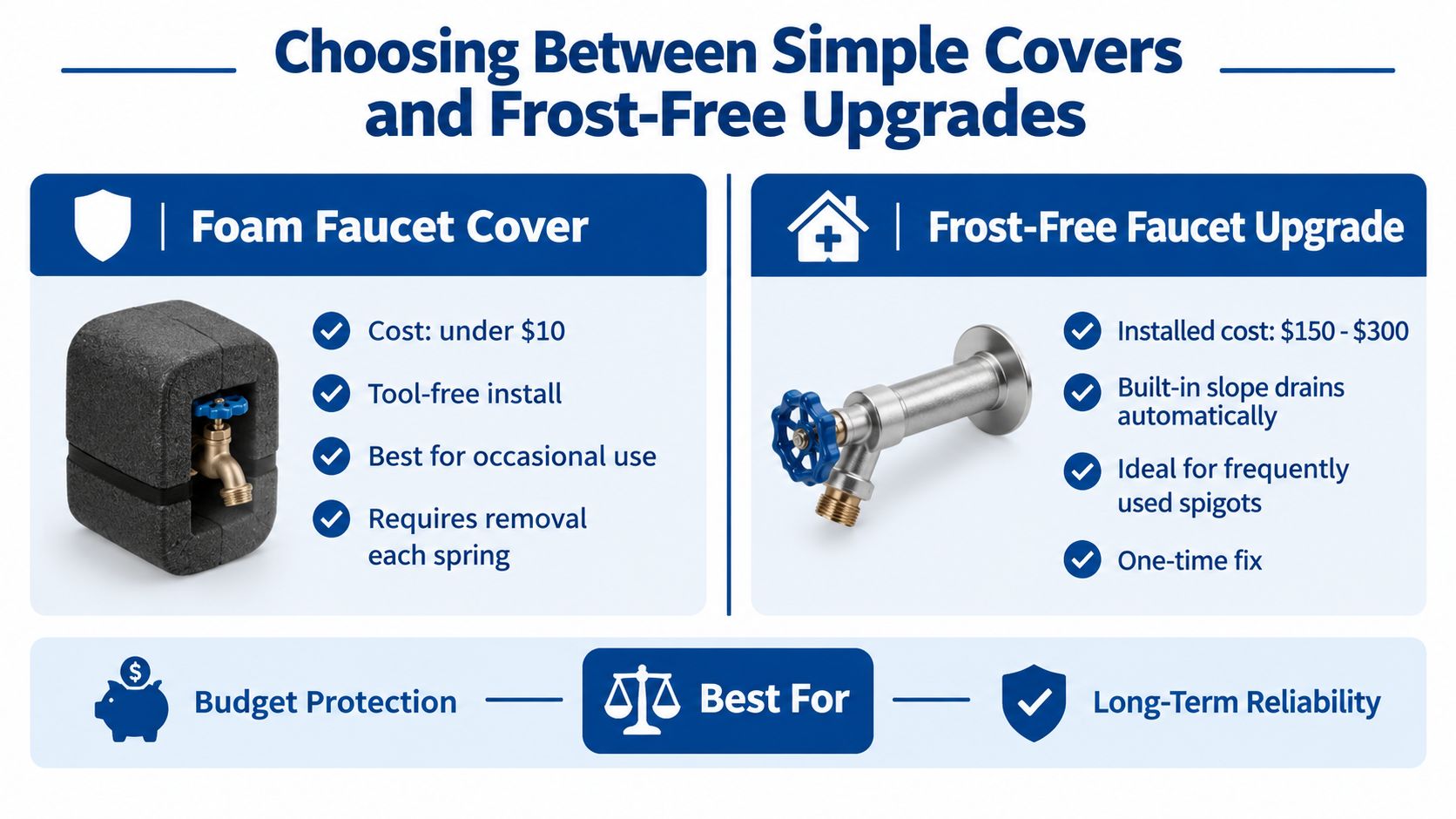
Retail guidance now presents both conventional covers and newer freeze-protection devices, including products that depend on minimum water pressure. This outdoor faucet cover and freeze-cap selection reflects an important choice homeowners often miss: temporary insulation and true freeze-resistant hardware solve related problems in different ways.
For a Fraser or Shelby Township property manager, the better answer may be a consistent hardware upgrade across vulnerable units. For a homeowner selling in Macomb or Sterling Heights, documented repair and proper winterization may be more useful than replacing a sound fixture without checking the hidden line.
Proper Cover Installation and Material Selection
A cover only works when it blocks cold air from reaching the faucet and the wall connection. Sliding a loose cap over the spigot leaves openings where wind can move behind the insulation, reducing its value on an exposed Michigan facade.
Install the cover against the wall
Choose a cover that fits the shape of the hose bib and makes firm contact with the siding, brick, or other wall surface. Check the lower edge and the area around the pipe entry point. There shouldn't be visible gaps between the cover and the wall.
Secure the cover according to its design. If it has a drawstring, tighten it close to the wall rather than around the end of the faucet. If it uses a snap or friction fit, check it after wind, heavy rain, or a freeze-thaw cycle.
A loose cover is decoration. A sealed cover is insulation.
Cloth wraps are a poor default because porous material doesn't create a dependable weather barrier. If cloth is used temporarily, it needs to be cinched tightly against the wall, but a fitted foam or insulated cover is the more reliable choice, consistent with this outside faucet winterization guidance.
Don't cover a faucet that is actively leaking and assume the problem is solved. A leak can indicate a failing washer, valve stem, connection, or hidden pipe. Fix the water source first, then complete the seasonal protection.
Final Winterization Checklist and Maintenance
Fall preparation works best as a routine rather than a last-minute reaction to the first snow. Walk the exterior of the property and match every visible faucet to its indoor supply, if one exists.
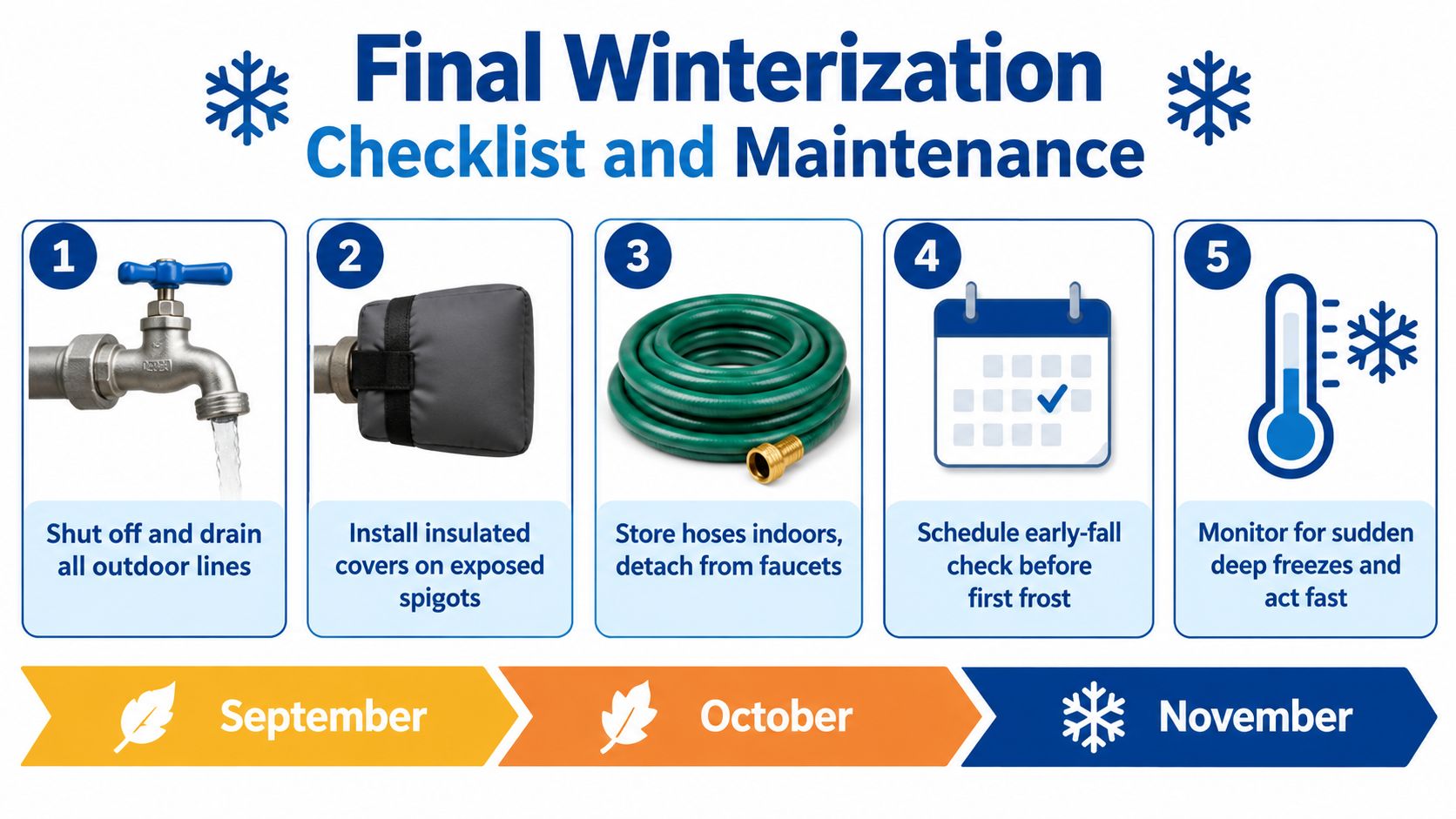
Use this checklist:
- Shut off and drain lines: Close the indoor valve, open the exterior faucet, and drain the bleeder where provided.
- Remove hoses: Store hoses indoors and detach every accessory from the faucet.
- Inspect fixtures: Look for dripping handles, cracked bodies, corrosion, and damaged threads.
- Fit covers tightly: Install insulated covers without gaps at the wall.
- Record difficult locations: Note faucets with no accessible shutoff, especially in older homes, rental units, and multi-unit buildings.
Those constraints are common in real properties. Public winterization preparedness guidance recognizes that some homes lack a usable interior shutoff, and landlords may need to coordinate access before cold weather arrives.
Troubleshooting and When to Call a Professional
A faucet that won't drain, continues dripping after the indoor valve is closed, or has a handle that won't turn deserves attention before freezing weather. Don't apply excessive force to a seized valve, and don't cut into a wall to search for a pipe without knowing where the line runs.
Start with the safe checks:
- Remove the hose and attachments.
- Confirm the correct indoor valve is closed.
- Open the outside faucet and observe whether water continues flowing.
- Look for dampness, staining, frost, or dripping near the wall and basement ceiling.
The recommended sequence remains disconnecting the hose, closing the indoor valve, opening the outside faucet, and allowing the line to drain completely, as described in this winter faucet prevention guide. Call a licensed plumber if the valve leaks, the line won't drain, the pipe is hidden, or you see water damage.
For urgent leaks, frozen plumbing, or sudden loss of water, 24/7 emergency plumbing service can help limit damage. The same evaluation may uncover related needs such as leak detection, pipe repair, sump pump repair, basement flood prevention, or commercial plumbing maintenance.
Call Jay's Plumbing and Sewer at 586-634-3450 for help winterizing outside faucets, checking hidden shutoffs, repairing leaks, or evaluating a frost-free upgrade in Macomb County, Oakland County, or Wayne County. You can also visit Jays Plumbing and Sewer to schedule residential or commercial plumbing service, including drain cleaning, sewer repair, water heater repair, water heater replacement, bathroom plumbing, kitchen plumbing, and garbage disposal repair.
