

A Michigan winter morning can turn quiet in a hurry. You open a faucet before work, hear a weak sputter, and then get nothing. Maybe there's a damp spot near the basement ceiling, or water is running somewhere you can't see. In Macomb and Oakland counties, a frozen pipe can start as a small problem in an exterior wall, crawl space, garage, or attic and become a major water emergency after the temperature rises.
The good news is that burst pipes winter problems are often easier to prevent when you understand what causes them. You'll learn what freezing water does inside a pipe, which warning signs matter, how to prepare a Fraser, Sterling Heights, or neighboring Southeast Michigan property, and when a professional inspection makes more sense than another temporary fix.
Table of Contents
- That Dreaded Silence A Michigan Winter Morning
- Why Winter Makes Pipes Burst The Science Explained Simply
- Warning Signs Your Pipes Are at Risk of Freezing
- Your Winterization Checklist Preventing Frozen Pipes
- Emergency Protocol What to Do When a Pipe Bursts
- When a Professional Plumber is Non-Negotiable
That Dreaded Silence A Michigan Winter Morning
You turn the kitchen faucet handle and wait. A few drops fall, the line coughs, and the flow stops. The house still has heat, but a bathroom supply line against an outside wall may be sitting in a much colder pocket of air than the living room.
That silence deserves attention. A frozen pipe may not leak while the ice remains in place. The trouble can appear when the pipe warms, the ice begins to melt, and pressurized water reaches a split joint or weakened section. By then, water may already be inside a wall, above a finished basement, or beneath flooring.
Michigan homes have several common trouble spots. Older houses may have plumbing routed through exterior walls or poorly insulated additions. Finished basements can hide supply lines behind drywall. Garages, crawl spaces, and utility rooms may lose heat quickly during a prolonged cold snap. A small business or commercial property faces another concern, unoccupied rooms can stay cold long enough for nobody to notice a problem early.
This isn't a reason to panic. It's a reason to use a clear decision process.
- Check the flow: A sudden loss of water from one fixture can point to a localized frozen line.
- Look for moisture: Inspect ceilings, walls, floors, and exposed plumbing for dampness or frost.
- Listen carefully: Dripping, hissing, and unusual movement behind walls can indicate trouble.
- Protect the property: Know where the main shut-off valve is before an emergency starts.
Practical rule: If water flow changes during severe cold, treat it as an early warning rather than waiting to see whether the problem resolves itself.
For homeowners, property managers, real estate agents, and small businesses in Fraser, Roseville, Warren, Clinton Township, Sterling Heights, and nearby communities, the right response is usually simple: identify the vulnerable area, reduce the chance of further freezing, and call for help when the line is inaccessible, leaking, or repeatedly freezing.
Why Winter Makes Pipes Burst The Science Explained Simply
Many people picture a pipe splitting because ice expands outward against the pipe wall. That explanation is incomplete. The more important failure mechanism is hydraulic pressure in trapped liquid water, between an ice blockage and a closed faucet or valve downstream, as explained by Utica National's frozen-pipe guidance.
Think of a soda can left in a freezer. The contents expand, but plumbing has an additional problem. A pipe is part of a connected system, and a faucet or valve can prevent the water from moving away from the freezing area. Ice forms like a plug. Liquid water trapped between that plug and the closed side has nowhere to go.
As freezing continues, pressure rises. The referenced risk guidance reports pressure reaching up to about 28,000 psi at -6°F, a level far beyond what residential plumbing can safely tolerate. The pipe often fails at a joint, bend, fitting, or already weakened area, not necessarily where the ice formed.

The simple chain of events
- Water fills the line: Liquid water normally moves through the pipe when a fixture opens.
- Cold reaches the plumbing: A draft, unheated space, or exterior wall lowers the pipe temperature.
- Ice forms: Part of the water freezes and creates an obstruction.
- Pressure builds: Liquid water remains trapped between the ice and a closed outlet.
- A weak point gives way: The pipe or fitting splits, often becoming obvious during thawing.
This is why prevention focuses on keeping vulnerable pipes warm and allowing safe movement through the system during extreme cold. Insulation slows heat loss, sealing drafts limits cold-air exposure, and professional repairs address weak sections that a homeowner may not be able to see.
Warning Signs Your Pipes Are at Risk of Freezing
A pipe rarely announces its problem with a dramatic crack. It usually gives smaller clues first. The most useful habit is to compare how a fixture normally behaves with what it's doing during a cold spell.
What to notice at faucets and fixtures
A faucet that sputters, trickles, or loses pressure may have a partially frozen supply line. Reduced flow from one fixture is more concerning than a home-wide pressure change, especially when other faucets still work normally. Toilets may refill slowly, and a shower can show an unusual change in flow.
Watch for these clues:
- Weak or uneven flow: Water may be struggling past ice forming inside a line.
- Sputtering: Air and restricted water movement can create an irregular stream.
- Frost on exposed pipe: Visible frost in a basement, crawl space, or utility area indicates cold exposure.
- New sounds: Gurgling, tapping, or hissing near walls and fixtures deserves inspection.
- Damp surfaces: Condensation, wet insulation, staining, or a soft ceiling can signal leakage.
- Cold drafts: Air entering around foundation openings, exterior walls, or pipe penetrations can chill plumbing.
Don't use a torch or open flame to thaw a pipe. Fire can damage the building and create a serious safety hazard, while aggressive heat can harm fittings and nearby materials. If you can't locate the frozen section, the pipe is behind a wall, or water starts leaking, stop experimenting and arrange professional service.
For a broader look at locating moisture problems, use this guide to find a water leak in your house.
Call Jay's Plumbing and sewer Now @ 586-634-3450 if a warning sign continues, appears in an inaccessible area, or affects a rental, office, storefront, or other property where delayed action could interrupt operations.
Your Winterization Checklist Preventing Frozen Pipes
Michigan winterization works best before the first serious freeze. Start with the parts of the plumbing system that lose heat first, then make sure someone can respond if the building is vacant.
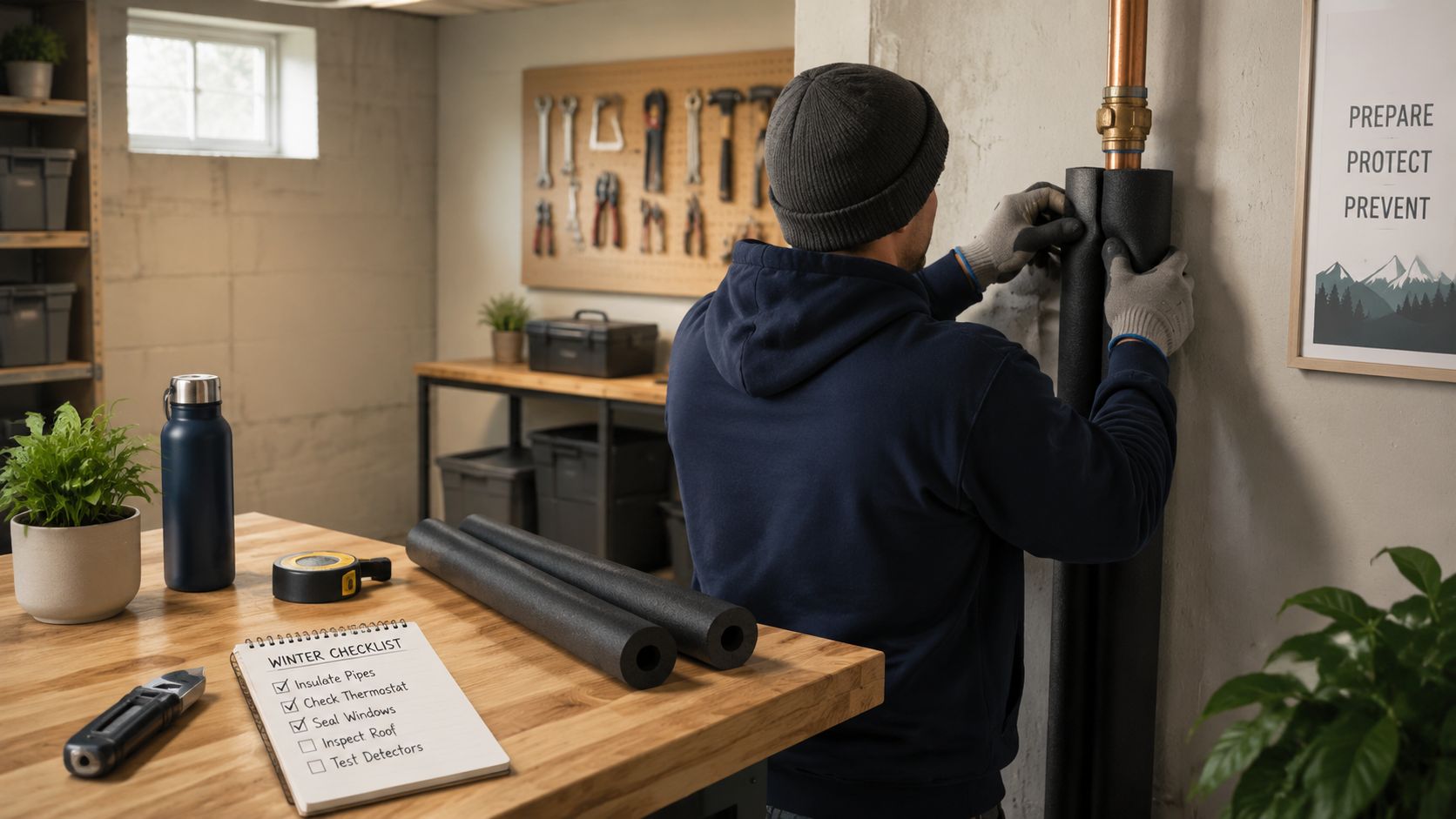
Insulate the vulnerable runs
Uninsulated pipes in unheated spaces often begin freezing around 20°F (-7°C) when the cold lasts for several hours, according to SCFB Insurance's explanation of how pipes freeze and burst. That threshold is practical, not absolute. Pipe material, airflow, insulation, location, and exposure time all matter.
Inspect plumbing in:
- Basements and crawl spaces
- Attics and attached garages
- Exterior walls and additions
- Utility rooms with weak heat circulation
- Areas near foundation gaps, vents, and doors
Use properly fitted pipe insulation and seal obvious drafts around plumbing penetrations. Don't compress insulation so tightly that it loses its insulating value, and don't cover valves or fittings in a way that prevents future inspection.
Use heat products carefully
Heat tape or a thermostatically controlled heat cable may help protect an exposed line, but the product must be listed for that use and installed according to its manufacturer's directions. Keep electrical connections dry and don't overlap heating cable unless the product specifically permits it.
A professional can determine whether insulation is enough, whether heat is reaching the space, and whether the pipe should be rerouted into a warmer area. Heat tape shouldn't conceal a plumbing layout that already has a leak or damaged fitting.
Here's a visual walkthrough of pipe insulation and winter preparation:
Protect outdoor plumbing
Disconnect garden hoses before freezing weather. Drain them and store them where they won't retain water. If the outdoor spigot has an interior shut-off, close it, then open the exterior faucet long enough to drain the remaining water.
Don't assume an outdoor faucet is protected because it's labeled frost-free. A damaged fitting, improperly sloped line, or hose left attached can still leave water trapped where freezing causes damage.
Prepare before leaving home
Keep the building heated during a winter trip, and ask someone reliable to check the property during a severe cold snap. A property manager should know which units, mechanical rooms, vacant suites, and seasonal spaces need attention.
Before leaving, make sure the main shut-off valve is accessible, alarms or temperature monitors are working, and vulnerable plumbing has been inspected. If the home has a sump pump, review this guide on checking whether your sump pump works, since melting snow and winter precipitation can add water pressure around a basement even when the pipe system is intact.
Emergency Protocol What to Do When a Pipe Bursts
A burst pipe requires fast, orderly action. Don't spend the first minutes searching for the exact crack. Stop the water, protect people from electrical hazards, and then limit the spread.
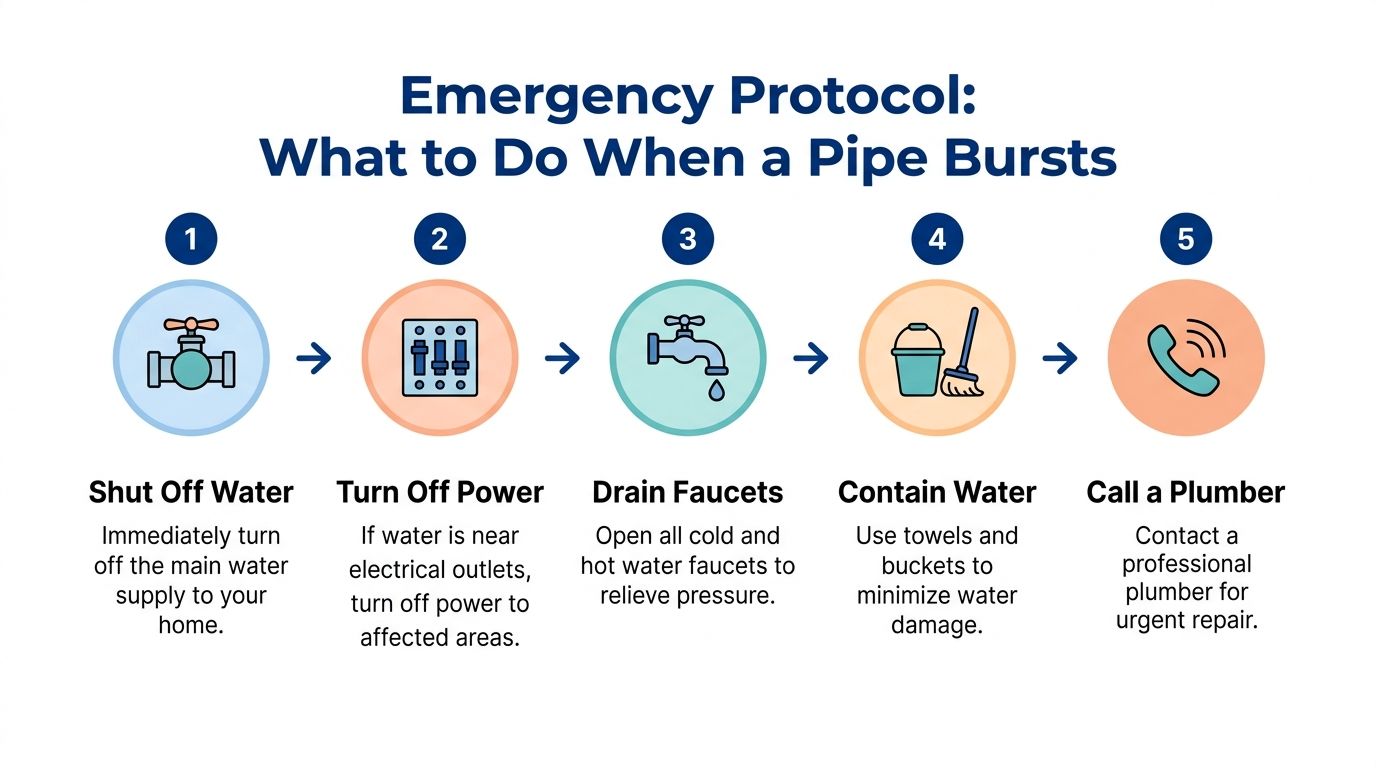
- Shut off the main water supply. Turn the valve clockwise if it operates normally. The valve may be near where the water service enters the home, in a basement, utility area, or mechanical room. If the handle won't move safely, don't force it.
- Stay away from electrical hazards. If water is near outlets, appliances, wiring, or the electrical panel, leave the wet area. Turn off power only if you can do so without standing in water or touching wet equipment.
- Open faucets after the supply is off. Opening hot and cold faucets can release remaining water and pressure from the plumbing system.
- Move belongings carefully. Lift valuables, electronics, documents, and furniture away from the wet area when it's safe. Use buckets and towels only where doing so won't expose you to electrical danger.
- Document the condition. Take photographs and note what happened, but don't delay emergency measures to create a perfect record.
- Call a professional plumber. A plumber can isolate the failed section, inspect connected lines, and make a repair that addresses more than the visible spray.
Burst-pipe losses can be severe. Insurance Times reported that the average burst-pipe claim topped £25,000, while the same verified reporting described average contents claims of £6,100 and average buildings claims of £19,200. Those figures explain why quick shut-off and prompt documentation matter.
For guidance related to the main valve itself, see main water shut-off valve replacement.
For 24/7 emergency service, Call Jay's Plumbing and sewer Now @ 586-634-3450.
When a Professional Plumber is Non-Negotiable
A temporary patch may stop visible water, but it doesn't always answer the important questions. Did the pipe split inside the wall? Did freezing damage a nearby fitting? Is another vulnerable run close to failing? A professional inspection looks beyond the first wet spot.
A plumber may use electronic leak detection to locate hidden moisture or a concealed leak without opening unnecessary areas. For sewer and drain concerns, a video camera inspection can show whether a line has a blockage, deterioration, root intrusion, or another condition unrelated to a frozen interior supply pipe. Those tools are useful when the symptom appears in one place but the cause is somewhere else.
Situations that call for expert evaluation
- Water remains off: If restoring water causes a new leak, the system needs isolation and repair.
- The line is hidden: Walls, ceilings, finished basements, and inaccessible crawl spaces make guesswork risky.
- Freezing keeps recurring: Repeated problems may point to poor insulation, drafts, routing, or an unheated section.
- The property is vacant: Landlords and property managers need a dependable plan for heating, inspection, and documentation.
- The building serves customers: Commercial plumbing failures can affect restrooms, kitchens, inventory, and daily operations.
Insurance coverage also has conditions. The District of Columbia Department of Insurance explains that resulting water damage may be covered, but a claim can be denied when a property was inadequately heated or left vacant without required safeguards. Keep photographs, receipts, service records, and the plumber's repair documentation for the claim file.
Jays Plumbing and Sewer provides residential and commercial plumbing service in Fraser and across Macomb and Oakland County, including emergency pipe repair, leak detection, sewer repair, drain cleaning, water heater repair and replacement, sump pump repair, bathroom plumbing, kitchen plumbing, and related maintenance. A professional visit is especially useful when the repair must be documented or when the visible leak doesn't reveal the full condition of the system.
Don't risk further damage. Call Jay's Plumbing and sewer Now @ 586-634-3450 for a free estimate.
Jays Plumbing and Sewer can inspect vulnerable plumbing, respond to burst or leaking pipes, and provide practical repair options for homes and businesses throughout Macomb and Oakland County. Visit Jays Plumbing and Sewer to schedule service or request help before the next Michigan freeze turns a small warning into a major plumbing emergency.
