
You're in the basement after a cold Michigan night, listening to water run behind the wall. A pipe has split, the sump pump is struggling, or wastewater is rising through a floor drain. In that moment, the key question isn't, “Who offers a 24/7 emergency plumbing service?” It's whether the problem can be safely isolated until morning or whether waiting will turn a repair into property damage, contamination, or restoration work.
For homeowners, property managers, small businesses, and commercial property owners in Fraser, Macomb County, Oakland County, and Wayne County, a calm first response makes a real difference. The steps below help you identify the urgency, limit damage, and give an emergency plumber the information needed to respond efficiently.
Table of Contents
- What Counts as a Plumbing Emergency Right Now
- What to Do in the First 10 Minutes Before Help Arrives
- What a True 24/7 Emergency Plumbing Service Includes
- Should You Call Now or Wait Until Morning
- How to Choose an Emergency Plumber in Macomb and Oakland County
- Prevent the Next Emergency and Get Help When You Need It
What Counts as a Plumbing Emergency Right Now
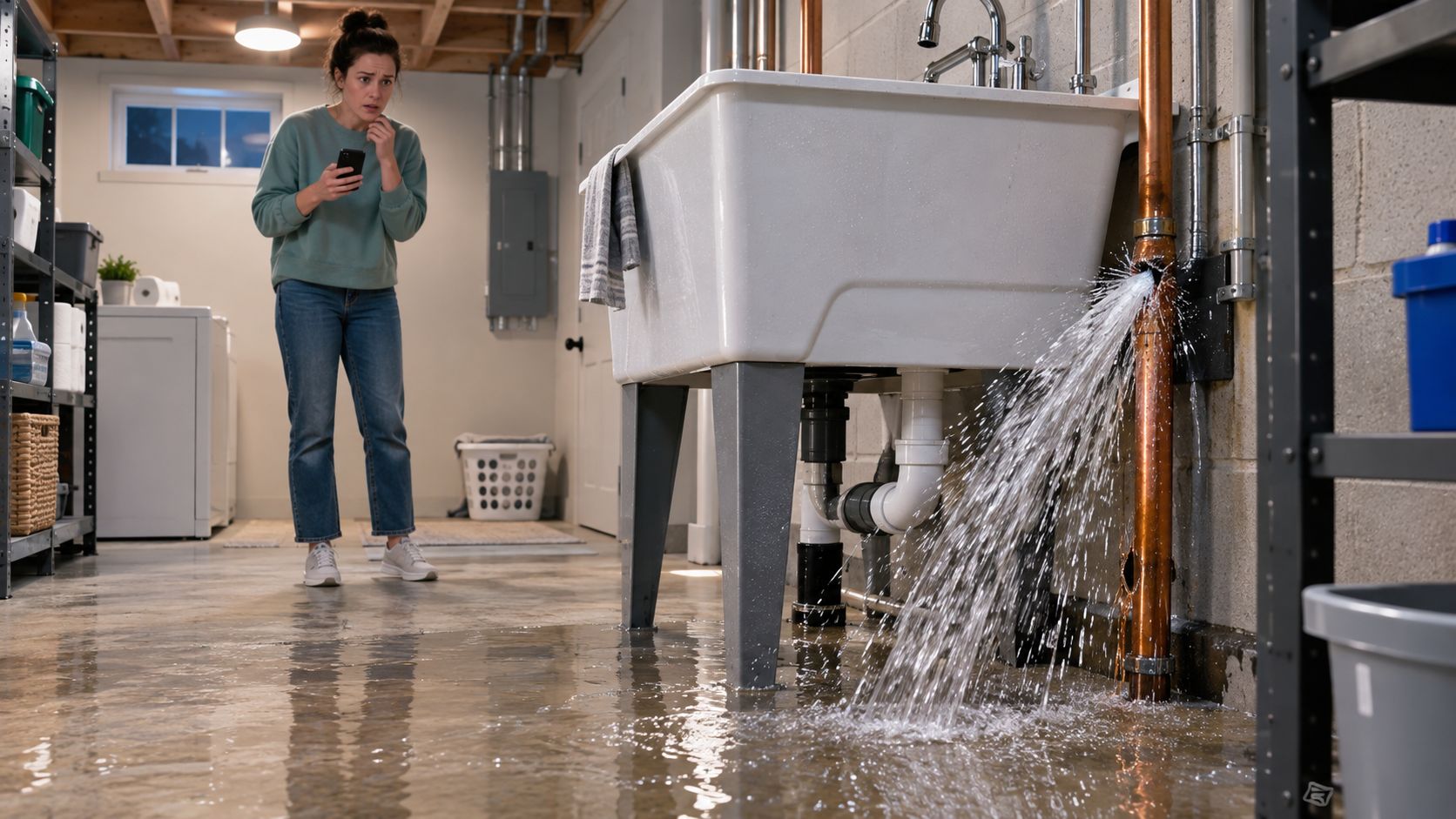
A burst pipe in a Fraser home can fill a finished basement while the family is asleep. A sewer backup can push contaminated water into a bathtub or floor drain. A failed water heater can leak across a utility room, while an overflowing toilet may threaten flooring and nearby walls. These problems look different, but they share one feature, active damage that may continue until someone stops the water or wastewater.
Common after-hours emergencies
Call for immediate help when you can't stop the flow, isolate the fixture, or keep the problem from reaching electrical equipment and finished materials. Typical emergency calls include:
- Burst or frozen pipes: Michigan winters can split supply piping, especially in unheated areas, exterior walls, crawlspaces, and garages.
- Sewer backups: Wastewater entering a tub, sink, basement, or floor drain needs prompt attention because it can create a sanitation hazard.
- Major leaks: A concealed leak may spread through ceilings, cabinets, insulation, and flooring before the source becomes obvious.
- Water-heater failures: Visible leaking, no hot water, loud operation, or diminished water quality can indicate a unit requiring same-day diagnostics, repair, or replacement, as described by water-heater service guidance.
- Overflowing toilets: If the fixture keeps rising and the shutoff doesn't work, waiting can damage flooring and nearby rooms.
Household leaks are a large, recurring problem. The U.S. Environmental Protection Agency's leak guidance says the average home's leaks waste more than 10,000 gallons of water per year, while 10% of homes have leaks wasting 90 gallons or more per day. Nationwide, household leaks waste more than 1 trillion gallons annually, equal to the yearly household water use of more than 11 million homes.
Practical rule: If water is still moving, sewage is present, or the source is hidden, treat the call as urgent rather than assuming a small problem can wait.
A slow drain that has stopped completely may sometimes be isolated. A sewer line that backs up into a tub is different. If you're unsure whether the situation is a sewer backup into a tub, keep people and pets away from the water and call for professional guidance.
What to Do in the First 10 Minutes Before Help Arrives
Your first job is to stop the source if you can do so safely. Don't crawl through standing water to reach a valve, and don't touch electrical equipment that may be wet. If sewage is involved, avoid contact and keep children and pets out of the area.
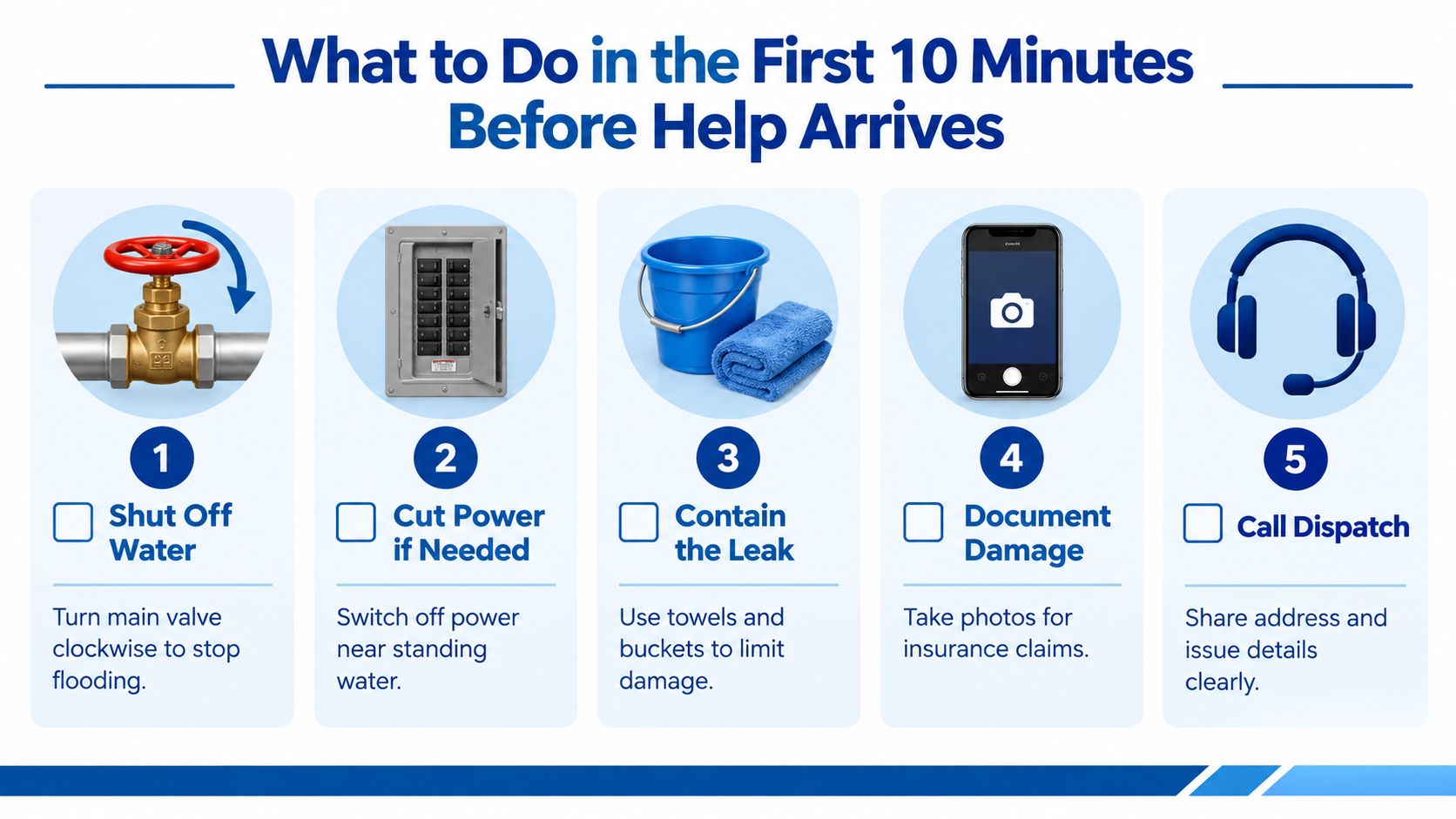
Follow this order
Shut off the water. Turn the fixture valve clockwise if the leak is at a toilet, sink, washing machine, or water heater. If that doesn't stop it, locate the home's main shutoff and close it. A valve that won't move should not be forced with excessive force, because it can break or worsen the leak.
Protect against electrical hazards. If water is near outlets, appliances, extension cords, or a breaker panel, move away and contact an electrician or emergency services when needed. Don't step into standing water to reach a switch. A leaking water heater may also require power isolation, but only if you can reach the breaker without entering a wet area.
Contain what you can. Place buckets under an accessible drip and use towels to keep water away from doorways and unaffected rooms. Don't open walls, remove ceilings, or pull up flooring while waiting. Those actions can expose wiring, insulation, or additional water without solving the source.
Protect valuable areas. Move loose items from the wet zone if the path is dry and safe. Finished basements need particular attention because water can reach drywall, trim, stored belongings, and mechanical equipment quickly.
Document the condition. Take clear photos and short videos from a safe location. Record the source, affected rooms, visible damage, valve position, and any error messages on equipment. This information can help your plumber understand the call and support an insurance conversation.
Call dispatch with useful details. Give the complete address, your location in the building, the type of water involved, whether the flow is active, and whether the main shutoff worked. Tell the dispatcher about children, pets, tenants, electrical concerns, or commercial operations that could affect access.
Use this main water shutoff valve resource to understand why a faulty or inaccessible main valve can complicate an emergency.
If you're waiting for a technician and need a visual reminder of the sequence, this short video can reinforce the basic response steps.
Don't attempt gas-line work, sewage cleanup, electrical repairs, or pipe cutting without appropriate training. A temporary shutoff is useful when it stops active damage, but it doesn't replace diagnosis.
What a True 24/7 Emergency Plumbing Service Includes
A real emergency response should do more than arrive with a drain snake and guess. The plumber needs to identify the source, make the situation safe, restore essential function where possible, and explain whether the first visit provides a permanent repair or temporary stabilization.
Diagnosis should come before destructive work
For a recurring drain blockage, a camera can show whether the cause is grease, roots, a crack, an offset joint, a belly, or a collapsed section. Sewer-camera guidance explains that live footage helps a plumber treat the actual pipe condition instead of repeatedly clearing only the visible clog.
Camera inspection has limits. A study of automated and human-reviewed CCTV inspection reported defect-detection results ranging from 77% precision and 73% recall on real inspection videos to 87% average precision for root intrusion and 85% reliability for open-joint detection in a modern YOLOv8 pipeline, according to the CCTV inspection research. Deposit-heavy pipes can be harder to classify, with one reported result of 58% accuracy for deposits, so inspection after cleaning matters when structural defects are suspected.
The equipment depends on the problem
Emergency plumbing may include:
- Drain cleaning: Clearing a blocked sink, toilet, branch drain, or main line with tooling suited to the obstruction.
- High-pressure water jetting: Using water to scrub grease, sludge, scale, and sediment from pipe walls. Some plumbing guides describe typical working pressure in the 3,000 to 4,000 PSI range, as outlined in this hydro jetting and sewer-camera guide.
- Sewer repair: Repairing or replacing damaged piping after camera findings, with excavation considered only when necessary.
- Leak detection: Finding concealed leaks before targeted pipe repair or rerouting, rather than opening walls or floors without a clear reason. Professional leak-detection information describes this as a separate diagnostic step from basic repair.
- Water heater repair and replacement: Addressing leaks, no hot water, noisy operation, or water-quality concerns.
- Sump pump and sewage pump service: Restoring pumping capacity when basement water or wastewater protection depends on the equipment.
- Fixture and pipe work: Handling toilet, faucet, garbage disposal, bathroom plumbing, kitchen plumbing, pipe repair, and gas-line concerns through appropriate professional service.
High-pressure jetting can remove 93% to 96% of internal sediment area, with a cleaning rate of roughly 100 to 120 meters per hour and water consumption below 6 cubic meters per hour, according to the water-jetting research. The result depends on nozzle geometry, pressure, pipe material, blockage depth, and jet angle. More pressure isn't automatically better.
For a Fraser homeowner, property manager, or restaurant operator, 24/7 coverage means the response model works at night, on weekends, and during Michigan winter conditions. The plumber may complete the repair immediately, or stop the damage and schedule a larger sewer repair, water-heater replacement, or excavation project for a controlled follow-up visit.
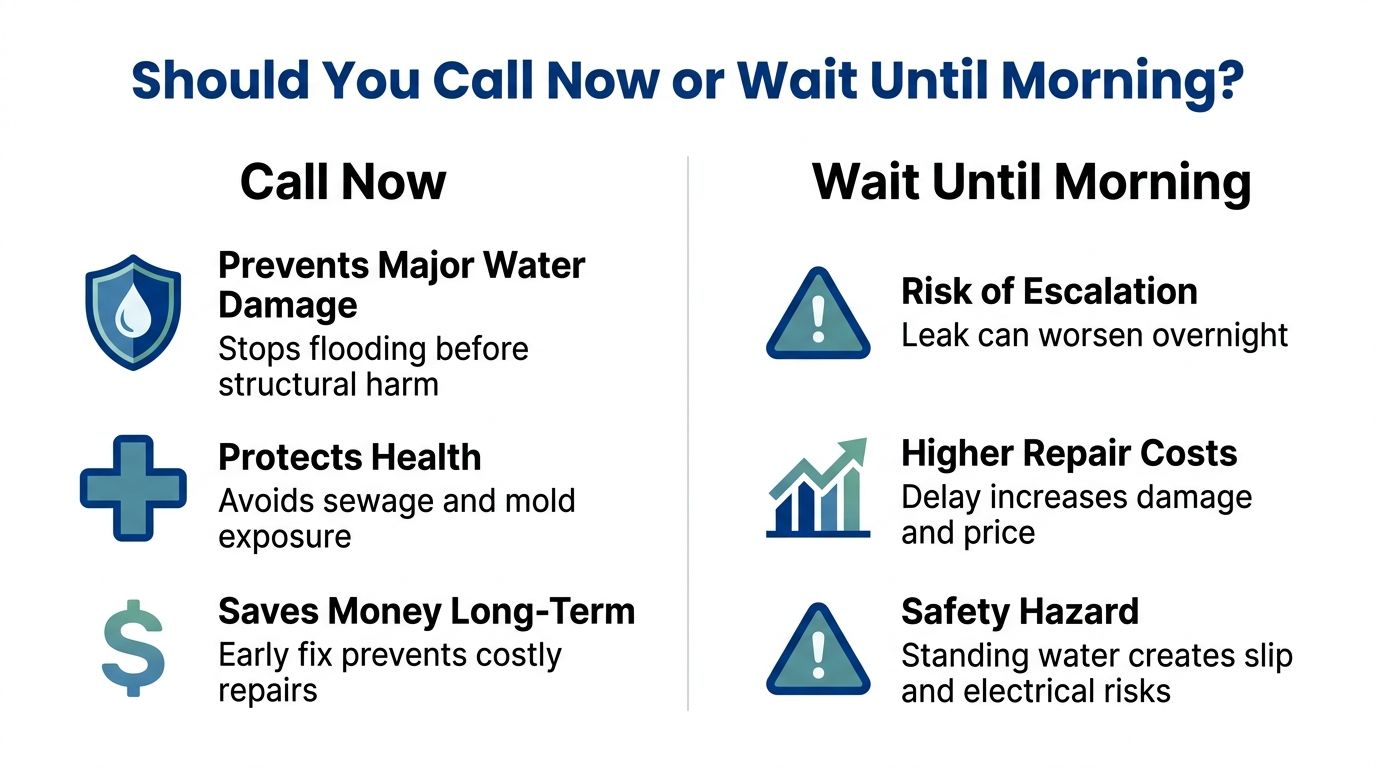
Should You Call Now or Wait Until Morning
Not every plumbing inconvenience requires an after-hours dispatch. A faucet that drips into a container after its fixture shutoff works may be manageable until regular hours. A leaking pipe behind a wall, wastewater backup, or water spreading toward electrical equipment deserves a different decision.
The financial difference can be substantial. Independent pricing information places emergency plumbing estimates from roughly $95 to over $1,500, with hourly rates commonly reported between $90 and $147 and averaging about $125 per hour, according to this emergency plumbing price guide. Another source reports a national emergency plumbing average of $215 to $655, with an average around $377, as summarized in this emergency plumbing cost discussion.
That range is why triage matters, but so does delay. Industry data summarized in water-damage claim information reports that about 1 in 60 insured homes files a water-damage or freezing claim each year, and the average water-damage or freezing claim was about $13,954 over the 2018–2022 period. Plumbing and appliance failures account for roughly 30% to 40% of non-weather water-damage claims nationally, according to the same source.
Call Now vs Wait Until Morning Decision Guide
| Situation | Can You Isolate It | Recommended Action |
|---|---|---|
| Active burst pipe or uncontrolled supply leak | Usually only if the main valve works | Call now and shut off the water if safe |
| Sewer backup entering a living area | A fixture valve won't isolate the main sewer | Call now and avoid contact with wastewater |
| Water near outlets, appliances, or electrical equipment | Don't enter unsafe standing water | Move away and address the hazard before cleanup |
| Water-heater leak contained in a dry utility area | Sometimes, with the unit valve and safe power isolation | Call now if leaking continues, otherwise request prompt service |
| Dripping faucet with a working fixture shutoff | Often yes | Isolate it and schedule regular service |
| Slow drain with no backup or overflow | Usually not an immediate hazard | Arrange drain cleaning during regular hours |
| Frozen pipe with no visible break | Possibly, but damage can appear after thawing | Call for guidance and inspection, especially if access is limited |
Heavy rain can overwhelm a sump system and cause basement flooding, while frozen pipes can fail as temperatures change. If you can isolate the problem completely and there's no sewage, electrical danger, active spread, or risk to a neighboring unit, waiting may be reasonable. If any of those conditions remain, the after-hours visit is usually about preventing a larger loss, not buying convenience.
How to Choose an Emergency Plumber in Macomb and Oakland County
Stress makes vague promises sound reassuring. “We're available” doesn't tell you when someone will arrive, what the first visit includes, or whether the quoted amount covers stabilization only. Ask direct questions before authorizing work, particularly when comparing an emergency plumber near me in Fraser, Sterling Heights, Warren, Royal Oak, or another Southeast Michigan community.
Compare the response, not just the advertised price
Ask whether the plumber provides a realistic arrival window, whether a technician is dispatched locally, and what information the crew needs before arriving. Confirm whether the company handles residential plumbing, commercial plumbing, sewer repair, water heater repair, leak detection, sump pump repair, and drain cleaning, or whether it will refer part of the problem elsewhere.
Pricing deserves the same clarity. Ask these questions:
- Emergency rate: Is there an after-hours surcharge, and when does it apply?
- Estimate format: Is the price job-based or hourly?
- Scope of the first visit: Will the plumber stabilize the leak, complete a permanent repair, or diagnose the cause for follow-up?
- Parts and equipment: Are common replacement parts, sewer cameras, jetting equipment, and pumps available for the type of call?
- Documentation: Will you receive written details describing the work and recommended next steps?
A trustworthy crew also protects the property. Look for shoe covers, drop cloths, clear communication, and cleanup after service. Property managers should ask how the company documents tenant-area damage and communicates follow-up work. Real estate agents and home buyers may need a sewer camera inspection or second opinion before accepting excavation or replacement recommendations.
Local experience matters because Michigan homes face frozen pipes, heavy rain, basement flooding, tree-root intrusion, aging sewer lines, and varied building layouts. Jays Plumbing and Sewer lists job-based upfront pricing, follow-up calls, free estimates, and service for residential and commercial systems. The company also notes senior citizen and military discounts. Treat those details as questions to confirm when you schedule, not assumptions about every job.
Prevent the Next Emergency and Get Help When You Need It
Emergency service solves the immediate problem, but prevention begins with understanding why it happened. Frozen pipes need attention before the next Michigan cold snap. A sump pump should be checked before heavy rain. Water heaters benefit from timely maintenance, and recurring drain clogs deserve diagnosis rather than repeated temporary clearing.
For sewer problems, a camera inspection after cleaning can reveal roots, damaged joints, or a collapsed section before excavation becomes the only option. For hidden moisture, professional leak detection can locate the source before a wall, ceiling, cabinet, or basement floor absorbs more water. These are long-term decisions, not just overnight fixes.
Homeowners and property managers in Macomb County, Oakland County, and Wayne County should call a licensed plumber when water can't be isolated, sewage is backing up, a pipe may be frozen or split, a water heater is leaking, or a sump and sewage pump has failed. The same applies to commercial plumbing problems that can shut down a kitchen, restroom, office, or tenant space.
Use this Michigan winter burst-pipe guidance to review seasonal risks, then arrange maintenance before a small warning becomes an after-hours call. Professional diagnosis costs more than guessing with a temporary fix, but it gives you a clearer repair path and helps avoid unnecessary replacement work.
Call Jay's Plumbing and Sewer Now at 586-634-3450 for 24/7 emergency plumbing service, drain cleaning, sewer repair, water heater repair or replacement, leak detection, and other residential or commercial plumbing needs across Macomb, Oakland, and Wayne County. For estimates, emergency service, or practical answers about whether your problem can wait, visit Jays Plumbing and Sewer.
