
PVC is chemically resistant to Drano, but the intense heat generated during the clog-clearing reaction can soften and warp glued joints if the drain is completely blocked. Drano's own guidance allows use with plastic pipes, including PVC, when you follow the label, but a trapped chemical reaction changes the risk.
A slow bathroom sink in a Macomb County home often starts innocently. Water takes longer to disappear, someone pours in a drain opener, and the drain may seem to improve. The trouble begins when the line is fully stopped and the product sits in one place instead of moving through the pipe.
That distinction answers the question, “Is Drano safe for PVC pipe?” The material itself generally resists alkaline chemicals. The concern is the combination of concentrated cleaner, standing water, heat, and time, especially near glued joints and fittings.
Table of Contents
- The Short Answer on Chemical Drain Cleaners
- How Exothermic Reactions Affect Plastic Pipes
- Long Term Risks of Repeated Drain Cleaner Use
- Safe DIY Alternatives for Minor Drain Slowdowns
- When to Call a Professional for Drain Cleaning
- Protecting Your Home with Expert Plumbing Care
The Short Answer on Chemical Drain Cleaners
Drano's official product FAQ states that all Drano products can be used safely with plastic pipes, including PVC, when the label directions are followed. That's the clearest product-level answer, but it isn't a blanket approval for every condition in a residential or commercial drain.
Rigid PVC has strong resistance to alkaline substances such as sodium hydroxide, a common ingredient in lye-based drain cleaners. A technical PVC resistance guide reports no failures or leakage in its testing of rigid PVC sink traps exposed to drain cleaners. Chemical compatibility, however, depends on the exact product, concentration, temperature, and exposure time.
The condition that changes the answer
A flowing drain gives the reaction somewhere to go. A fully blocked drain does the opposite. Cleaner, water, and organic material can remain concentrated in a trap or branch line, creating a hot pocket that places more stress on plastic and solvent-welded connections than ordinary household use.
Independent plumbing explanations describe chemical drain cleaners generating temperatures above 100°C in the reaction zone, while PVC is commonly described as softening around 140°F and deforming above 160°F. Those figures are discussed in this drain troubleshooting explanation. The exact temperature inside a particular pipe depends on the product and conditions, but the practical lesson is straightforward: heat matters more than the label on the pipe alone.
Practical rule: If water is standing in the fixture and the drain is completely stopped, don't keep adding chemical cleaner. A plunger, hand snake, or professional diagnosis is a safer next move.
Follow the product label exactly if you choose to use a chemical opener on a minor slowdown. Never mix drain products with bleach, ammonia, or another cleaner. If you later need plumbing service, tell the technician what product went into the drain and when, because residue can remain a handling hazard.
How Exothermic Reactions Affect Plastic Pipes
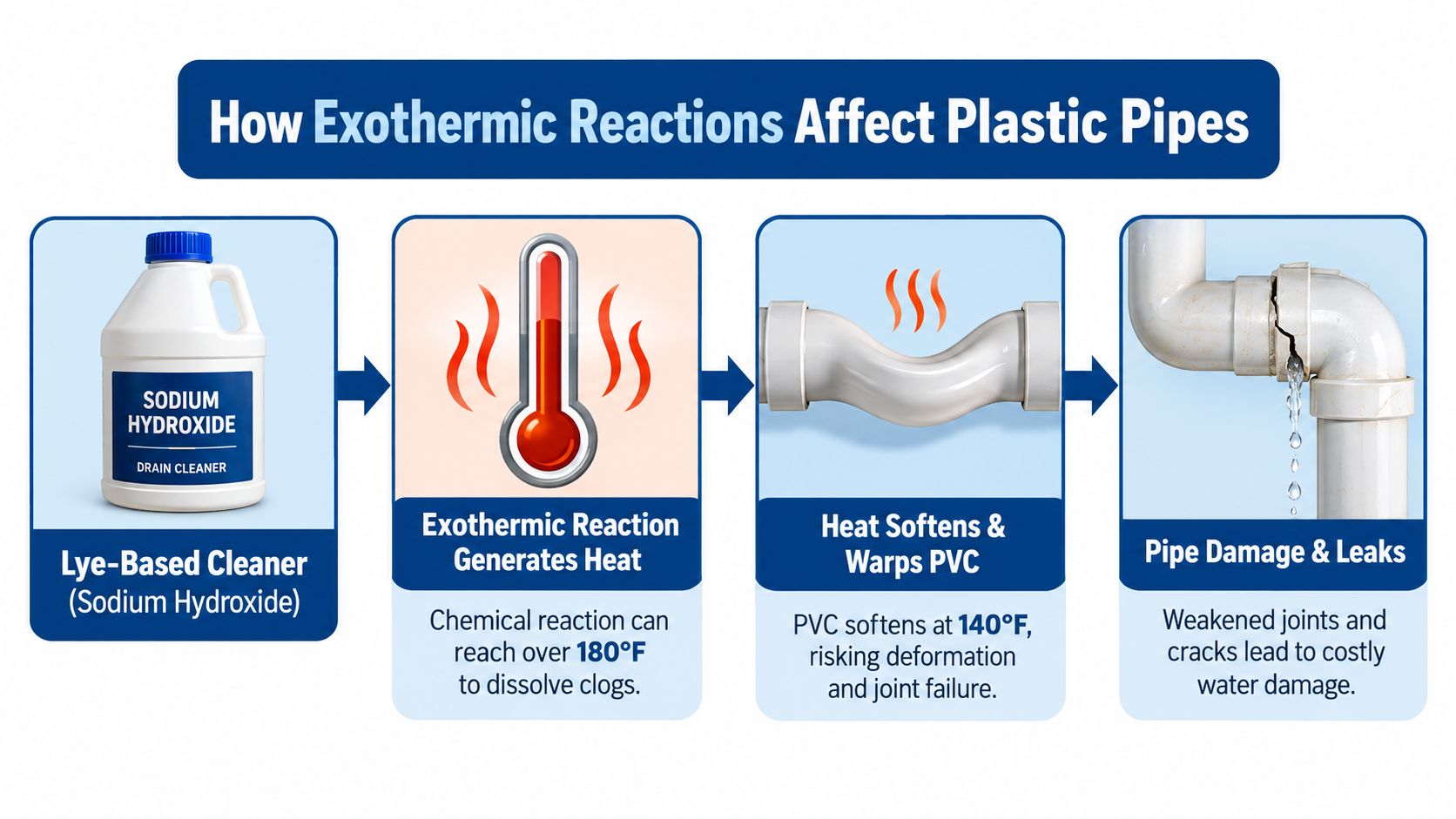
Many Drano-like formulas use sodium hydroxide, also called lye. Independent product explanations identify sodium hydroxide as a primary active ingredient in many formulas, as described by Hale Home Services. The chemical reacts with water and helps break down organic material such as hair, grease, and soap residue.
That reaction is exothermic, meaning it releases heat. In an open, partially flowing drain, heat can disperse as the liquid moves. In a stagnant trap or blocked branch line, the solution stays concentrated next to the pipe wall and fittings.
Why glued joints deserve attention
The weakest point may not be the middle of a straight PVC pipe. Solvent-welded joints, couplings, bends, and slip connections can be more vulnerable when heat reaches them while the assembly is under mechanical stress.
Rigid PVC used in drainage service is commonly engineered for long-term service around 60°C, or 140°F, and can soften and creep above that range, particularly at stressed joints. Engineer Fix's technical explanation discusses how a stagnant, concentrated solution can push local temperatures into that softening range even when the rest of the pipe feels cooler.
This is why ordinary hot tap water isn't the same situation as trapped drain cleaner. Hot water flows through the system and spreads its heat. A chemical solution held against one fitting can maintain a more intense local exposure.
What homeowners should understand
The risk profile depends on several conditions:
- Blockage severity: A total obstruction prevents the cleaner from moving away from the reaction zone.
- Product volume: More chemical in a confined space can increase the concentration and heat burden.
- Dwell time: The longer the solution remains trapped, the more opportunity it has to stress joints.
- Pipe condition: Existing movement, poor bonding, damaged fittings, or aging connections reduce the margin for error.
That doesn't mean every use will damage PVC. It means a label-directed application on a minor slowdown is materially different from repeated treatments in a standing clog.
Long Term Risks of Repeated Drain Cleaner Use
A single product application may appear to solve a slow drain without an obvious problem. Repeated use is different because it treats the symptom while leaving the physical obstruction or underlying line condition in place.
A bathroom sink that keeps slowing down may have hair and soap buildup close to the stopper or trap. A kitchen drain may have grease or food residue farther along the branch line. Pouring another bottle into the opening doesn't retrieve that material, inspect the pipe, or explain why the restriction returns.
Heat exposure can concentrate at connections
Repeated hot reactions place recurring stress on solvent-welded joints and fittings. Over time, a connection that has softened, shifted, or lost its proper fit may begin leaking behind a cabinet, inside a wall, or below a floor.
That risk deserves attention in Southeast Michigan homes because plumbing systems already experience seasonal changes. Michigan winters bring frozen-pipe concerns, while heavy rain can expose weaknesses in basement drains, sump systems, and sewer connections. Chemical cleaner won't correct a damaged lateral, a root intrusion, or a line affected by shifting soil.
A drain that needs chemical treatment again and again isn't asking for a stronger bottle. It's asking for a diagnosis.
Temporary flow is not the same as a clear line
Chemical cleaners can create the impression of progress when a narrow channel opens through a clog. Water moves, but residue remains. The drain may slow again because the material causing the restriction was never physically removed.
For property managers, real estate agents, and home buyers, that distinction matters during an inspection or turnover. A recently treated drain can look functional while hiding a recurring restriction. If several fixtures share the same branch or sewer line, a bottle under one sink won't reveal the condition farther downstream.
Chemical handling also matters. Splashback can injure skin or eyes, and leftover product can expose anyone who removes a trap or runs a cable later. Keep the original container, don't mix products, and tell a plumber about any chemical use before work begins.
Safe DIY Alternatives for Minor Drain Slowdowns
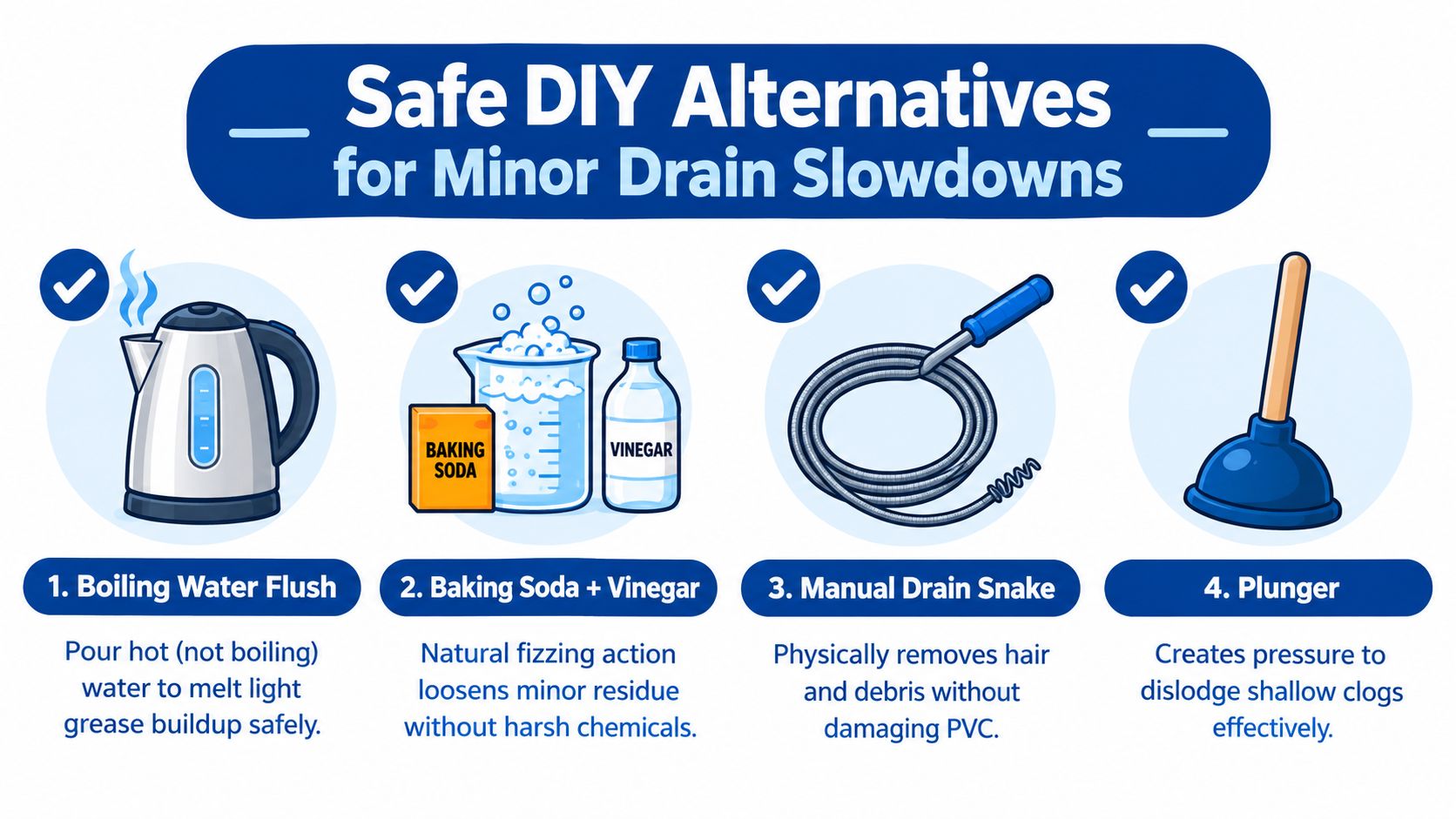
Minor slowdowns don't always require an emergency service call. Start with methods that physically move or loosen the obstruction without creating a concentrated caustic reaction inside the PVC system.
Start with the least aggressive option
-
Use a plunger. Cover the overflow opening on a sink, add enough water to cover the cup, and create a firm seal. Controlled plunging can move a shallow obstruction without exposing the pipe to drain opener.
-
Try a plastic drain snake. A small barbed plastic tool can pull hair and soap residue from a bathroom sink or tub near the opening. Remove the material instead of pushing it farther into the branch line.
-
Use a hand auger carefully. A compact manual snake can address a simple localized clog. Stop if the cable binds, the fixture has fragile fittings, or more than one drain is affected.
-
Consider an enzyme product for maintenance. Enzymatic cleaners work gradually on organic residue rather than relying on a caustic heat-producing reaction. They're better suited to routine care than to a drain that has stopped completely.
Avoid forcing tools through a fitting or repeatedly flushing a drain that isn't accepting water. Guidance on cleaning floor drains is especially useful for homeowners dealing with basement floor drains, where standing water may indicate a deeper obstruction rather than a simple surface buildup.
For a light kitchen slowdown, remove visible debris from the strainer and clean the stopper or baffle. For a bathroom sink, inspect the stopper mechanism because hair often gathers directly beneath it. These steps won't solve a sewer-line problem, but they can resolve a small fixture-level restriction.
A short video can also help homeowners understand basic drain maintenance:
Don't pour boiling water into a drain as a default fix, particularly where PVC piping or older connections are involved. Safer temperature choices and mechanical removal are more sensible when the goal is long-term pipe health.
When to Call a Professional for Drain Cleaning
The boundary between a minor fixture clog and a larger plumbing problem is usually visible in the symptoms. One slow bathroom sink may be local. A toilet, tub, floor drain, and kitchen sink backing up together points farther downstream.
Call for professional drain cleaning when you notice:
- Multiple affected fixtures: Several drains slow down or back up around the same time.
- Gurgling sounds: Air movement through nearby fixtures can accompany a restricted branch or main sewer line.
- Sewage odors: Persistent foul odors deserve investigation rather than another chemical treatment.
- Floor drain backup: Water or sewage coming up through a basement floor drain is not a simple sink clog.
- Recurring stoppages: A drain that clears and quickly slows again may have roots, grease, pipe damage, or a deeper obstruction.
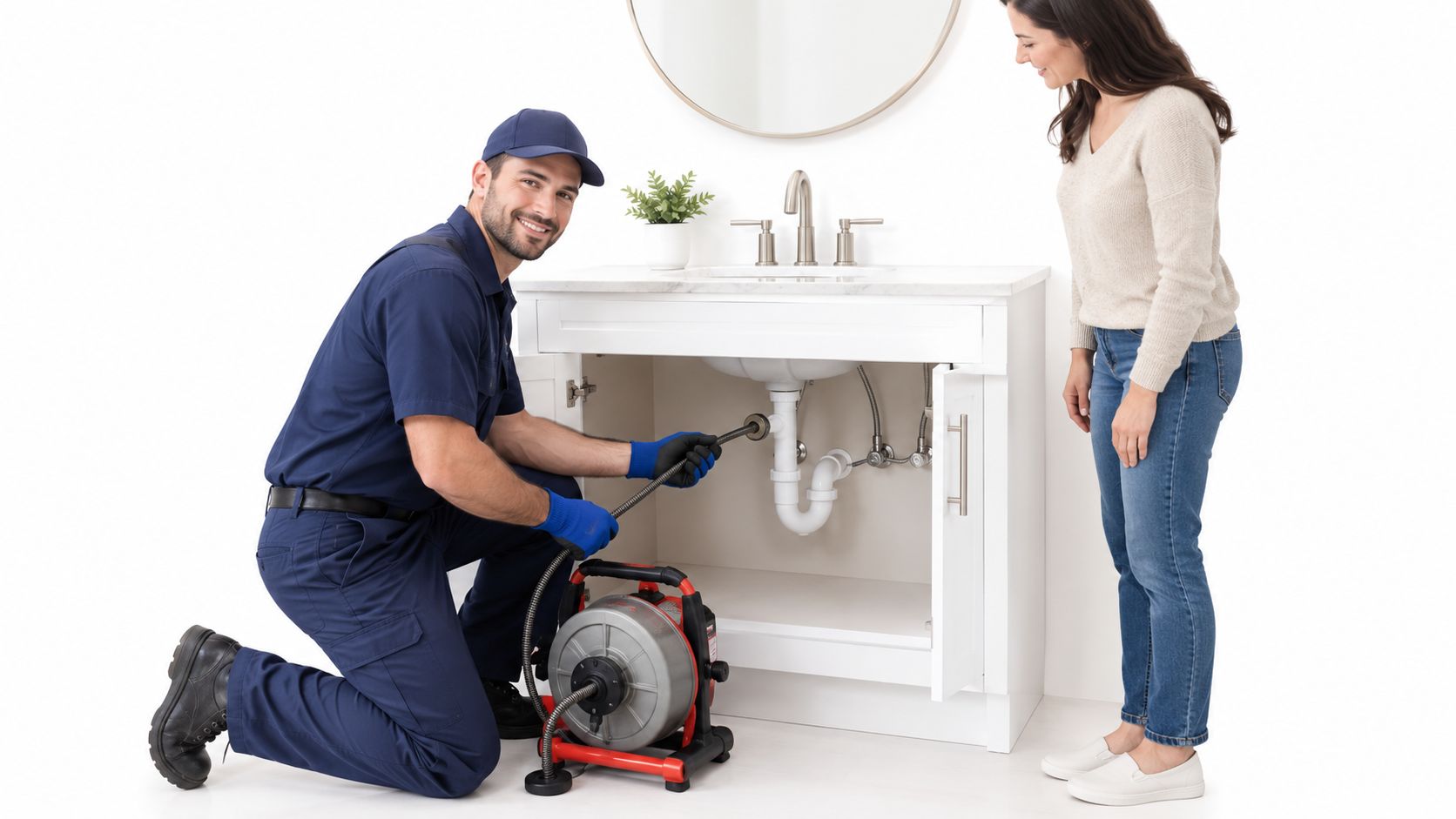
A professional starts by identifying where the restriction is located. A drain auger may clear a localized blockage. High-pressure water jetting can remove grease, detergents, sand, and mineral deposits when the pipe condition and access make that method appropriate. A sewer camera inspection shows whether roots, a collapsed section, an offset joint, or accumulated debris is responsible.
Read more about when a clogged drain may need water jetting before treating a recurring problem as a product-choice issue. Jetting and snaking serve different purposes, and a camera can help determine which approach fits the line.
Older neighborhoods in Macomb, Oakland, and Wayne counties may have a mix of original and updated plumbing. Freeze-thaw movement, tree roots, heavy rain, and aging sewer connections can all affect exterior lines. A chemical opener can't inspect those conditions, and it may make later work more hazardous.
If you've already used Drano and the drain remains blocked, don't add another product and don't disassemble the trap without telling the plumber. The technician needs to know what's in the line before choosing equipment and protective measures.
Protecting Your Home with Expert Plumbing Care
PVC is a durable drain material, and its chemical resistance explains why Drano's FAQ permits use with plastic pipes when the label is followed. The practical concern is different. A fully blocked line can hold a hot, concentrated reaction against joints and fittings, while repeated use can delay the diagnosis of the actual obstruction.
For a minor slowdown, a plunger, plastic drain snake, or suitable enzyme product may be enough. For standing water, repeated backups, multiple fixtures, sewage odors, or a basement drain problem, professional drain cleaning and inspection offer a more reliable path.
Jays Plumbing and Sewer serves residential and commercial customers across Macomb County, Oakland County, and Wayne County, including Fraser, Sterling Heights, Warren, Clinton Township, Shelby Township, Rochester, Royal Oak, Detroit, and nearby communities. The company provides drain cleaning, sewer repair, leak detection, pipe repair, kitchen plumbing, bathroom plumbing, commercial plumbing, water heater repair, water heater replacement, garbage disposal repair, and sump pump repair.
Technicians use tools such as sewer cameras, drain augers, and high-pressure water jetting when appropriate. Service includes shoe covers, drop cloths, and cleanup, with job-based upfront pricing noted by the company. For homeowners comparing service options, this guide to drain cleaning prices can help frame the conversation before work begins.
If a Michigan winter freeze, heavy rain, or an aging sewer line turns a slow drain into an emergency, 24-hour plumbing response is available. A prompt call can prevent a small fixture problem from becoming basement flooding, hidden leakage, or a larger sewer repair.
Call Jay's Plumbing and Sewer now at 586-634-3450 for drain cleaning, sewer camera inspections, hydro jetting, pipe repair, or help deciding whether Drano is appropriate for your PVC plumbing. Visit Jays Plumbing and Sewer to schedule residential or commercial service across Macomb, Oakland, and Wayne counties.
