
You're standing in the bathroom, staring at a tub that's pushing up dirty water, and the first question is always the same, “Is this just a clog, or is my sewer line backing up?” In Southeast Michigan, that matters fast, because a bathtub is often the first place wastewater shows itself when the main line is blocked, damaged, or overwhelmed. The safest move is to treat it as a sewer backup first, stay calm, and make the right call before the mess spreads.
Table of Contents
- What To Do the Moment You See Sewage in the Tub
- How To Tell If It Is a Tub Clog or a Main Sewer Line Problem
- Why the Tub Is Usually the First Place Sewage Shows Up
- What a Sewer Camera Inspection Actually Shows
- Snaking vs Hydro Jetting vs Repair and When Each One Fits
- Common Mistakes Homeowners Make During a Sewer Backup
- Preventing the Next Backup in a Michigan Home
What To Do the Moment You See Sewage in the Tub
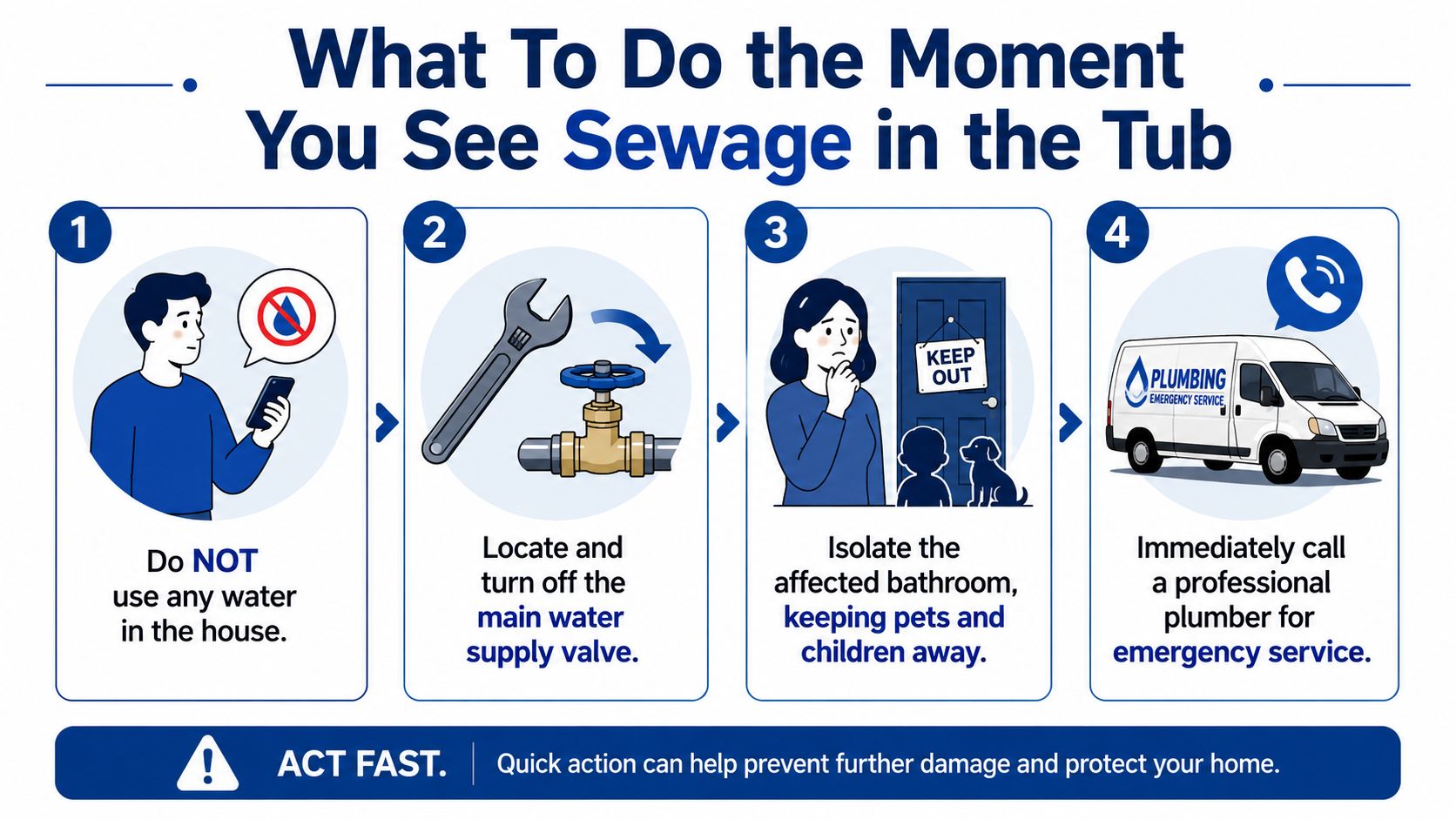
The first ten minutes matter more than the first tool you reach for. If the tub is filling with dirty water, stop using every fixture in the house right away. Keep toilets, sinks, showers, laundry, and dishwashers out of service so you're not feeding more wastewater into a line that's already blocked.
Contain the room first
Keep children and pets out of the bathroom. If water is spreading near outlets, cords, or fixtures, shut off power to that area if you can do it safely from a dry location. Open a window or run the exhaust fan if it doesn't put anyone at risk, because you want fresh air moving through the room.
Practical rule: sewage in a tub is a sanitation problem first, a drain problem second.
Avoid touching the wastewater with bare skin. If you have to go near the area, use gloves and closed shoes, and wash up well afterward. The EPA notes that sanitary sewer overflows happen regularly across the country, and that estimate does not even include sewage backups into buildings in the U.S. (EPA on sanitary sewer overflows).
Skip the panic moves
Don't run more water to “flush it through.” That usually adds volume to a line that can't carry it. Don't pour chemical drain cleaner into a tub that already has sewage in it either, because that doesn't solve a main-line backup and it creates a nasty hazard for anyone who has to work on the drain later.
If you need help fast in Fraser, Warren, Sterling Heights, Troy, Royal Oak, or nearby Macomb and Oakland County communities, Call Jay's Plumbing and sewer Now @ 586-634-3450.
How To Tell If It Is a Tub Clog or a Main Sewer Line Problem
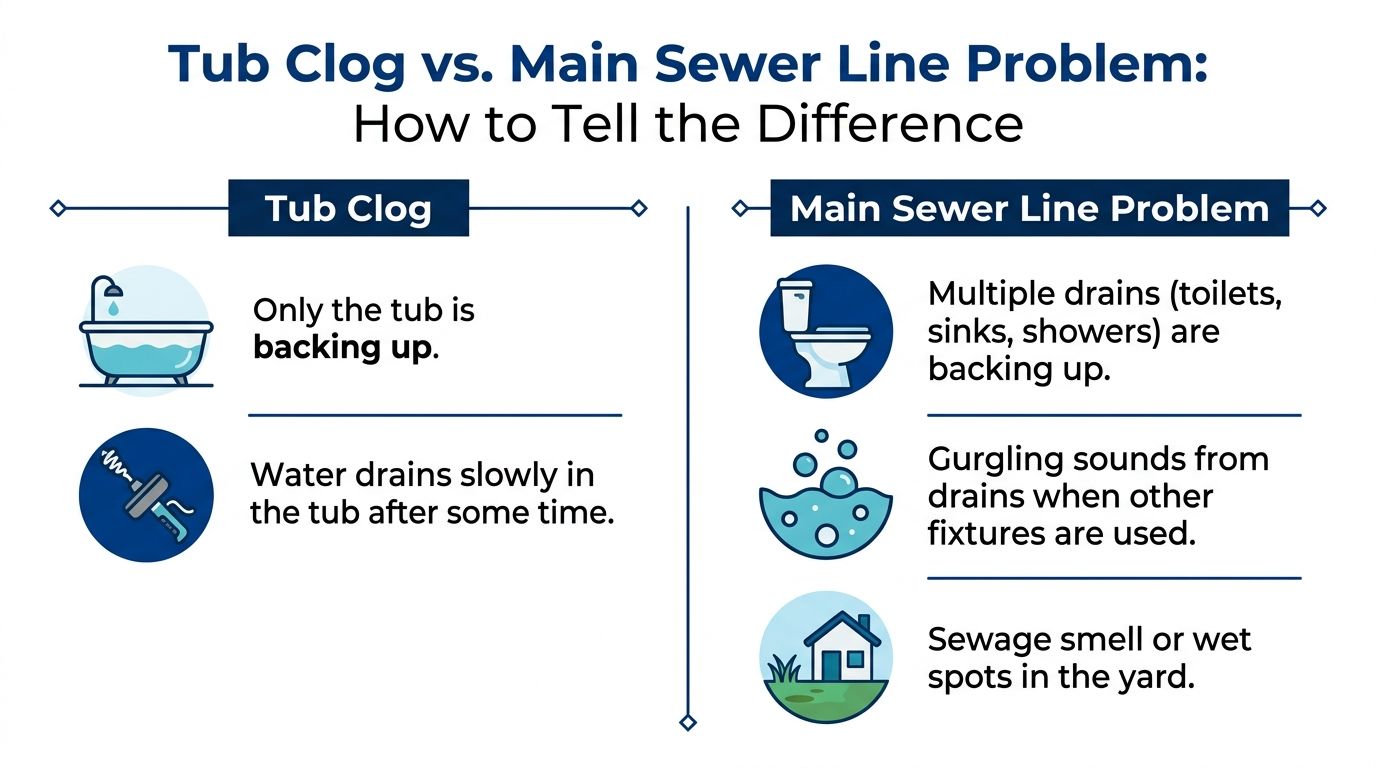
A tub-only clog behaves differently from a main sewer line problem. The quick test is simple, stop all water use, then watch what happens when other fixtures are used one at a time. If the tub only drains slowly on its own, that points more toward a local blockage in the tub branch or trap.
Read the pattern, not just the puddle
If flushing a toilet, running the washing machine, or using the kitchen sink makes the tub gurgle, fill, or back up, the problem is probably downstream in the main sewer line. That's the decision rule most homeowners need, and it's the one that saves time and money when it's used early. A single slow tub drain usually behaves like a local clog, while multiple drains reacting together point to a building sewer issue.
If the tub only misbehaves when the tub is used, start local. If it reacts when other fixtures discharge, think main line.
The supporting signs matter too. Bubbling in a toilet when a sink drains, slow drains in more than one room, and a strong sewer odor coming from multiple fixtures all fit a broader line problem. If the house is a duplex, rental, or older commercial space, that pattern is even more important because one fixture can mask a bigger shared drain issue.
For a deeper look at the main-line side of the problem, see this main sewer line repair guide.
Use the observation that counts
A plumber doesn't need guesswork, and neither do you. What matters is whether the backup is isolated to the tub or shared across the system. If it's shared, a simple drain clearing at the tub rarely solves the underlying cause.
[Video: Why a tub backup often points to the building sewer.]Why the Tub Is Usually the First Place Sewage Shows Up
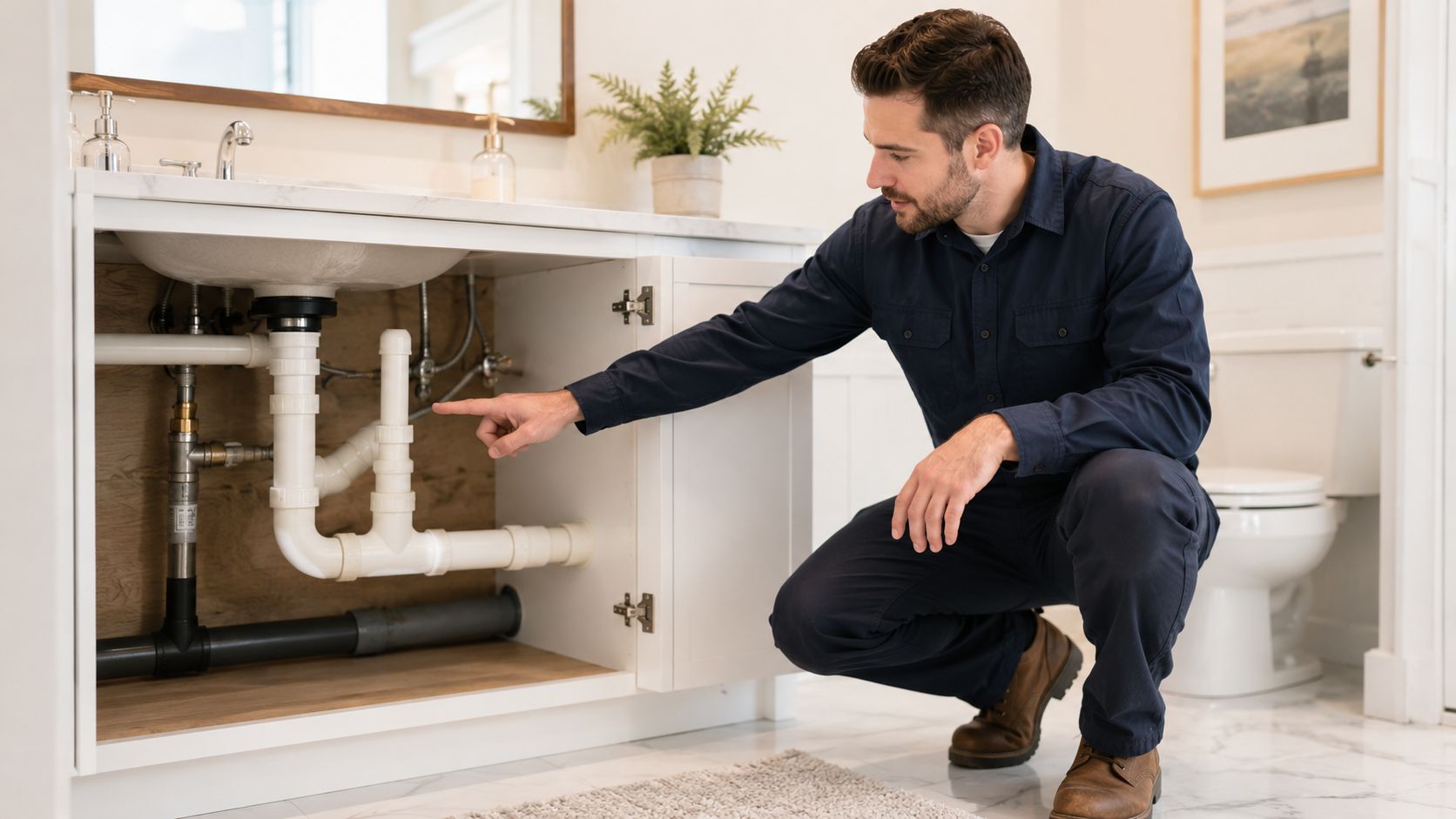
The tub is often the lowest fixture in the bathroom, so wastewater under pressure reaches that opening first when the main line can't carry flow away from the house. That is why a sewer backed up into tub complaint often starts at the bathtub, even when the underlying problem is farther out in the house sewer or near the street connection.
What the cleanout tells us
A house cleanout is the access point plumbers use to relieve pressure and inspect the line. In many Macomb and Oakland County homes, it sits near the foundation wall, in a basement, or just outside where the line leaves the house. If a cleanout is available, opening it can show whether the blockage is in the building sewer and can give the line a place to vent while the diagnosis is underway.
Michigan homes run into the same troublemakers over and over. Tree roots work into older clay or cast iron piping, kitchen grease narrows the pipe wall, joints shift, and older sections crack or collapse. Heavy rain can also stress a weak line or overwhelm the system, which is why some backups show up after a storm instead of during normal day-to-day use.
Why quick fixes don't hold
A tub-only clearing can remove the visible symptom without touching the reason the wastewater rose in the first place. If the line is still obstructed, the tub usually backs up again the next time the house sends a bigger discharge through the system.
That is why a camera look is worth asking for before anyone talks about a major repair.
What a Sewer Camera Inspection Actually Shows
A camera inspection takes the guesswork out of the line. A plumber feeds a lighted camera through the cleanout, or through a pulled toilet when needed, and watches the pipe in real time to find the exact problem and its location. That matters because the next step changes depending on whether the pipe is clogged, coated, cracked, shifted, or collapsed.
What the camera usually finds
In Southeast Michigan homes, the video often shows grease coating the pipe wall, root masses pushing through joints, an offset section where two pipe ends don't meet cleanly, or a full collapse. Sometimes it's a softer clog close to the house, and sometimes the pipe is structurally intact but badly fouled. Those are very different situations, and they don't call for the same fix.
Why the result matters
A cleanout camera run is not an upsell. It's the fastest way to avoid paying twice for the wrong work. If the pipe is intact and clogged with buildup, cleaning makes sense. If the pipe is broken or shifted, cleaning may only buy a little time before the backup returns.
A good question to ask when the camera is done is simple, what did you see, how far down is it, and is the pipe still sound enough to clean? That answer drives whether you're looking at drain cleaning, sewer repair, or a larger replacement plan.
The earlier section on warning signs gives the home pattern, and the camera gives the proof.
Snaking vs Hydro Jetting vs Repair and When Each One Fits
Once the camera shows what's inside the pipe, the fix usually falls into one of three buckets. Mechanical snaking, hydro jetting, and repair or replacement each solve a different kind of problem, and the wrong choice wastes time.
Matching the fix to the cause
| Problem Found | Best Professional Fix | Typical Longevity |
|---|---|---|
| Soft or moderate blockage near the fixture | Mechanical snaking | Works well when the clog is local and not caused by pipe damage |
| Grease, scale, or soft root mass in an intact line | Hydro jetting | Best when the pipe wall needs to be scoured clean |
| Collapse, severe offset, or repeated root intrusion | Pipe repair or replacement | Durable solution when cleaning won't hold |
Snaking is the right first move when the camera shows a direct blockage that can be opened without scouring the pipe wall. Hydro jetting uses very high-pressure water, commonly cited in the 3,000 to 4,000 PSI range, to clean grease, scale, and soft root accumulation from the inside of the pipe. If the line is cracked, offset, or repeatedly invaded by roots, repair or replacement is the durable fix.
A service page like this drain jetting resource can help you understand how high-pressure cleaning fits into sewer work, but the camera still decides whether jetting is appropriate.
Don't clean a damaged line like it's healthy
Hydro jetting works well when the pipe is structurally sound. It's the wrong choice when a line has shifted or collapsed, because pressure cleaning can only give short-lived relief in a failing pipe. That's why the camera comes first and the tool comes second.
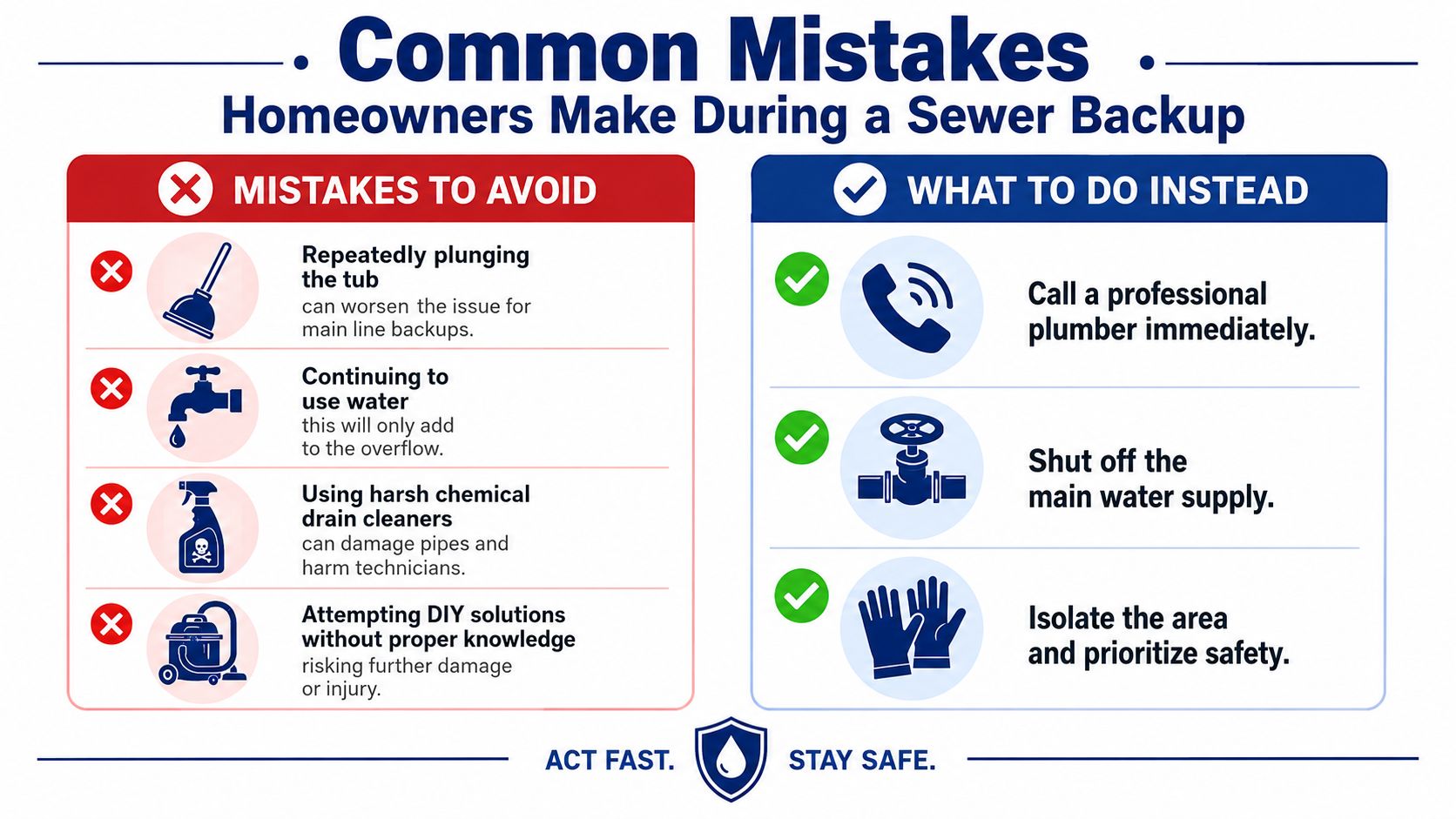
Common Mistakes Homeowners Make During a Sewer Backup
The most expensive part of a backup is often the delay. People try to muscle through it, and the problem gets worse. A tub with sewage in it needs a calm response, not more water and not more guesswork.
What not to do
- Keep plunging the tub. That can move contaminated water around without clearing a main-line obstruction.
- Keep running fixtures. Every extra sink load or toilet flush adds more wastewater to a line that's already backed up.
- Use harsh chemical drain cleaners. They don't fix a sewer-line problem, and they can create a dangerous mess in a contaminated tub.
- Treat a receding backup as solved. Water can drop back down while the obstruction is still sitting in the line.
- Use a shop vac without proper protection. Sewage cleanup is not the place for casual DIY.
The University of Maryland's sewage-backup research shows why this isn't just an inconvenience. In a pilot study of 40 homes, 34 homes had at least one harmful bacterium, 14 homes had more than one of the five pathogens studied, and 7 homes contained bacteria resistant to standard antibiotics. A later study of 86 Maryland homes found Enterococcus in 46% of homes with sewage backups and multidrug-resistant enterococci in 12% of those homes (University of Maryland sewage backup study).
The short version
Stop water use. Keep people away. Call for help if sewage is visible or more than one drain is involved. That's the cleanest way to limit damage and avoid turning a plumbing issue into a cleanup problem.
Preventing the Next Backup in a Michigan Home
Prevention starts in the kitchen and bathroom, not in the crawlspace. Keep grease out of drains, skip “flushable” wipes, and keep food scraps out of the disposal when they belong in the trash. In older neighborhoods across Macomb and Oakland County, that daily buildup matters more because aging pipe walls give debris more places to catch.
What keeps working year after year
Routine camera checks and main-line cleaning make sense for homes with older clay or cast iron piping, especially when mature trees are close to the house. Watch the small warnings too. If you hear gurgling, notice slower drainage, or smell sewer odor before a full backup, that is the time to get ahead of it instead of waiting for another overflow.
Basement protection matters in Michigan too. Heavy rain can load the system, and a weak basement setup can turn a drain issue into a floor issue. A backwater valve and a sump pump with battery backup help protect the home when water levels rise, and a quick way to verify the pump still works is covered in this sump pump check guide.
Practical rule: if more than one fixture is acting up, or sewage is visible, do not wait to see if it clears itself.
What a professional visit should include
A solid service call starts with stopping the flow, inspecting the line, and choosing the right clearing method based on what the camera shows. That applies to residential plumbing and commercial plumbing alike, whether the job turns into drain cleaning, sewer repair, or a recommendation for another fixture issue.
If you are in Fraser, Sterling Heights, Troy, Warren, Royal Oak, or nearby, Call Jay's Plumbing and sewer Now @ 586-634-3450. Jay's Plumbing and Sewer handles emergency plumbing, camera inspections, sewer repair, drain cleaning, and related service work across Macomb and Oakland County, and you can also visit Jays Plumbing and Sewer to schedule service or ask questions before the backup gets worse.
If sewage is backing up into your tub, do not wait for the smell to fade or hope the next flush fixes it. Jay's Plumbing and Sewer handles sewer backups, drain cleaning, sewer repair, and camera inspections for homes and businesses across Macomb and Oakland County, and they are set up for emergency plumbing when the problem cannot wait. Visit Jays Plumbing and Sewer to get help from a local team that knows how to diagnose the line, clear it the right way, and talk you through the next step.
