Most chemical drain cleaners shouldn't go into a septic system, even when labeled septic safe. A plunger or drain snake is the safer first step because it removes the blockage without adding a concentrated chemical load to your tank.
You're standing over a sink that won't empty, and the bottle under the cabinet promises a quick fix. Before you pour, check what's in it and consider whether this is an isolated clog or a problem that keeps returning. Those details matter more than the words on the front label.
Table of Contents
- Which Drain Cleaners Are Safe for a Septic System
- How to Clear a Slow Drain Without Chemicals
- Why Chemicals Upset Your Tank and How to Read Labels
- Enzyme Products and Other Septic Myths
- Preventing Clogs and Protecting Your Drainfield
- Warning Signs and When to Call a Plumber
- Frequently Asked Questions
- Keeping Your Drains Clear and Your Septic System Protected
Which Drain Cleaners Are Safe for a Septic System
The safest starting point usually isn't a bottled drain cleaner. The U.S. Environmental Protection Agency's septic-care guidance advises avoiding chemical drain openers and recommends boiling water or a drain snake instead.
Septic safe isn't blanket permission. Your tank relies on living microorganisms, and a product's ingredients, concentration, and frequency of use all affect the risk.
Drain cleaning methods ranked by septic safety
| Product or method | Septic verdict | Why it matters |
|---|---|---|
| Crystal or lye-based drain cleaner | Avoid | Caustic sodium hydroxide can harm tank bacteria and pipes. |
| Liquid acid drain cleaner with sulfuric or hydrochloric acid | Avoid | Strong acids disrupt bacterial breakdown and can corrode components. |
| Hydrogen peroxide drainfield product | Avoid | It can break down soil structure and shorten system life. |
| Organic solvent additive | Avoid | It destroys helpful microorganisms and creates groundwater risk. |
| Enzyme or bacteria drain product | Not needed | The tank already holds microbes, and these products don't remove physical obstructions such as roots or damaged piping. |
| Plunger | Safe | It can clear accessible sink and tub clogs mechanically. |
| Drain snake | Safe | It reaches the clog without adding a chemical load. |
| Boiling water poured in stages | Safe on suitable metal pipes only | It may loosen grease; use hot tap water on PVC instead. |
| Camera inspection and hydro jetting by a professional | Safest approach for repeat clogs when appropriate | Inspection identifies roots, buildup, or damage so the plumber can choose suitable cleaning or repair. |
Here, avoid means don't pour the product down septic-connected drains. Safe means the method doesn't add a chemical load to the tank, not that every tool or temperature suits every pipe.
A camera inspection and hydro jetting aren't interchangeable. The camera helps diagnose the problem; jetting removes suitable deposits. A damaged pipe may need repair rather than more cleaning.
Practical rule: Choose the method that removes the obstruction, not a product that promises to treat everything downstream.
Start mechanically. If the clog remains or returns after two careful attempts, stop and call a plumber rather than increasing the chemical dose.
How to Clear a Slow Drain Without Chemicals
These steps are for an isolated slow sink or tub that hasn't already received chemical drain cleaner. If chemicals are sitting in the drain, don't plunge, snake, or add hot water because you could splash the product.
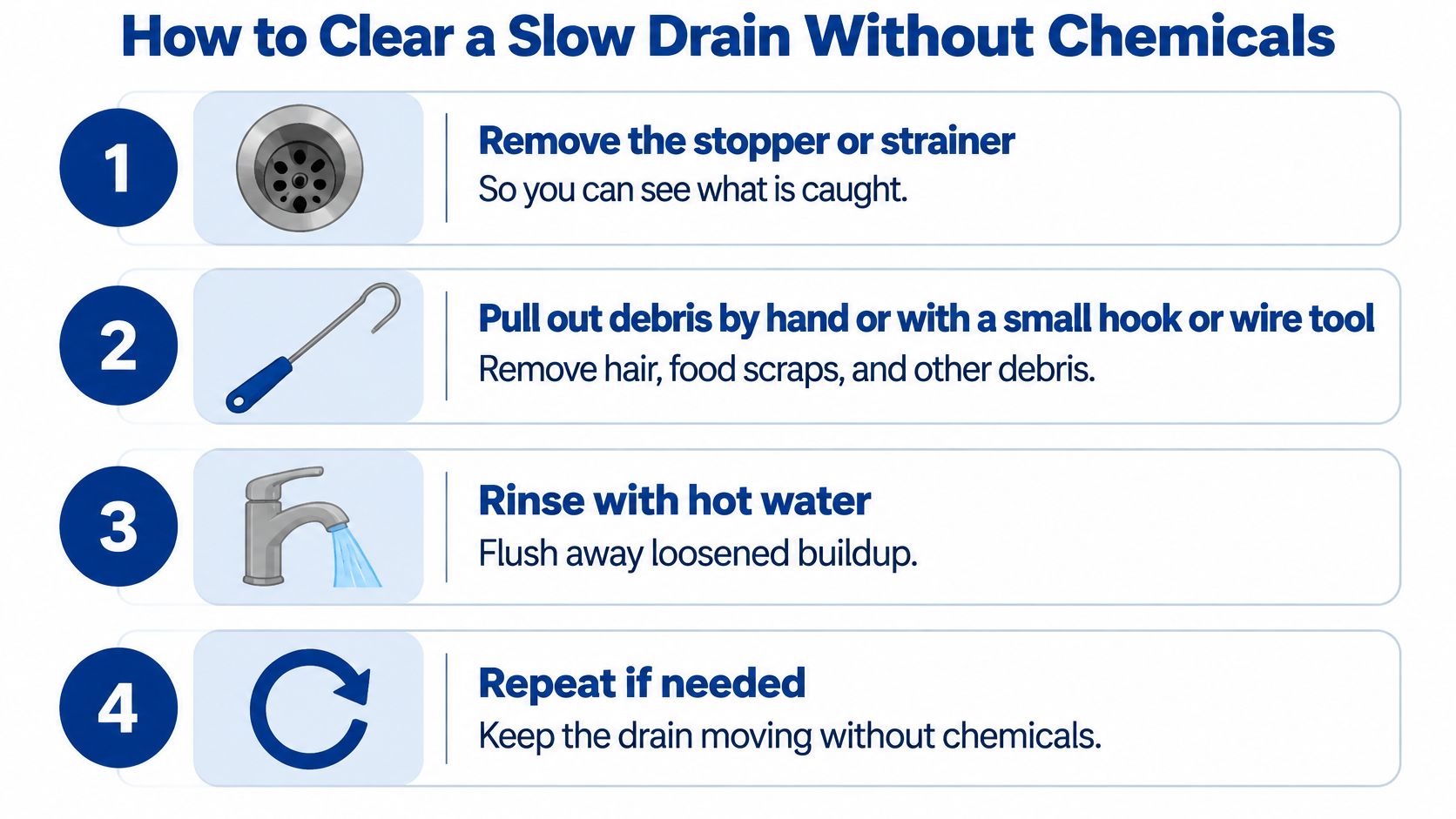
The visual below summarizes basic debris removal. Don't keep repeating the process if drainage doesn't improve.
Work from the drain opening inward
- Remove the stopper or strainer. Follow its release mechanism instead of forcing it. Opening the drain lets you see whether the blockage is within reach.
- Pull out visible hair, food scraps, and debris with gloves or a small plastic hook. Keep your hands and tools out of a garbage disposal.
- Use a sink plunger. Cover the overflow opening with a damp cloth, seal the cup over the drain, and add enough water to cover its rim. Push and pull in short, controlled strokes for about twenty seconds.
- If you know the drain assembly is suitable metal piping, carefully add boiling water in small stages, allowing each pour to drain. Skip this on PVC, uncertain piping, or a completely blocked drain; hot tap water is the gentler choice.
- Try a hand-operated drain snake. Feed and turn it slowly, then withdraw trapped debris. Stop if it binds or meets solid resistance.
- Run warm water briefly to check the result. Normal flow without gurgling is the goal, not just a temporary drop in standing water.
Hot water may loosen residue, but it won't remove roots or repair a broken pipe. Repeated boiling-water treatment can also stress unsuitable plastic drain assemblies.
Our guide to choosing a drain-cleaning method explains the differences between basic clearing and professional equipment. If the drain stays slow after two attempts, leave it for diagnosis.
Why Chemicals Upset Your Tank and How to Read Labels
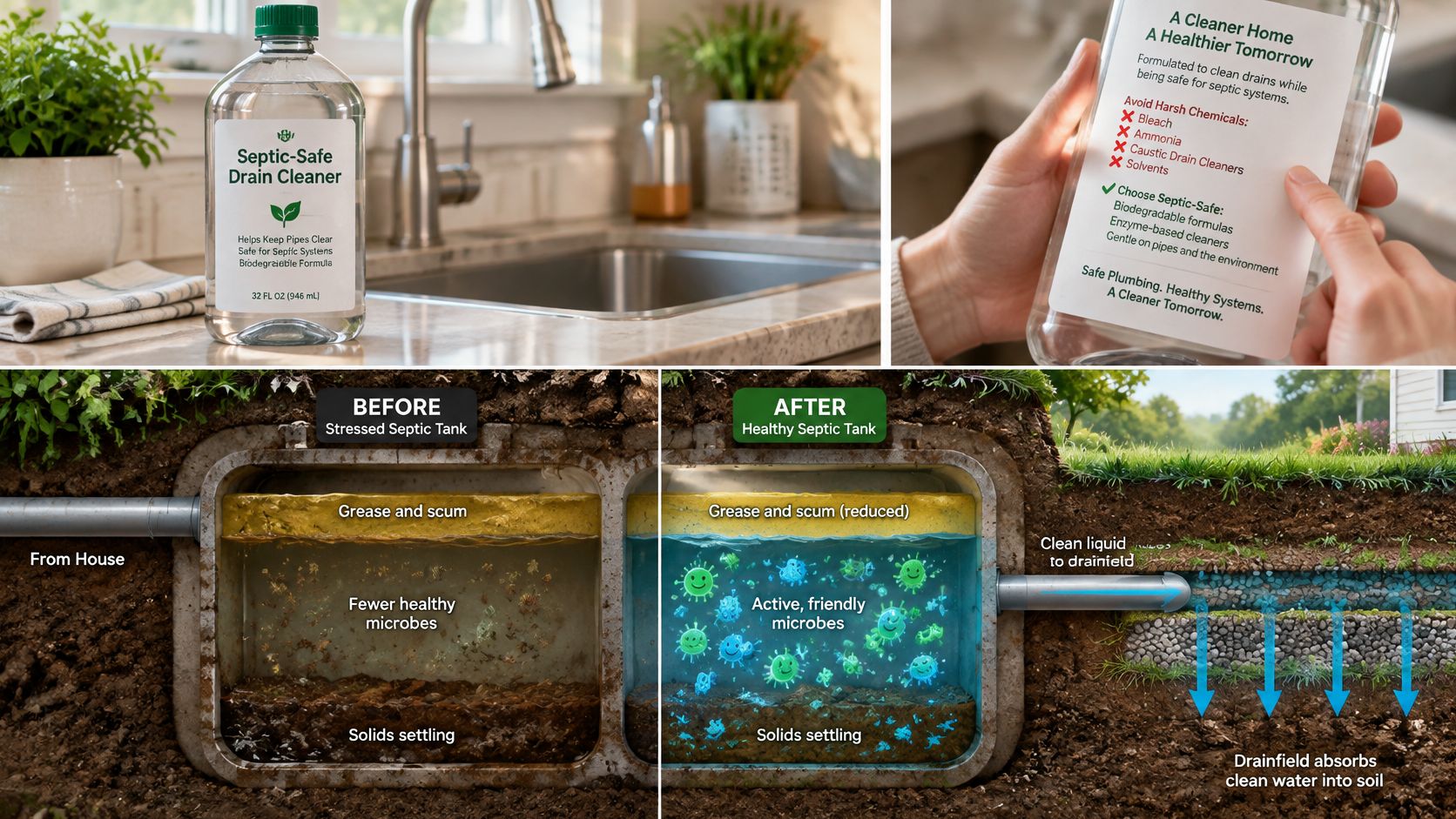
A septic tank is a living treatment system, not just an underground storage container. Microorganisms break down organic waste, while liquid moves onward to the drainfield for further treatment.
Think of those organisms as a kitchen crew handling steady deliveries. Pouring in a concentrated acid or alkali is like dumping harsh cleaner across the workstations instead of letting the crew do its job.
This illustration shows the relationship between household drains, the tank, and the drainfield. Treat the bottle's label as a claim to evaluate, not a recommendation to buy.
The ingredients matter more than the promise
The EPA's septic-tank additives fact sheet identifies strong acids and alkalis, including sulfuric acid and lye, as chemicals that can interfere with bacterial breakdown and damage system components. It also explains that hydrogen peroxide drainfield treatments can damage soil structure, while organic solvents can destroy helpful organisms and threaten groundwater.
Soil doesn't remove every cleaning-product contaminant. What goes down the sink can affect more than the tank itself.
Frequency matters, too. Purdue Extension's septic guidance notes that corrosive crystal cleaners can temporarily harm tank microorganisms, although populations may recover after limited exposure. That's a reason not to panic over an isolated incident, but it isn't a reason to make chemical clearing a routine.
The video below provides additional context for septic-system care.
Check the label before considering any product
- Scan active ingredients. Skip sulfuric acid, hydrochloric acid, sodium hydroxide, and potassium hydroxide unless a licensed professional has assessed the plumbing and septic risks.
- Look for organic solvents and strong disinfectants. A septic-related product name doesn't make those ingredients harmless.
- Read amount and frequency directions. Occasional, label-directed use isn't permission for repeated dosing whenever drainage slows.
- Match the intended application to the drain. Kitchen, bathroom, laundry, and drainfield products aren't interchangeable.
- Never mix cleaners. Combining drain cleaner with bleach, acids, or another product can generate dangerous heat or toxic gases.
For the separate question of pipe compatibility, our explanation of Drano and PVC piping helps distinguish pipe concerns from septic concerns. A label can't tell you whether your tank is already stressed, so ingredient screening is only a starting point.
Enzyme Products and Other Septic Myths
Additives aren't repairs
Myth: Adding bacteria or enzymes keeps every tank healthy.
Household wastewater already supplies bacteria, enzymes, yeasts, fungi, and other microorganisms. Routine additives aren't a substitute for pumping, sensible water use, or correcting an operating problem.
Myth: Enzymes will clear a grease-clogged drain.
Some products act slowly on organic residue, but they aren't a dependable fix for a blocked drain. A snake can retrieve an obstruction; an enzyme product can't pull out a hair bundle or remove pipe damage.
Myth: A pump-out fixes a slow sink.
Pumping removes accumulated material from the tank. It doesn't clear a separate blockage in a sink trap or branch drain, so the location of the restriction still needs checking.
Household cleaning needs moderation
Myth: Heavy disinfecting keeps the septic system clean.
Michigan EGLE's septic guidance allows for household cleaners in small quantities but warns against excessive bleach, detergents, strong disinfectants, and every-flush toilet-disinfection products. It also advises using quaternary-ammonia cleaners sparingly or not at all and keeping caustic drain cleaners out of drains.
A product that smells clean hasn't necessarily made your septic system healthier.
Keep cleaning reasonable and consistent. An enzyme treatment isn't a substitute for finding and removing the cause of a clog.
Preventing Clogs and Protecting Your Drainfield
Kitchen and bathroom habits
Wipe greasy pans into the trash before washing them, and fit strainers to kitchen and shower drains. Don't use a garbage disposal as a food-waste bin, and flush only human waste and toilet paper, not wipes marketed as flushable.
Our explanation of why grease doesn't belong down the drain covers the practical alternative: collect it, let it cool, and dispose of it with household trash.
Laundry and outdoor care
Spread laundry loads across the week instead of sending a large surge of wastewater into the system. Have a septic professional set a pumping schedule based on tank capacity, occupancy, and actual solids accumulation rather than waiting for a backup.
Keep vehicles and heavy equipment off the drainfield. Plan trees and shrubs away from the system because roots can enter vulnerable piping.
Michigan seasonal precautions
Spring thaw and heavy rain can leave drainfield soil saturated. Reduce unnecessary water use when the ground is unusually wet, and don't direct roof runoff toward the field.
During Michigan winters, keep plowed snow piles and vehicles off the drainfield, and have vulnerable exposed piping assessed for freeze protection. Homeowners in Fraser, Sterling Heights, Clinton Township, Troy, Macomb, and Shelby Township, along with nearby communities across Macomb, Oakland, and Wayne counties, should include septic care in seasonal property maintenance.
Keep this checklist by the sink:
- Trash the grease: Wipe pans before washing.
- Catch the debris: Empty strainers regularly.
- Report changes early: Don't ignore slower drainage or new odors.
Warning Signs and When to Call a Plumber
Warning signs and the right next step
| Warning sign | What it usually points to | What to do |
|---|---|---|
| One slow sink that clears with a plunger | Fixture clog from hair or grease | Clear it mechanically and watch for a repeat. |
| Several drains back up at once | Main sewer line blockage | Stop running water and call a plumber. |
| Gurgling toilet or drain after flushing | Venting problem or partial blockage | Arrange diagnosis; a camera inspection may be appropriate. |
| Clog returns within weeks after clearing | Grease buildup, roots, or pipe damage | Get a camera inspection and repair options. |
| Sewage smell near floor drains or outdoors | Possible trap, tank, line, or drainfield problem | Have indoor traps and lines assessed; call a septic professional for outdoor or tank-related symptoms. |
| Wet or soggy ground over the drainfield | Saturated soil or a failing field | Reduce water use and call a septic professional. |
A plumber first checks which fixtures are affected and where their drain paths meet. One slow sink in Troy or Clinton Township suggests a different starting point than sewage backing up through several fixtures in Sterling Heights or Shelby Township.
Location alone doesn't establish the diagnosis. A returning clog may involve grease, roots, or pipe damage, and a camera can help distinguish them after access and flow conditions allow inspection.
What professional diagnosis changes
Repeated chemical treatments may temporarily improve flow without removing the underlying restriction. EPA technical guidance on septic additives warns that strong acids, alkalis, and solvents can harm treatment organisms or system components, so another dose isn't a sound diagnostic step.
At Jays Plumbing and Sewer, we inspect the drainage system and explain the available repair options. If several drains are backing up together, we advise calling because the main sewer line is a likely cause.
Follow this decision order:
- Stop adding chemicals.
- If only one fixture is affected and no chemical cleaner is present, try a plunger or hand snake if you haven't already reached your stopping point.
- Check whether other drains are slow, gurgling, or backing up.
- Stop running water if several fixtures back up, and call a plumber.
- Arrange a camera inspection if the restriction returns after clearing.
A sewage smell or wet patch over the drainfield calls for septic-system assessment, not another drain-cleaning visit. During heavy rain, distinguish sewage backup from groundwater entering a basement because the appropriate response may differ.
After we clear a drain, we send a follow-up survey. If the customer isn't satisfied, we'll address the service.
Before calling: Note which fixtures are affected and tell the plumber exactly what products you've already used.
That information helps a licensed plumber separate a fixture problem from a line or septic problem and choose the next useful step.
Frequently Asked Questions
Common homeowner and property-manager questions
I already poured a chemical drain cleaner down a septic-connected drain. What now?
Stop adding products, and don't chase the cleaner with another chemical or run extra water in an attempt to dilute it. Keep the container available and call a licensed plumber or septic professional for product-specific advice, especially if the drain remains blocked.
Is one label-directed use a year a problem?
An isolated use is less concerning than repeated dosing, but there's no universal safe allowance for every product and septic system. Choose mechanical clearing first rather than treating occasional chemical use as preventive maintenance.
Who should I call, a plumber or a septic professional?
A plumber handles fixture drains, branch lines, and sewer piping; a septic professional handles tank pumping, tank operation, and drainfield concerns. Describe whether the problem is indoors, outdoors, or affecting several fixtures so the person taking your call can help route it appropriately.
I manage rental properties on septic. What should I tell tenants?
Give tenants written guidance to avoid chemical drain openers, use a plunger only when no chemical is present, and report slow drains or sewage odors promptly. Keep a maintenance contact on the notice so they don't have to search for a “plumber near me” while a backup develops.
For commercial plumbing or shared residential plumbing, ask occupants to identify the affected fixture rather than attempt increasingly aggressive repairs. That makes it easier to trace whether the restriction serves one unit or several.
Keeping Your Drains Clear and Your Septic System Protected
When a drain slows again after clearing, the location and pattern matter more than a “septic-safe” label. Check the product's ingredients and directions, but don't treat that label as permission for repeated use. Mechanical clearing is the safer first step, and recurring clogs call for finding the cause.
Jays Plumbing and Sewer offers drain cleaning and sewer camera inspections for residential and commercial properties. For help in Macomb or Oakland County, Michigan, contact the company through its website and describe which drains are affected and how often the problem returns. That information can help plumbers inspect the drainage system and explain options for addressing the blockage.
