
You come home after a weekend away, open the door, and notice a sulfur-like odor near the guest bathroom. The sink looks clean, the toilet still works, and there isn't an obvious leak. Yet the smell returns every time the room sits unused.
That situation raises a practical question: what causes sewage smell in house plumbing when nothing appears broken? In many homes, the answer isn't a mysterious air-quality problem. It's a failure in the plumbing system's water seal, venting, or connection points that normally keep sewer gas out of living spaces.
Table of Contents
- Why That Sewer Smell in Your House Is Hard to Ignore
- Dry P-Traps and the Water Seal That Blocks Sewer Gas
- Venting Problems, Failed Seals, and Broken Sewer Lines
- How to Narrow Down the Source Room by Room
- Safe Fixes You Can Try Before Calling a Plumber
- Health and Safety Notes Homeowners Should Know
- When to Call Jay's Plumbing and Sewer for Help
Why That Sewer Smell in Your House Is Hard to Ignore
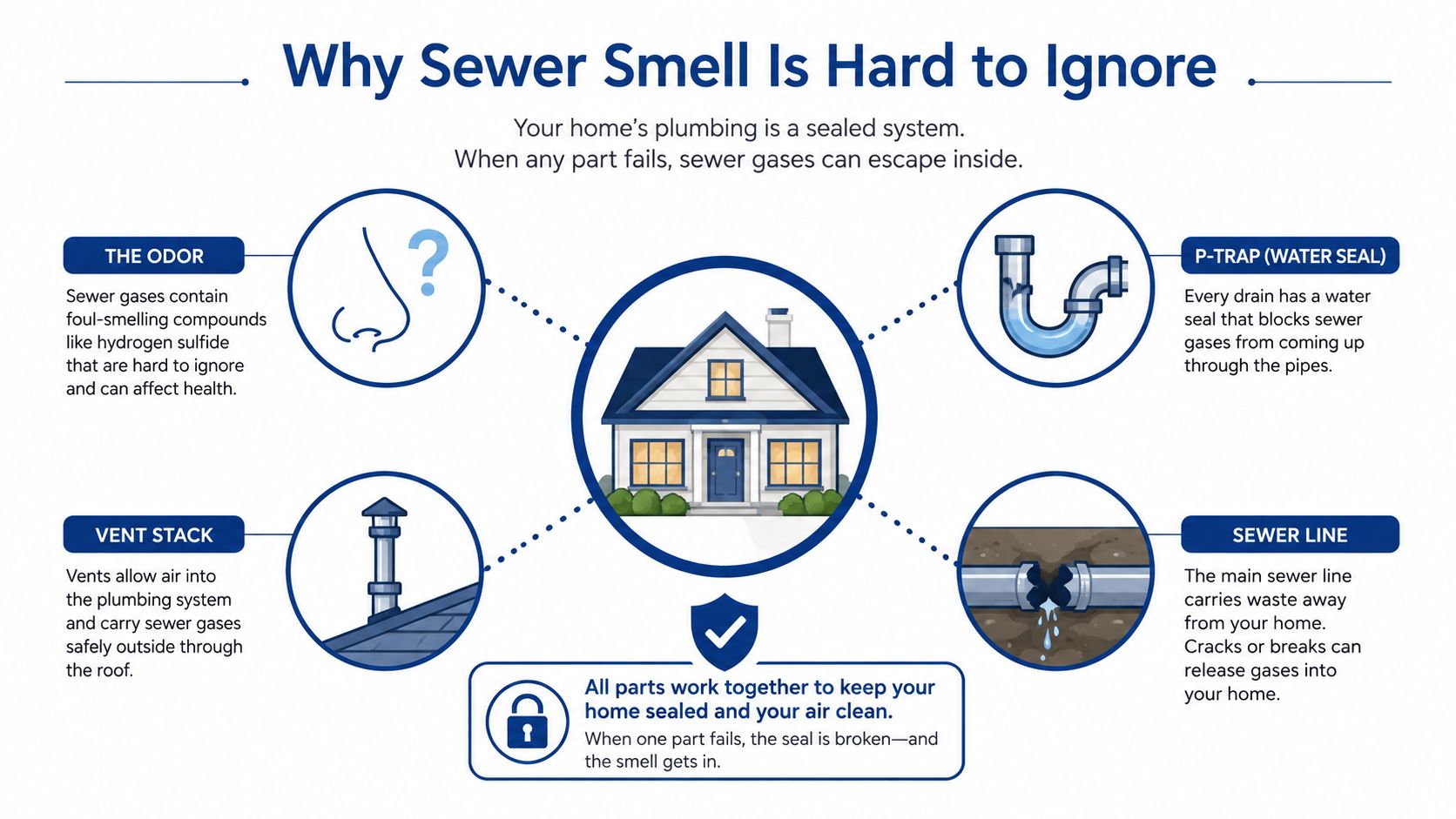
Every drain in your house connects to a drainage system designed to move wastewater away while keeping sewer gas outside. Two safeguards make that possible. A water seal inside each trap blocks gas at the fixture, and vent pipes allow air into the drainage network while sending sewer gas above the roofline.
Sewer gas is a mixture created as waste breaks down. It can include hydrogen sulfide, methane, ammonia, and other byproducts. Hydrogen sulfide produces the familiar rotten-egg or sulfur-like odor, and the human nose can detect it at very low concentrations. Wisconsin public health guidance explains that sewer gas can enter through a floor drain, a leaking or blocked roof vent, or cracks in the foundation, and recommends flushing seldom-used drains to restore dried-out traps. Read the Wisconsin sewer gas guidance for the foundational plumbing principle.
The odor is a plumbing clue
When the seal works, sewer gas has no easy path into the room. If the trap dries out, a vent develops a pressure problem, or a toilet or pipe seal fails, the drainage path can become an odor pathway.
That distinction helps you respond calmly. A smell beside one unused basement drain often points to a local trap issue. An odor affecting several rooms, combined with gurgling or backup, suggests a larger drainage or venting problem.
Property managers, home buyers, and owners of businesses in Macomb and Oakland County should treat recurring sewage odor as a condition worth diagnosing before it becomes a visible leak or backup. The same principle applies whether you need residential plumbing, commercial plumbing, drain cleaning, sewer repair, or an inspection before selling a property.
Dry P-Traps and the Water Seal That Blocks Sewer Gas
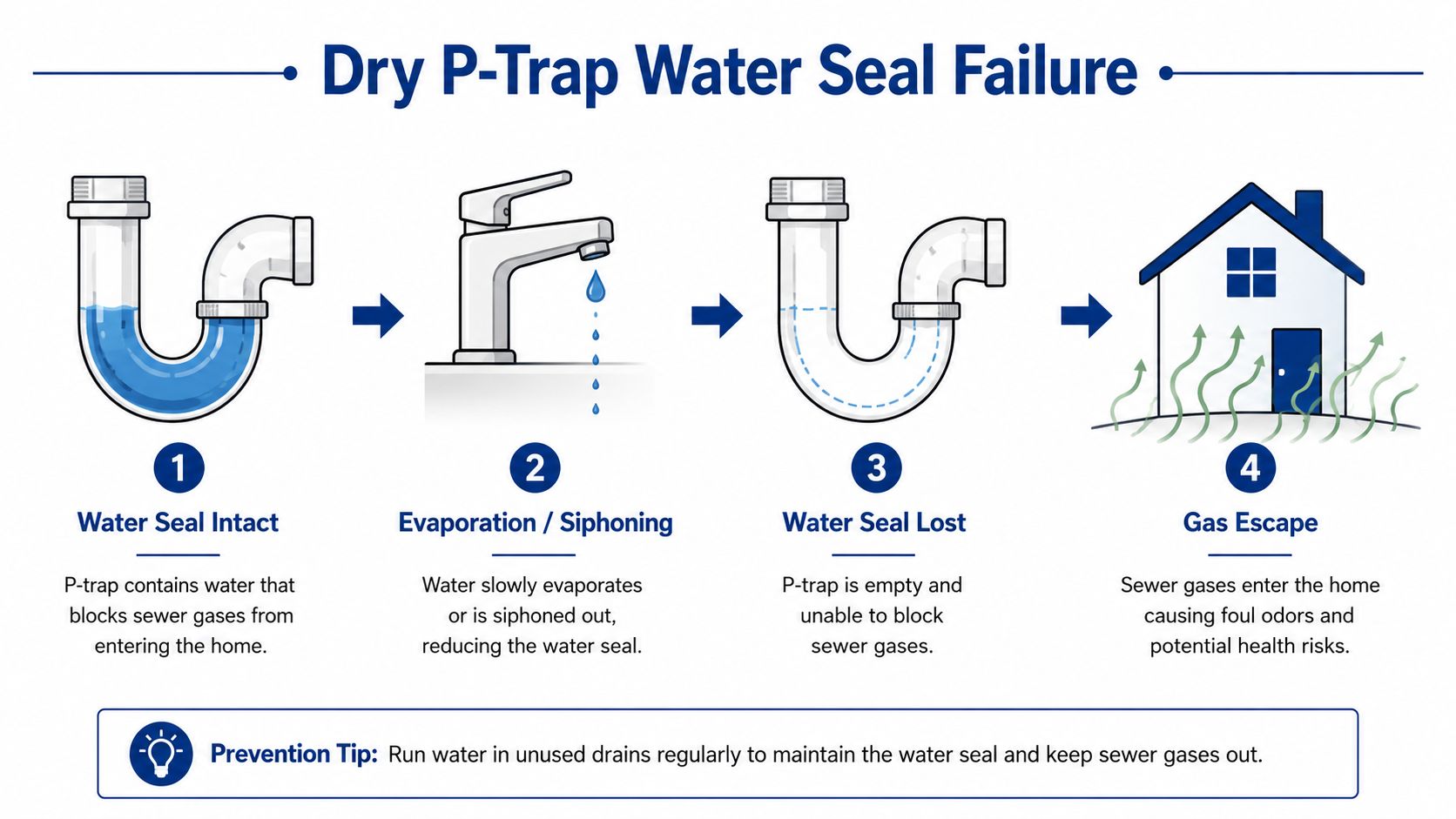
The P-trap is the curved section of pipe beneath a sink, tub, shower, or floor drain. It holds a small amount of water, creating a physical barrier between the room and the drainage system. Plumbing codes specify a trap seal depth of 2 to 4 inches, as described in this engineering explanation of sewer gas and trap seals.
A fixture that gets regular use normally replaces that water. Problems develop in a guest bathroom, basement floor drain, laundry sink, vacant unit, or seasonal property where water rarely enters the fixture. Evaporation can remove the seal, especially when dry indoor air circulates through a home during Michigan winters.
Industry service data summarized by HomeFixx identifies dried-out P-traps as roughly 40% of residential sewer-odor service calls, with the source also reporting failed toilet wax rings at about 25% and blocked or damaged vent stacks at about 20%. Those figures are from a plumbing industry summary, not a universal measurement, but they reinforce a useful diagnostic point: a small group of fixable plumbing defects accounts for many odor complaints. See the HomeFixx summary of common sewage-smell causes.
A missing seal doesn't always mean a broken pipe
A trap can also lose water through siphoning or pressure changes. A blocked or poorly configured drain can pull water from the bend, while airflow through a vent system can disturb the seal. A rag, hair, or other obstruction may encourage water to move out through capillary action rather than remain in the trap.
Practical rule: If the smell is strongest at one drain, restore the water seal first. If the odor returns, the recurring loss points toward a venting or pressure problem.
Run water through rarely used fixtures and observe whether the odor fades. For additional guidance on a basement drain, see this resource on cleaning floor drains.
A short visual explanation can also help you see how evaporation changes a sealed trap into an open gas pathway:
Venting Problems, Failed Seals, and Broken Sewer Lines
A drainage system depends on controlled airflow as well as open pipes. Drain lines carry wastewater away, while vent pipes let air follow behind it. That balance protects the water held inside each trap, much like a pressure regulator keeps flow from pulling the seal apart.
Leaves, ice, snow, or a bird's nest can block a roof vent. Weather damage or incorrect construction changes can create the same problem. Restricted airflow may cause gurgling drains, slow fixtures, or pressure that removes trap water and pushes sewer gas through fixture drains. Oatey's guidance on sewer gas odor and venting faults explains why traps, vents, and drain lines must be considered together.
Sewer gas is a mixture of hazardous components, including hydrogen sulfide, methane, and ammonia created by waste breakdown. The odor may therefore signal a failed water seal, a venting fault, or a damaged line rather than a dirty drain alone.
Toilet and pipe seals can release odor at floor level
A toilet wax ring seals the joint between the toilet base and closet flange. As the ring deteriorates, gas can escape around the base even if the bowl drains normally. A rocking toilet or moisture near its base makes that seal more suspect. This toilet wax-ring troubleshooting guide identifies an old wax ring as a possible sewer-gas route.
Cracked cast-iron or PVC drain lines, shifted sewer laterals, root intrusion, settling, and failed septic components require more than a one-drain maintenance fix. They can release odor behind walls, beneath floors, in crawl spaces, or near the foundation. Professional diagnosis and main sewer line repair may be needed.
Odor that appears after heavy rain deserves attention. Saturated soil and changing drainage conditions can expose weaknesses in sewer systems. In Southeast Michigan, freezing weather, frozen ground, heavy rain, and basement flooding can make existing drainage problems more noticeable.
How to Narrow Down the Source Room by Room
Start with the room where the smell is strongest. Don't begin by spraying air freshener or pouring products into every drain. A controlled check gives you better information and reduces the chance of turning a localized issue into a larger one.
In a bathroom, compare the sink drain, shower drain, tub drain, floor drain, and toilet base. Run water through each drain, one at a time, then note whether the odor changes. If the smell lessens near one fixture after water enters it, that fixture may have had a dry trap. If the odor remains at the toilet base, look for movement, moisture, or a failed seal.
Use the location as evidence
Kitchen odors can come from the sink drain, garbage disposal splash guard, dishwasher connection, or an infrequently used basin. A laundry room deserves a close look at the washer standpipe, utility sink, and floor drain. In a basement, inspect floor drains, sewage ejector pits, sump areas, and exposed pipe connections.
| Room | Likely Source | Quick Check |
|---|---|---|
| Guest bathroom | Dry sink, tub, or shower trap | Run water through each fixture and compare the odor |
| Basement | Floor drain, ejector pit, or damaged line | Check trap water and look for dampness near exposed piping |
| Kitchen | Disposal, sink connection, or dishwasher drain | Clean visible residue and check whether the smell follows hot or cold water |
| Laundry room | Washer standpipe or floor drain | Listen for gurgling during discharge and inspect nearby drains |
| Bathroom toilet area | Wax ring or flange seal | Check for rocking, moisture, or odor strongest at the base |
If water backs up into a tub or shower, stop using affected fixtures and review this guidance on sewer backup into a tub. Multiple affected rooms usually require professional diagnosis rather than a fixture-by-fixture cleaning.
Safe Fixes You Can Try Before Calling a Plumber
Begin with the simplest maintenance step. Run water for about 30 seconds in every seldom-used sink, shower, tub, and floor drain. This restores the trap barrier when evaporation caused the odor.
For a floor drain that dries repeatedly, a thin layer of mineral oil over the trap water can slow evaporation. Use this only as a maintenance measure, not as a substitute for investigating a trap that keeps losing its seal.
Clean residue without aggressive chemicals
Organic residue and biofilm can create a sewage-like smell even when the trap still contains water. A homeowner can try near-boiling water, followed by a gentle baking soda and white vinegar flush, then hot water again. Avoid mixing cleaning chemicals, and don't use bleach or chemical drain cleaners as a way to solve an unidentified sewer-gas problem.
You can safely perform a limited visual inspection:
- Look around the toilet base: Check for moisture or movement, but don't force the fixture.
- Check visible connections: Look beneath sinks and around cleanouts for dampness or staining.
- Listen during drainage: Gurgling, bubbling, or slow flow can indicate a vent or line issue.
- Use only a hand auger when appropriate: Stop if resistance continues or the odor affects multiple fixtures.
A loose toilet may need the closet bolts tightened snugly, but overtightening can crack the porcelain. Replacing a wax ring is possible for a homeowner who is comfortable removing and resetting the toilet, but a rocking flange or damaged floor connection should be left to a licensed plumber.
Don't snake a main stack, dismantle roof vents, or work on the main sewer line without proper training and equipment. If the smell returns after the trap is refilled, spreads to other rooms, or appears with backup, schedule service instead of repeating temporary treatments.
Health and Safety Notes Homeowners Should Know
Sewer gas isn't one single substance. It can contain hydrogen sulfide, methane, ammonia, and other gases created by waste breakdown. The odor itself can be strong before a homeowner can see any plumbing damage, which is why persistent sewage smell deserves attention rather than cosmetic treatment.
A strong or sudden odor in an enclosed area calls for a cautious response. Ventilate the space if you can do so safely, avoid flames and anything that could create a spark, and leave the area if anyone feels ill. Don't enter a confined pit, ejector basin, crawl space, or other poorly ventilated location to investigate the smell yourself.
Treat symptoms as a reason to leave
Headache, nausea, fatigue, dizziness, or feeling faint can occur when indoor air is affected by unpleasant or potentially hazardous gases. People with asthma or allergies may also find that damp basement conditions and contaminated air aggravate breathing symptoms.
If the odor is intense, the room is poorly ventilated, or anyone feels unwell, move outside and contact appropriate emergency assistance. Don't try to locate a hidden leak while remaining in the affected area.
Air fresheners, candles, and deodorizers only cover the warning sign. A confirmed vent failure, broken drain line, toilet seal problem, or sewage backup needs a plumbing repair that restores the barrier between the drainage system and the home.
This matters for homeowners and property managers alike. A vacant apartment, office restroom, restaurant floor drain, or commercial utility area can develop odor while the property appears otherwise clean. Prompt inspection protects occupants and helps prevent a small seal problem from becoming water damage or contamination.
When to Call Jay's Plumbing and Sewer for Help
A smell that vanishes after you refill one unused trap may be a simple maintenance issue. If it returns, spreads to several rooms, or appears with drainage changes, the problem may involve the system's air pressure, venting, or sewer line. That is the point to arrange an inspection from a licensed plumber.
Watch for these warning signs:
- Recurring odor after trap refill: The trap may be siphoning, a vent may be restricted, or a concealed connection may be leaking.
- Gurgling or slow drains: Air and wastewater are not moving normally through the drain-waste-vent system.
- Water backing up: Stop using the affected fixtures and request prompt service.
- Soggy yard patches: A damaged sewer lateral or another buried drainage defect may be releasing wastewater.
- Odor beneath floors or behind walls: Camera inspection or leak detection may be needed to find the source.
- Problems after heavy rain or Michigan winter weather: Saturated soil, frozen ground, or shifting conditions can reveal weaknesses in buried pipes.
A licensed plumber can test the system instead of relying on odor alone. A sewer camera inspection may reveal blockages, root intrusion, separated joints, or deteriorated pipe. Smoke testing can help locate vent and trap leaks. When cleaning is appropriate, hydro jetting can remove grease, scale, sand, detergents, or root-related buildup. Pressure checks and targeted leak detection can also examine concealed venting and piping.
Jay's Plumbing and Sewer provides residential and commercial service from Fraser for customers across Macomb and Oakland County. Services include sewer and drain cleaning, camera inspections, high-pressure water jetting, sewer line repair and replacement, leak detection, sump pump repair, sewage pump service, bathroom and kitchen plumbing, water heater repair and replacement, garbage disposal repair, pipe repair, and emergency plumbing response.
Persistent sewage odor is a good reason to request an inspection from a licensed plumber serving Fraser, Warren, Sterling Heights, Roseville, Clinton Township, Shelby Township, Troy, Rochester, or nearby Southeast Michigan communities. Air fresheners only cover a symptom while a failed seal, venting fault, or sewer line defect continues underneath the home.
To discuss the symptoms, schedule a camera inspection, or arrange targeted repair, call Jay's Plumbing and Sewer at 586-634-3450. For residential or commercial plumbing needs in Macomb and Oakland County, visit Jays Plumbing and Sewer to schedule service or request an estimate.
