

A high-pitched alarm near the basement utility sink usually means the sewage ejector basin has reached its warning level. You may also notice slow drainage, a sewer odor, humming from below the floor, or water near a floor drain. Don't keep flushing the basement toilet or running fixtures into that system while you figure out what's wrong.
Sewage ejector pump repair isn't always a pump replacement. A tripped breaker, failed float switch, clogged impeller, blocked vent, worn check valve, or undersized discharge system can create similar symptoms. The right diagnosis saves you from replacing a working motor while the actual problem remains in the plumbing.
Table of Contents
- What a Sewage Ejector Pump Does and Why It Matters
- Safety First Before Any Repair Work
- Step-by-Step Diagnostic Walkthrough
- The Five Most Common Failure Modes
- Why Ejector Pumps Fail Early in Michigan Homes
- What You Can Fix Yourself and When to Call a Plumber
- Preventive Care and When to Reach Out
What a Sewage Ejector Pump Does and Why It Matters
A sewage ejector pump sits in a sealed basin below the basement floor. It collects wastewater from fixtures such as a basement bathroom, laundry area, utility sink, or floor drain, then pushes that wastewater uphill to the building's main sewer connection. The pump uses an impeller, commonly a grinder or vortex design, to move wastewater containing solids through the discharge piping.
That job is different from a sump pump. A sump pump handles groundwater and rainwater collected around the foundation. A sewage ejector pump handles wastewater from plumbing fixtures, including solids. They aren't interchangeable, and using the wrong type of pump can create clogs, motor strain, and unsanitary backups.

Why the alarm matters
When gravity can't carry basement wastewater to the sewer, the ejector system performs that lifting work. If the pump stops, wastewater remains in the basin and can eventually back up through the lowest connected fixture. That's why an alarm, repeated cycling, grinding noise, or sewage odor deserves attention even if the bathroom still appears usable.
A sealed lid, working vent, float control, check valve, and correctly sized discharge line all matter. A useful explanation of how basement sewer connections fit into the larger plumbing system is available in this guide to what a sewer cleanout does.
Safety First Before Any Repair Work
Sewage ejector repair combines electrical equipment, contaminated wastewater, and a confined basin. The safest first step is to stop using every fixture that drains into the basin. That includes the basement toilet, shower, laundry sink, utility sink, and any connected floor drain.
Isolate electricity before touching anything
Find the dedicated circuit breaker and switch it off. Don't rely only on a wall switch or the pump's float control. Verify that power is absent with a properly used non-contact voltage tester at the outlet and pump cord before opening the lid or handling the pump.
Pentair's Hydromatic service documentation emphasizes disconnecting power before service, allowing hot equipment to cool, and keeping the pump within its designed operating range because running a submersible pump below the recommended liquid level can damage or overheat it. The manufacturer service manual also supports checking straightforward electrical causes before removing the pump.
Treat the basin as contaminated
Wear nitrile gloves, eye protection, and clothing that can be washed or discarded. Keep your face away from the open basin, ventilate the area, and never stand in pooled sewage. Strong rotten-egg odors or lightheadedness are reasons to leave the area immediately, not reasons to investigate further.
Safety rule: Never reach into an ejector basin while the pump is energized. If the work involves wiring, confined access, sewage cleanup, or uncertainty about the electrical supply, call a licensed plumber.

This video provides a visual look at the safety considerations involved:
Step-by-Step Diagnostic Walkthrough
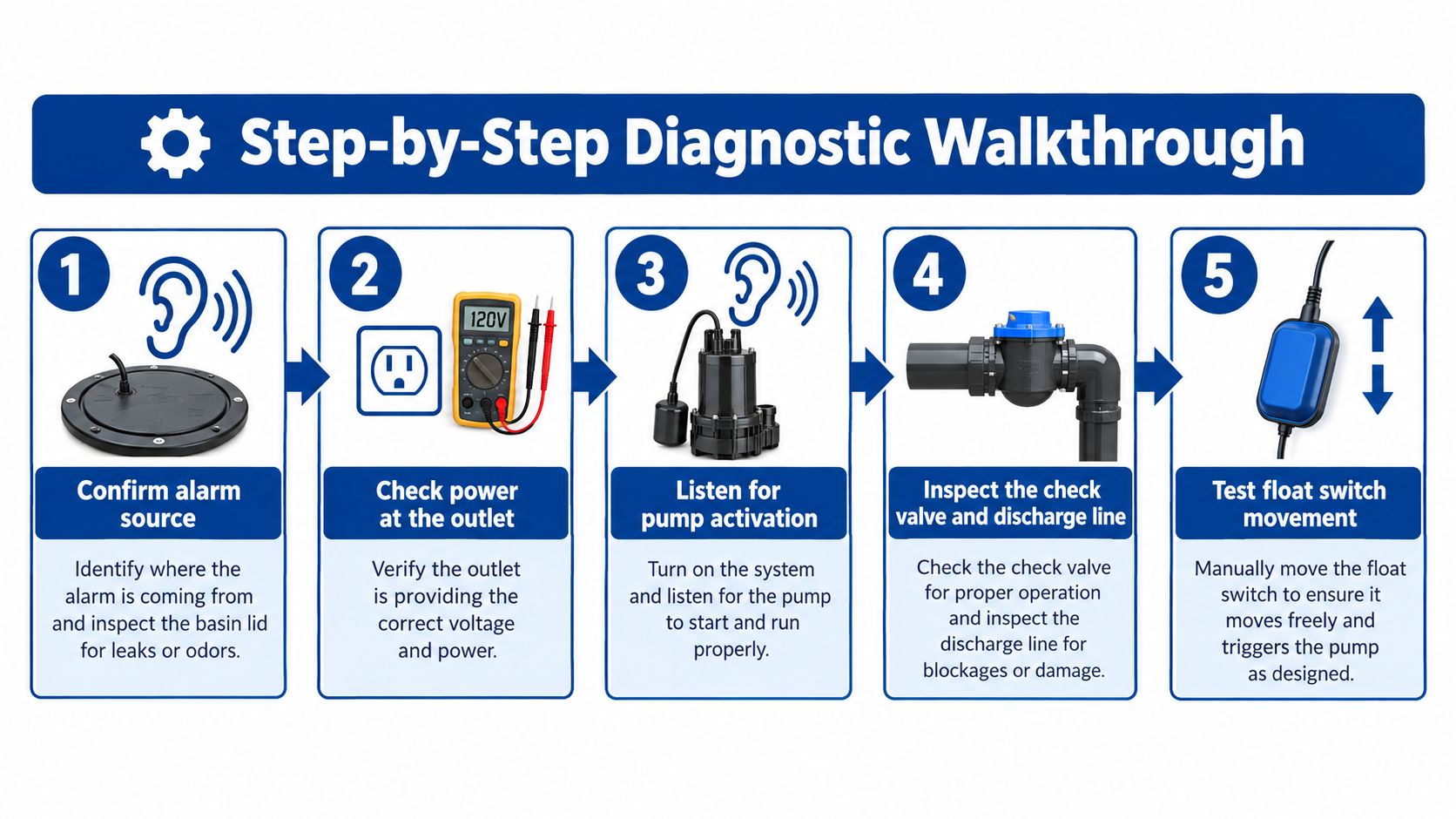
A good diagnosis starts with the simplest failure point and moves toward the more involved possibilities. Pentair's service guidance follows that same logic by checking power, the control switch, and the impeller cavity before deeper teardown.
Start outside the basin
Confirm the alarm source. Make sure the sound comes from the sewage basin alarm and not a sump pump, water softener, security device, or another basement appliance. Look around the lid for seepage, loose connections, or an odor that suggests the basin seal or venting needs attention.
Check power. Inspect the dedicated breaker, outlet, GFCI protection where applicable, and the pump's plug connection. A blown fuse, tripped breaker, or loose cord can stop a healthy pump from running.
Look for switch trouble. Many systems use a piggyback float plug. If the pump runs when connected directly to power but won't operate through the piggyback switch, the switch is the likely failure, not the motor. Don't bypass safety controls as a permanent repair.
Inspect the operating parts carefully
Observe the float. With power isolated, check whether the float moves freely without touching the basin wall, discharge piping, or debris. A float that sticks can cause either a no-start condition or continuous operation.
Consider the impeller. A humming pump that doesn't move wastewater may have debris or buildup in the impeller cavity. The pump should be disconnected from power before any inspection, and you shouldn't reach into contaminated water without proper protection.
Examine the check valve and discharge path. The check valve above the pump should prevent wastewater from falling back into the basin. Backflow can cause short cycling, while a blocked discharge line can leave the pump running without clearing the basin. Listen for steady flow when the pump operates, but don't assume quiet operation proves the line is clear.
If the pump has power, the float moves, and the impeller isn't visibly obstructed, the problem may be hydraulic rather than electrical. Incorrect sizing, excessive inflow, poor float settings, or a discharge problem can keep a replacement pump from solving the issue. A video camera sewer inspection can help when the discharge route or connected sewer piping is part of the suspected problem.
The Five Most Common Failure Modes
The symptom often tells you more than the alarm itself. A pump that hums, a pump that runs constantly, and a pump that never starts may all need different repairs.
| Failure Mode | Approx. % of Calls | Symptoms | Likely Cause |
|---|---|---|---|
| Impeller wear or clogging | Not stated here | Humming, weak discharge, slow clearing, grinding | Debris, buildup, or internal wear |
| Mechanical seal failure | Not stated here | Leakage, odor, moisture near the pump or basin | Worn or damaged seal |
| Float switch malfunction | Not stated here | Pump won't start, won't stop, or cycles unpredictably | Fouled, stuck, or failed float control |
| Motor winding failure | Not stated here | No operation on direct power, overheating, or repeated overload trips | Electrical motor failure |
| Check valve failure | Not stated here | Backflow, short cycling, or wastewater returning to the basin | Stuck or worn valve |
An independent summary identifies these five categories as recurring sewage pump failure modes and connects rapid cycling to check-valve backflow, poor float settings, undersizing, or excessive inflow. That failure-risk overview is useful because it looks beyond the familiar “clear the clog” answer.
Match the sound to the likely problem
A grinding sound usually sends the inspection toward the impeller or motor. A humming sound with little or no discharge suggests an obstruction, a locked impeller, or a motor that can't develop enough power. Frequent starts and stops point toward the float, check valve, inflow conditions, or pump sizing rather than automatically proving that the pump itself is worn out.
A strong sewage odor near the basin can indicate a poor lid seal, venting issue, or wastewater that isn't being removed correctly. Frequent clogs, backups, alarm activation, constant cycling, and a pump that won't turn on are recognized warning signs requiring prompt inspection, as summarized in this sewage ejector pump warning-sign guide.
The important distinction is between a failed component and a recurring system condition. Replacing a float won't correct a blocked vent. Installing a new motor won't correct a discharge line that is too restrictive or a check valve that allows backflow.
Why Ejector Pumps Fail Early in Michigan Homes
Southeast Michigan homes bring several practical conditions into the diagnosis. In Macomb County, Oakland County, and Wayne County, basement systems may be installed during a remodel, added to an older home, or adapted to a newer subdivision layout. The pump may be blamed when the actual issue is the surrounding installation.
Winter and basement conditions
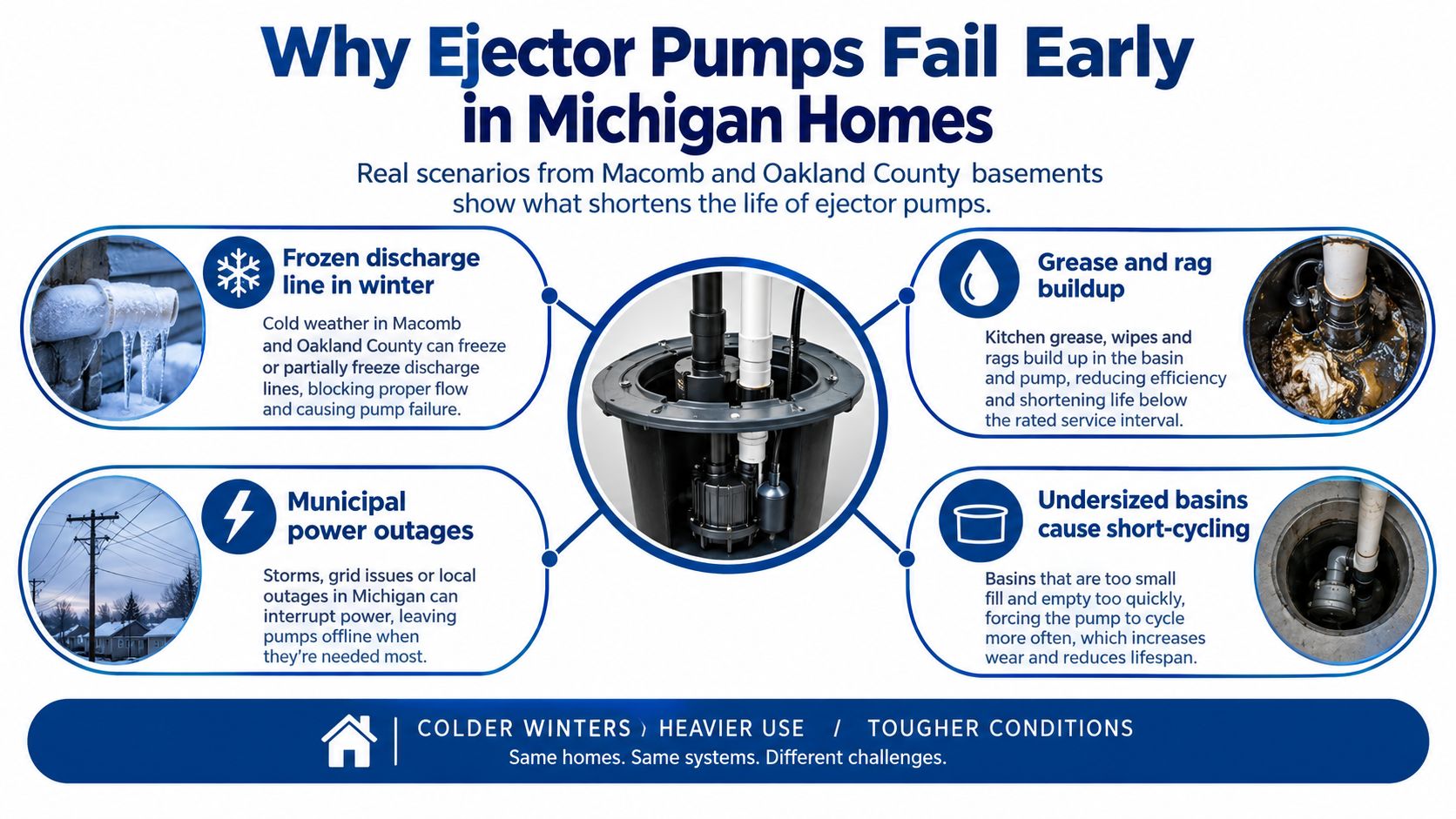
Michigan winters can expose weak points in discharge piping, venting, and basement plumbing. A cold, poorly protected section of piping may restrict flow, while heavy rain can increase the amount of water entering a building through plumbing or foundation-related pathways. A sump pump may handle groundwater, but it can't substitute for a sewage ejector pump connected to basement fixtures.
Hard-water mineral buildup can coat internal pump components, float rods, valves, and discharge passages. Over time, scale can limit float movement or reduce the effective opening through which wastewater must pass. That can turn a minor maintenance issue into repeated alarms and shortened equipment life.
Waste and installation problems
Wipes, feminine hygiene products, grease, and other unsuitable solids increase clogging and motor strain. Sediment entering through a basement floor drain can also collect where the pump has difficulty passing it. The result may be a pump that works after cleaning but fails again because the material entering the system hasn't changed.
Some recurring problems come from installation details. Blocked vents, worn check valves, improper pump sizing, poor float settings, and electrical irregularities can create short cycling or overload trips. Code frameworks address discharge piping, venting, alarms, and controls, so a repair may have compliance implications as well as mechanical ones. This overview of sewage ejector repair and maintenance explains why inspection and code-aware service belong in the same conversation.
What You Can Fix Yourself and When to Call a Plumber
A homeowner can handle a few external checks without taking apart the sewage system. Resetting a tripped breaker, confirming that a plug is seated, and observing whether the alarm changes are reasonable first steps, provided you keep clear of standing water and follow electrical safety precautions.
You may also be able to see whether a float is obstructed from outside the basin. Don't force it, bypass it, or open the lid while power is connected. If a visible inlet screen has an accessible obstruction, remove it only after isolating power and using appropriate protective equipment.
Repairs that need more caution
A check valve replacement, capacitor replacement, pump removal, or wiring repair is not a casual weekend project. The correct part must match the pump and system, the basin must be safe to access, and contaminated components need proper cleaning and disinfection after service.
Call a licensed plumber when:
- The pump is inside the basin. Removal exposes you to electrical and contamination hazards.
- The discharge line needs alteration. A repair beyond an accessible union can affect flow, venting, and code compliance.
- The pump repeatedly overloads. A stuck impeller, low or incorrect voltage, and motor failure are all possible causes, according to Pentair's Hydromatic service documentation.
- Sewage reached finished space. Cleanup and disinfection require more than wiping down the floor.
- The problem keeps returning. Recurring alarms usually deserve a system diagnosis rather than another replacement part.
A practical rule is simple. If the issue is outside the sealed basin and you can verify power is safely isolated, basic observation may help. If you must open, lift, rewire, resize, or modify anything in the system, professional service is the safer choice.
Preventive Care and When to Reach Out
Preventive care won't correct a flawed installation, but it can reveal trouble before the basin overflows. Manufacturer and field guidance support routine inspection of pumps and system components, with some pump guides recommending quarterly float-switch checks and annual discharge check-valve testing.
For a Michigan basement, keep a simple maintenance record:
- Test the alarm and float. Confirm the alarm works and that the float moves without sticking.
- Watch the cycling pattern. Repeated starts, continuous running, or an unusually long discharge cycle needs attention.
- Inspect the vent and lid. Obstructions, loose seals, and odors can point to a ventilation or containment problem.
- Check the discharge valve. A worn check valve can allow backflow and force unnecessary cycling.
- Use the system appropriately. Keep wipes, grease, feminine hygiene products, and other unsuitable solids out of fixtures connected to the ejector.
A light-duty sewage or effluent pump has an expected life of about seven years, although installation quality, maintenance, and correct sizing can change that substantially, according to this pump maintenance reference. If you own a home in Fraser, Sterling Heights, Clinton Township, Troy, Macomb, or Shelby Township, recurring alarms and odors are good reasons to arrange service before a basement backup damages flooring or finished walls.
For related basement equipment, see this guide to sump pump maintenance. The systems serve different purposes, but both deserve attention before heavy rain, freezing weather, or an extended period of inactivity.
Call Jay's Plumbing and Sewer at 586-634-3450 for sewage ejector pump repair, diagnosis, replacement, and related residential or commercial plumbing service across Macomb, Oakland, and Wayne counties. Visit Jays Plumbing and Sewer to schedule service for a recurring alarm, backup, odor, or pump that won't start.
