

Last spring, a homeowner in Fraser called after a heavy rain. The basement didn't flood all at once, but the sump pit was full, the pump was quiet, and water was creeping toward the furnace room. That's the kind of call that turns into a long day, because the problem usually wasn't the storm, it was the maintenance that never happened when the basement was dry.
Sump pump maintenance is one of those jobs that feels boring until the night it saves your basement. In Southeast Michigan, with Michigan winters, thaw cycles, and sudden heavy rain, the pump isn't just a piece of equipment, it's the last barrier between a damp floor and a real cleanup. A widely used maintenance benchmark says residential sump pumps last about 7 to 10 years, with annual checks and more frequent operational tests, while battery backups need their own schedule too, including load-testing and battery replacement at regular intervals (maintenance benchmark and flood-damage comparison).
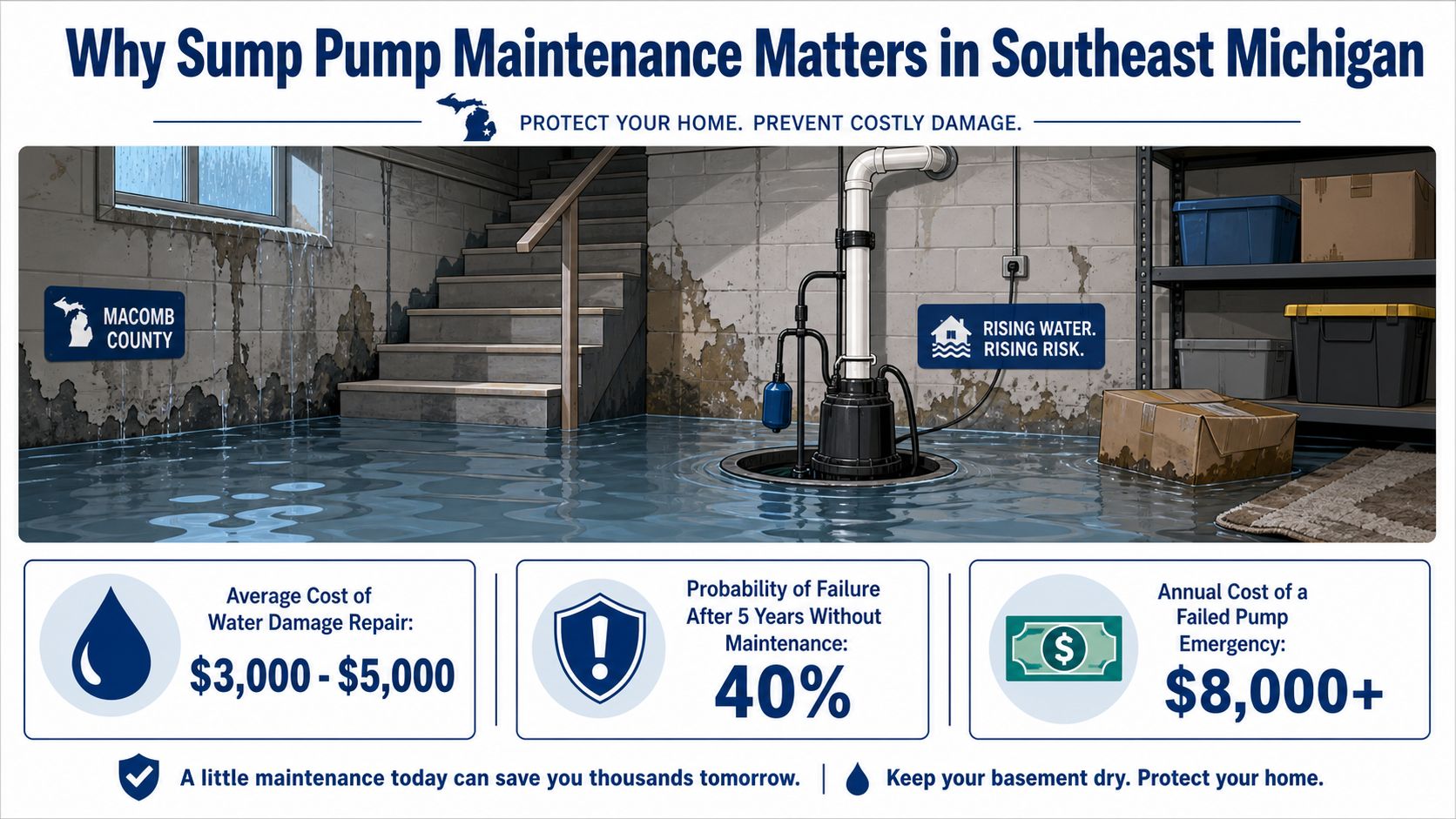
For homeowners in Macomb County, Oakland County, and nearby communities, that makes the maintenance routine a practical form of insurance. The work is cheap compared with cleanup, and it's a lot easier to catch a bad float, a dead outlet, or a frozen discharge line before the next storm than after the carpet is wet and the furnace is sitting in standing water. If basement flooding is already a concern, this basement flooding prevention resource is worth keeping handy.
Table of Contents
- Why Sump Pump Maintenance Matters in Southeast Michigan
- Quick Monthly and Quarterly Checks Anyone Can Do
- The Full Annual Service Routine Step by Step
- When the Sump Pump Also Handles Laundry or Gray Water
- Winter and Storm Season Resilience in Michigan
- A Simple Seasonal Calendar for Sump Pump Care
- When to Call a Plumber and How Jay's Plumbing and Sewer Can Help
Why Sump Pump Maintenance Matters in Southeast Michigan
A basement in Sterling Heights can look fine on a Tuesday and be underwater by Friday if the snow melts fast and the pump doesn't kick on. That's the reality people run into around Macomb and Oakland County, especially in older homes where the pit, discharge line, and backup system haven't been checked in years. The hard lesson is simple, the pump can sit there for months and still fail when the first load hits.
The cost gap is what makes routine care worth doing. One maintenance source ties 1 inch of basement flooding to $25,000 or more in damage, while annual maintenance is estimated at $150 to $250 compared with $1,200 to $4,000 for a water-damage remediation event (maintenance benchmark and cost comparison). Those aren't abstract numbers when you're looking at soaked drywall, a ruined box of keepsakes, or a dehumidifier running for days.
What usually fails first
Hidden problems are common. One maintenance checklist says 25% to 40% of sump pump systems can show concealed issues like float-switch failures, stuck check valves, or blocked discharge lines that won't show up until a heavy rain event (hidden-failure checklist). That's why a pump that “seems fine” still deserves a real test.
Practical rule: if you haven't heard the pump run during a test, don't assume it's ready for storm season.
The older the unit gets, the more important that habit becomes. A pump can last a decent run, but age, sediment, and power issues pile up. In Michigan, where snowmelt and spring rain can arrive back-to-back, a lazy maintenance schedule is usually the thing that exposes a weak system.
Quick Monthly and Quarterly Checks Anyone Can Do
You do not need a full service call every time you open the sump pit. Most homeowners can do a fast check in under five minutes, and that small habit catches the problems that turn into emergency plumbing calls later. It also tells you whether the pump is sitting idle, short-cycling, humming, or completely dead.
The monthly habit that prevents surprises
Start with the easiest things first.
- Confirm the pump has power: Make sure it is plugged in and the GFCI or circuit protection has not tripped, because a dead outlet leaves the pump useless even when the mechanical parts are fine.
- Look for warning marks: Rust, dampness, or water lines around the pit usually mean the system has been under stress or has already backed up a little.
- Listen for odd cycling: Repeated on-off starts can point to float trouble or a discharge issue instead of healthy operation.
- Test with water: Pour a bucket or several gallons into the pit and confirm the float trips, the pump starts, and water leaves the house.
A practical checklist from this sump pump function check guide says a visual check can take about 30 seconds and a test cycle about 2 minutes, which is why this is not a job people should keep putting off (tiered maintenance schedule).
The quarterly outside check
The outdoor part matters just as much. Walk to the discharge outlet and make sure water is leaving the property, not dumping near the foundation. Check for ice, crushed pipe, or a disconnected run that would let the pump run without moving water.
A pump that runs but does not move water is not doing its job. The discharge line tells you whether the system is really protecting the basement.
Frozen discharge lines are a common problem in Michigan, especially after a warm spell followed by a hard freeze. If the line is blocked outside, the pump may sound normal in the basement and still fail the house when the pit fills fast.
That is what homeowners in Macomb and Oakland County run into.
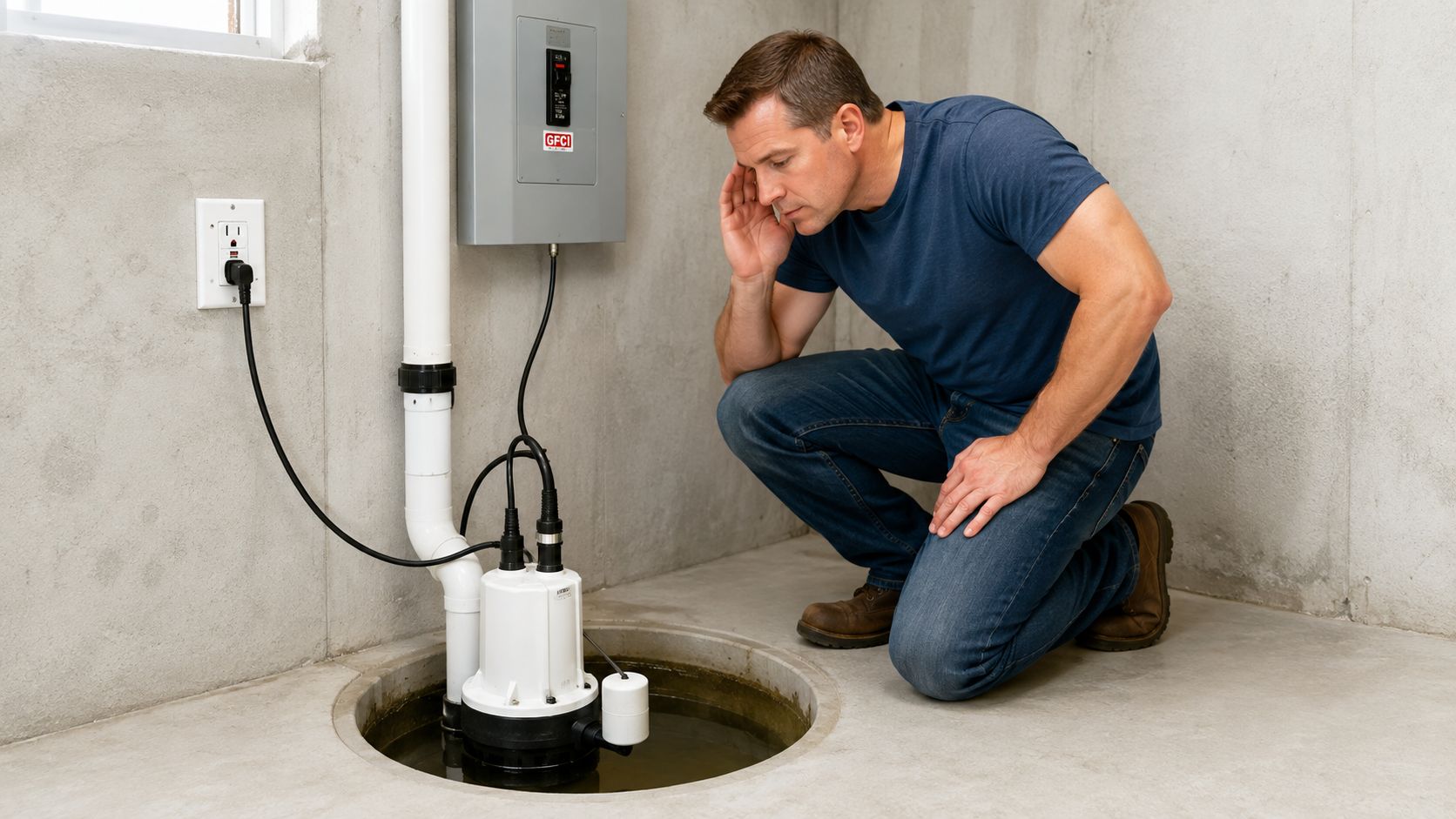
Laundry-fed basins deserve a closer look too. If the sump pit also handles gray water from a washer, lint and soap residue can settle in faster, and the pump has to work harder than a dry-weather test suggests. Backup systems are another weak point, because a battery or secondary pump that has never been tested under load can look ready right up until a storm knocks the primary system out.
For a basement in Michigan, that is the part worth respecting. A quick monthly check tells you whether the basics still work, and the quarterly outdoor check tells you whether the water has a clear path away from the house when the weather turns.
The Full Annual Service Routine Step by Step
A good annual service is more than a bucket test. It's a complete look at whether the pump can sense water, get power, move water out of the house, and shut off without hanging up. That's the kind of check that makes sense for homeowners, property managers, and anyone responsible for a basement that can't afford a surprise.
Start with safety and access
Unplug the pump or turn off the dedicated breaker first, then verify the GFCI protection. After that, open the pit or remove the pump if needed, because you can't clean or inspect what you can't see. A reliable maintenance workflow starts there, not with pouring water in and hoping for the best.
The basin should be free of sediment and debris, and the intake screen should be clear. Silt buildup is a common nuisance in Michigan basements, especially where groundwater or small bits of grit keep making their way into the pit. Clean the basin, then check that the float moves freely without rubbing the pit wall or catching on the discharge pipe.
Reassemble, restore power, and test the response
Once everything's clean and seated, restore power and do an in-pit activation test by adding several gallons of water. A healthy system should start, drain the test volume in roughly 30 to 60 seconds, and shut off on its own when the float drops below the trigger point (field guide on expected pump behavior). If it hesitates, cycles oddly, or keeps running after the water level falls, something in the control path needs attention.
Common failure points are often simple. A tripped GFCI or unplugged cord can leave the pump dead even if the motor is fine, while sediment or a binding float can stop a good pump from activating at all. That's why this routine matters, it checks the whole chain, not just the motor.
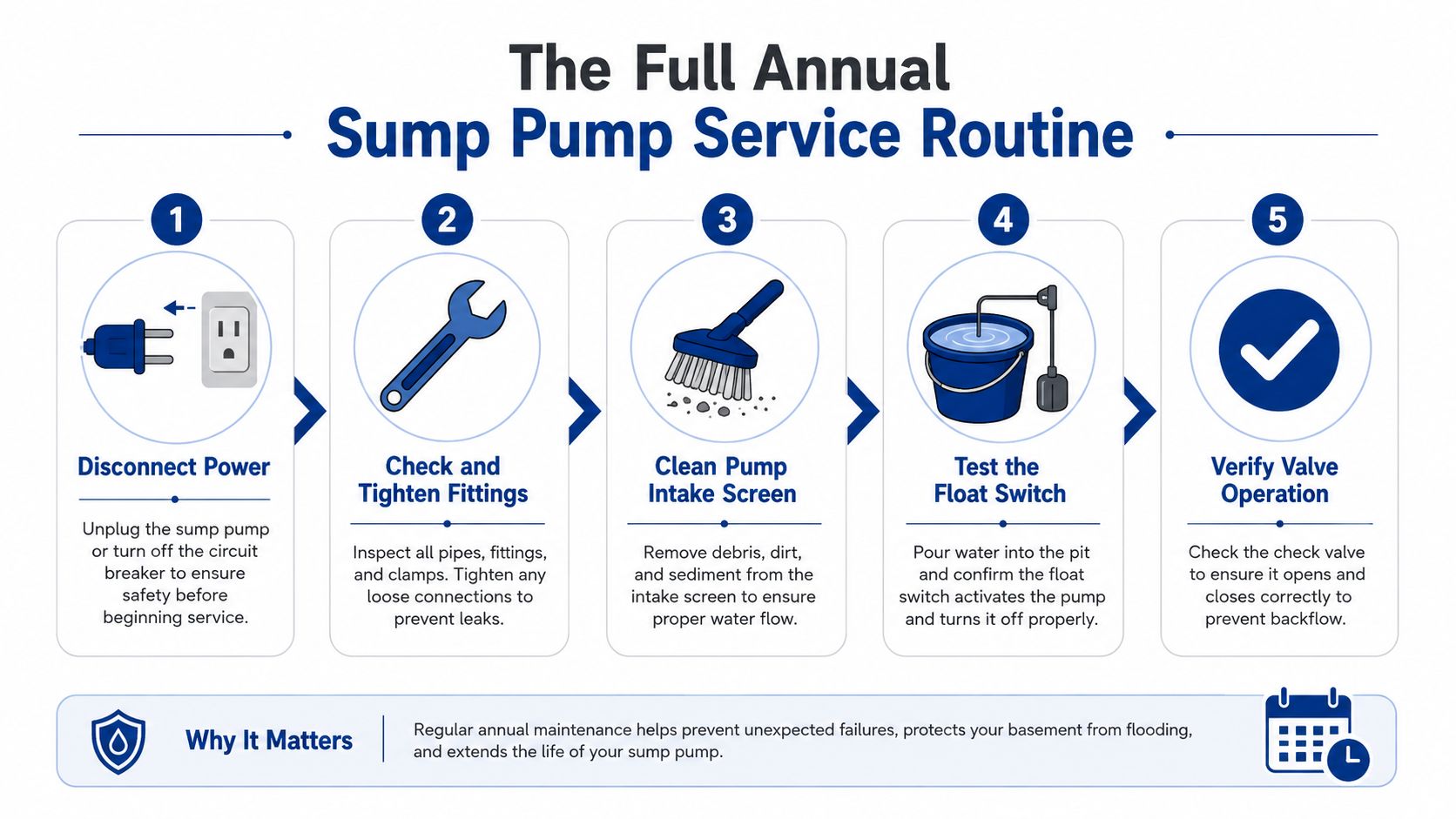
If you want to see the basic service logic in motion, the embedded guide below is a solid visual reference.
When the Sump Pump Also Handles Laundry or Gray Water
A sump pit that only handles groundwater is one thing. A pit that also takes washing machine discharge, utility sink runoff, or other gray water is a different animal. The maintenance schedule gets tighter because lint, soap residue, and fine debris don't behave like clean groundwater, they cling to screens, foul the float, and build up faster.
Why laundry-fed systems need more attention
Most generic checklists assume the pit is dealing with groundwater only. That's where they miss the problem in older homes and some rental properties, because laundry discharge can turn a normal sump into a catch basin for lint and detergent residue. One source specifically notes that pumps handling washing machine water may need monthly cleaning because buildup happens faster than in groundwater-only systems (gray-water maintenance angle).
The failure mode is usually not the motor first. It's the screen clogging, the float binding, or the pump losing capacity because the inlet path is dirty. If the pit looks slick, smells like detergent, or develops a crust near the waterline, that's a sign the maintenance cadence should be shorter.
How to tell if the schedule needs to change
Use the water source as the decision rule.
- Groundwater only: A quarterly inspection and annual cleaning usually makes sense.
- Laundry or gray water in the pit: Clean more often, watch the float closely, and expect residue on the basin walls.
- Mixed use with frequent laundry loads: Treat the system as higher-maintenance, because buildup can outpace standard seasonal checks.
If the pit handles lint, don't wait for the annual visit to find the problem. The residue usually shows up before the motor fails.
A lot of homeowners get caught here. They assume the pump is undersized, when issue is buildup changing how the system senses water and moves it out. A straightforward cleaning schedule usually beats guessing.
Winter and Storm Season Resilience in Michigan
Michigan winters create a pair of problems that can fool even a healthy sump pump, frozen discharge lines and power loss. The pump can run just fine and still leave water trapped if the outlet is iced over or the discharge line won't drain between cycles. In storm season, that's the difference between a dry basement and a mess.
Check the discharge line before the first hard freeze
Look at the outdoor run and make sure it's clear, sloped properly, and not holding water between cycles. One source specifically warns to inspect the discharge line for ice buildup in cold weather and to verify the breaker or power connection after outages (cold-weather and outage guidance). If the outlet is frosted over, the problem may be on the discharge side, not in the pit.
The best indicator here is simple, water should leave the property and the pump should shut off cleanly afterward. If the line freezes or the pipe backs up, the pump may sound normal while failing to protect the basement.
Treat the backup system as separate equipment
Backup systems need their own testing, not just a glance when the primary pump is checked. Canada's emergency guidance says to check backup performance two to five times a year, and to test it by unplugging the primary power source so the backup has to run on its own (backup pump guidance). Battery backup systems also need load testing every 6 months, and batteries should be replaced every 3 to 5 years (maintenance benchmark).
If you want extra protection during extended outages, a generator can be part of the plan, but it doesn't replace testing. The worst time to discover a dead backup is during a snowmelt surge with the power out.
A Simple Seasonal Calendar for Sump Pump Care
The easiest way to stay on top of sump pump care is to tie it to the seasons you already notice. In southeast Michigan, spring melt and heavy rain are the big load periods, summer can still bring sudden storms, fall is a good prep window, and winter is where frozen discharge problems show up.
| Season | Key Tasks | Why It Matters | Estimated Time |
|---|---|---|---|
| Spring | Clear the discharge line, test the pump after thaw cycles, check for returning water | Heavy rain and snowmelt expose weak floats, blocked lines, and power issues | Short, repeatable check |
| Summer | Test the backup system, inspect for odd cycling, confirm the outlet stays clear | Storms and outages still happen, even when the weather looks calm | Quick test and walk-through |
| Fall | Clean the pit, inspect the check valve, clear the outdoor outlet before freezing weather | Small problems turn into frozen problems once the temperature drops | Seasonal service visit |
| Winter | Watch for ice at the discharge outlet, verify outage readiness, keep access clear | Frozen lines and power loss are the two big winter failure points | Brief check during cold snaps |
The point of a calendar like this is consistency. If you do the short checks when the season changes, you don't end up guessing during the first big storm. That's especially useful for landlords, property managers, and anyone handling a home with an older basement system.
One thing I'd keep in mind, if the pump hasn't been exercised before the season turns hard, that's when surprises show up. A few minutes now can save a lot of cleanup later.
When to Call a Plumber and How Jay's Plumbing and Sewer Can Help
Call a plumber when the pump is running but not moving water, the float sticks, the basin fills too quickly, or the backup has never been tested under load. A licensed plumber will look at the amperage draw, the check valve condition, the discharge line slope, and whether the basin is sized right for the home's water load. That's the kind of inspection that separates a temporary fix from a real plan.
If the pump is near the end of its service life, repair and replacement become a practical decision, not a guess. The system may still turn on, but that doesn't mean it's reliable enough for a Macomb County spring storm or a January outage. For sump pump, sewage, and backup pump work, Jay's Plumbing and Sewer's repair and installation page is the right place to start if you want a local crew to evaluate the setup.
Jay's Plumbing and Sewer serves residential and commercial customers across Macomb and Oakland County, with 24/7 emergency response, scheduled maintenance, and pump service from Fraser. If you'd rather have a trained plumber check the system before the next heavy rain, Call Jay's Plumbing and sewer Now @ 586-634-3450.
If your sump pump is overdue for a check, Jay's Plumbing and Sewer can inspect the pit, test the backup, and help you decide whether repair or replacement makes more sense for your basement. Visit Jays Plumbing and Sewer to schedule service, ask questions, or get help before the next storm moves through Macomb or Oakland County.
