
You walk downstairs in Clinton Township or Sterling Heights and find water pooled around the basement floor drain. The grate may look dirty, but the visible opening isn't always where the trouble started. A floor drain clogged with standing water can be a small trap obstruction, or it can be the first sign that a shared branch or main sewer line can't carry wastewater away.
Before you reach for a plunger, check what the rest of the plumbing is doing. That quick diagnosis helps you choose between safe cleanup, drain cleaning, a sewer camera inspection, or a more involved sewer repair.
Table of Contents
- Why a Floor Drain Clogged With Water Is Usually a Symptom
- Diagnosing Whether the Clog Is in the Trap or the Sewer Line
- How to Unclog a Floor Drain Yourself Safely
- Snaking Versus Hydro Jetting and Camera Inspections
- Preventing Floor Drain Clogs in Michigan Homes
- When to Call a Licensed Plumber for a Floor Drain Backup
Why a Floor Drain Clogged With Water Is Usually a Symptom
A basement floor drain is usually one of the lowest open outlets in a building's plumbing system. When a downstream pipe becomes restricted, wastewater follows the path of least resistance and may rise through that low drain before it appears at a sink, tub, or toilet.
That means the grate can be innocent. Grease, wipes, debris, and tree-root intrusion commonly narrow drain and sewer lines, while older piping can lose usable space from corrosion, mineral scale, and root growth. Guidance on basement floor-drain backups and main-line clogs notes that one contractor dataset attributed about 45% of basement floor-drain backups to main sewer line clogs, while another estimate placed tree-root intrusion at about 25% of recurring cases.
Read the symptoms before choosing a tool
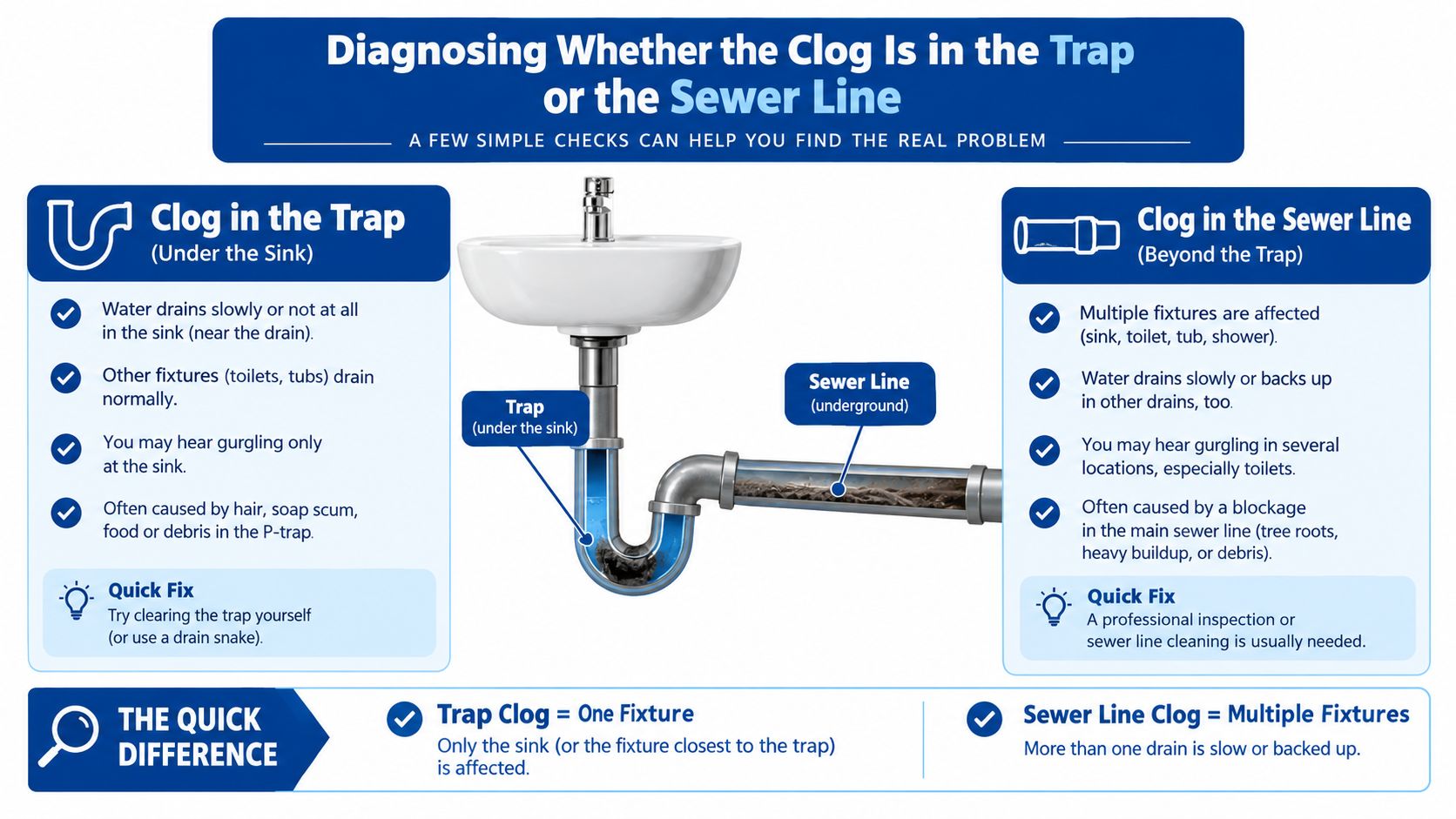
A localized trap clog usually affects the floor drain by itself. You may see slow drainage, sediment, or debris near the opening, but nearby fixtures continue working normally.
A broader restriction creates a wider pattern:
- Multiple slow fixtures: Sinks, tubs, or toilets may drain poorly at the same time.
- Gurgling or bubbling: Air can move through connected plumbing when wastewater meets resistance.
- Rain-related backups: Heavy rain can overload systems where downspouts, foundation drains, or sump pumps connect to sanitary sewers. The Ohio EPA explanation of sewage backups during rain events describes how excess stormwater can force wastewater back through fixtures.
- Recurring problems: The drain clears temporarily, then backs up again because the underlying line remains restricted.
User behavior is also a major factor. A UK drainage-industry survey reported that 83.1% of drain blockages were tied to user-related behavior, while 15.3% were linked to structural defects, including broken, misaligned, or root-damaged drains. The figures are from HomeFixx's floor-drain guidance, and they reinforce a practical point: recurring blockages often need more than cleaning the grate.
Practical rule: Treat the floor drain as a warning point until you know whether water is trapped locally or blocked farther downstream.
Diagnosing Whether the Clog Is in the Trap or the Sewer Line
The cleanout-plug test gives you useful information without guessing. A cleanout is an access point on the drainage system, often near the floor drain or along the branch line. If you're unsure which plug serves the drain, don't force a corroded fitting, and don't open one while sewage is actively rising.
For background on identifying and using this access point, see this guide to what a sewer cleanout is.
Start with the water movement
With the area protected and the correct cleanout identified, remove the plug carefully. Watch what the water does:
- Water drains immediately: The restriction is more likely in the floor-drain trap. A drain auger is usually the next reasonable tool.
- Water remains still: The blockage is more likely downstream from the trap, in the branch or main line.
- Water sits at the cleanout opening: That points toward a clogged trap.
- Water is a couple of inches below the opening: That suggests the downstream line is still open, making a trap-level obstruction more likely.
This diagnostic method is described in floor-drain clog guidance from Clogged Drain Authority. It doesn't replace a professional inspection, especially if the cleanout is damaged or sewage is present, but it helps separate a small local problem from a system problem.
Look beyond the basement drain
One slow floor drain points more toward the trap or immediate branch. Multiple gurgling fixtures, toilet bubbles when another fixture runs, or a backup that appears during heavy rain point more toward a shared branch or main sewer line.
Don't keep adding water to test the system if wastewater is already backing up. That can increase the amount of contaminated water on the floor and make cleanup harder.
How to Unclog a Floor Drain Yourself Safely
DIY makes sense when the evidence points to a small, accessible trap-level clog and there is no sewage actively backing up through other fixtures. Work from the least aggressive method to the most demanding one. Stop if the water level rises, the tool binds hard, or the drain connects to a larger backup.
Begin at the opening
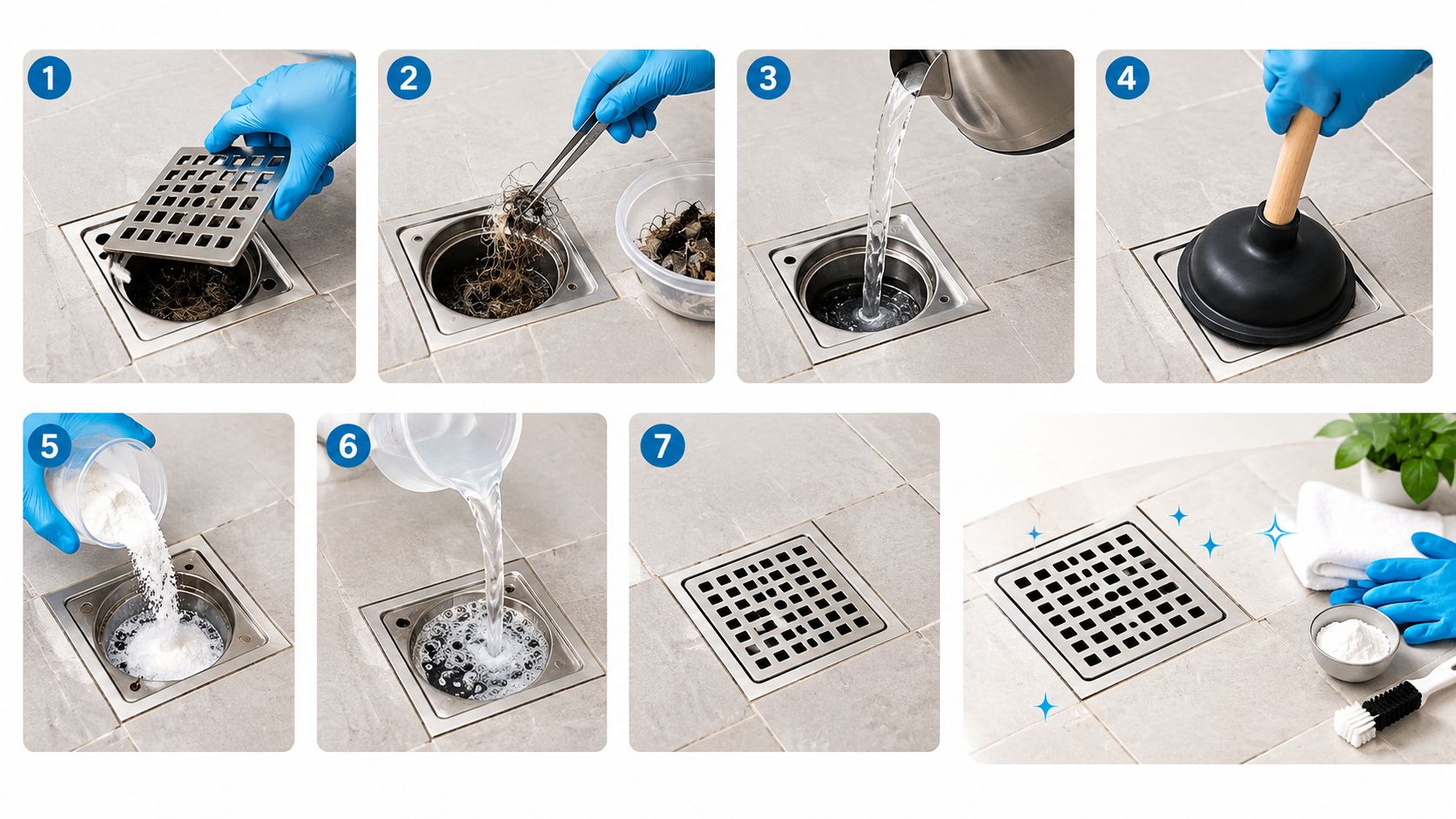
Put on gloves, remove the grate, and use a flashlight to inspect the first part of the trap. Pull out visible hair, lint, sediment, and debris with a hand tool or gloved fingers. Keep removed material in a bucket instead of pushing it farther into the pipe.
A dirty grate can restrict flow, but cleaning the grate won't correct a blockage farther down. If the trap has a removable strainer or basket, clean it separately before testing the drain.
Use a plunger with a real seal
A flat-cup plunger works better on a floor drain than a toilet flange plunger. A few inches of standing water can help transmit pressure, so don't remove all the water before plunging. Press the cup firmly over the opening, keep nearby openings covered when practical, and use controlled strokes rather than striking the drain aggressively.
Plunging can move soft material close to the opening. It won't remove tree roots, scrape heavy grease from the length of a sewer line, or correct a crushed or shifted pipe.
Try an auger only when the diagnosis supports it
A hand auger can help with a trap-level obstruction. Feed the cable gradually, rotate it when you feel resistance, and pull it back periodically to remove what it catches. Resistance that gives slightly may be soft debris. A cable that locks, kinks, or repeatedly meets a solid stop can indicate a fitting, root mass, scale, or damaged pipe.
A rental drain snake has more reach and force, but that doesn't make it automatically safer. It can damage fragile older piping, become lodged, or push material farther into a shared line. Don't use it as a substitute for diagnosis.
Skip harsh chemical drain cleaners
Chemical drain openers are a poor choice when you don't know where the blockage is. The product may sit in standing water, create a burn hazard for anyone opening the drain later, and still leave roots, grease, or structural damage in place. Never combine drain chemicals, and tell a plumber if any chemical product has already gone into the line.
Don't open a cleanout during an active sewage backup. If several fixtures are affected or wastewater is rising, stop testing and arrange professional drain cleaning.
Snaking Versus Hydro Jetting and Camera Inspections
A homeowner auger is designed to reach and disturb a nearby obstruction. Professional drain-cleaning equipment can work farther into a branch or sewer line, with cables selected for the pipe size and blockage type. The right method depends on the diagnostic fork, not on which tool sounds most powerful.
Hydro jetting uses high-pressure water to wash material from the interior of a suitable pipe. It can remove grease, detergents, sand, and mineral deposits clinging to pipe walls. It isn't the first choice for every old, damaged, or weakened line, because the pipe condition should be assessed before aggressive cleaning. The hydro jetting explanation from Jays Plumbing and Sewer describes how this approach differs from ordinary snaking.
A video camera inspection answers a different question. It shows whether the recurring restriction comes from roots, grease, a broken section, a shifted joint, or another condition. That information matters before anyone recommends excavation or sewer line replacement.
Which Method Fits Your Clog
| Situation | Likely Cause | Best Method |
|---|---|---|
| One floor drain is slow and water clears after trap access | Trap-level debris or buildup | Manual removal, plunger, or hand auger |
| The drain clears but becomes slow again | Buildup farther along the branch | Professional drain cleaning, followed by evaluation |
| Several fixtures gurgle or back up together | Shared branch or main sewer restriction | Main-line cleaning and diagnostic testing |
| The same line repeatedly clogs | Roots, grease, scale, or pipe damage | Camera inspection, with jetting or sewer repair as indicated |
| Backup appears during heavy rain | Stormwater surcharge or overloaded connected system | Plumbing and sewer evaluation, including sump pump and connection review |
A localized trap clog is only one possibility. Main sewer blockage, tree roots, and storm surcharge can all produce a floor drain clogged with water, and each requires a different long-term answer.
Preventing Floor Drain Clogs in Michigan Homes
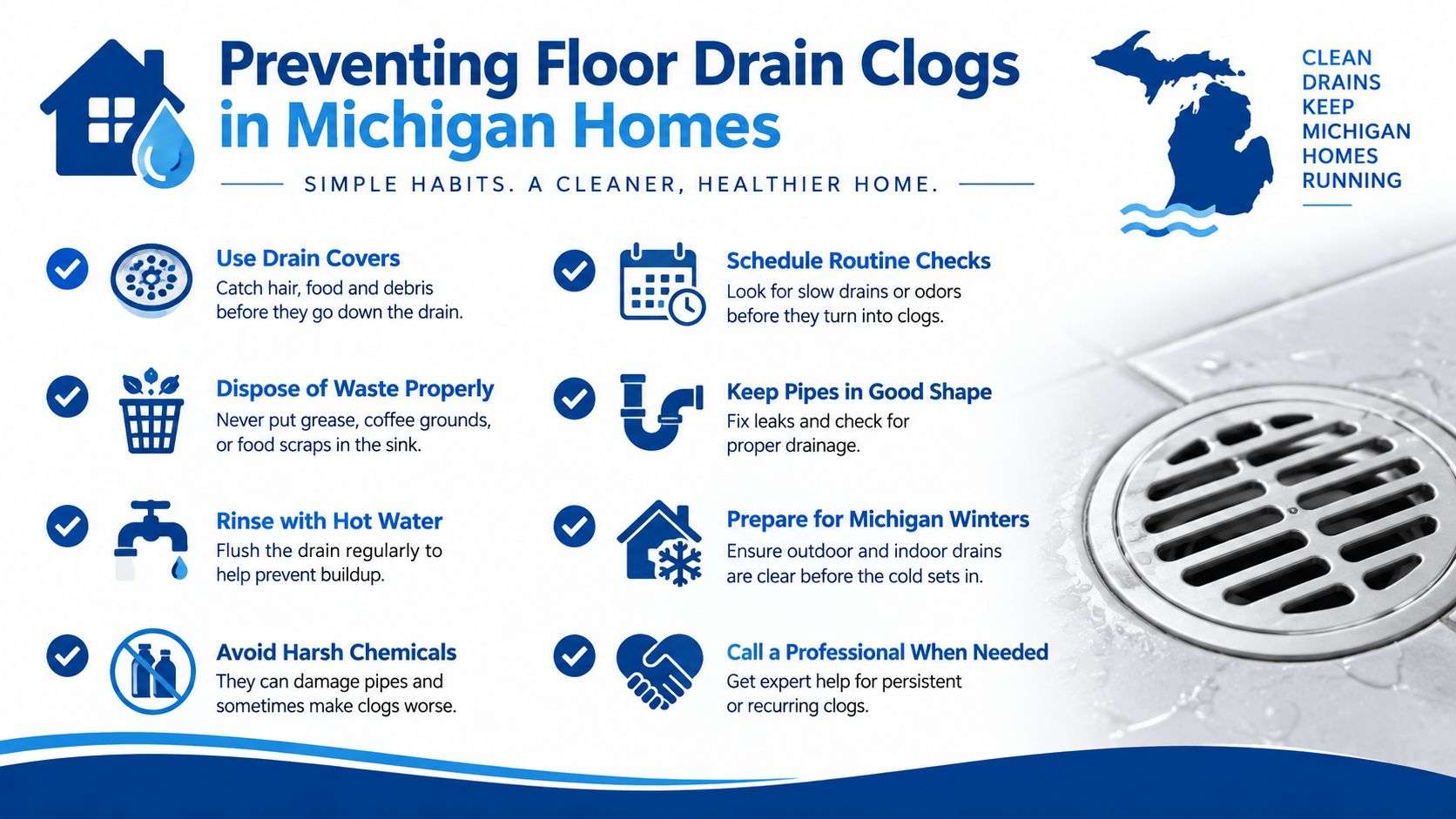
Prevention starts with what enters the plumbing. Keep wipes, shop towels, construction debris, and solid waste out of floor drains. Let grease cool and dispose of it in the trash instead of pouring it into a kitchen drain, because grease can travel and collect farther down the line.
Flush an infrequently used basement or utility-room drain periodically with clean water. Sediment and mineral accumulation can reduce capacity during dormancy. One technical source reports that over a 12-month dormancy period, buildup can reduce effective drain capacity by more than 50% without periodic flushing. The maintenance recommendation is supported by Structure Tech's floor-drain basics.
Keep the trap seal intact
A floor drain that sits unused can dry out. Once the water seal evaporates, sewer gas can enter the building. Plumbing guidance describes fixture trap seals between 2 inches and 4 inches, and recommends a trap seal primer or another approved device for drains that aren't used often. The plumbing trap paper from Dialectic Engineering explains this function.
Fraser, Troy, and Shelby Township homeowners should also pay attention to seasonal conditions:
- Spring rain: Watch for slow drains, basement flooding, or water rising at the floor drain after heavy storms.
- Michigan winters: Frozen ground and shifting soil can stress older buried lines, especially where drainage has already been marginal.
- Utility rooms: Keep lint, gravel, and sediment away from the grate, then flush and inspect the trap during routine maintenance.
- Older Southeast Michigan homes: Ask about sewer camera inspections when buying or selling a property with recurring drainage complaints.
When to Call a Licensed Plumber for a Floor Drain Backup
Call a licensed plumber when the backup involves sewage, multiple fixtures, heavy rain, or a recurring obstruction. A professional visit also makes sense when you suspect tree roots, when a snake won't pass normally, or when the drain clears only briefly before slowing again.
Those signs indicate that the problem may be beyond the trap. A plumber can choose the right cable, assess whether hydro jetting is appropriate, inspect the line with a camera, and recommend sewer repair when cleaning won't solve a damaged or obstructed pipe. That avoids repeatedly treating the symptom while the cause remains in the branch or main sewer.
A temporary opening is not the same as a reliable repair. The useful question is whether the line stays open and why it restricted in the first place.
This applies to homes, rental properties, restaurants, offices, and commercial buildings. Property managers and real estate agents may also want a camera inspection before a transaction or major renovation, while homeowners may need related services such as sump pump repair, leak detection, pipe repair, bathroom plumbing, kitchen plumbing, water heater repair, or water heater replacement.
If wastewater is entering the basement, use the 24/7 emergency plumbing service available from the Fraser-area team. Call 586-634-3450 for an estimate or emergency drain cleaning service in Fraser, Sterling Heights, Clinton Township, Troy, Macomb, Shelby Township, and surrounding Macomb, Oakland, and Wayne County communities.
Jays Plumbing and Sewer provides residential and commercial drain cleaning, sewer camera inspections, hydro jetting, sewer repair, and emergency plumbing support for floor-drain backups. Visit Jays Plumbing and Sewer or call 586-634-3450 to discuss the symptoms and schedule service.
