

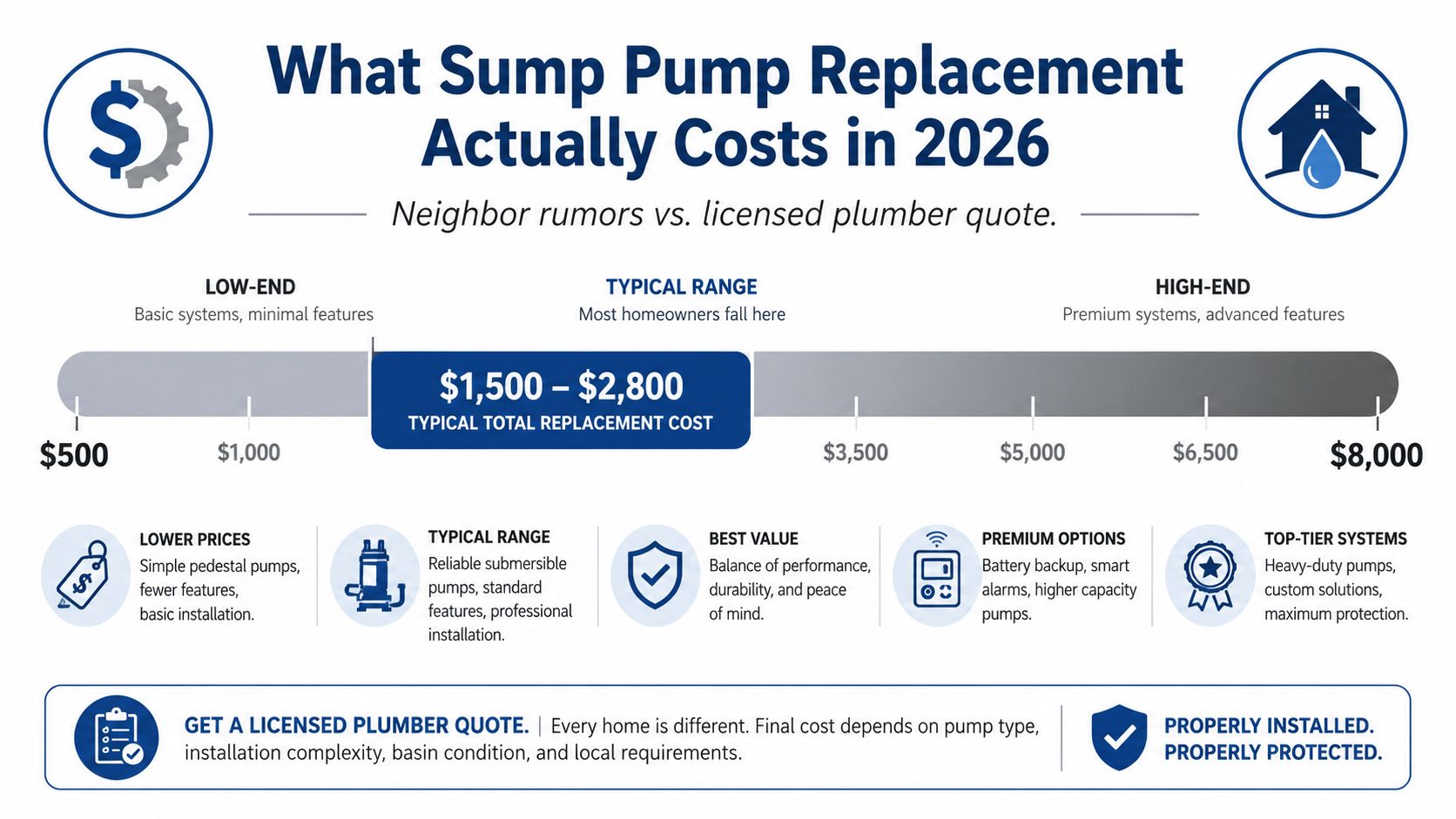
A standard sump pump replacement in an existing pit typically costs $650 to $1,200 in 2026. The final bill can be lower for a simple pedestal swap or rise into the $2,000 to $3,000 or higher range when the job includes backup protection, electrical changes, discharge-line work, or pit modifications.
You may be hearing different numbers because sump pump work isn't priced like buying a pump off a shelf. One Macomb County homeowner may get a few-hundred-dollar quote for a basic pedestal replacement, while another homeowner with a finished basement, a difficult discharge route, and no backup protection may receive a four-figure estimate. Both quotes can be reasonable when the work being proposed isn't the same.
Michigan basements have their own challenges. Heavy spring rain, snowmelt, groundwater, frozen discharge lines, and finished living spaces all affect how much time a plumber needs on site. The practical question isn't only, “How much does the pump cost?” It's, “What condition is the entire pumping system in, and what does this basement need to stay protected?”
Table of Contents
- What Sump Pump Replacement Costs in 2026
- Pedestal vs Submersible Pumps and Their Price Tags
- Labor Costs and What Licensed Plumbers Charge
- Simple Swap vs Full System Upgrade Where the Numbers Diverge
- Why Michigan Basements Push the Cost Higher
- What to Ask Before You Hire a Plumber
- When to Call a Plumber Before a Small Job Becomes a Flood
What Sump Pump Replacement Costs in 2026
A national homeowner cost guide places the average sump pump replacement cost at $1,358, with most homeowners paying between $645 and $2,109 for the full job, according to HomeAdvisor's 2026 sump pump installation cost guide. A simpler replacement in an existing pit commonly falls between $650 and $1,200. More involved work can reach $2,000 to $3,000 or more when the project includes backup protection or electrical changes, as outlined by The Basement Guide's replacement cost information.
The estimate depends on the condition of the pumping system and the protection the basement requires. A pump-only replacement may retain a sound pit, check valve, discharge line, and electrical connection. A broader project may involve damaged components, drainage corrections, finished-surface protection, or testing the system during operation.
Michigan conditions affect that scope. High water tables, heavy spring rain, snowmelt, frozen discharge lines, and finished basements can add labor or require a more capable setup. A like-for-like swap and a full system upgrade are different estimates, even when both start with replacing the pump.
What the estimate should include
A written quote should identify whether it covers:
- The pump: Pump type, capacity, construction, and included controls.
- Labor: Removal, installation, connections, testing, and cleanup.
- The check valve: Inspection or replacement of the valve that helps prevent water from flowing back into the pit.
- The discharge line: Examination of the pipe, fittings, exterior exit, and freeze-prone sections.
- Pit access: Extra work if stored items, carpet, shelving, or finished walls make access difficult.
The sump pump maintenance guide explains why the pit and discharge system need attention alongside the motor. A pump can run properly while a restricted or frozen line still leaves the basement exposed to rising water.
Practical rule: Compare the scope of two estimates before comparing their totals. A lower quote may cover only the pump, while a higher one may address the surrounding system.
Another national guide reports that installation averages about $1,400, with projects ranging from $500 to $4,000, while a straightforward replacement generally falls between $350 and $1,000 including labor and materials, according to This Old House's sump pump cost guide. These figures support the main point: replacement cost is a project-cost conversation, particularly in Southeast Michigan.
Pedestal vs Submersible Pumps and Their Price Tags
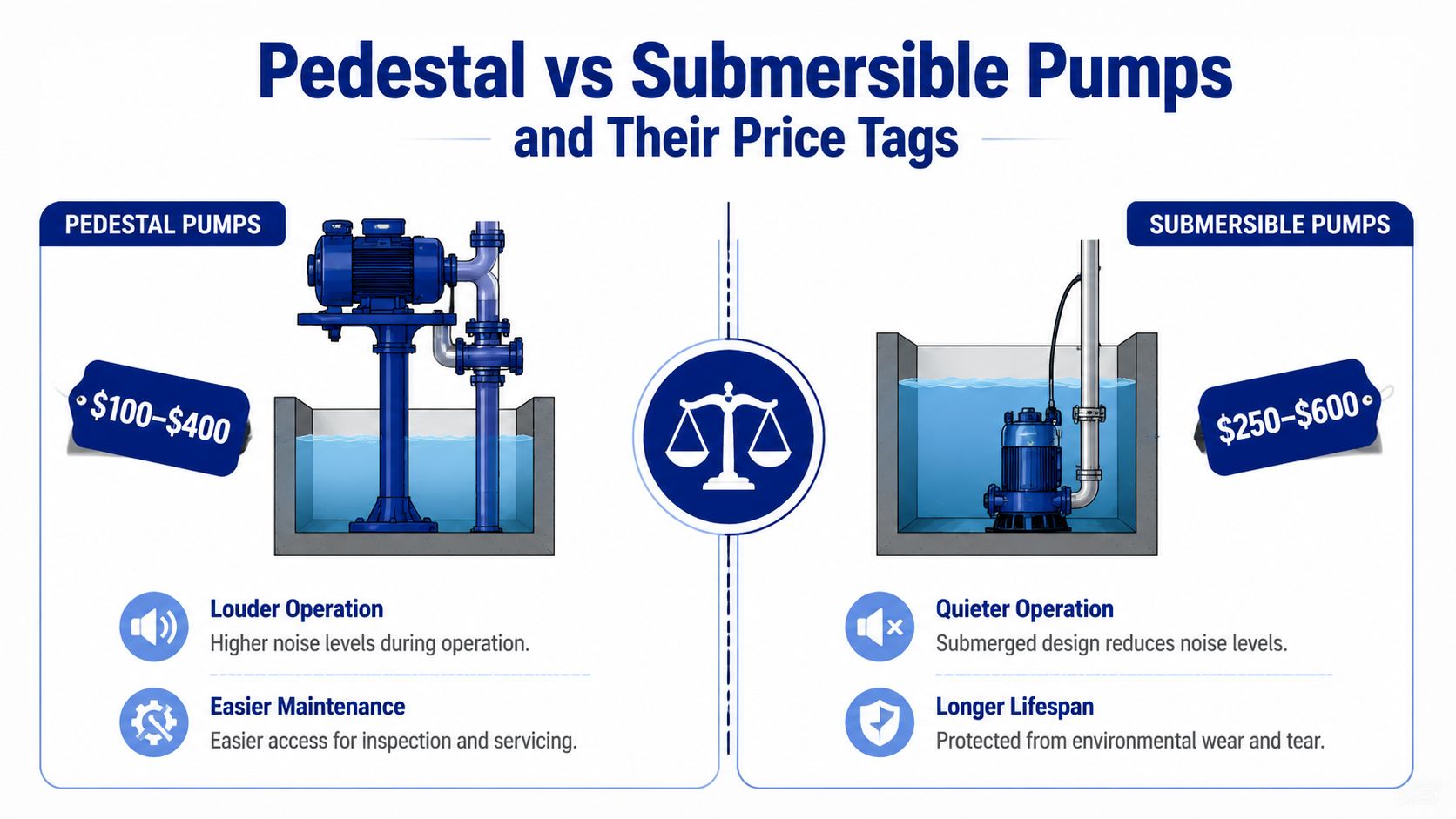
The pump design inside your basement affects both the purchase price and the way the system behaves. A pedestal pump keeps its motor above the sump basin, with a long shaft extending down to the water. A submersible pump sits inside the pit and operates underwater.
A pedestal replacement can start around $400, according to The Basement Guide's sump pump cost breakdown. The design is accessible, which can make service easier, and it can work well where the pit stays relatively dry between pumping cycles. The trade-off is noise and less suitability for homes that regularly move large amounts of groundwater.
When a pedestal pump makes sense
A pedestal model may be a practical choice when:
- The existing system is stable: The pit, discharge pipe, and electrical connection are in good condition.
- Noise isn't a concern: An unfinished utility area may not need the quieter operation of a submerged motor.
- Service access matters: The motor remains visible above the basin, making inspection straightforward.
- Water volume is moderate: The system doesn't face constant inflow during storms or snowmelt.
A like-for-like replacement often keeps the project simple. Changing to a different design, however, can require adjustments to the discharge connection, basin cover, or electrical arrangement.
Why homeowners choose submersible models
Submersible pumps sit below the water level and are generally quieter, which matters in a finished basement. They also suit homes that experience substantial groundwater movement. A standard submersible swap in an existing pit typically lands within the $650 to $1,200 range described in The Basement Guide's replacement pricing overview.
The right choice depends on the basement, not a neighbor's recommendation. A pump that works adequately in a dry Fraser basement may not be the right match for a property near a high water table or one that cycles heavily during Macomb County storms. A professional checks the pit, float operation, discharge route, and electrical setup before recommending an upgrade.
Labor Costs and What Licensed Plumbers Charge
The pump is only one line of the estimate. Labor commonly ranges from $350 to $1,200, while licensed plumbers or electricians may charge approximately $70 to $120 per hour, according to The Basement Guide's labor cost breakdown. For a same-type replacement in a prepared existing system, labor may be closer to $200 to $400.
The work can include disconnecting the old pump, inspecting the pit, installing the replacement, changing the check valve, reconnecting the discharge pipe, testing the float switch, checking the electrical connection, and running water through the system.
Why a quick swap can take longer
A straightforward replacement takes longer when:
- The check valve leaks: Backflow can cause short cycling and added wear.
- The discharge pipe is restricted: A clogged or poorly routed line limits water flow.
- The float switch catches on the pit: The pump may not start or may run continuously.
- The outlet or wiring needs attention: Electrical defects require careful evaluation before reconnection.
- The pit is difficult to reach: Finished walls, stored belongings, and flooring slow safe removal and installation.
A finished basement can add a separate labor item. If the discharge line passes through a finished wall, the plumber may need to open limited access, disconnect and reinstall the line, then test for leaks. A frozen-line exit may also require rerouting the discharge outdoors and securing it against future blockage. That is different work from exchanging a pump in an open utility area.
Ask the plumber to itemize removal, testing, cleanup, and accessory replacement so you can compare quotes on equal footing.
Simple Swap vs Full System Upgrade Where the Numbers Diverge
A like-for-like replacement usually runs $350 to $1,000 including materials and labor. That estimate assumes the existing pit, wiring, check valve, and discharge arrangement are usable. The plumber removes the failed pump, installs the same type, tests the float switch, and runs water through the system.
Michigan homes with a high water table, heavy spring rain, or a finished basement may need more than a pump exchange. Backup protection, electrical corrections, discharge changes, or a new basin can bring the project to $2,000 to $3,000 or more. Broader installation estimates range from $500 to $4,000, depending on drainage conditions and access. This Old House's replacement cost guidance also separates ordinary replacement work from more involved installations.
| Project Type | Typical Cost Range | What's Included |
|---|---|---|
| Basic like-for-like replacement | $350 to $1,000 | Replacement pump, standard labor, existing pit and discharge components |
| Michigan-focused system upgrade | $2,000 to $3,000 or more | Backup protection, electrical changes, discharge work, or pit modifications |
| Broad residential installation range | $500 to $4,000 | Varies with drainage conditions and installation complexity |
The estimate should identify whether it replaces one failed component or improves the system around it. A battery backup, water-powered backup, dedicated discharge line, new basin, or electrical correction may make sense for a finished basement, but each item should be listed separately.
Jays Plumbing and Sewer's sump, sewage, and backup pump service explains the different pump systems a plumber may evaluate. Compare quotes by checking removal, testing, accessory replacement, cleanup, and discharge work. That makes a necessary upgrade easier to distinguish from an optional add-on.
Why Michigan Basements Push the Cost Higher
Sump pump replacement in Phoenix isn't the same conversation as sump pump replacement in Fraser, Sterling Heights, Shelby Township, or Rochester Hills. Southeast Michigan homes often deal with wet spring conditions, snowmelt, heavy summer storms, and basements built as finished living areas. Those conditions can turn a basic replacement into a more careful protection project.
A high water table can keep the pump cycling frequently. Spring snowmelt adds water to the soil around the foundation, while intense storms can send water into the drainage system quickly. In a finished basement, the plumber may need to protect carpet and drywall, move stored property, and work around built-in walls or flooring.

The discharge line matters in winter
Michigan winters introduce another concern. If the discharge line exits poorly, holds water, or lacks a suitable route away from the foundation, freezing can stop a working pump from doing its job. Correcting that route may require more piping and labor than a pump-only replacement.
Power protection also deserves an honest discussion. A power outage during a thunderstorm can disable the primary pump at the moment groundwater is rising. A battery backup or water-powered backup may be appropriate, particularly where the sump system protects a finished basement or a property manager needs added continuity for tenants.
The same local conditions affect commercial properties, rental buildings, and small businesses. A basement mechanical room, office storage area, or retail space may need a different approach from a single-family home. The estimate should reflect the building's water exposure and the consequences of a shutdown, not just the model number on the old pump.
What to Ask Before You Hire a Plumber
Before approving a sump pump replacement, ask for answers that separate a basic swap from a larger system upgrade:
- Is this a like-for-like replacement or a system upgrade? Confirm whether the price covers only the pump or includes added protection.
- Is labor listed separately? This shows how the estimate compares with a same-type replacement.
- Will the check valve be inspected or replaced? A worn valve can send water back into the pit.
- Has the discharge line been tested? Confirm that water can move away from the foundation.
- What warranty covers the pump? Ask whether labor has separate coverage.
- What backup options fit this basement? A battery or water-powered backup may suit a finished basement, but the plumber should explain the recommendation.
- What cleanup is included? Confirm how flooring, walls, and nearby finishes will be protected.
Ask for the scope in writing. It should identify the pump, accessory work, testing, warranty terms, and conditions that could change the price.
Ask the plumber to state the total job price, what work is included, and what could add labor or materials. Jays Plumbing and Sewer serves residential and commercial customers across Macomb and Oakland County, including sump pump repair and installation. A professional should explain what can remain in service, not only what could be added.
Call Jay's Plumbing and Sewer at 586-634-3450 to discuss your options.
When to Call a Plumber Before a Small Job Becomes a Flood
Warning signs deserve attention before the next March thaw or summer thunderstorm. Constant cycling, strange grinding noises, visible rust, musty odors, water around the pit, or a tripped breaker can indicate that the system needs inspection. You can also review how to check whether your sump pump works before calling, provided you can do so safely and without handling electrical components.
A planned standard replacement commonly falls in the $650 to $1,200 range, based on the 2026 pricing cited earlier. Emergency basement flooding can bring additional cleanup, damaged finishes, and interrupted use of the space, so replacing a questionable pump before failure is often the more controlled financial decision.
Call Jay's Plumbing and sewer Now @ 586-634-3450 if your sump pump is noisy, unreliable, or overwhelmed during rain. A local plumber can determine whether you need a basic replacement, discharge correction, or backup system.
Jays Plumbing and Sewer provides sump pump repair, replacement, and backup pump installation for homeowners, property managers, and commercial customers in Macomb and Oakland County. Visit Jays Plumbing and Sewer to request an estimate, discuss emergency plumbing service, or schedule help before the next heavy rain. Call Jay's Plumbing and sewer Now @ 586-634-3450.
