Monday morning in a Michigan home can make a toilet's cleaning routine feel overdue. The kids are rushing, someone gives the bowl a quick brush, cleaner goes under the rim, and the brush returns to its spot behind the toilet. That's when many homeowners start wondering whether a self-cleaning toilet can handle the chore without turning the bathroom into a maintenance project.
The honest answer is useful, but it isn't as flashy as the label. Some toilets only resist stains with a special glaze. Others automatically rinse the bowl, make electrolyzed water, clean a bidet wand, or use ultraviolet light. None of them eliminates plumbing service, descaling, or normal wiping. In Southeast Michigan, especially in older homes, well-water bathrooms, and basement bathrooms, the installation and water-quality details matter as much as the feature list.
Table of Contents
- What a Self Cleaning Toilet Actually Does
- The Different Types of Self Cleaning Technology
- How a Modern Self Cleaning Cycle Works Step by Step
- Real Pros and Cons for Everyday Households
- Maintenance Your Self Cleaning Toilet Still Needs
- Where Self Cleaning Toilets Make the Most Sense
- When to Call a Licensed Plumber Before You Buy or Install
What a Self Cleaning Toilet Actually Does
A true self-cleaning toilet performs a cleaning action without requiring you to lift a brush. Depending on the model, that action may be a pre-mist before use, an automatic rinse after flushing, an electrolyzed-water spray, or a programmed sanitation cycle. Some premium systems combine several of these features.
That's different from a toilet marketed as self-cleaning because it has a stain-resistant ceramic surface. A hydrophilic glaze can help water spread across the bowl and can make residue less likely to cling, but it doesn't remove every mark or clean the exterior. The bowl may stay presentable longer, yet somebody still needs to wipe the seat, hinges, base, lid, tank, and floor area.
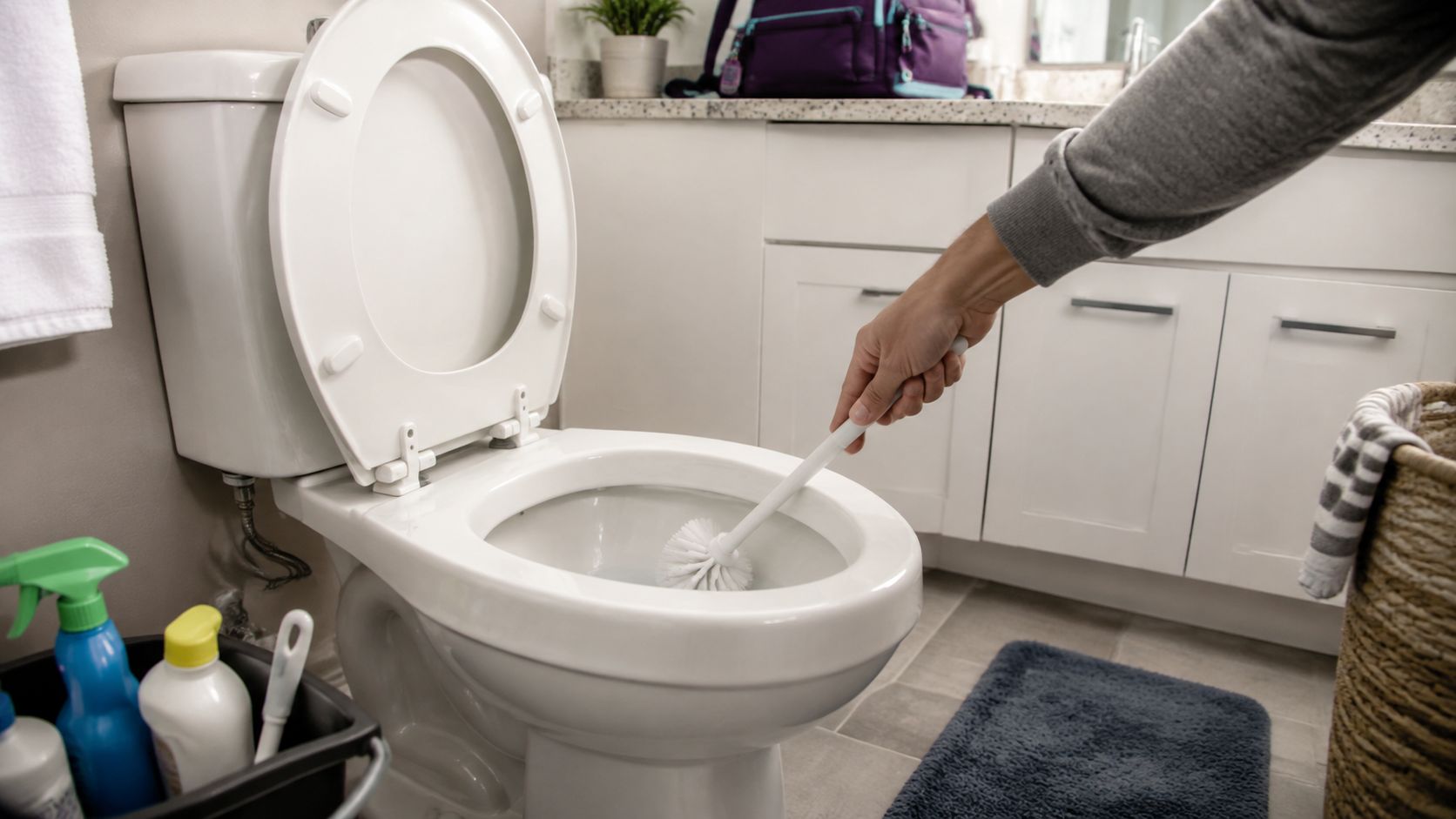
Separate the bowl from the rest of the fixture
A toilet has several cleaning zones, and each one uses different hardware:
- Bowl interior: A glaze, swirling flush, mist, rinse, or chemical-free water treatment may reduce residue.
- Seat and lid: These usually need ordinary wiping unless the product includes a specialized antimicrobial material.
- Bidet wand: A rinse cycle may wash the wand before or after use. Some models add UV treatment.
- Exterior and base: Automation generally doesn't reach these areas.
- Tank and plumbing connections: These still require inspection when a valve, seal, supply line, or flush mechanism wears out.
The engineering history is longer than many product pages suggest. A patent for an automatic self-cleaning water-saving toilet system reached filing in 1990, while related self-cleaning designs were filed on July 28, 2005, and March 17, 2006. The patent trail shows that the idea developed over decades, moving from early automated concepts into the more refined systems sold today. The patent record for an automatic self-cleaning toilet provides that historical marker.
Practical rule: “Self-cleaning” should mean less manual scrubbing, not zero maintenance.
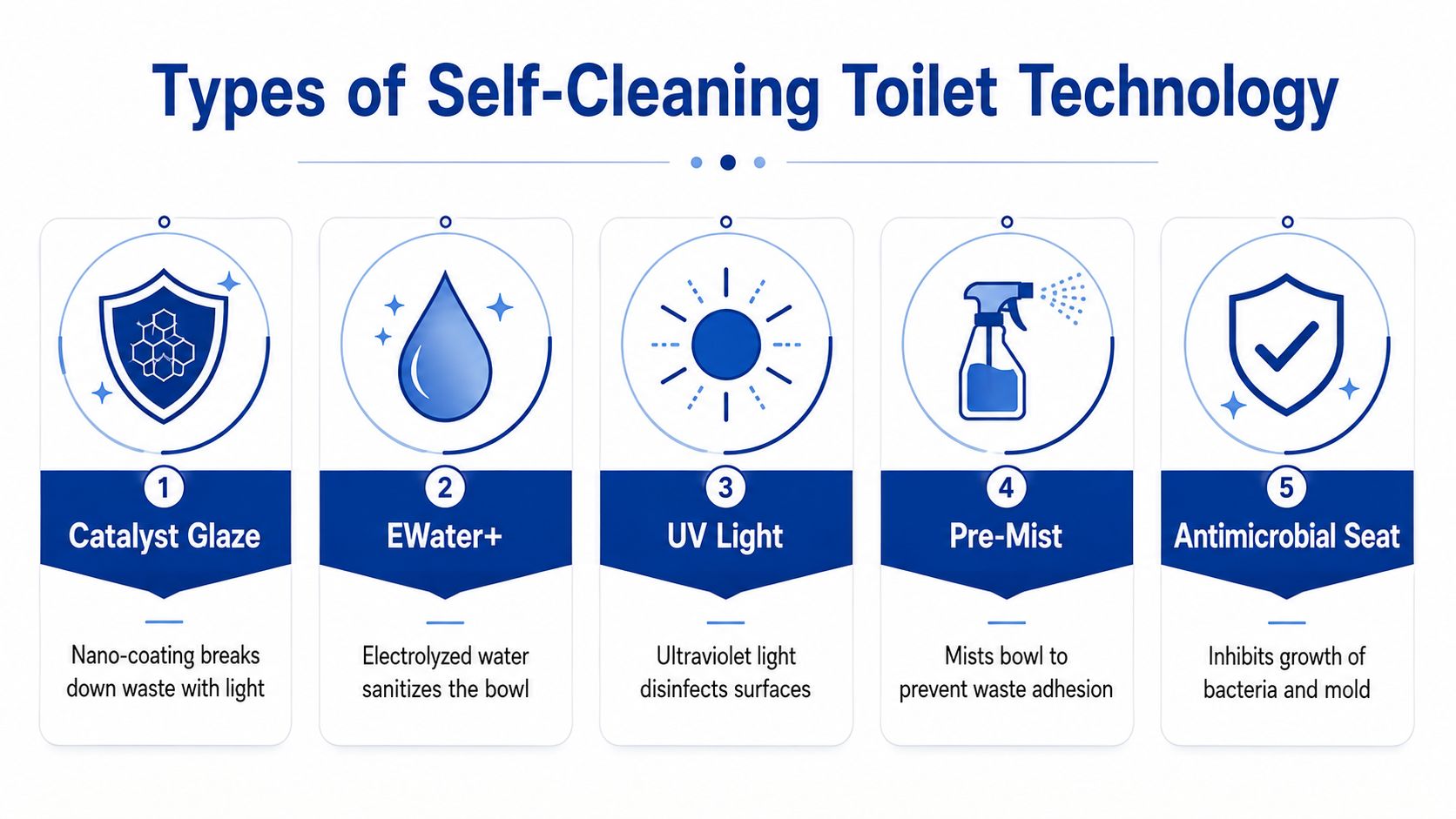
The important question isn't whether the box uses the phrase. Ask which surface gets cleaned, what triggers the cycle, and what the system needs to keep working. The main categories are passive coatings, automatic rinsing, electrolyzed water, UV treatment, and mechanical cleaning systems.
The Different Types of Self Cleaning Technology
The phrase self-cleaning toilet covers several unrelated features. Understanding the mechanism helps you avoid paying for a label when what you really need is a better flush, a replacement toilet, or routine bathroom plumbing service.
Passive surface coatings
A hydrophilic ceramic glaze changes how water moves across the bowl. Instead of forming isolated droplets, water spreads over the surface, which can reduce the area where waste films adhere. Antimicrobial surfaces may also inhibit staining and odor-causing growth, but they don't replace flushing or manual cleaning.
Some marketing materials use terms such as catalyst glaze or nano-coating. Treat those names as descriptions of a surface treatment, not proof that the toilet actively scrubs itself.
Automatic pre-mist and rinsing
A pre-mist wets the bowl before use. The moisture helps reduce adhesion, while the main flush uses the bowl's geometry and spray pattern to carry waste away. Some designs pair the mist with a swirling or cyclone-style flush to improve coverage.
A post-flush rinse adds another pass after waste leaves the bowl. This is closer to an active self-cleaning feature, but it still depends on clear spray ports, working solenoids, adequate water supply, and clean water passages.
Electrolyzed water
Systems such as TOTO's NEOREST line describe a self-cleaning bowl with ewater+, electrolyzed water, and automatic rinsing. Kohler's Numi 2.0 documentation describes UV light and electrolyzed water for automatic cleaning of wand surfaces. These systems create treated water from the home's supply rather than relying only on a bottle of bowl cleaner. TOTO's WASHLET documentation explains the relationship between the bowl, rinsing, and ewater+.
UV sanitation
UV-C modules are usually aimed at a specific surface, such as a bidet wand or an enclosed bowl area. A manufacturer document describes a UV cleaning cycle that runs every 24 hours, while another product listing describes UV cleaning for the wand surface. The product documentation for a UV-equipped bidet system shows why homeowners need to ask exactly what the light reaches.
Mechanical and bidet-style systems
Premium smart toilets may combine an automated bowl rinse with a bidet wand, warm-air drying, and wand-washing functions. Robotic cleaning mechanisms are less common, but the principle is straightforward: moving water or a mechanical component reaches areas a standard flush may miss.
Coatings may need no electricity. Rinse systems, UV modules, pumps, sensors, and bidet seats usually do. Some also require a cartridge, filter, reservoir, or nearby grounded GFCI outlet. Those requirements should be checked before a purchase, not after the toilet is sitting in the bathroom.
How a Modern Self Cleaning Cycle Works Step by Step
A modern automated cycle is a chain of small operations. If one part loses power, develops scale, or stops receiving water, the toilet may appear to flush normally while losing its cleaning function.
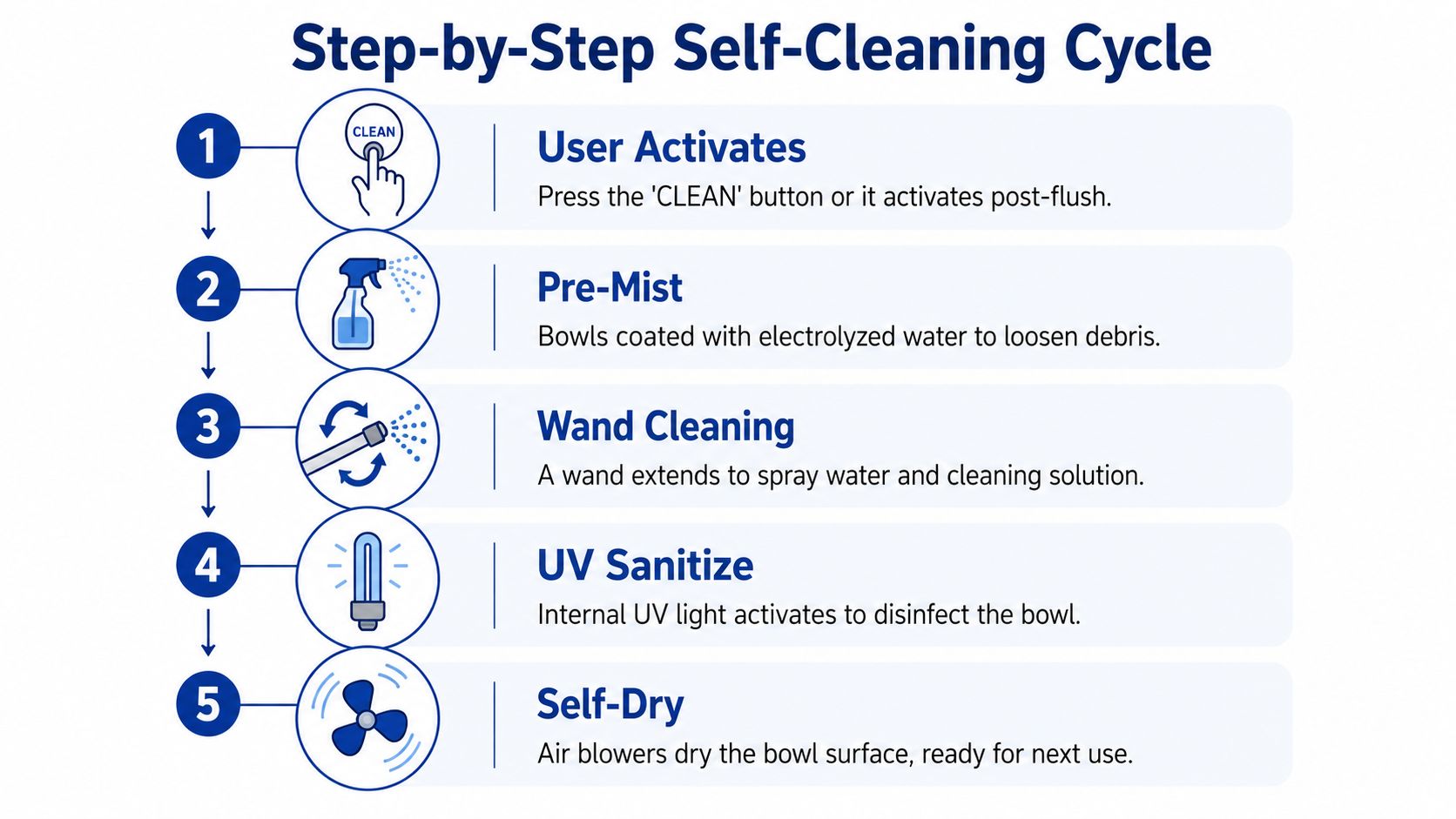
1. Activation
A seat sensor, remote, wall control, or flush command starts the sequence. On some units, the user standing up triggers the automatic flush. The control board then sends power to valves and pumps in the programmed order.
2. Pre-mist
The toilet wets the bowl before use. This is a prevention step, not a deep-cleaning step. It helps keep waste from drying onto the ceramic, which makes the next flush more effective.
3. Main flush and bowl coverage
The flush sends water through the bowl's rim or dedicated jets. Some self-cleaning designs use a swirling pattern to cover more of the interior. A commercial system brochure describes a 35-second wash cycle, using 13.5 liters of water, 5 watts of electricity, and 20 cubic centimeters of disinfectant per cleaning pass. Those figures are specific to that documented system, not a universal standard. The commercial self-cleaning toilet brochure illustrates the recurring utility and chemical demands.
4. Treated-water or UV step
An electrolyzed-water mist may coat the bowl or wand after flushing. If the unit includes UV treatment, the light may run on a schedule rather than after every user. UV only works where the light reaches, so it won't disinfect hidden joints, the floor, or mineral deposits blocking the intended surface.
5. Wand rinse and drying
Bidet-equipped models retract and rinse the wand. Some then use warm air to dry the user area or bowl surface. An early patented system described a sequence involving a latched lid, a high-pressure rotating water stream, liquid removal, and warm-air drying. The automatic self-cleaning toilet patent shows that this sequence has been part of toilet-system engineering for decades.
The cycle depends on a power supply, control board, solenoid valves, spray nozzles, seals, and sometimes a small reservoir or cartridge. A clogged nozzle or power interruption may prevent part of the process without stopping the ordinary flush.
Real Pros and Cons for Everyday Households
The main benefit is labor reduction. A self-cleaning toilet can limit the residue that accumulates between regular bathroom cleanings, which is useful in a family bathroom where several people use the fixture throughout the day. Guests may also find a well-maintained bowl more comfortable, but the owner still controls the cleaning schedule.
Efficient flushing can reduce water use when the bowl shape, spray pattern, and flush volume work together. One referenced TOTO system uses 1.28 gallons per flush while combining spray and rinse features with an electrolyzed-water rinse. The engineering overview of modern consumer toilet technology discusses the role of bowl glaze, swirling flushes, pre-mist, and electrolyzed-water spray.
What homeowners usually like
- Less routine scrubbing: The bowl may need attention less often because residue has less opportunity to dry and cling.
- Cleaner intervals between uses: Automated rinsing can help after one person uses the bathroom and another uses it soon afterward.
- Integrated bidet care: A self-rinsing wand reduces one separate cleaning task.
- Better design options: One-piece and skirted units can have fewer exterior grooves than older two-piece toilets.
What can frustrate you
- Electrical planning: A bidet-style unit may need a grounded outlet and GFCI protection close to the toilet.
- Consumables: Cartridges, filters, disinfectant, or solution reservoirs require replacement.
- Hard-water scale: Calcium and mineral deposits can narrow spray openings, affect valves, and cover the surface the system relies on.
- Repair complexity: Sensors, control boards, pumps, heaters, and solenoids add parts beyond a conventional tank and bowl.
- Noise: Pumps and refill cycles may be more noticeable than a standard gravity flush.
- Limited coverage: The seat, hinges, base, tank exterior, and surrounding floor still need manual cleaning.
A self-cleaning toilet makes the most sense for someone who values convenience and accepts scheduled care. Household size, water quality, cleaning habits, and access to replacement parts should all influence the decision.
Maintenance Your Self Cleaning Toilet Still Needs
Treat the unit like an appliance connected to a plumbing system. A wipe-down keeps the visible surfaces clean, while inspection and descaling protect the hidden valves and spray passages.
A simple service schedule
| Interval | Task | Useful tool |
|---|---|---|
| Weekly | Wipe the seat, lid, hinges, exterior, and base with a non-abrasive cleaner | Soft cloth and manufacturer-approved cleaner |
| Monthly | Check the spray wand and nozzle for residue, and run the approved descaling process when mineral buildup is present | Soft cloth, approved descaler, flashlight |
| Quarterly | Inspect the water filter, cartridge, or solution reservoir | Replacement filter or cartridge listed for the unit |
| Yearly | Review seals, supply connections, electrical protection, and any backup battery | Flashlight and the owner's service instructions |
The schedule varies by product, so the manual takes priority. Don't use an abrasive pad, harsh chemical, or improvised descaler that can damage ceramic, seals, sensors, or a wand assembly.
Southeast Michigan water and bathroom conditions
Hard water can turn a toilet into a restricted-water appliance. Mineral deposits can clog a nozzle, interfere with a solenoid, or create a rough surface where residue sticks. In a basement bathroom that sees little use, stagnant moisture and infrequent flushing can create a different maintenance concern, especially around seals and hidden surfaces.
Maintenance reality: Automation reduces cleaning labor, but it doesn't remove the need to inspect water passages and connections.
A leak between the tank and bowl is a separate plumbing problem, even if the toilet has a self-cleaning cycle. If you notice moisture at the tank-to-bowl connection, review this guide on toilet leaks between the tank and bowl or schedule a professional inspection before the connection damages the floor.
Where Self Cleaning Toilets Make the Most Sense
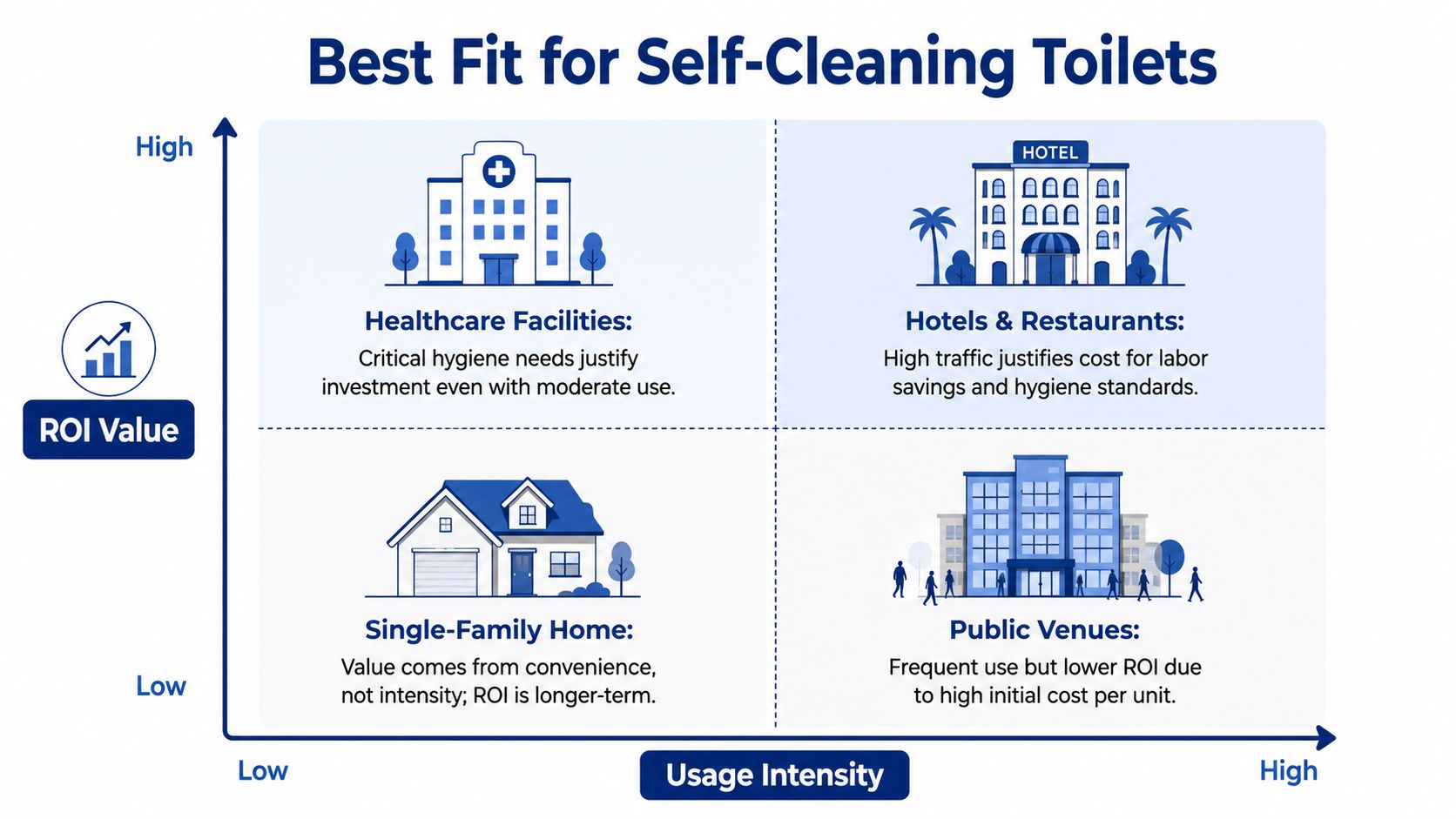
The value changes with the number of users, cleaning expectations, and cost of downtime. A fixture that feels extravagant in a lightly used guest bathroom can be practical in a busy commercial restroom.
For a single-family Michigan home, the benefit is usually convenience rather than direct labor savings. A family may appreciate less bowl scrubbing and a bathroom that stays guest-ready, but the owner still needs to maintain the unit and clean the surrounding fixture.
A rental property presents a different calculation. A landlord may reduce turnover cleaning work, yet the landlord also remains responsible for explaining the controls, replacing cartridges, and responding when a tenant disables a feature or reports a clogged nozzle. Include the toilet's maintenance requirements in the move-in information.
A dental office, salon, or small professional office may place more value on consistent presentation and automated rinsing. In a restaurant, school, or other high-traffic location, the toilet can support cleaning between deeper janitorial visits, but it shouldn't replace a documented commercial cleaning plan.
Match the technology to the property
- Single-family home: Convenience, accessibility, and reduced scrubbing may justify the upgrade.
- Rental unit: Easier turnovers can help, but service responsibilities become more involved.
- Small business: A clean, modern restroom can support the customer experience.
- High-traffic facility: Automation works as one part of a janitorial and plumbing maintenance program.
The more varied the users and the heavier the daily traffic, the stronger the practical case for automated cleaning. Before purchasing, compare the system with other improvements, such as drain cleaning, leak detection, or replacing a toilet that already flushes poorly.
A slow toilet can signal more than a dirty bowl. If the bowl fills, drains slowly, or leaves water standing, review the guidance on a toilet that won't drain before assuming a self-cleaning model will solve the problem.
When to Call a Licensed Plumber Before You Buy or Install
A self-cleaning toilet isn't maintenance-free. It combines a fixture, water valves, sensors, and often electrical equipment, so the existing bathroom needs to support the installation.
Southeast Michigan homes can have mineral deposits from well water or treated municipal supplies, including properties across Macomb County. Older homes may also have unusual rough-in dimensions, aging shutoff valves, limited bathroom electrical capacity, or drain and vent problems that a new toilet can't correct. A low-use basement bathroom may develop biofilm or connection issues because the fixture sits unused for long periods.
Stop and arrange an inspection when
- The rough-in may not match: Measure the existing connection and confirm the replacement unit fits without moving the drain.
- There's no suitable outlet: A bidet seat or smart toilet may need a grounded, GFCI-protected outlet near the fixture.
- Mineral staining is heavy: Scale on the bowl, supply valve, or spray openings suggests the water quality may affect the new equipment and its warranty.
- The toilet flushes slowly: Repeated slow flushing can point to a drain, vent, or sewer restriction instead of a bowl problem.
Ask the plumber to inspect the electrical capacity, shutoff valve, supply connection, rough-in, seals, and compatibility between the new unit and the existing flush components. If the toilet runs or flushes without being used, this guide on a toilet that flushes on its own can help you identify what information to share during the service call.
Jays Plumbing and Sewer handles residential and commercial bathroom plumbing, toilet installation and repair, drain cleaning, sewer camera inspections, sewer repair, leak detection, and emergency plumbing service across Fraser, Macomb County, Oakland County, and nearby Southeast Michigan communities. Call Jay's Plumbing and sewer Now @ 586-634-3450 for help checking the rough-in, supply, drainage, and installation requirements before you commit to a smart fixture.
Call Jay's Plumbing and sewer Now @ 586-634-3450 to discuss whether a self-cleaning toilet fits your Michigan bathroom, especially if you're dealing with hard water, a basement fixture, a slow flush, or an older home. You can also visit Jays Plumbing and Sewer to schedule residential or commercial plumbing service, including toilet installation, drain cleaning, sewer repair, and leak detection.
