

When a toilet tank will not fill with water, the most common cause is a stuck, misadjusted, or worn fill valve, often combined with debris in the valve or supply line. Most cases can be fixed without replacing the whole toilet, and fill valves in service for 7 years or more often become prime suspects as wear and mineral buildup restrict refill flow (independent plumbing guidance).
You flush, the bowl clears, and then the familiar refill sound never starts. Or the tank makes a faint hiss and takes so long to recover that the toilet seems completely broken. That situation is common in Macomb County, Oakland County, and throughout Southeast Michigan, especially in older bathrooms where the shutoff valve, supply hose, or internal tank parts have been adjusted many times.
The good news is that this symptom usually points to a mechanical problem, not a cracked toilet or a structural failure. The fill valve controls incoming water, the float tells it when to stop, and the supply connection delivers water from the wall. A careful inspection usually identifies the fault before a full toilet replacement is even worth considering.
Table of Contents
- Why Your Toilet Tank Will Not Fill With Water
- First Checks Before Opening the Tank
- Inside the Tank, Fill Valve, Float, and Overflow Tube
- Adjusting and Cleaning the Fill Valve Safely
- When to Repair Yourself and When to Call a Plumber
- Preventing Future Toilet Tank Fill Problems
Why Your Toilet Tank Will Not Fill With Water
A toilet flushed before work may leave the tank nearly empty all day. In another Macomb or Oakland County home, the tank refills so slowly that the next flush is weak or unavailable. The symptoms look alike, but the on-site diagnosis starts by separating a completely dead fill from a slow fill caused by restricted flow.
After flushing, the water level drops, the float lowers, and the fill valve opens. Water should pass through the shutoff valve and supply hose into the fill-valve assembly. As the tank rises, the float rises and closes the valve at the set level. A stuck component, debris, or a restricted connection can interrupt that sequence, leaving the tank silent or making it refill at a crawl.
The usual suspects are:
- Fill valve: A worn seal, blocked inlet screen, stuck valve seat, or incorrect adjustment can stop incoming water.
- Float: A cup-style float may bind against the valve or tank wall. An older ball float may be misadjusted or unable to move freely.
- Shutoff valve: A stop that appears open can remain partly closed inside or may not be fully open.
- Supply line: A kinked or deteriorated flexible hose can reduce flow before water reaches the tank.
- Household pressure: Low pressure can resemble a toilet valve failure, although repair guidance commonly identifies the fill valve as the main suspect (plumbing troubleshooting guidance).
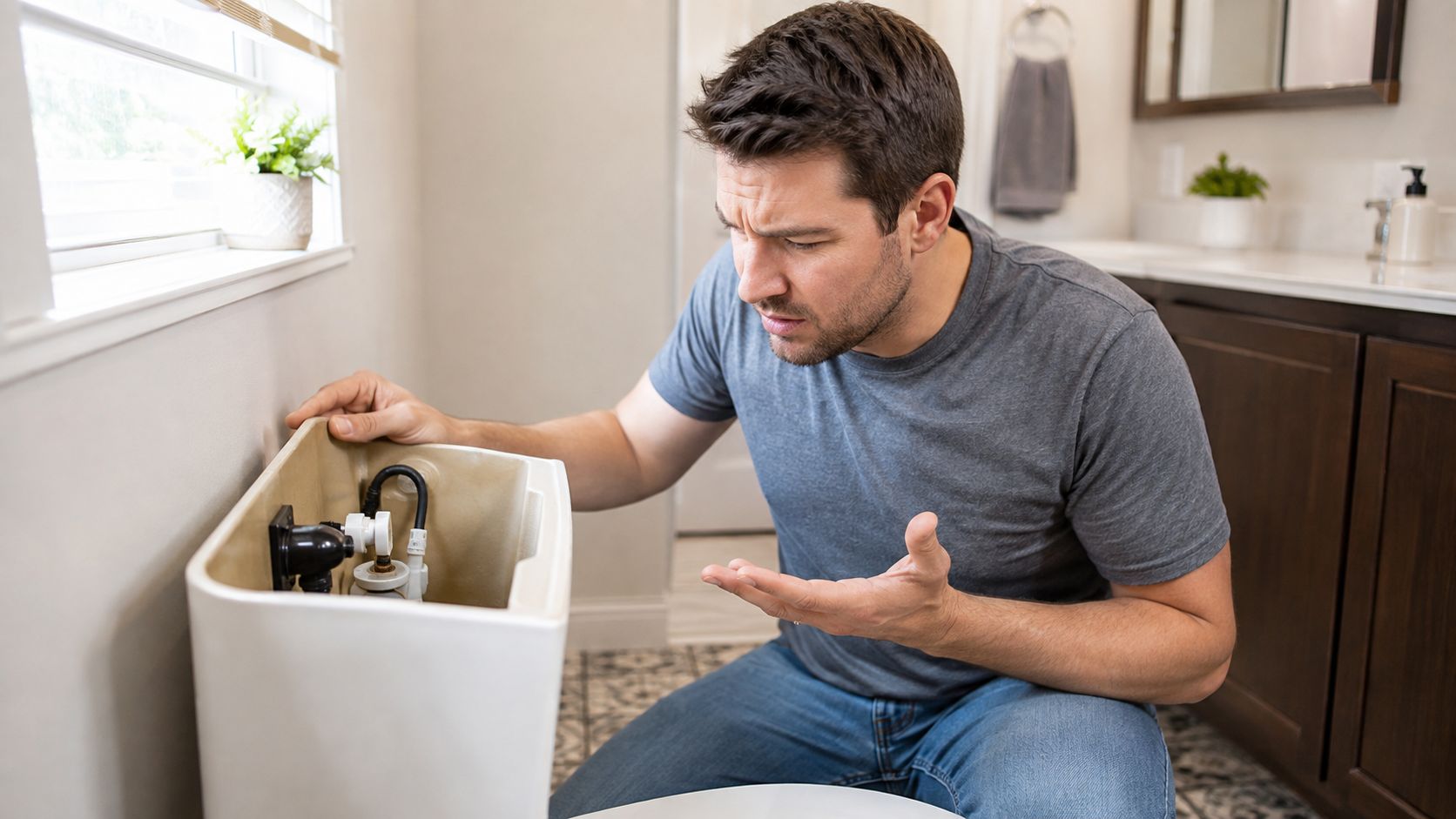
Jay's Plumbing and Sewer sees this bathroom plumbing problem frequently across Southeast Michigan. The practical repair is often cleaning, adjustment, or fill-valve replacement. If the toilet bowl, tank, and drain connection remain sound, replacing the porcelain fixture adds cost without addressing the refill fault.
First Checks Before Opening the Tank
A plumber doesn't start by buying parts. The first job is to confirm whether water is reaching the toilet at all.
Check the shutoff and supply
Look behind or beside the toilet for the small shutoff valve connected to the wall pipe. Turn it counterclockwise until it is fully open, but don't force a stiff or corroded valve. A partially closed stop valve can reduce flow enough to make a healthy fill valve look defective.
Next, inspect the flexible supply hose. Look for a sharp bend, crushed section, damaged fitting, or moisture around either connection. With the toilet calling for water, a slight vibration in the hose can indicate that water is moving, while complete silence may suggest that the restriction is farther upstream.
Compare another cold-water fixture
Open a nearby bathroom faucet or another fixture supplied by cold water. If that fixture has normal flow while the toilet remains silent, the fault is probably local to the toilet. If several fixtures have weak flow, the problem may involve household supply conditions, a larger restriction, or a leak that needs licensed evaluation.
Listen before lifting the lid. A hiss, trickle, or faint vibration gives useful information. No sound doesn't prove the valve has failed, but it tells you not to assume the tank itself is the problem.
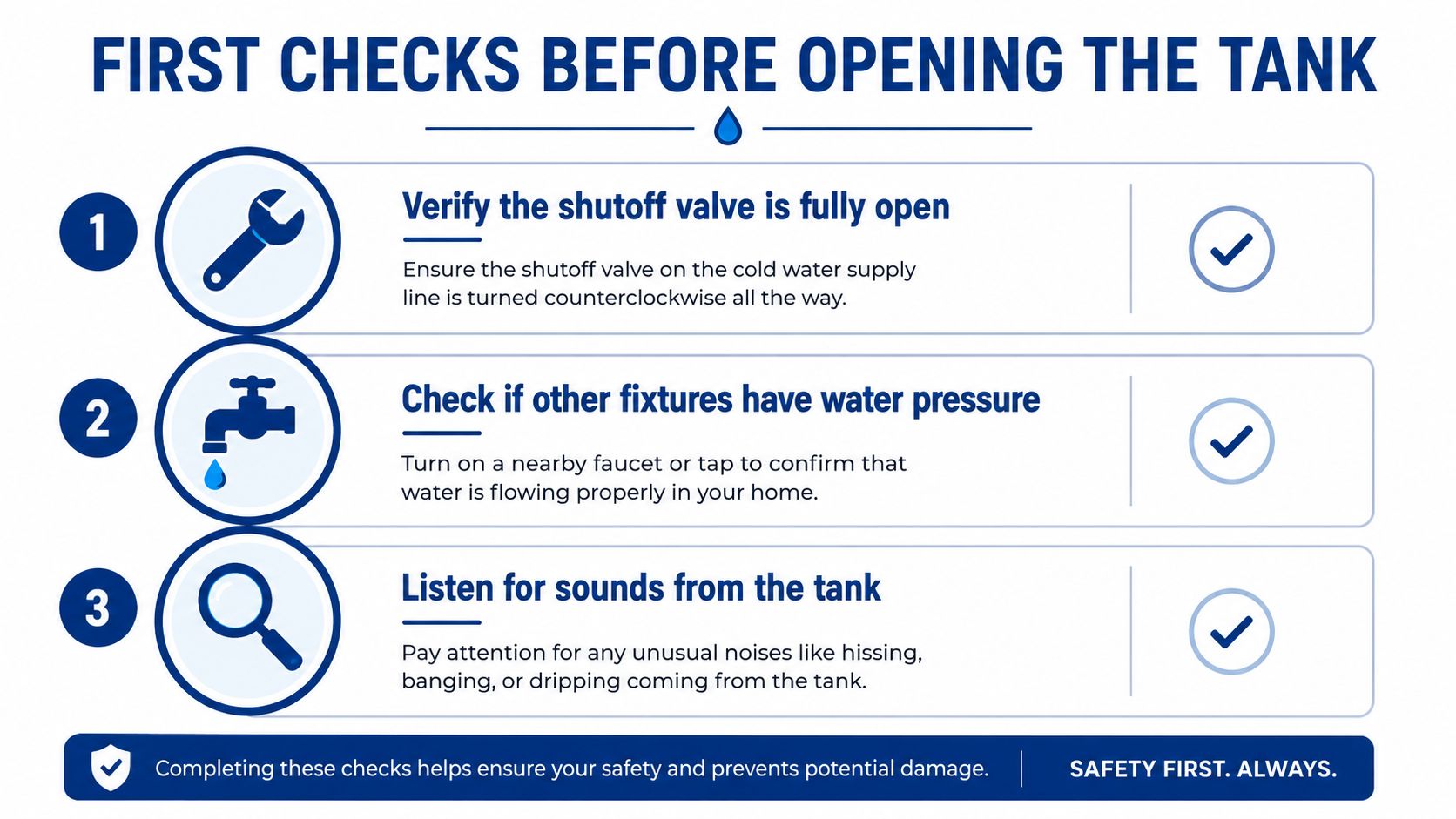
Practical rule: Confirm the water path before replacing an internal part. Skipping the shutoff and supply checks can send you to the hardware store for a component that was working correctly.
If multiple fixtures are affected, don't keep adjusting the toilet. A licensed plumber can evaluate the supply conditions and look for signs of a broader plumbing issue without turning a simple fixture problem into unnecessary trial and error.
Inside the Tank, Fill Valve, Float, and Overflow Tube
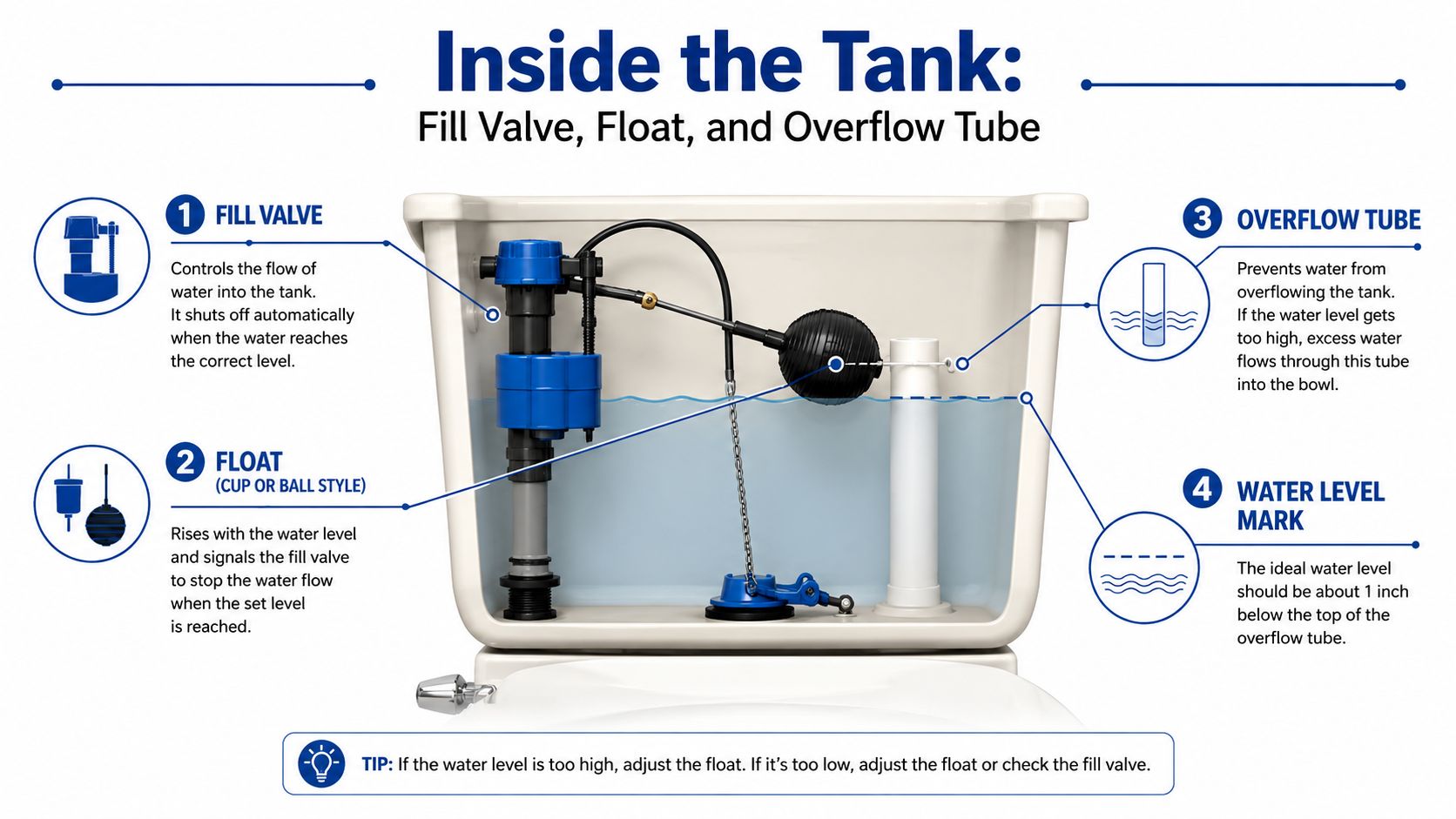
Remove the tank lid carefully and set it on a stable, flat surface. Inside, you'll usually see a vertical fill valve with a plastic cup float, or an older valve connected to a ball float on an arm. The overflow tube stands near the flush valve and provides a safe path for excess water.
What each part does
The fill valve admits fresh water after the flush. Its cap and inlet screen can collect sediment or hard-water minerals, while its internal seal can wear and allow only a weak stream.
The float controls shutoff height. A cup float slides vertically along the valve body. A ball float moves on an arm. If either one catches on the tank wall, refill can stop before the tank reaches its normal level.
The overflow tube helps prevent the tank from rising indefinitely. The water level should generally sit about 1 inch below the top of the overflow tube (water-level guidance from the City of Portland, Michigan). A level that is too low can contribute to a weak flush, while a level that is too high can send water continuously into the tube.
Dead fill versus slow fill
A dead fill has no meaningful incoming water after the flush. A slow-fill problem may produce a thin stream, gradually recovering until repeated flushes expose the restriction. Mineral debris inside the valve body, sediment in the inlet, a tired seal, or a partially closed stop can create an intermittent pattern.
That distinction matters. A float adjustment may help if the float is binding, but adjustment won't remove debris from a restricted inlet or restore a worn seal. The refill mechanism has been standardized for years, and fill valves in service for 7 years or more commonly become more likely to wear out (plumbing maintenance guidance).
For a related symptom, see this guide on what to check when a toilet tank overflows.
Adjusting and Cleaning the Fill Valve Safely
Basic adjustment and cleaning can solve a restricted or incorrectly set valve, provided the parts are accessible and in sound condition. Start by closing the toilet shutoff valve and flushing to lower the tank water. Keep a towel nearby, and handle the lid and plastic fittings gently.
Adjust the float
Modern cup-float valves usually have a top adjustment screw or another marked adjustment point. Turning the screw clockwise lowers the water level, while turning it counterclockwise raises the level (fill-valve adjustment guidance). Make small changes, reopen the shutoff, and watch the refill cycle.
Older brass-arm ballcocks may use a screw as well, but some require gently bending the float arm. Don't bend repeatedly or aggressively. Metal fatigue, a misaligned arm, or a brittle valve connection can turn a simple adjustment into a replacement.
Clean the inlet
If the float moves freely but the flow remains weak, shut the water off again and inspect the fill-valve cap and inlet screen according to the valve manufacturer's design. Sediment and mineral deposits can restrict the opening. Cleaning the inlet is a high-yield first step before replacing the assembly, as noted in Fluidmaster's toilet refill troubleshooting guidance.
Don't force a brittle cap, pry aggressively, or overtighten plastic connections. A part that won't release easily may need professional handling, particularly on an older toilet with corroded hardware.
Set the final water level at about 1 inch below the overflow tube, then flush and observe the complete cycle. For additional toilet troubleshooting, use this guide on fixing a running toilet.
If cleaning and reasonable adjustment don't restore a strong refill, repeated tinkering usually wastes time. Replacement of the fill valve is the practical next step.
When to Repair Yourself and When to Call a Plumber
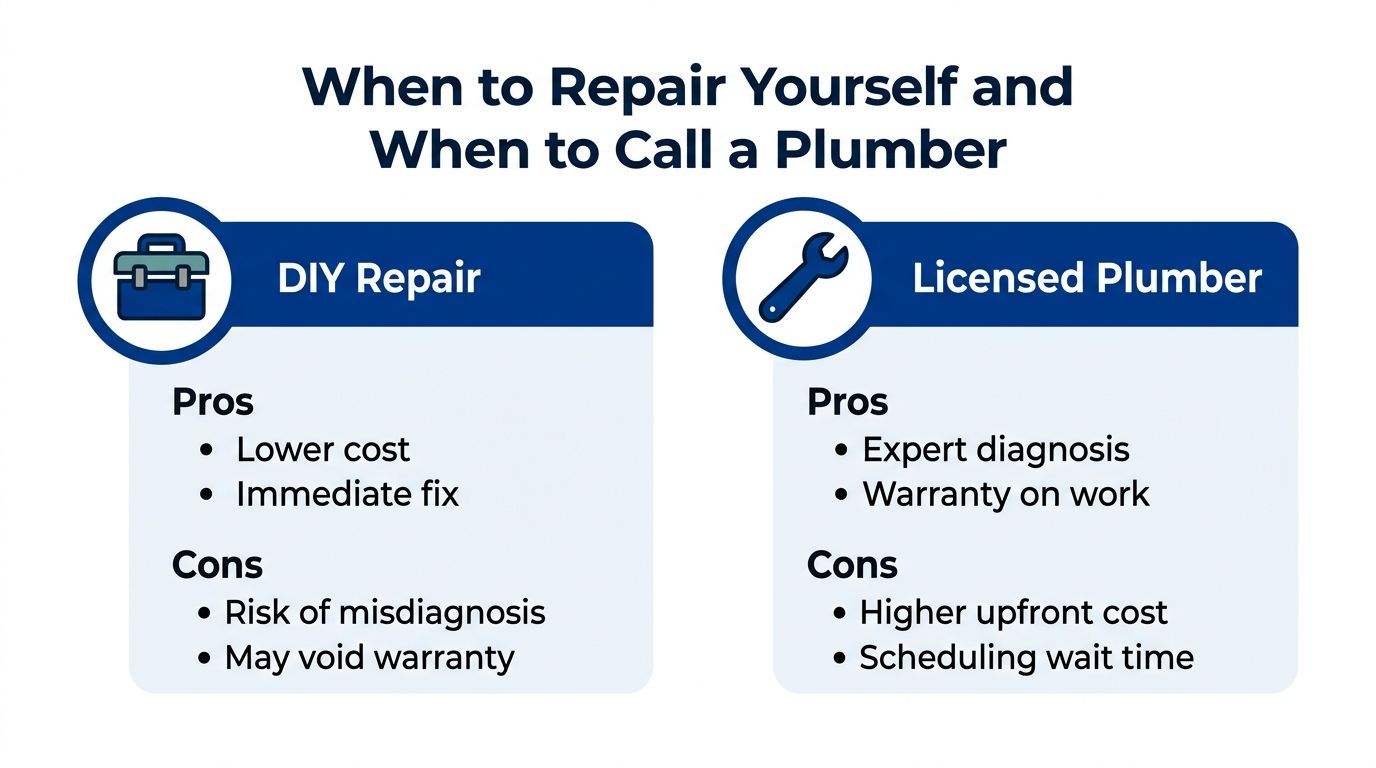
A homeowner can often handle a freely accessible adjustment, inlet cleaning, or supply-line replacement when the shutoff works properly and there are no signs of leakage. The advantage is immediate troubleshooting with minimal disruption. The trade-off is that a wrong diagnosis can leave the original problem unresolved, and overtightening a plastic fitting or porcelain connection can create a second problem.
A fill-valve replacement is more reasonable when the float moves normally, the inlet is clean, and the valve still doesn't supply water. Match the replacement to the toilet's design, and stop if the shutoff valve won't close, the connection begins to twist, or water appears where it shouldn't.
Call for professional help when
- The shutoff is corroded or stuck: Forcing it can cause a leak at the wall or supply connection.
- Water is escaping around the tank or base: A hidden leak may involve the supply line, tank hardware, seal, or floor connection. Related symptoms are discussed in this guide to a leak between the tank and bowl.
- The problem keeps returning: Repeated refill failures may indicate mineral buildup, pressure trouble, or aging components beyond a single adjustment.
- The toilet serves a business or rental property: Commercial plumbing and property-management repairs need dependable diagnosis and documentation, not repeated short-term fixes.
- Several fixtures have low flow: That pattern deserves evaluation beyond one bathroom fixture.
Jay's Plumbing and Sewer provides 24/7 emergency service, job-based upfront pricing, and residential and commercial plumbing coverage across Macomb and Oakland County. The same visit can include bathroom plumbing, leak detection, drain cleaning, sewer repair, water heater repair, water heater replacement, pipe repair, garbage disposal repair, or sump pump repair when those concerns are present. Call Jay's Plumbing and sewer Now @ 586-634-3450.
Preventing Future Toilet Tank Fill Problems
Prevention is mostly observation. Check that the shutoff valve turns normally, look over the supply hose for kinks or moisture, and watch the tank refill after an occasional flush. Property managers can add those checks to routine bathroom inspections rather than waiting for a tenant to report that the toilet has stopped recovering between uses.
Michigan winters bring temperature swings that can affect exposed plumbing, while hard-water minerals and sediment can gradually restrict internal valve parts. A tank that refills slowly after repeated flushes deserves attention before the restriction becomes a complete no-fill problem.
A practical routine includes:
- Water level: Check it every 3 months when the tank has no marked fill line, following local water-level guidance (Portland, Michigan water-level information).
- Supply connection: Inspect the hose and shutoff for moisture or damage during regular household maintenance.
- Early symptoms: Address intermittent refill, hissing, or unexplained running before it contributes to waste or water damage.
Call Jay's Plumbing and sewer Now @ 586-634-3450 for toilet repair, leak detection, or a full bathroom plumbing inspection. Free estimates and senior and military discounts are available.
Jays Plumbing and Sewer can diagnose a toilet tank that won't fill, clean or replace the fill valve, and check nearby bathroom plumbing for related leaks or supply problems. Visit Jays Plumbing and Sewer to schedule service or request help for a residential, property-management, or commercial plumbing issue.
