

A sump pump usually gets ignored until a wet patch shows up on the basement floor, and by then the conversation has turned from maintenance to cleanup. Around Fraser, Roseville, Sterling Heights, and the rest of Macomb County, that's how a lot of homeowners find out the hard way that a pump can sound fine and still not protect the house.
The check isn't whether the motor makes noise. The check is whether water leaves the pit, exits the house, and the pump shuts itself off when it should. That's the difference between a system that's alive and one that's doing its job during spring thaw, summer cloudbursts, or a fast melt after a Michigan cold snap. For a sewer or drain issue tied to basement water, start with the basics, then verify the discharge path before you trust it.
Table of Contents
- Why Michigan Basements Need a Sump Pump That Works
- What to Check Before You Pour a Single Drop of Water
- The 5-Gallon Bucket Test: Step by Step
- Walking Outside to Confirm Water Is Actually Leaving Your Home
- How Often to Test Your Sump Pump in Michigan
- Warning Signs That Mean Stop Testing and Call a Plumber
- Your Sump Pump Checklist and When to Reach Out for Help
Why Michigan Basements Need a Sump Pump That Works
A homeowner can hear the sump pump kick on after a storm and still walk downstairs to damp carpet. I've seen that exact setup in older basements where the unit powered up, but the discharge line was blocked, frozen, or disconnected somewhere out of sight. The motor sounded busy, the basement still lost.
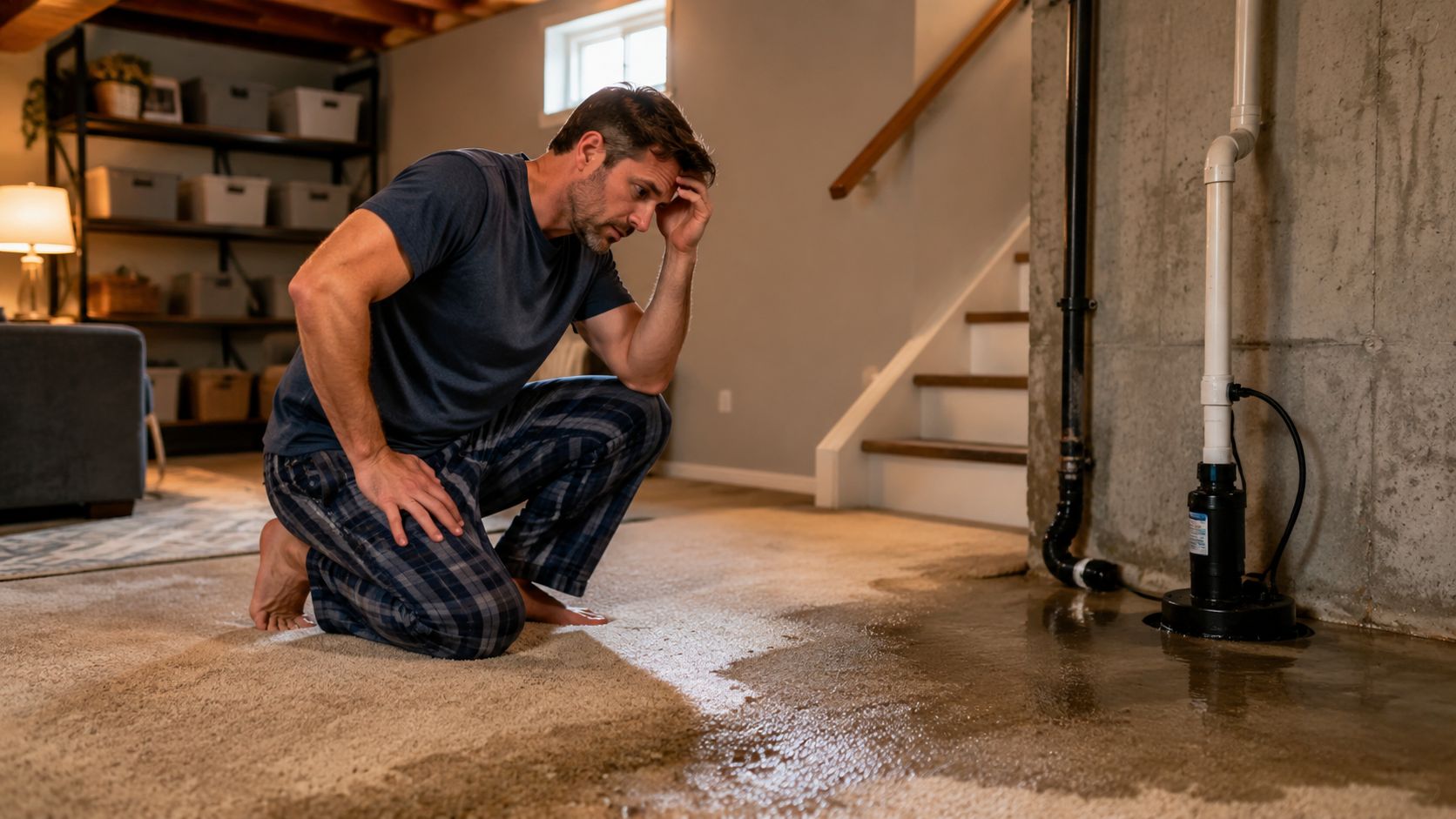
In places like Fraser, Roseville, and Sterling Heights, the risk window shows up with spring snowmelt, summer downpours, and older homes that already work hard against water intrusion. A sump pump is supposed to move water away from the foundation, not just make noise in the pit. If it doesn't discharge, the basement is still exposed even though the unit ran.
That same warning applies when basement water problems are tied to broader drainage trouble, including a main sewer line repair issue that can make a wet basement worse in a hurry. A sump pump can only do its job if the water has somewhere to go outside the house, and a clogged or failed discharge path leaves the system pretending to work.
Sound isn't the finish line
The standard field check is simple. Home-improvement guidance points to a 5-gallon bucket test that should lift the float, start the motor, and lower the pit again, and Cass County Electric Cooperative says the pump should cycle on and off at least twice during testing to show repeatable operation rather than a one-time startup, as described in Angi's sump pump check guidance.
That matters because a pump can respond manually and still fail under load. The basement doesn't care that the motor hummed for a few seconds. It only cares whether the water left.
A good test is cheap, quick, and honest. A failed test tells you something useful before the next heavy rain or rapid thaw does the talking for you.
Practical rule: if the pump runs but the pit stays wet, you don't have a working flood-control system yet.
What to Check Before You Pour a Single Drop of Water
Start with the power, because a dead outlet makes every other test pointless. Make sure the pump is plugged into a live GFCI outlet, check that the breaker hasn't tripped, and confirm any backup battery is charged. That electrical check belongs first, because a pump that has power problems will fail even if the motor itself is fine.
Look at the pit, not just the plug
Open the lid or look into the basin and inspect the float area. Debris, sludge, and mineral buildup can keep the float from moving freely, and that is enough to stop the pump from activating when the water rises. A quick look often catches what a frustrated homeowner misses.
Check the discharge line outside if you can see it. In Michigan, that line can freeze, clog with leaves, or get pinched somewhere along the route. A pump that is ready to start but cannot push water out of the house is still a problem.
- Power first: Confirm the pump has electricity before you assume the motor failed.
- Float clearance: Make sure the float is not rubbing the pit wall or hanging up on debris.
- Discharge condition: Look for obvious blockage, ice, or a buried outlet.
- Battery backup: If the system has one, check that it is charged and connected.
A pump that hums but cannot move water is still a problem.
That simple check saves time and keeps you from pouring water into a system that never had a fair shot.
The 5-Gallon Bucket Test: Step by Step
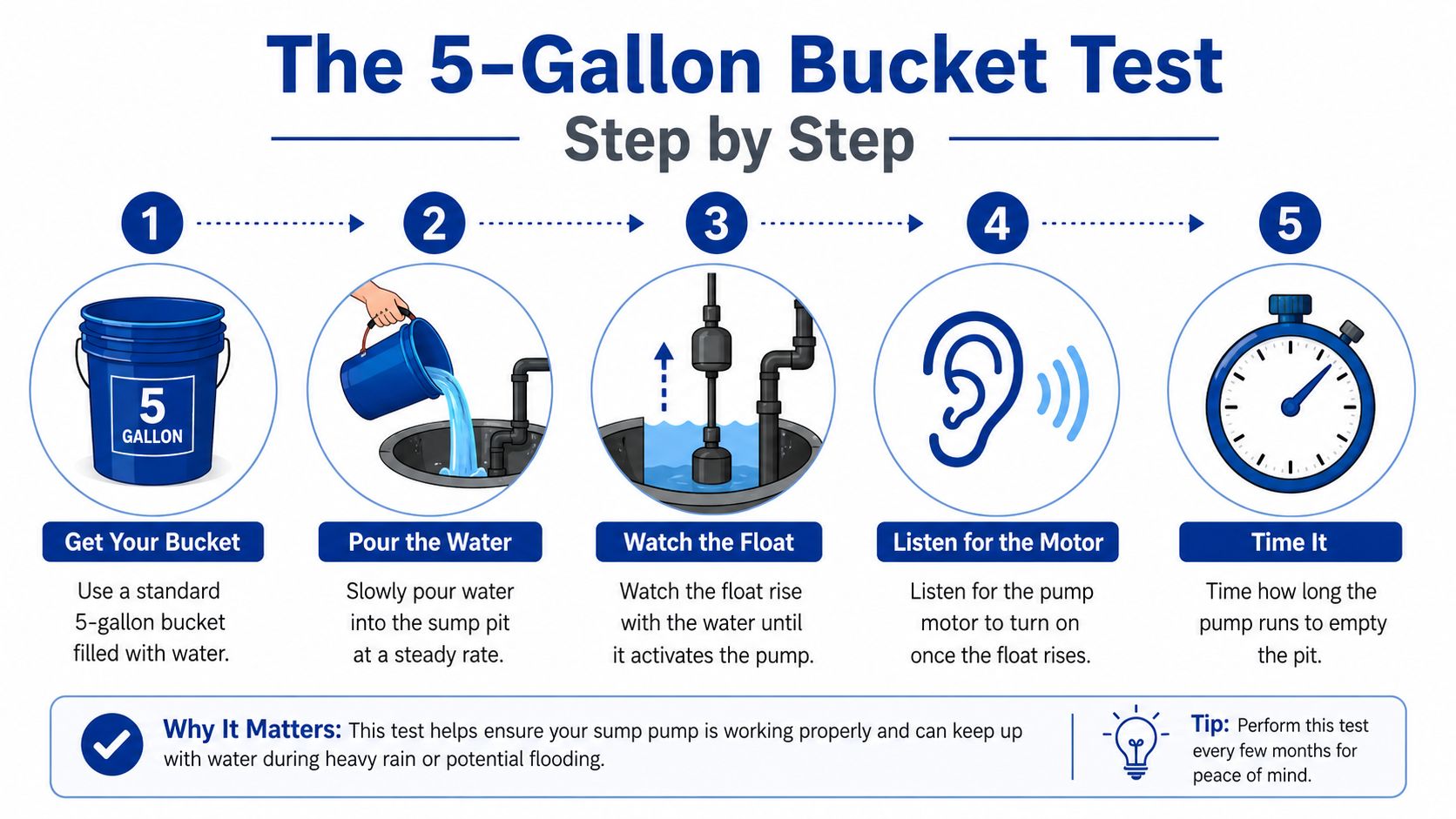
A bucket test tells you more than a quick glance ever will. It forces the pump to do the full job, the float has to rise, the motor has to start, the water has to leave the pit, and the unit has to shut itself off when the level drops. If any one of those steps fails, you have a real problem to deal with before the next spring thaw or summer storm puts water back in the basement.
-
Get a clean 5-gallon bucket.
Use a bucket that is easy to manage and holds a known amount of water. A standard field test like this gives you a controlled way to check the pump without overfilling the basin or guessing at the load. If the pit is already close to full or the water has nowhere to go, stop and clear the system first. If you need help sorting out a slow drain before you test, Jays Plumbing and Sewer explains what to do when drains are clogged and need water jetting. -
Pour the water in slowly.
Add the water in a steady pour so the float can rise naturally. A sudden dump can splash, stir up sludge, and make it harder to see whether the switch is moving the way it should. Slow and steady gives you a cleaner read on the pump. -
Listen for the motor.
A working pump should come on when the float lifts. If it stays quiet, start with the power, then the switch, then the motor itself. That order saves time and keeps you from blaming the wrong part. -
Watch the water level fall.
The pump is only doing its job if the pit empties and the unit shuts off on its own. If the motor runs but the level barely moves, the problem may be in the discharge line, not the pump body. That is the kind of shortcut that leaves homeowners thinking the system passed when it really did not. -
Watch for repeat cycling.
A good test should show the pump turning on and off more than once as the float rises and falls. That tells you the switch can reset and the system can repeat the job without getting stuck. If it runs once and never responds again, or if it chatters on and off too fast, something in the control or discharge path needs attention.
What different results usually mean
If nothing happens, the problem is usually power or a stuck float. If the pump runs nonstop and never shuts off, the float may be hung up or the discharge line may be holding water back. If it clicks on and off quickly, you may be dealing with short cycling from a bad switch, a blockage, or a line that cannot move water out of the house fast enough.
The failure I see most often is the pump that starts fine but never really clears the pit. That means the motor is alive, but the water is not getting away from the foundation. At that point, you do not keep staring at the basin, you go outside and verify where the water is going.
Walking Outside to Confirm Water Is Actually Leaving Your Home
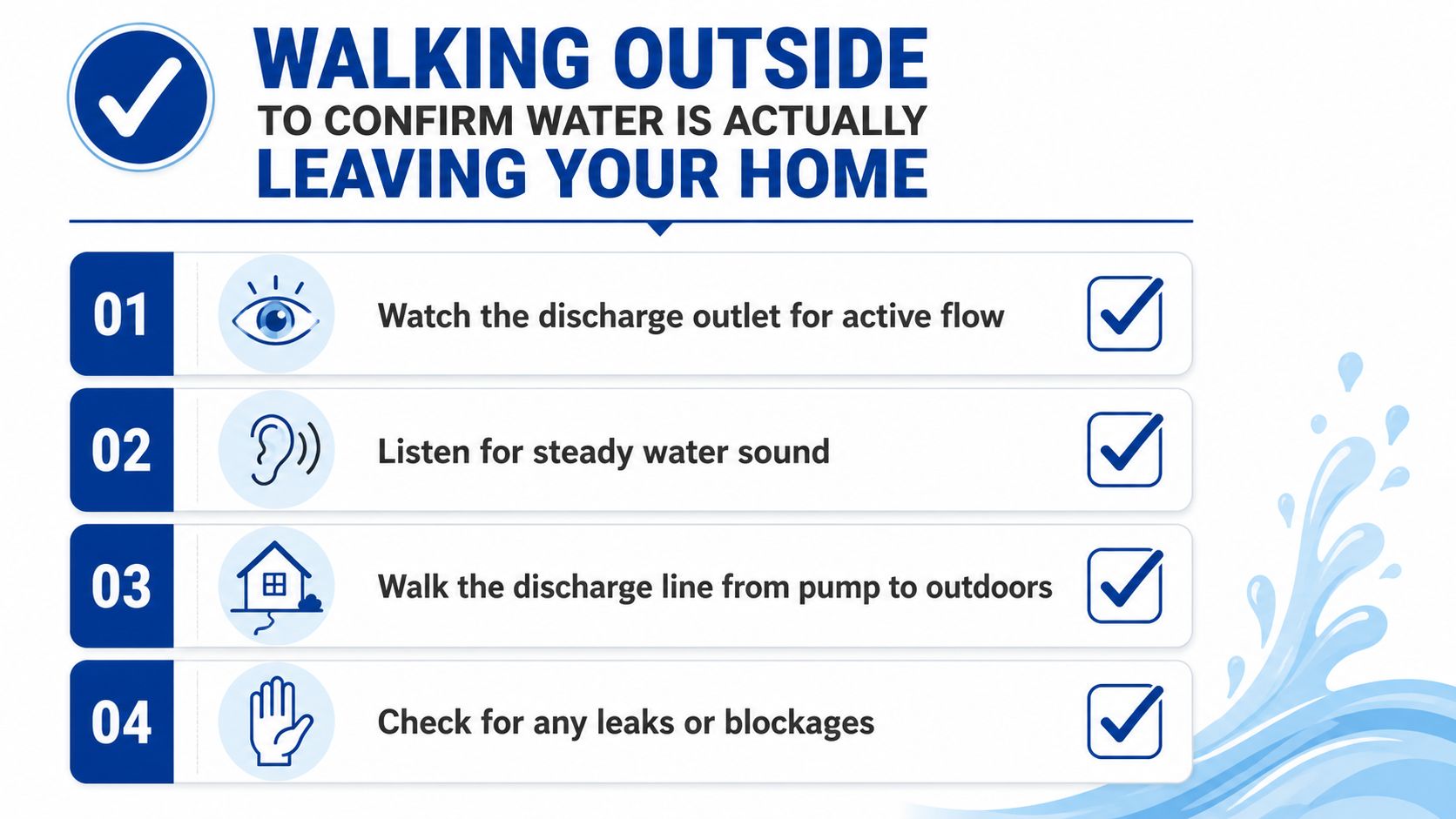
This is the part most guides skim past, and it's the part that matters most when a basement is on the line. A sump pump can run, make normal noise, and still leave you unprotected if the discharge line is blocked, frozen, disconnected, or dumping water too close to the foundation. If you want to know whether the system is working, follow the water outside.
What healthy discharge looks like
After the pump turns on, go to the outlet and watch for active flow. You should be able to see or hear water moving through the discharge point, not just hear the motor inside. The line should send water away from the foundation, not back toward the house or into a low spot that soaks right back in.
That outside check catches a lot of the failures that look fine from the basement floor. In January, a frozen discharge line can stop the system cold. In fall, leaves can cover the outlet and slow it down. In older homes, a pipe hidden behind a finished wall can come loose without being obvious from the pit.
The common failure modes to watch for
- Frozen discharge line: Water can't leave if the pipe is iced shut.
- Buried or blocked outlet: Leaves, mulch, or snow can cover the exit.
- Disconnected routing: The pump runs, but the water is dropping somewhere you can't see.
- Failed check valve: Water falls back into the pit after it's pumped out.
If the pump runs but you can't verify discharge outside, the basement is not protected. That's the line I use in the field, because it cuts through wishful thinking fast. The motor may be fine, but the system still failed the part that matters.
For slow or repeated line issues, a drain problem may need more than a quick clear-out. A blocked route sometimes points to a deeper cleaning need, and in some cases that means taking a closer look at the line with proper tooling, like the sewer and drain service approach explained by Jays Plumbing and Sewer.
How Often to Test Your Sump Pump in Michigan
A sump pump sits quiet for long stretches, and that silence tricks people into thinking it's fine. It isn't. The only real proof is a test, and in Michigan the timing should match the weather windows that usually cause basement trouble.
A simple seasonal rhythm
A practical schedule is a quick activation check before spring thaw in March, a full bucket test before summer storm season in June, and another check before fall freeze-up in October. That lines up with the times when water pressure, heavy rain, and freezing conditions are most likely to expose a weak pump or a bad discharge line.
For extra peace of mind, some maintenance guidance recommends activating the pump a couple of times per month so the float keeps moving freely and doesn't stick from debris or buildup. Another source suggests testing the pump three times a year at the start of water-heavy seasons, which fits the same basic idea, as noted in the seasonal testing guidance from the maintenance video shared in the verified data.
Good habit: test before the weather turns, not after the carpet gets wet.
What that routine buys you
This isn't about making a chore out of it. It's about catching the boring failures early, the stuck float, the clogged line, the dead outlet, before a storm puts the system on the clock. Ten minutes in the dry basement is cheaper than finding out during a midnight rain.
If you manage rental units, a small office, or a commercial property in Macomb or Oakland County, that same schedule gives you a repeatable maintenance point. It also makes it easier to explain to tenants or buyers why the system was checked instead of just assumed.
Warning Signs That Mean Stop Testing and Call a Plumber
Some problems are still in the homeowner range. Others belong in a licensed plumber's hands right away. The line is simple, if the pump sounds wrong, behaves wrong, or the pit looks contaminated, stop testing and get help.
Red flags I don't ignore
A pump that hums but doesn't move water usually has a motor, float, or impeller problem. A pit that refills faster than the pump can drain it may point to a system issue that goes beyond a basic test. Visible rust or corrosion on the unit is another sign the pump has aged out of reliable service.
A leaking check valve is its own headache, because water that falls back into the pit can make the pump run too often. A cracked, frozen discharge line needs attention too, especially if it's split in winter and won't hold pressure. If you see sewage backing into the pit, stop there and call for service. That's no longer a simple sump check.
What a pro looks at that homeowners usually can't
A licensed plumber can check amperage draw, inspect the check valve condition, and see whether the basin is properly sealed. Those details help separate a pump that's repairable from one that's worn out or installed wrong. That matters in older Macomb and Oakland County homes, where old basins and mixed-age piping can create problems that don't show up during a quick bucket test.
If the system needs sump pump repair or replacement, a local shop can address the pump itself and the piping around it without guessing. Jays Plumbing and Sewer handles sump pump repair and installation along with sump, sewage, and backup pump service, which is the kind of help that makes sense when the system won't pass a real test, and their main service page covers sump, sewage, and backup pump repair and installation.
Your Sump Pump Checklist and When to Reach Out for Help
Use this as the weekend version, the quick pass before you trust the pump again.
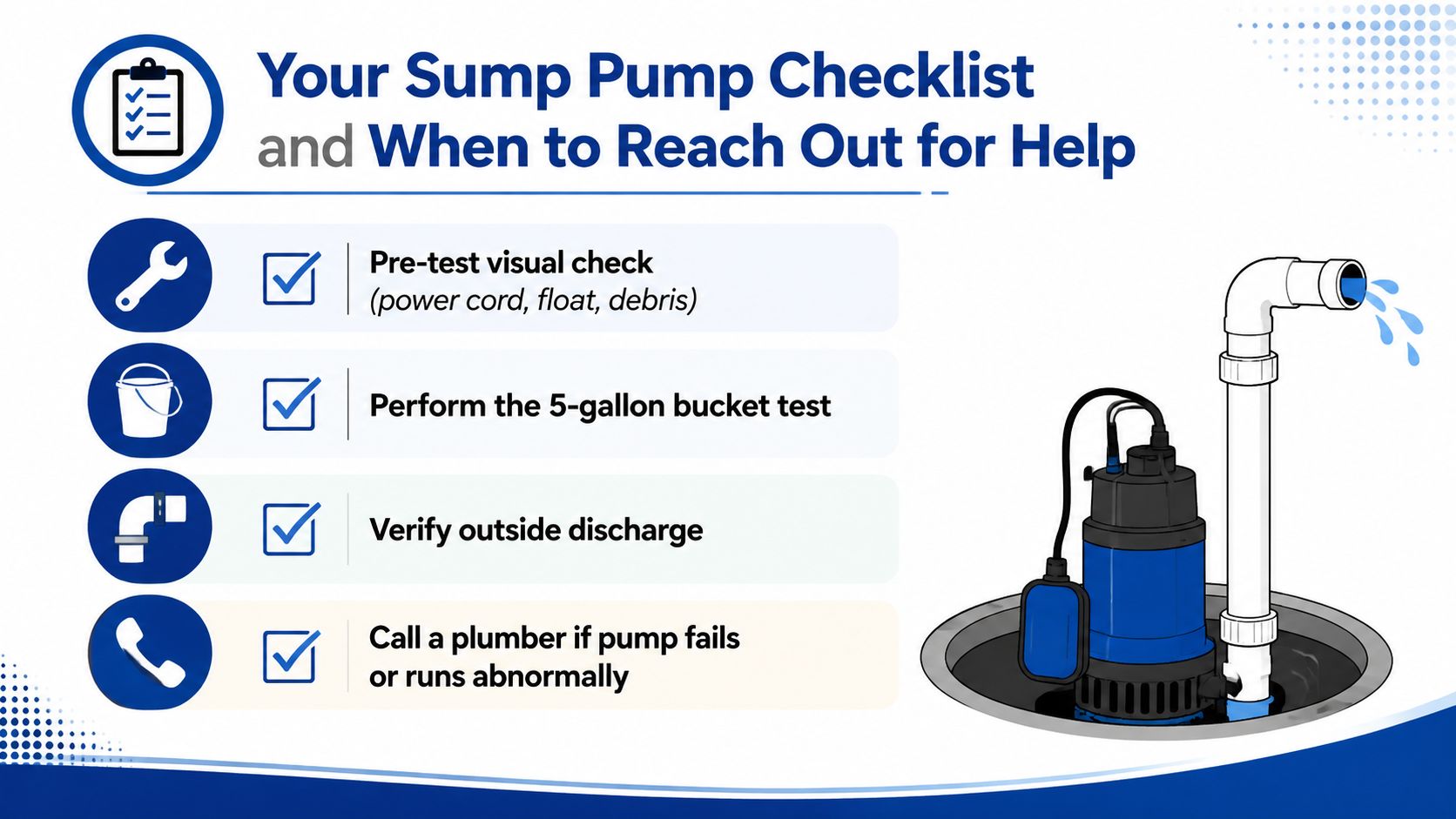
- Pre-test visual check: Look at the power cord, float, pit, and visible debris.
- Bucket test: Pour in about 5 gallons of water and watch the float and motor response.
- Outside discharge verification: Confirm water is leaving the house.
- Call a plumber if needed: If the pump fails, short-cycles, or behaves abnormally, stop and get it checked.
Quick FAQ
How long should a sump pump last?
There isn't a single rule for every home, but older pumps that fail repeated tests usually need attention sooner rather than later.
Does a backup battery matter in Michigan?
Yes, especially when storms and outages overlap. Power loss takes a standard electric pump out of service unless there's backup power in place.
What if I'm leaving for a long vacation?
Test the pump first, make sure the outlet is live, and verify the discharge line is open before you go.
If you're in Macomb or Oakland County and the pump didn't behave the way it should, call Jay's Plumbing and Sewer Now @ 586-634-3450. They handle residential and commercial plumbing, including sump pump repair, drain cleaning, sewer repair, leak detection, bathroom plumbing, kitchen plumbing, water heater repair, and water heater replacement, so you're not guessing at the next step. For a local plumber near me who can check the system and tell you what's wrong, visit Jays Plumbing and Sewer.
If your sump pump didn't pass the bucket test, or if the discharge line isn't moving water the way it should, Jays Plumbing and Sewer can check the pump, outlet, and piping before the next storm does the damage. They serve Fraser, Macomb County, Oakland County, and nearby communities with sump pump repair, drain service, sewer work, and emergency plumbing, so you can get a straight answer and a proper fix.
