

The bowl is near the rim, the tank is still running, and water is spreading toward the bathroom doorway. Whether you're standing in a Sterling Heights bathroom or a Shelby Township rental, leave the flush handle alone. You can often limit the damage before you know what caused it.
Knowing how to fix a flooded toilet starts with separating two problems: water entering the fixture and wastewater failing to leave it. Stop the incoming water first, treat any bowl spill as contaminated, and determine whether you have a local clog or a backup that requires everyone in the property to stop using water.
Table of Contents
- Stop the Overflow in the First Two Minutes
- Tell a Clog from a Backup and When to Call
- Plunge or Auger Only a Local Blockage
- Clean Sewage Water and Discard What You Cannot Save
- Protect Floors and Keep the Next Flush from Flooding
- Frequently Asked Questions
Stop the Overflow in the First Two Minutes
Don't start with the plunger. A running tank can keep feeding a blocked bowl while you're looking for tools. The first job is to stop that supply without adding another flush.
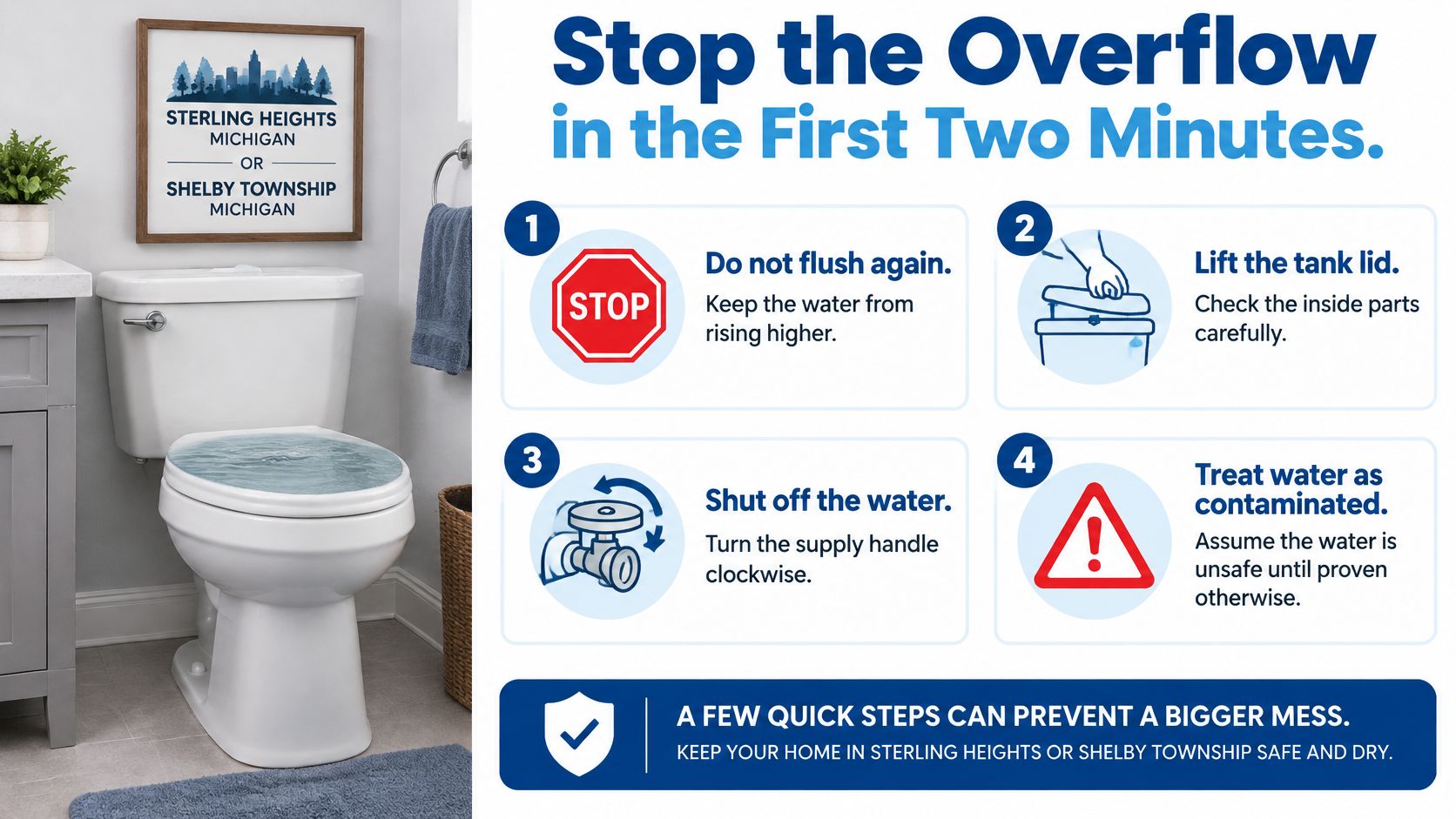
Follow this sequence to stabilize the bathroom.
- Don't flush again. Even if the bowl drops slightly, another flush can send more water onto the floor before the restriction clears.
- Lift the tank lid carefully and close the flapper. Set the porcelain lid flat somewhere secure. If your toilet uses a rubber flapper at the bottom of the tank, press it onto its seat to stop tank water from dumping into the bowl.
- Close the toilet's supply valve. Look behind the toilet near the wall or floor. Turn a conventional shutoff clockwise until it stops, without forcing a seized handle. If water continues entering the tank, use the home's main water shutoff.
- Watch the bowl. If it keeps rising with the toilet supply closed, stop showers, laundry, dishwashing, and kitchen sink use. Water is likely arriving through a restricted shared drain.
- Keep children and pets out. Close off the room so nobody walks through the spill or carries contamination elsewhere.
- Protect yourself before kneeling. Put on waterproof gloves, rubber boots, and eye protection. Don't reach barehanded into bowl water.
- Contain the doorway. Place absorbent towels along the wet area's edge to reduce tracking onto carpet or hardwood. Treat those towels as contaminated cleanup materials afterward.
Use this quick visual when you're locating the tank parts and shutoff.
Leave chemicals out of the bowl
Chemical drain cleaner isn't a useful emergency step in a full toilet. It can remain in the standing water and splash during plunging or cable work, exposing you or the plumber who handles the blockage.
If someone already poured cleaner into the toilet, stop working on it and tell the plumber what product was used. Don't add another cleaner to try to neutralize it.
Leave the tank lid safely off while you monitor whether the fill valve has stopped. Don't stand in water to operate electrical equipment, and leave cleanup involving wet outlets or electrical fixtures to qualified help.
Immediate goal: The supply is off, the bowl level is stable, and nobody is tracking dirty water through the property.
A running toilet deserves prompt attention even after the floor is contained. In its 2023 newsletter, the U.S. Environmental Protection Agency reported that toilets account for nearly 30% of indoor household water consumption. Continuous filling isn't a minor drip.
Tell a Clog from a Backup and When to Call
A faulty flapper and a blocked sewer need different repairs. Replacing tank parts won't open a drain, and plunging won't repair a fill valve that refuses to shut off.
Start by identifying where the water escaped. Water leaking directly from a tank or supply connection may be clean supply water. Water that passed through the bowl must be treated as contaminated, even if it looks clear and has little odor.
A running tank alone also doesn't explain every bowl overflow. The toilet's overflow tube normally directs excess tank water into the bowl, where an open drain should carry it away. If the bowl spills, check drainage rather than assuming a new flapper solves everything.
What the overflow is telling you
| What you see | Likely cause | Next move |
|---|---|---|
| Only this toilet is slow and the bowl holds waste | Local closet or trap clog | Plunge with a flange plunger, then use a closet auger if needed |
| Clean water spills and the tank keeps running with little odor | Flapper, float, or fill valve | Shut the supply and adjust or replace the faulty part; verify where the spill originated |
| Bowl still rises after the toilet supply is off | Downstream restriction | Stop all water use and call a plumber |
| Tub, sink, or floor drain also backs up | Branch or main sewer | Stop plunging and arrange camera inspection or mechanical cleaning |
| Gurgling returns hours after the toilet seemed clear | Partial line obstruction | Schedule drain cleaning before the next overflow |
| Sewage in a basement floor drain after heavy rain | Surcharged sewer or sump issue requiring diagnosis | Isolate the area and get emergency service |
For the last pattern, don't assume the sump caused the sewage. A sump normally manages groundwater, while sewage comes through the wastewater system. A plumber needs to distinguish the source before recommending sump pump repair or sewer work.
Older fixtures can make an extra flush particularly messy. The National Kitchen & Bath Association's toilet water-use history notes that toilets manufactured before 1980 may use as much as 7 gallons per flush. That explains the potential spill volume in an older Clinton Township or Troy house, not the cause of the blockage.
Recognize a property-wide problem
Look at nearby fixtures without filling sinks or running a washer as a test. Existing standing water, gurgling, or wastewater in a low tub can provide enough evidence to stop.
In Macomb County, Oakland County, and Wayne County homes, a plumber may need to distinguish roots, grease buildup, or a damaged sewer lateral from a toilet obstruction. A camera inspection can help establish pipe condition, although standing wastewater or a heavy blockage may require clearing before useful footage is possible.
Our guide to signs of a main sewer line clog explains the shared-fixture warning signs. If multiple drains are backing up at once, we advise calling because the main sewer line is likely the cause.
For septic properties, reduce nonessential water use and arrange inspection rather than continuing to flush. The CDC's septic and onsite wastewater guidance emphasizes limiting wastewater discharge when flooding may have affected the system.
At Jays Plumbing and Sewer, our toilet services include unclogging, fixing and sealing leaks, repairing flushing mechanisms, and installing new units. We also offer 24/7 emergency service for burst pipes, sewer backups, and no hot water.
Call an emergency plumber when wastewater keeps entering, sewage reaches carpet or a commercial kitchen, or the backup returns after a controlled clearing attempt. Those situations need diagnosis, not another round of trial-and-error flushing.
Plunge or Auger Only a Local Blockage
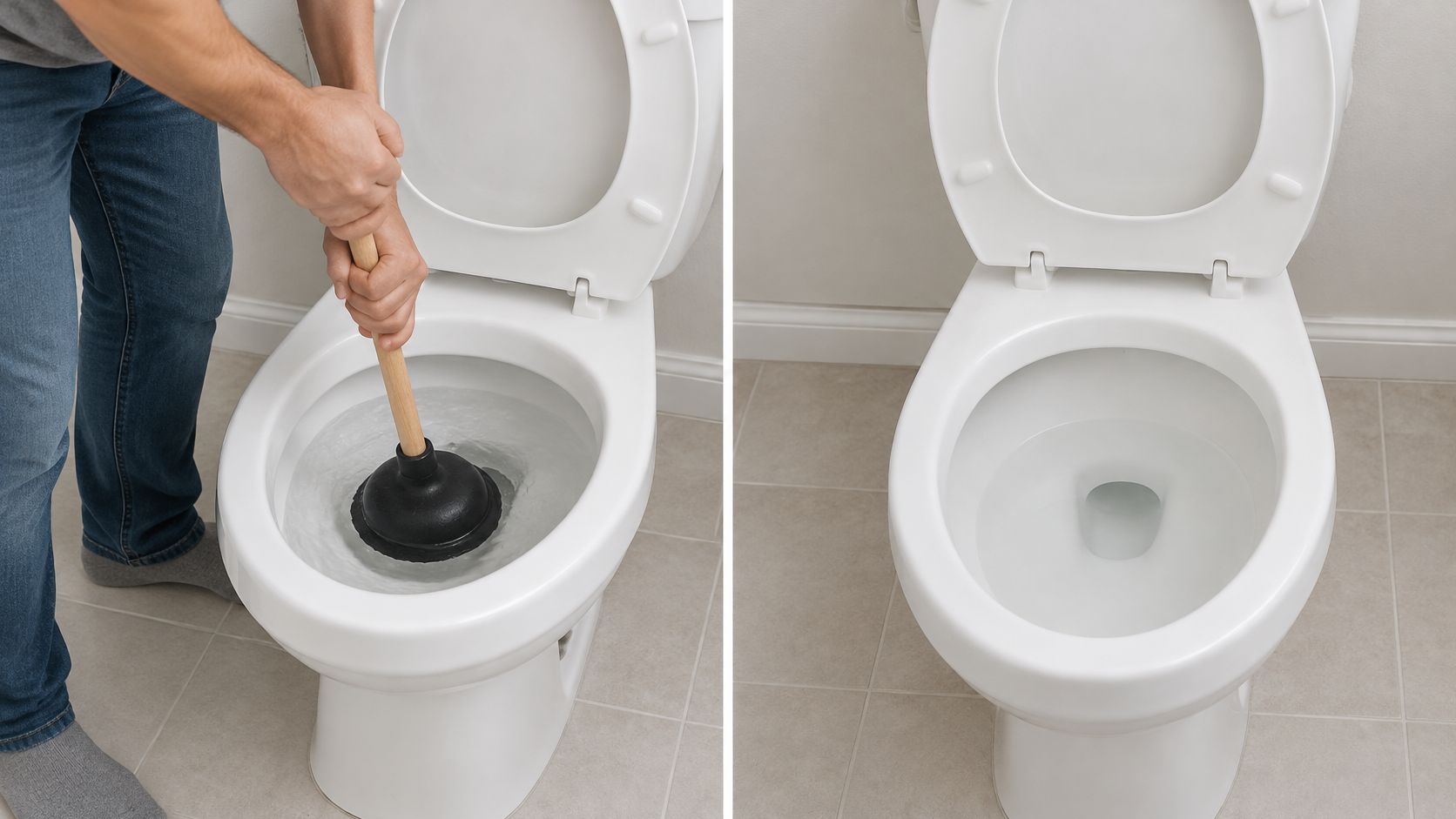
A plunger is appropriate when only this toilet is affected, the supply is controlled, and the bowl has enough space below the rim to work without spilling. If those conditions aren't met, leave the toilet alone.
Use a toilet plunger with an extended rubber flange. The flat cup sold for sinks doesn't seal a toilet outlet as well and tends to move water around the bowl instead of through the obstruction.
The tool should sit squarely over the outlet, as shown below.
Use controlled pressure rather than splashing
- Check the water level. If the bowl is too full, carefully transfer some water into a leakproof bucket reserved for contaminated cleanup. Don't carry an open, overfilled bucket through the house.
- If the bowl is low, add only enough water to cover the plunger cup. Don't fill it toward the rim.
- Seat the flange inside the outlet. Keep the handle upright so the rubber makes a seal.
- Begin with slow strokes to expel trapped air. An abrupt first push can splash contaminated water.
- Use firm vertical strokes while maintaining the seal. More force isn't better if you're sloshing water over the edge.
- Lift the plunger and watch. The water should drop and remain down.
- Confirm cautiously with a small pour of water, not a full tank flush. Stop immediately if the level rises instead of draining.
The EPA's guidance on resolving septic system malfunctions supports avoiding sewage contact and obtaining qualified help for contaminated backups. Protective equipment doesn't make an uncontrolled backup a suitable DIY job.
Stop when the water approaches the rim, another fixture reacts, or a careful plunging attempt doesn't restore drainage.
For a visual demonstration of toilet plunging, watch the technique before trying it.
When a closet auger makes sense
A closet auger, also called a toilet auger, has a protective guide designed for the porcelain bend. Seat that guide correctly, feed the cable gently while turning the handle, and withdraw it carefully. Stop at hard resistance rather than forcing the cable.
Don't substitute an exposed general-purpose drain cable that can scratch the bowl. If you suspect a toy or another solid object, forcing it deeper can make removal harder.
Wipes, paper towels, and hygiene products can obstruct residential toilets in Fraser or Macomb. Grease and roots farther along the building drain require different access and tooling.
A toilet that floods again after temporary improvement needs its cause checked. Our explanation of drain cleaning methods can help you understand why a cable, camera, or other cleaning approach may be recommended instead of more plunging.
Clean Sewage Water and Discard What You Cannot Save
Repair and cleanup are separate jobs. A toilet that drains again can still leave contaminated flooring, wet wall cavities, or soaked belongings behind.
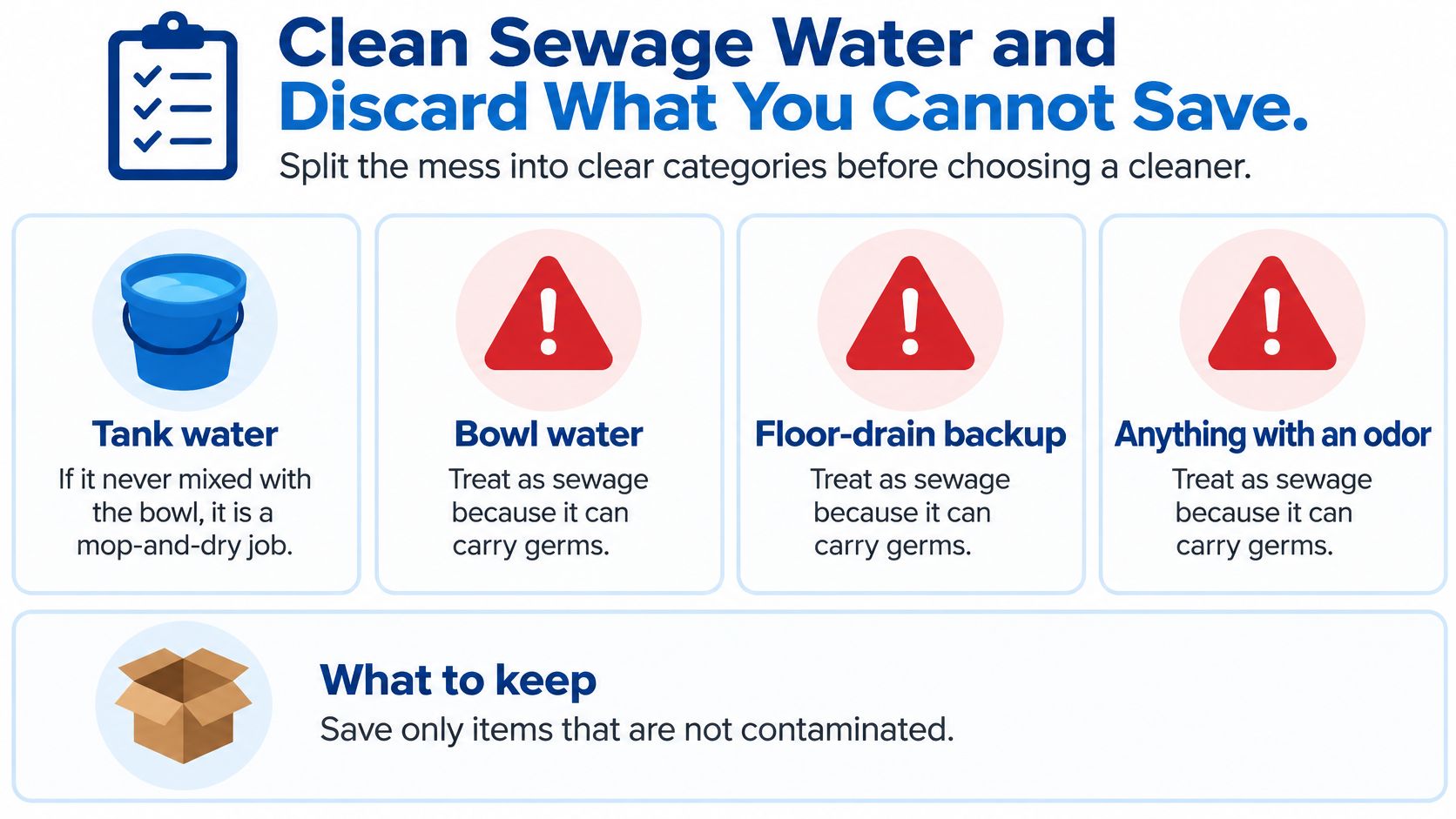
Water that escaped directly from the tank or supply and never mixed with the bowl is generally a mop-and-dry problem. Bowl water, a floor-drain backup, or water of uncertain origin requires sewage precautions. Lack of odor doesn't prove it's clean.
Use the contamination category, not puddle size, to choose your cleanup approach.
Clean before disinfecting
Remove standing water with equipment suitable for contaminated water that can be cleaned afterward. Don't use a household dry vacuum, and don't empty collected sewage into a drain that remains backed up.
Wash hard surfaces with hot water and detergent, then remove the dirty cleaning solution. Visible soil must come off before disinfectant goes on.
The CDC's bleach-disinfection guidance specifies regular unscented bleach containing 5%–9% sodium hypochlorite and, when the label provides no dilution directions, 5 tablespoons, about one-third cup, per gallon of room-temperature water, with surfaces visibly wet for at least 1 minute. Ventilate the room, follow material compatibility instructions, and never mix bleach with ammonia or another cleaner.
What to clean and what to throw out
| Material | If sewage touched it | If only clean tank water |
|---|---|---|
| Ceramic, sealed vinyl, metal fixtures | Detergent, then compatible disinfectant for the required wet contact time | Detergent and dry |
| Bath mats, cardboard, unfinished drywall | Discard items that can't be thoroughly cleaned and disinfected | Dry fully if not soaked through; replace damaged material |
| Upholstered furniture and mattresses | Discard contaminated items that can't be adequately disinfected | Extract water, dry promptly, and inspect for retained moisture |
| Area rugs with backing | Discard if soaked and not adequately cleanable | Extract water and dry promptly |
| Mop, plunger, boots, and clothing | Wash and disinfect as appropriate for the material before storage | Wash and dry |
| The bathroom itself | Keep closed through cleanup and complete drying | Reopen once surfaces are dry |
The Illinois Department of Public Health's sewer-overflow cleanup guidance supports protective clothing, minimizing skin contact, and discarding contaminated furnishings that can't be adequately cleaned. Protect cuts and wash yourself after handling cleanup equipment.
Don't judge dryness by the top of the floor alone. Swollen trim, damp carpet edges, or moisture below an upstairs bathroom call for further assessment. The EPA's damaged-building guidance recommends treating flood contamination seriously and removing materials that cannot be safely restored.
Cleanup boundary: Sewage inside wall cavities, porous flooring, HVAC areas, or food-preparation space calls for professional remediation.
Property managers should isolate the affected area and coordinate plumbing repair with appropriate cleanup help. Our sewer backup guidance addresses the broader problem when contamination extends beyond the toilet.
Protect Floors and Keep the Next Flush from Flooding
Once drainage is confirmed, check why water kept entering. With the supply closed, inspect the flapper, chain, float, and fill valve before restoring water under observation.
An untangled chain and a properly seated flapper are simple checks. Don't keep changing the float to compensate for a cracked or warped flapper, and don't assume every replacement part fits every toilet.
Tank settings to check
The following targets come from Fluidmaster's installation instructions: a tank waterline about one-half inch below the overflow pipe, an overflow pipe at least one inch below the handle opening, and approximately one-half inch of flapper-chain slack.
| Setting | Target | Why it matters |
|---|---|---|
| Tank waterline | About 1/2 inch below the top of the overflow tube | A level set too high sends water down the overflow |
| Overflow tube height | At least 1 inch below the handle opening | Keeps the overflow tube below the spill line |
| Flapper chain | About 1/2 inch of slack | A tight chain stops the flapper from sealing |
Use the instructions for your specific toilet and repair parts rather than cutting or modifying an overflow tube based only on a general measurement. If the toilet still runs, a plumber should check the fill valve and flush-valve sealing surface.
Don't flush wipes or paper towels, including wipes labeled flushable. Keep a wastebasket available so occupants don't use the toilet for hygiene products.
Separate seasonal problems from fixture repairs
During Michigan winters, include little-used bathrooms in rental-property checks. Frozen pipes concern the water supply; recurring bowl backups concern drainage. They require different troubleshooting.
After heavy rain or spring melt, inspect basement drains without running fixtures as a test. Groundwater flooding and sewage backup may occur around the same time, but a new flapper won't correct either a surcharged sewer or a failed sump system.
For landlords, businesses, and home buyers in Sterling Heights, Shelby Township, and nearby communities, a useful maintenance record includes:
- Overflow timing: Note whether it followed toilet use, laundry discharge, or rain.
- Affected fixtures: Record which drains changed level.
- Prior repairs: Keep camera findings and repair recommendations, not just receipts for clearing a clog.
Replacing an inefficient fixture can reduce water use. The EPA's 2024 WaterSense newsletter reports that a WaterSense-labeled toilet can save nearly 13,000 gallons and about $140 in water costs annually compared with an older toilet. A new fixture still won't cure an obstructed sewer lateral.
If gurgling returns or nearby drains rise, arrange diagnosis before normal use resumes. A camera inspection can help determine whether cleaning is enough or pipe repair or sewer repair needs consideration.
Frequently Asked Questions
Should I flush again to see whether it clears?
No. Keep the supply closed and avoid a test flush while the cause is uncertain. A flush can send more water into a bowl that is already near the rim. Once the toilet is stable, a plumber can help determine whether the blockage is local or farther down the drain.
Is overflow water safe to touch?
Treat it as contaminated if it has contacted the bowl or sewage. Water from a clean tank or supply line may be different, but appearance and odor alone cannot confirm that it is safe.
Wear gloves, protective footwear, and eye protection during cleanup. Keep other occupants away from the affected area.
Can I use chemical drain cleaner?
No. A full bowl leaves little room to work, and chemical residue can splash during plunging or augering. If you already added cleaner, tell the plumber what product you used before work begins.
Why did it overflow again after plunging?
The blockage may have shifted without clearing, or the restriction may be farther downstream. A solid object caught in the toilet can also cause repeated trouble.
Note whether other fixtures gurgle, drain slowly, or back up. If several drains are affected, stop using water throughout the property. Plunging the toilet will not clear a main sewer line problem. That information helps the plumber decide whether to inspect the toilet, access the drain, or use a camera to locate the blockage.
Can I wait until morning?
Get emergency help if sewage keeps rising with the toilet supply off, enters a floor drain, or spreads beyond the bathroom. Stop wastewater discharge throughout the property while a downstream backup is present.
If the toilet is isolated, stable, and unused, tell the plumber those details when you call. They help assess the urgency.
What should I tell the plumber when I call?
Give your location, whether the toilet supply is closed, which fixtures are affected, and whether you used chemical cleaner. Mention any water near electrical equipment or sewage outside the bathroom.
If you're searching “plumber near me,” describe the immediate problem, such as an active sewer backup or a local toilet blockage. Keep unrelated maintenance, such as water heater repair, leak detection, or kitchen plumbing, separate from the bathroom emergency.
Jays Plumbing and Sewer provides toilet repairs, drain cleaning, and emergency backup response for residential and commercial customers. Call Jay's Plumbing and Sewer at 586-634-3450 for help in Fraser, Sterling Heights, Clinton Township, Troy, Macomb, Shelby Township, and the surrounding Macomb and Oakland County area, or visit Jays Plumbing and Sewer to request service. Tell the plumber whether the bowl is still rising and which other drains are affected.
