
The hot water fades halfway through a shower, or you notice a rusty ring under the tank in a Fraser basement. Nothing has flooded yet, so it's easy to wait. In Macomb County, Oakland County, and Wayne County homes, that wait is usually how a manageable water heater problem turns into a cold morning and wet drywall. Sterling Heights basements and garages see the same pattern after hard winters, when cold inlet water makes an aging heater run longer.
Most water heaters give clear signals long before they stop working. This guide walks through the eight most common signs a water heater needs replacement, explains what causes each one, and shows when a repair is enough and when replacement is the smarter move. Age, color, noise, leaks, short supply, odor, bills, and repeat repairs tend to stack. Reading them as a sequence tells you more than any single symptom.
I treat each sign as a decision point, not a scare. A fitting, element, thermostat, or anode can still be worth fixing. A compromised storage tank usually is not. If you manage a rental in Clinton Township, sell a house in Troy, or run a small shop in Shelby Township or Macomb, the same questions apply. Where is the water coming from, how old is the unit, and will another repair hold?
Table of Contents
- 1. Your Water Heater Is 10 to 15 Years Old or Older
- 2. Rusty, Cloudy, or Discolored Hot Water
- 3. Popping, Rumbling, or Banging Noises from the Tank
- 4. Water Pooling or Leaking Around the Base of the Tank
- 5. Not Enough Hot Water or Running Out Faster Than Before
- 6. A Rotten Egg or Sulfur Smell from Hot Water
- 7. Rising Energy Bills Without a Clear Reason
- 8. Frequent Repairs and a Dripping Temperature and Pressure Relief Valve
- How the 8 warning signs compare
- When to Repair, When to Replace, and Who to Call
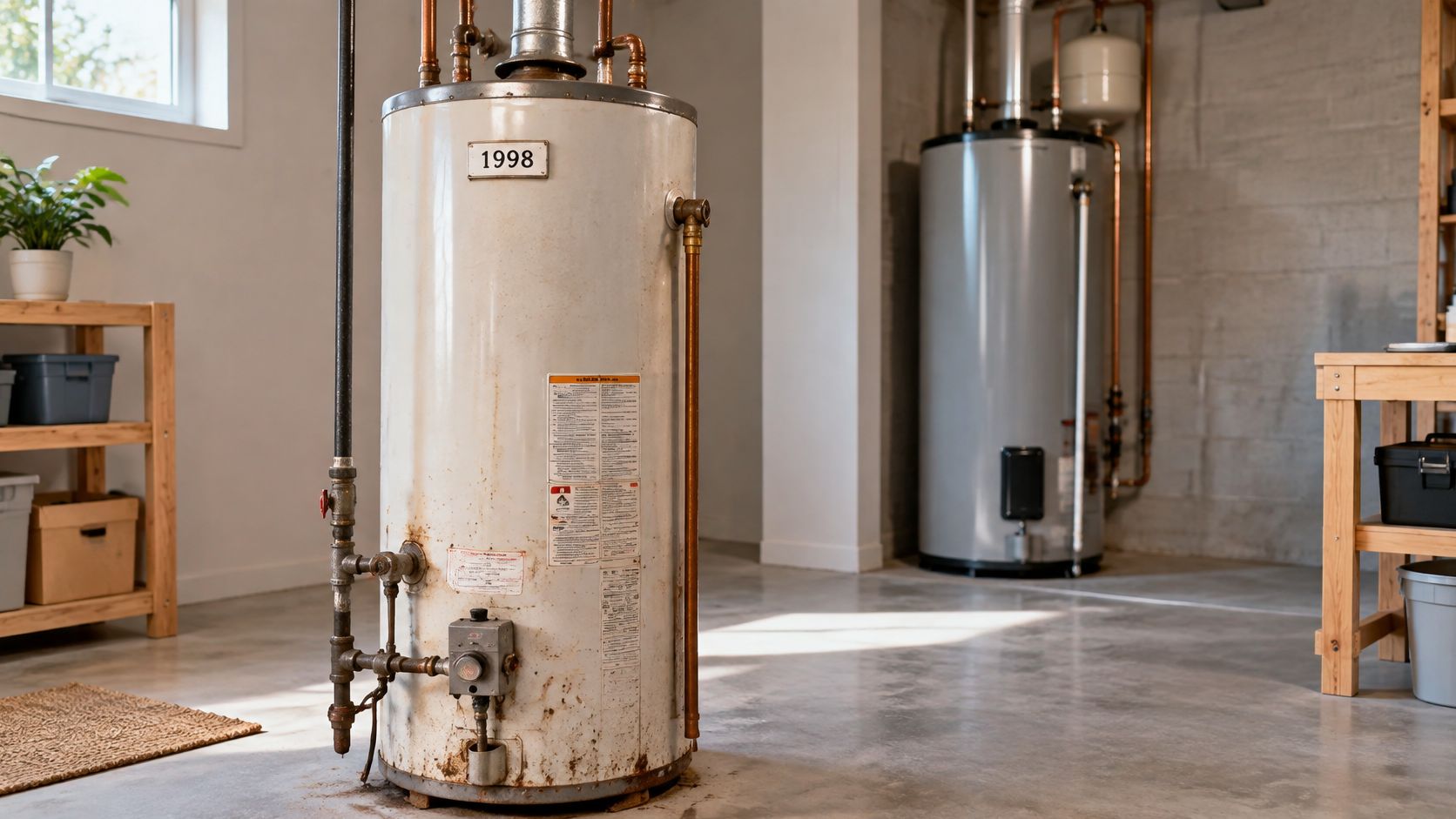
1. Your Water Heater Is 10 to 15 Years Old or Older
The U.S. Department of Energy Energy Saver guide states that most conventional storage water heaters last approximately 10 to 15 years, while tankless models can last more than 20 years. Age isn't a stamped expiration date. Water quality, sediment, installation, and maintenance all move that window. An older DOE Energy Saver publication recommends beginning the search for a replacement when a unit is more than 7 years old. That's planning time, not a verdict that the tank has already failed.
Say a 12-year-old gas tank sits in a Sterling Heights basement. Small repairs have kept it going, then a damp ring shows at the base. A planned swap on a mild week beats a January outage. A Clinton Township rating plate that shows a 2009 install date is the same kind of signal. You still have time to compare size, fuel, and venting before the unit quits.
A technician reads the manufacture date on the rating plate, not a marker note on the jacket. I also look at the tank base, the burner or elements, and whether this is already the second or third paid repair.
- Write the year down: Keep the install year with your home records.
- Price the next repair: Past 10 years, ask for repair cost next to replacement before you approve parts.
- Add a drain pan: A pan and drain line under a basement or garage tank limits damage if seepage starts.
For a cost picture before you decide, see how much water heater installation costs.
2. Rusty, Cloudy, or Discolored Hot Water
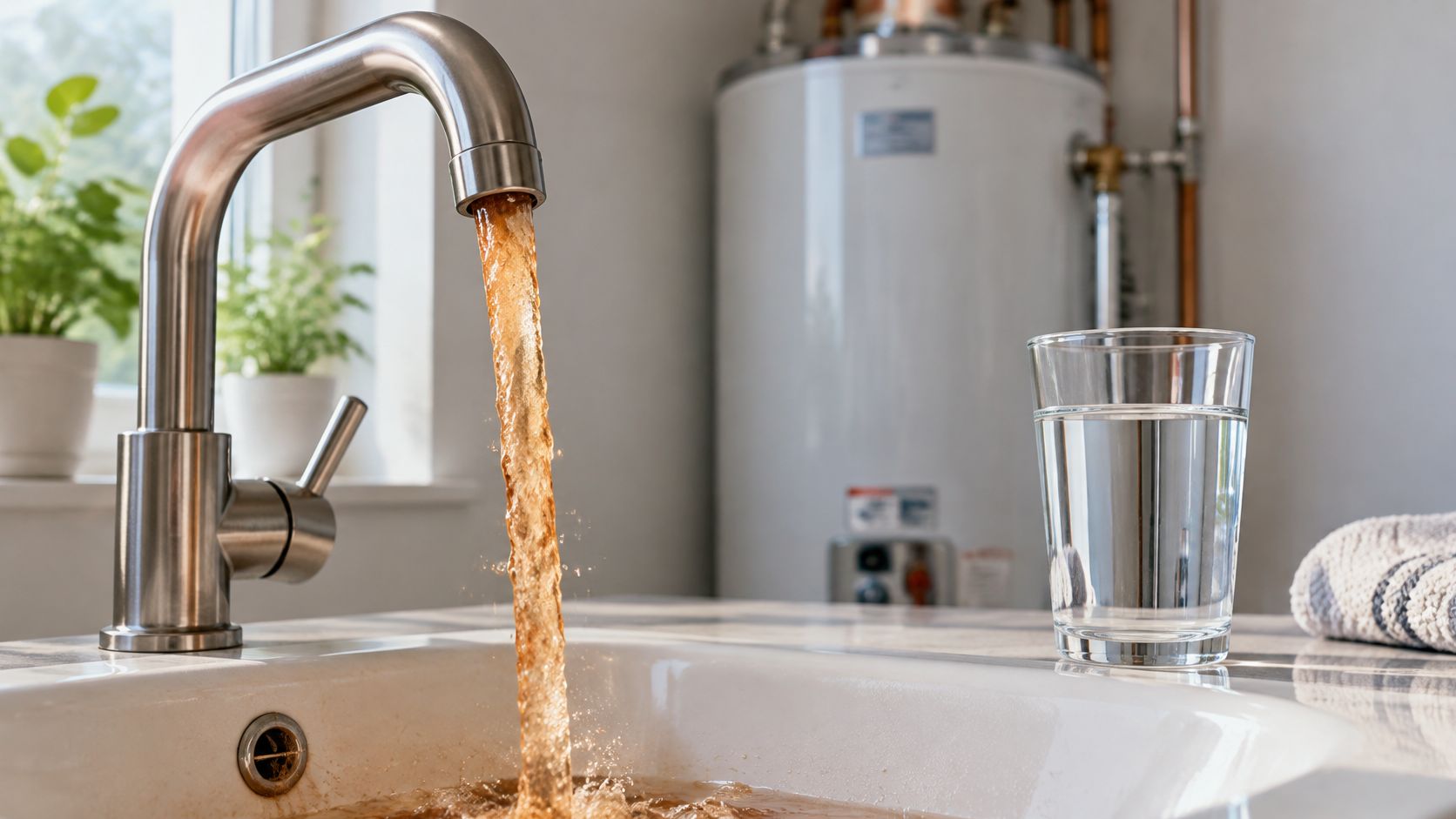
Brown water only from the hot side is a different problem from a city main that dirties every tap. Steel tanks use a glass lining. When that lining cracks, exposed steel reacts with the water and the color shows up at the faucet. Sediment on the bottom can cloud it too. In Macomb and Oakland County, minerals in the supply often build that layer faster than people expect.
Say a Troy kitchen runs brown for several weeks, and only on hot. Cold stays clear. That's a strong hint the lining is aging, and replacement is usually the honest call. A 14-year-old commercial tank serving a Shelby Township office restroom can send the same color to every lavatory at once.
What a plumber looks for
I run cold first, then hot, at a fixture that isn't filtered. I check the anode, the tank base, and whether the color is rust or loosened sediment. A spent anode leaves the steel more exposed. A flush can clear loose debris when the shell is still sound. It won't rebuild a lining that's already gone.
Practical rule: If cold water is clear and hot water stays yellow, brown, or rusty after a professional flush, plan on replacement rather than another cleaning.
Don't drain a large tank yourself. The water can burn you, and a licensed plumber can flush it safely. Ask about the anode on the next maintenance visit so you catch wear before the color changes. Kitchen plumbing aerators can hold rust for a day after the tank is addressed, so clear those screens once, then retest.
3. Popping, Rumbling, or Banging Noises from the Tank
A quiet tick as water heats is normal. Loud popping, rumbling, or banging usually means sediment is sitting on the tank bottom. Water trapped under that layer boils, and the bubbles punch through it. The layer also insulates the steel, so the burner or electric elements run longer. That extra heat stresses the bottom and shortens tank life. Hard water is common across Metro Detroit, so Fraser, Macomb, and Oakland County tanks collect this layer often.
A Department of Energy building guide describes draining about a quart of water every three months, checking the temperature-and-pressure relief valve every six months, and inspecting the anode rod every three to four years. Those intervals keep sediment from becoming the whole story. If the tank is already near the end of its life, a flush may quiet the noise and still leave you with a unit that won't last.
Say a Fraser homeowner hears popping for months. A flush drops the noise, and the rating plate shows the tank is late in its service life. Replacement is the cleaner plan. A Sterling Heights restaurant with popping during a lunch rush, plus slow recovery, is a commercial version of the same choice. Waiting through another busy weekend doesn't fix the layer already baked onto the bottom.
- Listen at the right time: Note noise while the burner or elements are heating, not only while a tap runs.
- Track the change: Write down when it started and whether it's getting louder.
- Don't skip the yearly look: Annual service lets a technician judge sediment before the bottom overheats.
A sound tank with a light layer is a maintenance job. An old tank that's loud, slow, and already repaired is a replacement job.
4. Water Pooling or Leaking Around the Base of the Tank
Any water at the base deserves a same-day look. A union, drain valve, or flex line can be repaired. Water leaving the tank shell usually means the inner vessel has cracked or corroded, and an external patch isn't a reliable fix. Michigan heaters often sit in basements and utility rooms, so a slow leak can wet a floor for weeks before anyone notices. Leak detection starts by drying the area and watching which fitting wets first.
This short clip shows why a base leak shouldn't sit until the weekend.
A Pacific Northwest National Laboratory technical report, citing an analysis of 700 water-heater-related water-loss insurance claims, found that 69 percent involved leakage from the heater or a burst tank. Those failures averaged $4,444 per incident after the deductible.
Repairable drip or tank leak
Say a Clinton Township basement shows a damp spot and the shell itself is wet at a split. That's replacement, scheduled before the spot becomes a flood. Say a Macomb rental has moisture only at a loose drain valve. Tightening or replacing that valve can stop it without a new tank. I check the pan, the T&P discharge, the dielectric unions, and the floor around the base. Active flow means shut off the water supply and the power or gas, then call. Pipe repair nearby doesn't change a cracked tank, but it does explain some "heater" leaks that aren't the heater at all.
A towel with a dry edge under the tank makes a new drip obvious on your next walkthrough.
5. Not Enough Hot Water or Running Out Faster Than Before
A heater should cover showers, dishes, and laundry through your busiest hour. When that hour shrinks to a few minutes, the tank may be losing usable volume, the heat source may be weak, or the dip tube may be broken so cold water shorts to the outlet. Sediment takes up space and slows recovery. A failed electric element or a weak gas burner does the same thing from the heat side.
Say a Sterling Heights family of five has a 40-gallon tank that dies during morning showers. The tank may still be sound, and the main miss is size. Bathroom plumbing and kitchen plumbing added after the original install often outgrow the old gallon rating. Say a Fraser office goes lukewarm every afternoon. A technician may find one bad element plus a worn tank, and then replacement beats another element in a vessel that's already thin.
I compare first-hour need with recovery, not just the number on the jacket. A sudden loss often points to an element, thermocouple, or burner that is still worth fixing. A slow fade on an older tank, especially after a bathroom was added in Troy or Shelby Township, usually means the unit no longer matches the building.
Match the next heater to the busiest hour you actually live, not to the tank that happened to fit the closet ten years ago.
If the problem showed up overnight, get it checked before you order equipment. A repair can restore a sound tank. It can't invent capacity the household has outgrown.

6. A Rotten Egg or Sulfur Smell from Hot Water
Rotten-egg odor on hot water only usually means bacteria in the tank are reacting with the anode rod and producing hydrogen sulfide. The rod is supposed to corrode so the steel doesn't. When it's depleted or the wrong metal for the water, the smell can stick around. Cold water that smells the same points somewhere else, including the supply or a well, so the first job is to separate the two.
Hot side only
Say a Shelby Township shower smells and the kitchen cold tap doesn't. A flush plus a new anode often clears it when the tank is still solid. Say a Macomb business restroom keeps the odor after repeated treatments. At that point another rod is a short pause, not a fix, and replacement is the practical call. I confirm hot versus cold at more than one fixture, check the rod, and look at tank age before recommending parts.
The rod's job is easy to misunderstand, so it helps to read what an anode rod does before you assume the tank is ruined. Don't use that hot tap for drinking or cooking until the source is confirmed. A smell that returns within weeks on an older tank is a replacement conversation. A smell that leaves after one proper service, and stays gone, is a repair.
7. Rising Energy Bills Without a Clear Reason
A heater can use a large share of the gas or electric bill, and a jump with no change in showers often means the unit is running longer for the same water. Sediment, weak burners or elements, and tired insulation all do that. Michigan winters make inlet water colder, so every heater works harder from late fall through spring. The question is whether your increase is weather, or weather plus a tank that's lost its edge.
ENERGY STAR's water heater market profile reports that qualified high-efficiency models use 7 to 55 percent less energy than standard-efficiency units and can save roughly $30 to $300 per year, depending on technology and usage.
Say a Clinton Township gas bill climbs in winter and a flush pulls heavy sediment. Cleaning may help a sound tank, and a higher-efficiency replacement may still be the better multi-year buy. Say a Troy property manager replaces several aging rental heaters and the hot-water portion of the bills eases the following year. That's the pattern I want before anyone calls a bill spike a heater failure.
Compare the same months year to year, not January against July. Set the thermostat near 120 degrees Fahrenheit unless a specific use needs hotter water. Insulate exposed hot lines you can reach safely. I check run time, scale, and jacket condition before blaming the rate. A newer efficient tank in a closet with no airflow or no condensate drain can be the wrong upgrade, even when the math on paper looks good.

8. Frequent Repairs and a Dripping Temperature and Pressure Relief Valve
One repair on a younger tank is normal. A second and third visit in a short span usually means several parts are aging together, and the labor starts to rival a new unit. The temperature and pressure relief valve, the T&P, is a safety device. It opens if temperature or pressure gets too high. A regular drip can be a bad valve, an over-pressurized system, or both. Neither one should be ignored, and neither one should be capped.
The EPA WaterSense home maintenance guidance advises homeowners to visually inspect water-heating equipment for leaks, aged gaskets, loose connections or screws, and corrosion, and to repair identified problems as necessary. That walkthrough is how a dripping valve gets caught before it runs all night.
Say a Fraser heater needs the same electric element twice in two years, and the tank is already old. I recommend replacement rather than a third element. Say a Sterling Heights office has a T&P discharging every day. High incoming pressure can be the driver, and a pressure-reducing valve may be part of the fix, but a worn tank still gets replaced if the shell or the valve seat is done.
- Never plug the discharge: That line is a safety path, not a nuisance drip.
- Keep a repair log: Dates and costs make the replace-versus-repair choice obvious.
- Ask about an expansion tank: Many closed systems need one, and the right setup depends on the building.
Details and timing for service are covered under water heater repair. A valve swap on a young, solid tank is a repair. A valve that keeps opening on an old, corroded tank is a replacement.
How the 8 warning signs compare
| Item | Urgency Level | Often Repairable? | Typical Next Step |
|---|---|---|---|
| Your Water Heater Is 10 to 15 Years Old or Older | Moderate | Sometimes | Have a plumber assess its age and condition |
| Rusty, Cloudy, or Discolored Hot Water | Moderate | Sometimes | Confirm whether only hot water is affected and call a plumber |
| Popping, Rumbling, or Banging Noises from the Tank | Moderate | Sometimes | Schedule an inspection and sediment check |
| Water Pooling or Leaking Around the Base of the Tank | High | Fittings or valves often; tank leaks rarely | Shut off the unit if actively leaking and call a plumber |
| Not Enough Hot Water or Running Out Faster Than Before | Moderate | Often, depending on the cause | Have a plumber check components and household sizing needs |
| A Rotten Egg or Sulfur Smell from Hot Water | Moderate | Sometimes | Confirm which taps are affected and have a plumber check the source |
| Rising Energy Bills Without a Clear Reason | Low to moderate | Sometimes | Compare bills and ask a plumber to assess efficiency |
| Frequent Repairs and a Dripping Temperature and Pressure Relief Valve | High | Sometimes | Have a plumber promptly check the valve and system pressure |
When to Repair, When to Replace, and Who to Call
Most of these signs start small. On one visit a licensed plumber can usually tell whether a part will hold or whether the tank is the problem. Repair still makes sense for a younger unit with a bad element, thermostat, thermocouple, anode, or fitting, once the shell is dry and solid. Replacement makes sense when the tank leaks, the lining is throwing rust, the same parts fail again, or the heater is already in that later 10 to 15 year range and the next repair isn't cheap.
Write down the install year, each repair, and a simple note when bills jump. That record is what turns a guess into a decision for a homeowner, a landlord, a real estate agent, or a buyer walking a house in Wayne County. Schedule the look before water is on the floor or the safety valve is discharging. If either of those is happening now, shut off the water and the gas or power and call. Don't cap the valve and don't wait out a shell leak.
Local buildings add their own limits. A basement in Fraser or Clinton Township may fit a tank and still lack airflow, a condensate drain, or electrical capacity for a heat-pump model. A closet in Troy or a utility room in Shelby Township can have the same issue. ENERGY STAR states that certified heat-pump water heaters can use about one-quarter of the energy of standard electric resistance models and can save a four-person household approximately $550 annually, with an estimated 2.7-year payback and more than $5,600 in lifetime savings under its stated assumptions. The same page reports that certified gas storage models are about 15 percent more efficient than conventional models and may save up to $1,000 over the unit's life. Those savings only land if the room can support the equipment.
Rules are also moving. A Federal Register notice says amended residential water-heater standards apply to covered products manufactured from May 6, 2029, while commercial standards have a compliance date of October 6, 2026. Waiting on a future standard isn't automatically better if today's tank is leaking or the business can't lose hot water. Compare an emergency like-for-like unit with a planned upgrade, your fuel, your demand, and whether the building can take the new equipment.
Michigan winters, frozen pipes, heavy rain, and basement flooding all raise the cost of guessing. For a plumber near me, an emergency plumber can stabilize the heater and look at related risks in the same utility room. Crews across Fraser, Sterling Heights, Clinton Township, Troy, Macomb, and Shelby Township handle residential plumbing and commercial plumbing, including restaurants and small offices. While the heater is open, many customers also ask about drain cleaning, sewer repair, sump pump repair, or a garbage disposal repair that's been waiting. Jay's Plumbing and sewer, at 586-634-3450, can give an estimate, 24-hour emergency service, and a straight repair-or-replace recommendation.
Jays Plumbing and Sewer diagnoses noisy, leaking, and undersized water heaters and handles water heater repair or water heater replacement for electric, gas, and tankless systems across Macomb and Oakland County. You can get a straight recommendation, scheduled service, or 24-hour help before a small leak or a dead tank turns into a larger mess. Visit Jays Plumbing and Sewer to request an estimate or ask which option fits your home or building.
