
A cold Michigan morning, a faucet in Fraser gives a thin trickle, while another tap has stopped completely. Before reaching for a hair dryer, find the main water shutoff and check the exposed pipes. The goal is controlled, gradual heat with an open faucet to relieve pressure, not fast melting. A pipe may already be split even if you can't see a leak yet.
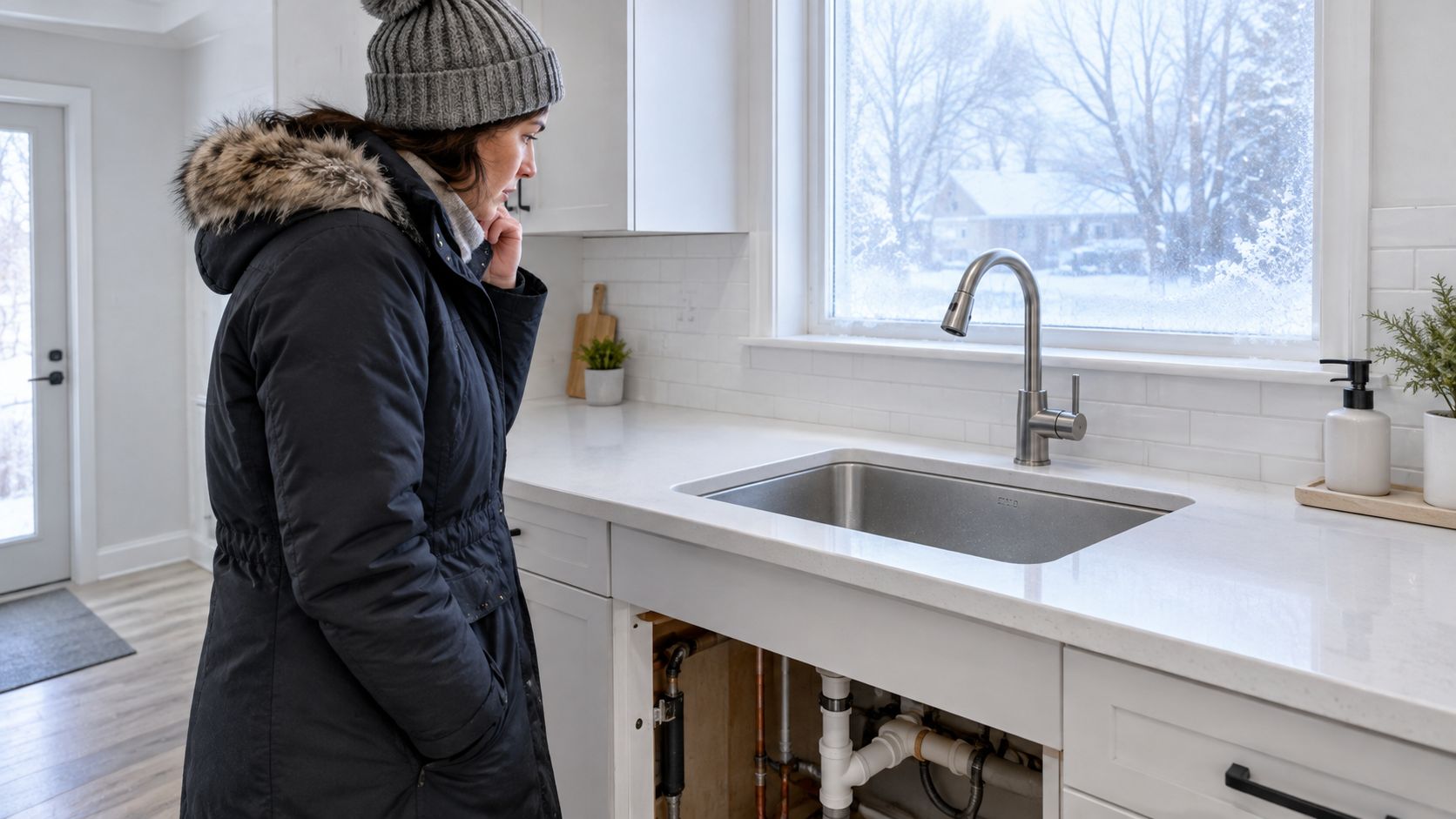
Table of Contents
- Why Frozen Pipes Happen in Southeast Michigan Homes
- Finding the Frozen Section and Your Main Shutoff
- Safe Heat Sources and the Ones to Never Use
- Thawing the Pipe Without Causing Damage
- Preventing Pipes from Freezing Again
- When to Call a Licensed Plumber and How Jays Plumbing and Sewer Helps
Why Frozen Pipes Happen in Southeast Michigan Homes
In Macomb, Oakland, and Wayne counties, a pipe can freeze when cold air reaches plumbing in an exterior wall, crawl space, garage, or unheated utility area. Those runs lose heat more readily than pipes surrounded by warm indoor air. A slow trickle may become an ice plug during a cold night, leaving a faucet weak or completely dry by morning.
A frozen line isn't automatically a burst line. But an ice plug can hide damage: a pipe may have cracked before the water stopped, and you might not see the leak until thawing lets water move again. That's why how to thaw frozen pipes safely starts with pressure relief and a check for damage, not just choosing a heat source.
Before thawing: Know where the main shutoff is, keep the affected faucet open, and stop if you see water or suspect a split.
One frozen pipe can be a sign that other lines in the building are at risk. The American Red Cross recommends checking every faucet after finding a frozen line. If the freeze is concealed, unreachable, or won't respond to controlled warming, don't open a wall or apply stronger heat. Call a licensed plumber.
Finding the Frozen Section and Your Main Shutoff
Trace the dead or weak faucet back toward the plumbing rather than assuming the ice is directly beneath the sink. Check exposed runs in basements, crawl spaces, garages, exterior walls, and service entries. Frost, an unusually cold section, a bulge, or damp insulation can help locate the problem. A faint hiss or visible moisture may point to a leak, not just a freeze.
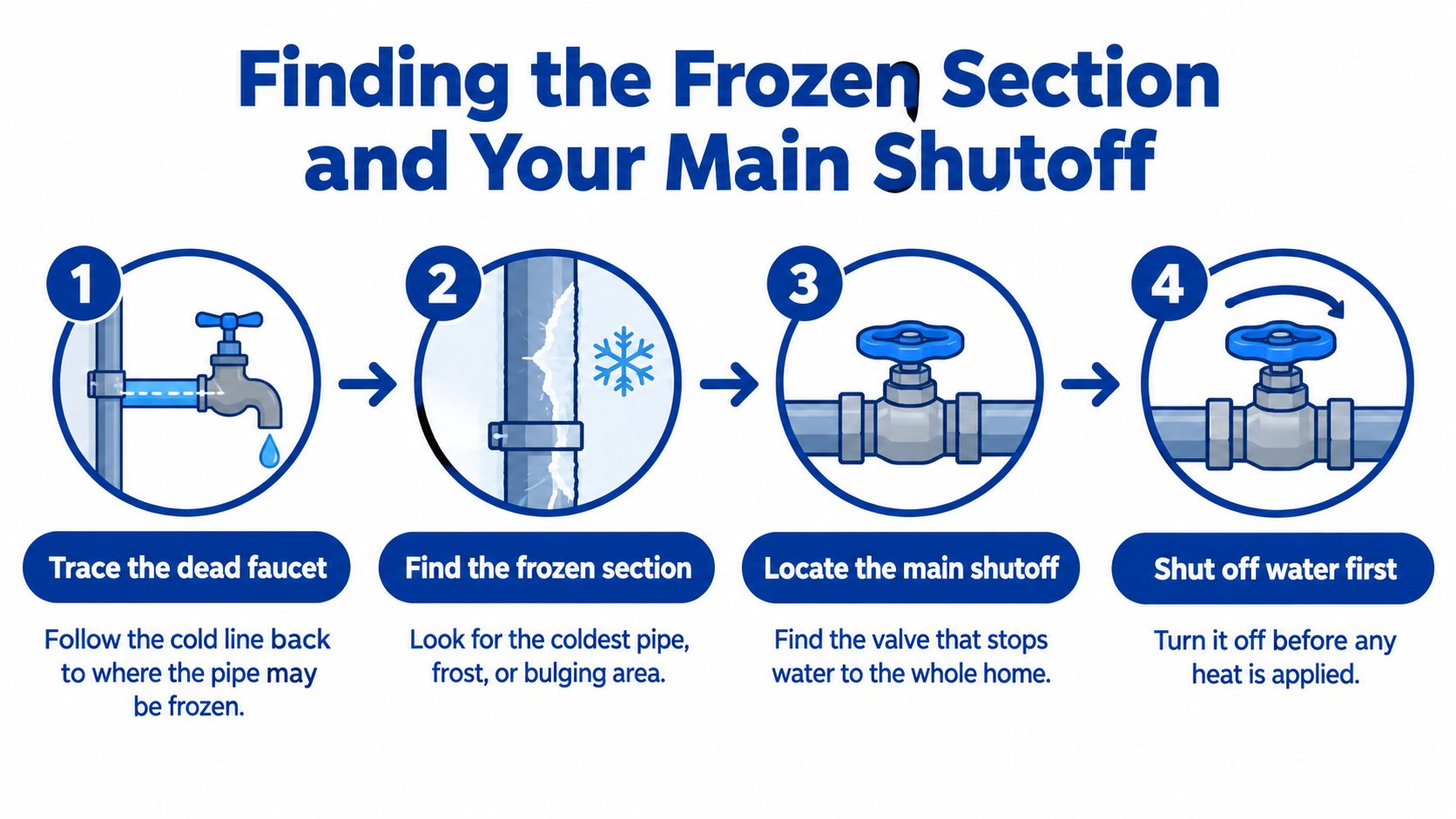
Find the main shutoff before applying heat. It's often near where the water service enters the building, but locations vary. If you don't know which valve controls the whole home, or it won't turn, don't force it. A stuck or damaged valve can make a leak harder to control. Learn how the main water shutoff valve works and when it may need replacement.
Open the nearest cold-water faucet so melting water has an outlet and pressure against the ice plug can ease. If you find a bulge, active leak, or signs of concealed damage, shut off the main supply before attempting to thaw. After water flow returns, restore supply slowly and inspect exposed pipe, joints, the meter, and nearby ceilings or cabinets for leaks, following frozen-pipe thawing and inspection guidance.
Standing water near an outlet or electrical appliance is a stop sign. Don't handle electrical equipment in or near water. A freeze inside a wall, under a floor, or at an underground service line also calls for professional assessment.
Safe Heat Sources and the Ones to Never Use
For an accessible pipe with no visible damage, use a gradual heat source. A hair dryer, electric heating pad, or towels soaked in hot water can warm the frozen section without the intense, concentrated heat of a flame. A portable space heater can warm the surrounding air, but keep it away from the pipe and all combustible materials.
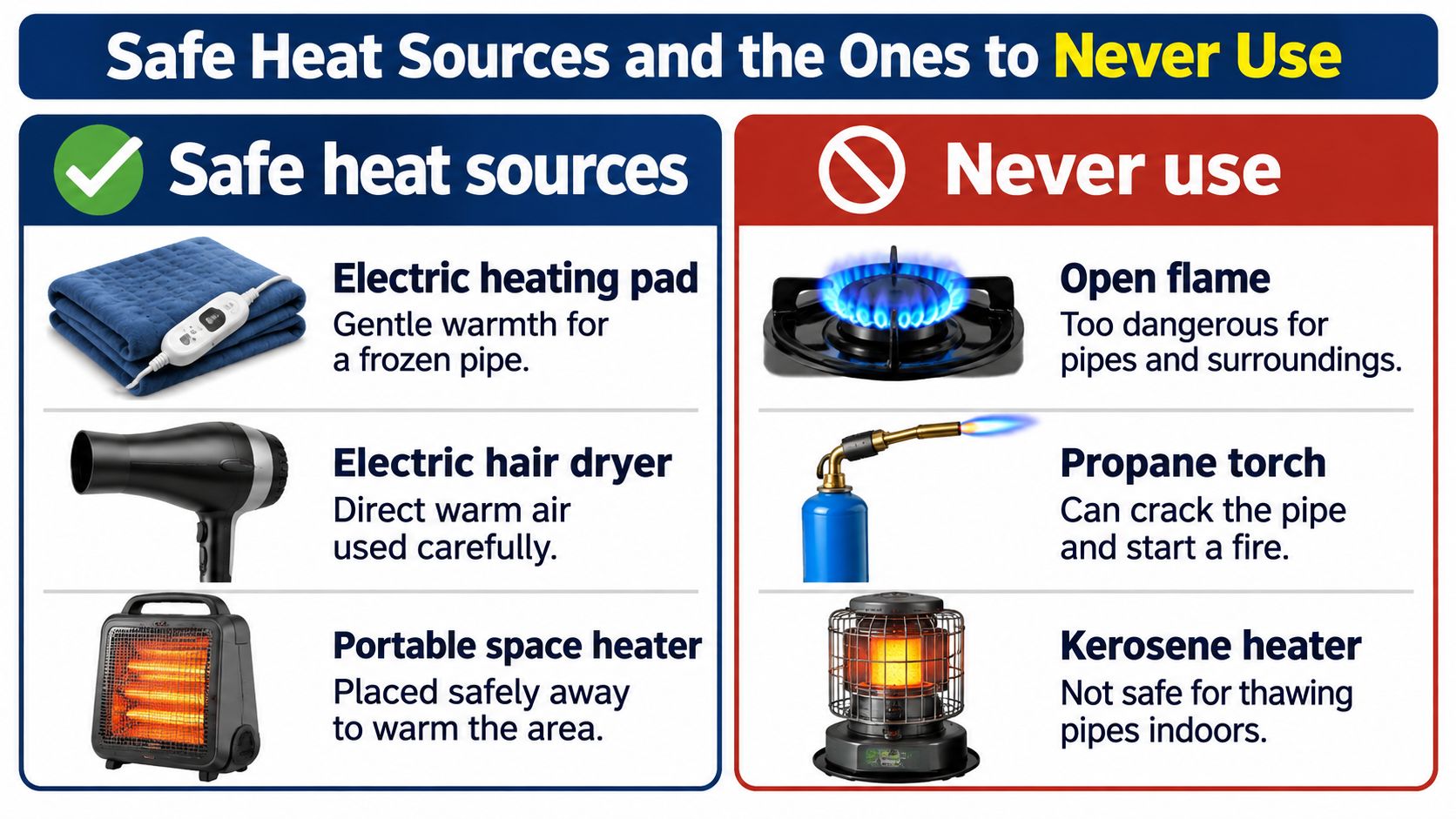
Never use a blowtorch, propane or kerosene heater, charcoal stove, or other open flame. Concentrated heat can ignite insulation, framing, or household materials, heat a pipe unevenly, and damage plastic piping. Devices that can make water boil can also create rapid pressure changes that may harm the pipe.
| Use carefully | Never use |
|---|---|
| Electric heating pad or hair dryer | Blowtorch or other open flame |
| Towels soaked in hot water | Propane or kerosene heater |
| Space heater placed safely away to warm the area | Charcoal stove |
Keep electrical devices dry, follow the manufacturer's clearance from combustibles, and never leave a portable heater unattended. If there's standing water, avoid electrical appliances. A space heater should warm the room, not touch or scorch the pipe.
The American Red Cross recommends gradual heat and keeping the faucet open while the ice melts. Continue warming until normal flow and pressure return. A partial thaw can leave an ice plug behind.
Thawing the Pipe Without Causing Damage
Open the affected cold-water faucet and keep it open as you work. If cabinet piping is involved, open the cabinet doors so warmer room air can reach the pipes. Raise the room temperature if practical, and remove insulation only as needed to expose the affected section without damaging the pipe or surrounding materials.
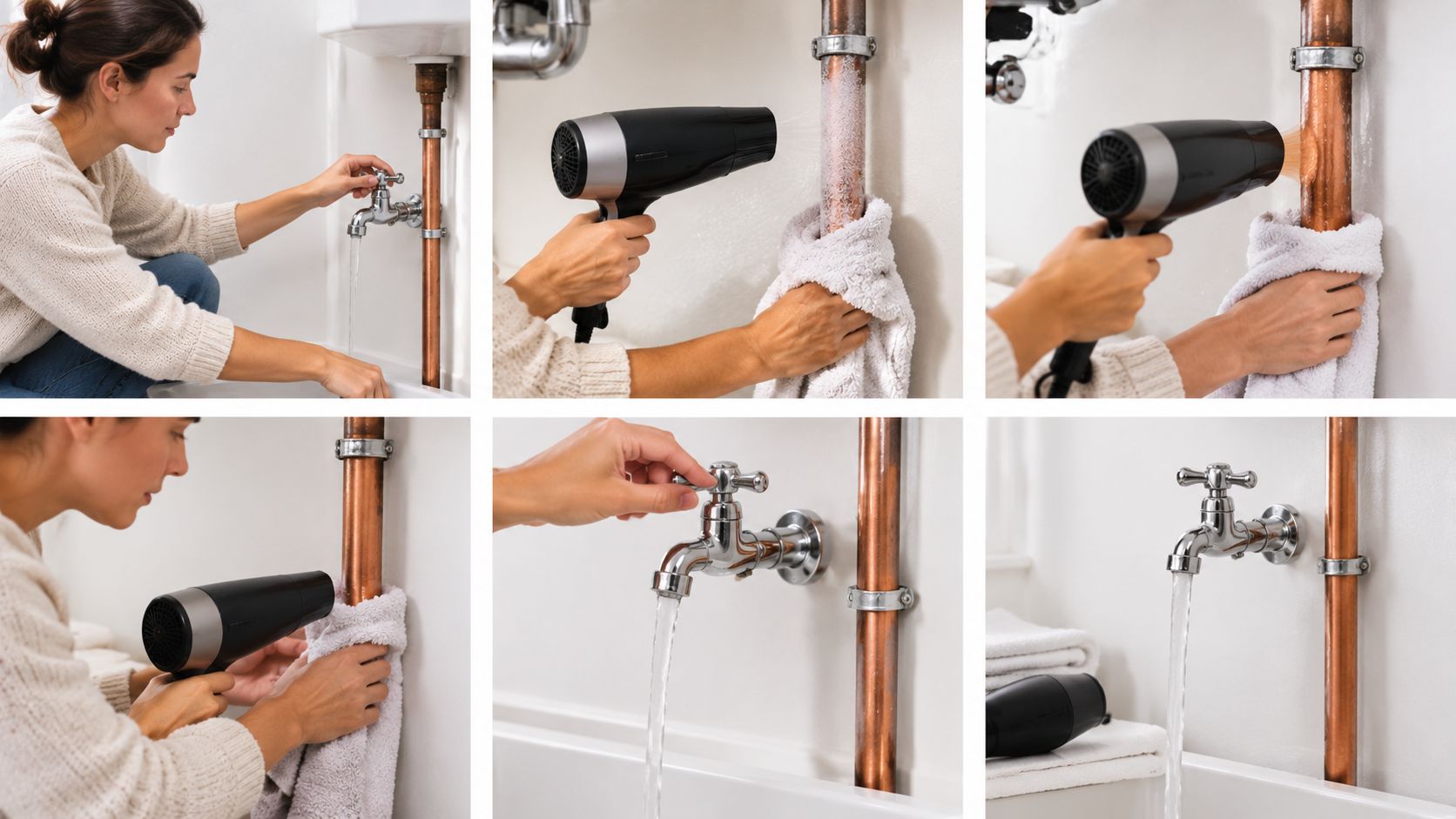
Apply heat progressively, starting near the faucet and working toward the suspected blockage. Keep a hair dryer moving rather than holding it in one spot, or place warm towels around the pipe and replace them as they cool. If using a space heater, let it warm the surrounding air from a safe distance. Don't aim intense heat at a pipe or use a device that can make the water boil.
Water may begin to trickle or flow as the ice releases. That isn't proof the whole line is clear. A second ice plug may remain elsewhere, and a hidden split may become apparent once water moves through the pipe. Continue controlled warming until normal flow and pressure return, while watching nearby joints, cabinets, ceilings, and exposed pipe.
When you're ready to restore supply, open the main valve slowly and inspect continuously. Shut it off immediately if water appears. If a section has burst, it needs repair before the system is repressurized. Guidance for thawing pipes while checking for damage emphasizes treating thawing as both water restoration and damage prevention.
Stop and call a licensed plumber if you can't reach or locate the frozen section, if it's inside a wall or ceiling, or if controlled warming isn't restoring flow. Don't cut into a wall or escalate to higher heat.
Preventing Pipes from Freezing Again
After the line is flowing normally, check other faucets and plumbing areas for signs of cold exposure. A freeze in one spot can point to a similar risk elsewhere, especially in older homes, finished basements, garages, and mixed-use buildings around Fraser, Sterling Heights, Clinton Township, Troy, Macomb, and Shelby Township. Focus on pipes in spaces that are poorly insulated or remain colder than the living areas.
A few habits can reduce the chance of another freeze:
- Let vulnerable faucets drip during severe cold if their pipes run through an exterior wall or an unheated area.
- Open cabinet doors beneath sinks so household heat can reach the plumbing.
- Keep garage doors closed when water lines run through or beside the garage.
- Check every fixture and note any faucet that has weak or no flow.
Before freezing weather, disconnect garden hoses and protect outdoor faucets. Follow these steps for protecting outside faucets from freezing.
A thawed pipe may leak as water pressure returns. Keep an eye on nearby plumbing and building materials, and avoid electrical appliances wherever water is present. The Michigan winter-preparation guidance also warns that a frozen pipe may already be split.
For property managers and small businesses, record the affected area and which fixtures or units were checked. That handoff helps the next person responsible for the building, particularly when plumbing serves multiple suites or an unheated space.
When to Call a Licensed Plumber and How Jays Plumbing and Sewer Helps
Use a simple decision path: if the frozen pipe is exposed, reachable, and has no signs of damage, controlled warming may be appropriate. If you see a bulge, crack, active leak, wet insulation, or water near electrical equipment, stop and shut off the supply if it's safe to do so. If the pipe is concealed, underground, or won't thaw with gentle heat, leave it to a licensed plumber.
A plumber can locate the affected section, assess whether the pipe is damaged, and determine whether repair or replacement is needed before anyone opens a wall or floor. That assessment is useful for homeowners, home buyers and sellers, landlords, and commercial property owners who need to understand the condition of the plumbing before restoring the system.
Jays Plumbing and Sewer is based in Fraser and serves residential and commercial customers in Macomb and Oakland counties. The company offers 24-hour emergency plumbing response, leak detection and repair, and plumbing work for homes and businesses. Its wider services include water heater repair and replacement, drain cleaning, sewer repair, camera inspections, and high-pressure jetting. Learn about its 24/7 emergency plumbing service.
If a pipe is frozen, split, or out of reach, call Jay's Plumbing and Sewer at 586-634-3450 for help. A timely assessment can identify the right next step before you restore pressure to a damaged line.
For a frozen or leaking pipe in Macomb, Oakland, or Wayne County, call Jay's Plumbing and Sewer at 586-634-3450 for emergency plumbing service and pipe repair. To discuss the problem or arrange service, visit Jays Plumbing and Sewer.
