

Start with a water-meter test that takes about half an hour. If every fixture and appliance is off but the meter or low-flow indicator still moves, you likely have a hidden leak that needs further investigation.
You may notice it in an ordinary moment. A homeowner in Fraser sees a water bill that doesn't fit the household's normal routine. Someone in Troy finds a damp area near a wall or feels an oddly warm patch beneath the flooring. In Macomb County, Oakland County, and Wayne County, these clues can point to several plumbing problems, including a leak beneath a concrete slab.
Learning how to detect a slab leak starts with confirmation, not demolition. A careful process moves from a meter check to line testing and then to professional tools that can locate the problem before anyone cuts into concrete.
Table of Contents
- Recognizing the Early Warning Signs of a Slab Leak
- Performing the Water Meter Test at Home
- Understanding Physical and Environmental Indicators
- DIY Methods Versus Professional Detection Tools
- When to Call an Emergency Plumber for Help
- Next Steps for Repair and Prevention
Recognizing the Early Warning Signs of a Slab Leak
A slab leak happens when a water or sewer line beneath a concrete foundation develops a break, crack, or other failure. Because the pipe sits below flooring and concrete, you usually can't inspect it directly. Water may travel through soil or along the underside of a floor before it creates an obvious wet spot.
Clues that deserve attention
A sudden change in water use is often the first clue. If the meter moves while all faucets, toilets, appliances, and irrigation fixtures are off, water is escaping somewhere in the plumbing system. That doesn't prove the leak is under the slab, but it gives you a reason to investigate further. A water-meter isolation guide describes this moving indicator as a strong sign that water is still flowing through the system.
Other warning signs include:
- Unexplained water-bill increase: A higher bill without a change in household habits may indicate hidden water flow.
- Running-water sound: You may hear hissing or rushing even when nobody is using a fixture.
- Warm flooring: A hot-water line leaking below the slab can create a warm section of tile, hardwood, or carpet.
- Lower water pressure: A supply line that is losing water may affect pressure at fixtures.
- Damp flooring or carpet: Moisture can appear far from the actual break because water follows paths beneath the floor.
- Persistent humidity or musty odors: Hidden moisture may affect the air and nearby materials.
A warm floor spot is more useful when it appears with another clue, such as a moving meter or pressure change. A damp carpet by itself could come from condensation, a fixture leak, heavy rain, or basement moisture rather than a slab leak.
Practical rule: Treat the signs as evidence to connect, not as a reason to guess where the pipe failed.
This matters during Michigan winters and wet seasons. Frozen ground, cold floors, and heavy rain can make moisture symptoms harder to interpret. A homeowner in Sterling Heights, Clinton Township, or Shelby Township may need to distinguish a plumbing leak from water entering around a foundation, a sump pump problem, or condensation around cold pipes.
Performing the Water Meter Test at Home
A quiet house can still have water moving through its pipes. The meter test checks for that hidden flow before you open walls, lift flooring, or schedule unnecessary demolition. It cannot show the exact leak location or catch every intermittent problem, but it gives a local homeowner useful evidence for the next diagnostic step.
Before starting, photograph the meter face and dial position. A clear before-and-after image helps you compare a slow-moving indicator without relying on memory. This simple record is also useful when you explain the result to a plumber serving Macomb or Oakland County.
Follow a controlled test
Stop all water use. Turn off faucets and showers. Do not flush toilets, run a washing machine, use a dishwasher, make ice, or operate a water softener during the check. If the property has irrigation, confirm that its cycle is off.
Record the meter. Locate the water meter and write down the reading. Note the dial position and identify the low-flow or leak indicator, if the meter has one. That small indicator may move whenever water passes through the plumbing system.
Wait without using water. Observe the meter for about half an hour, as described in this slab-leak testing overview. Keep every fixture and appliance off during this period.
Check the indicator again. Compare the second reading with your photograph. A stationary dial and unchanged indicator suggest that no measurable flow occurred. Continued movement means water is still traveling through the system and needs further investigation.
Repeat an unclear test. Check whether a toilet tank is refilling, an appliance is cycling, or an outdoor connection is drawing water. Once those possibilities are excluded, record the time, meter movement, and conditions.
A moving meter does not prove that the leak is beneath the slab. Water may be escaping from a wall, fixture, outdoor line, or another part of the property. Treat the result as a signal to isolate the plumbing, not as permission to break the floor.
Add a pressure-decay check
A plumber can close off or isolate sections of the supply system, then watch whether pressure holds. Pressure that drops while fixtures are unused supports the possibility of a pressurized supply-line leak. The test helps narrow the problem before a professional uses listening or locating equipment.
If you can safely reach a visible access point, listen for hissing near expansion joints, wall penetrations, or slab edges. A screwdriver placed carefully against a solid, accessible surface may transmit sound, but do not remove flooring, drill concrete, or handle electrical equipment near moisture. Escaping pressurized water creates vibration, although the loudest sound is not always the break.
For broader steps on tracing hidden household water loss, read this guide to finding a water leak inside a house.
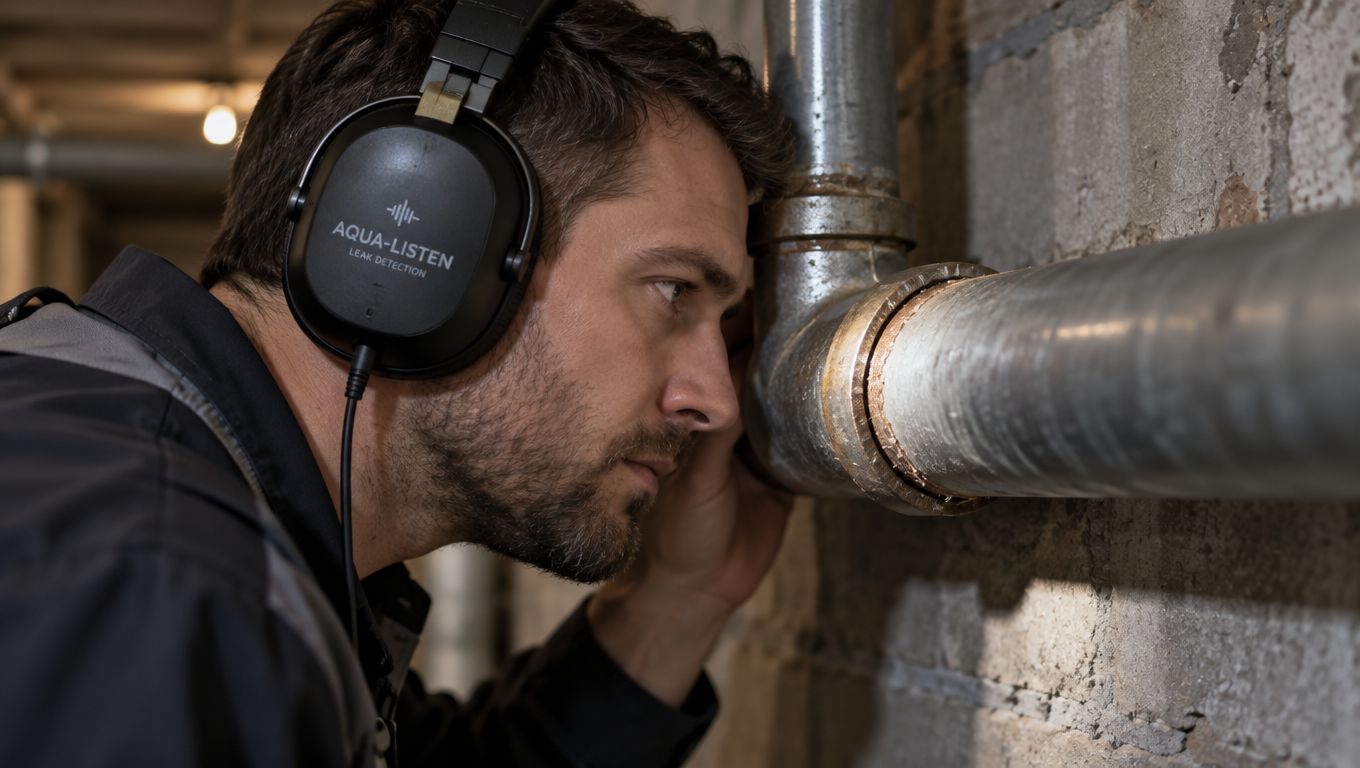
Stop testing if water is spreading, flooring is becoming saturated, or the source cannot be isolated safely. Give the plumber your test time, readings, indicator movement, fixture checks, and any sound locations.
Understanding Physical and Environmental Indicators
A slab leak leaves clues in the home, but each clue has limits. Warm flooring is more suggestive of a hot-water line problem because heat can transfer through the slab and surface materials. A cold-water leak may not create a temperature change, even when it is active.
Moisture also travels. Water under a slab can reach baseboards, carpet edges, flooring seams, or low areas that aren't directly above the failed pipe. A damp spot tells you where moisture is appearing, not necessarily where the pipe is broken.
Separate plumbing clues from weather-related moisture
Southeast Michigan homes face seasonal conditions that can blur the picture. During Michigan winters, frozen soil and cold surfaces may make damp areas less noticeable. Heavy rain can introduce basement moisture, saturate soil near the foundation, and make a sump pump work harder. Those conditions may happen at the same time as a plumbing problem, but they don't prove the plumbing caused the moisture.
Use the clues together:
- Warm area plus meter movement: A hot-water supply leak becomes more plausible.
- Damp carpet plus no meter movement: Check condensation, exterior water entry, appliance leaks, and basement conditions.
- Lower pressure plus ongoing meter movement: A pressurized supply-line problem deserves professional testing.
- Musty smell near a floor drain: Consider drain, sewer, or sump conditions as well as hidden supply piping.
- Moisture after heavy rain only: Investigate drainage and foundation entry before assuming a slab leak.
The location of the home doesn't change the diagnostic logic, but it does affect what else should be considered. A property in Fraser may have different construction details from a home in Troy, Macomb, or Shelby Township. Older renovations, radiant hot-water lines, finished basements, and flooring installed over concrete can all make visual inspection more difficult.
Keep a simple record of meter movement, pressure changes, odors, and when the moisture appears. A pattern is more helpful than a single observation, especially when a leak is intermittent or low volume.
DIY Methods Versus Professional Detection Tools
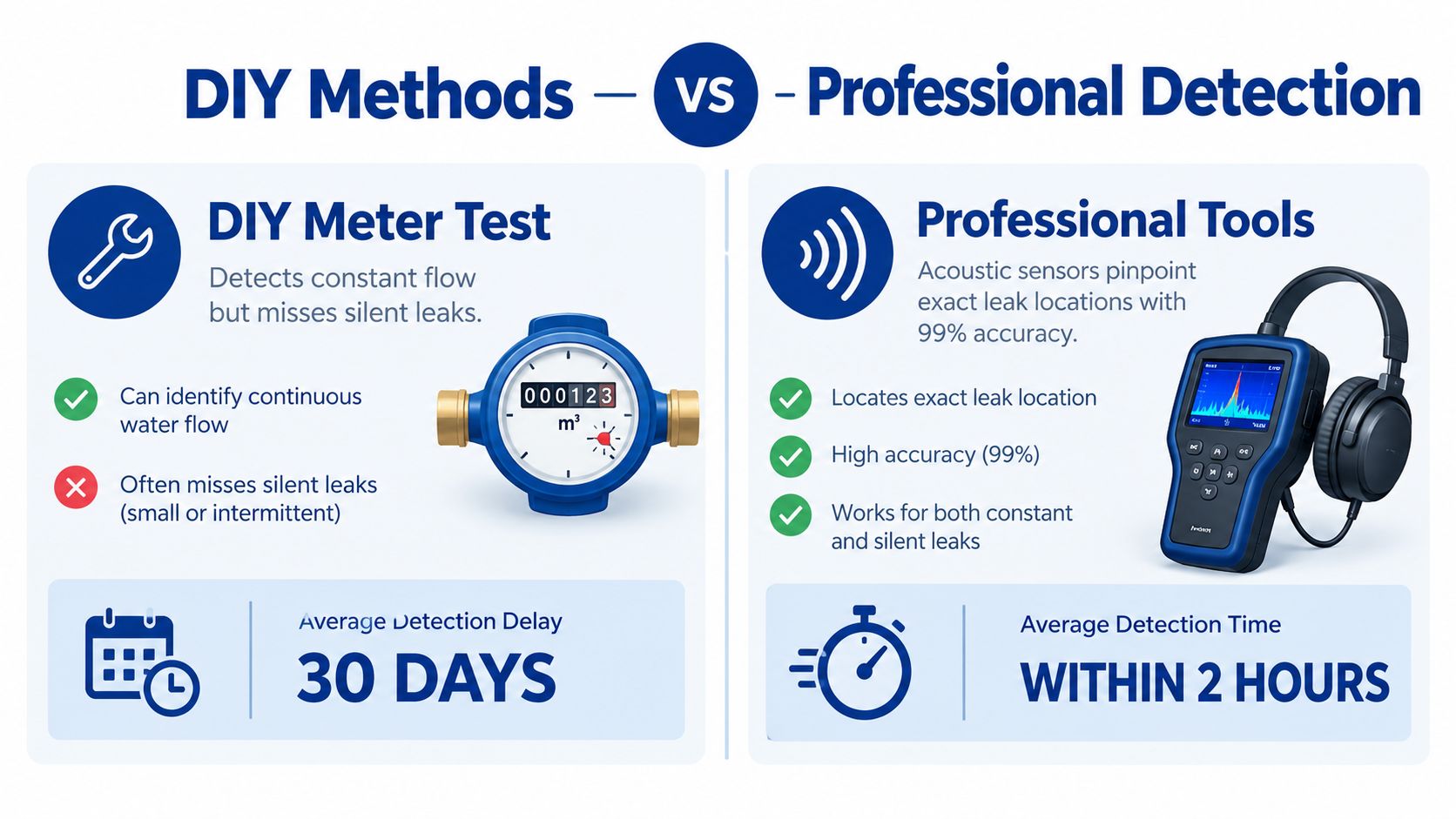
A homeowner's first three steps are straightforward: check the meter, observe pressure decay, then use professional locating tools if the results point to a hidden leak. This sequence helps Macomb and Oakland County homeowners avoid guesswork and unnecessary concrete removal.
Home checks answer one question: Is water moving when it should not be? Professional testing answers the next: Which branch is affected, and where is the failure?
A technician usually isolates hot and cold branches, closing one at a time to narrow the problem. The isolated line is then monitored for pressure decay over 15 to 30 minutes, as described in this slab-leak diagnostic workflow. A pressure drop supports the conclusion that the line is losing water, but it does not identify the break by itself.
What each method can and cannot tell you
| Method | Useful for | Main limitation |
|---|---|---|
| Water-meter test | Detecting ongoing flow while fixtures are off | Confirms flow, but hot and cold isolation plus pressure-decay testing are needed to narrow the affected branch before location tools are used |
| Pressure-decay test | Confirming whether an isolated pressurized line holds pressure | Requires proper isolation and shows a leak in the test section without locating the breach |
| Acoustic correlation | Comparing vibration from pressurized water escaping a pipe | Background noise, flooring, and concrete can affect readings |
| Thermal imaging | Finding heat patterns from hot-water leaks | Less useful for cold-water leaks or leaks without a temperature difference |
| Moisture meter | Mapping surface saturation | Shows moisture near the surface, not necessarily the failed pipe |
| Forming gas | Tracing a quiet or hard-to-access leak after line isolation | Requires professional equipment and controlled testing |
Acoustic correlation uses ground microphones or electronic listening devices at multiple access points. Thermal imaging can add useful information when the leaking line carries hot water. For a quiet or difficult-to-reach leak, a technician may isolate the line and introduce forming gas, then trace where it reaches the surface. These tools complement the meter and pressure tests. They do not replace proper isolation.
This layered process helps a plumber choose a focused opening, repair, reroute, or another option instead of cutting through several areas of concrete.
A camera inspection is appropriate when the evidence points to a sewer or drain line rather than a pressurized supply line. A video camera sewer inspection resource explains how camera work can show obstructions and pipe condition before excavation. Supply lines and sewer lines require different diagnostic approaches, so one test cannot answer every plumbing question.
When to Call an Emergency Plumber for Help
Call an emergency plumber promptly when water is actively flooding the home, the source can't be controlled, flooring is rapidly becoming saturated, or a confirmed meter test continues while the plumbing system is isolated. A sudden loss of water pressure combined with visible moisture also deserves quick attention.
Michigan winters add another reason to act without panic. A frozen or burst pipe can release water in a wall, basement, or under a slab. Heavy rain can create a separate flooding problem involving the sump pump, sewer, or foundation drainage. The priority is to protect people and property, not to keep testing after conditions have become unsafe.
What a professional visit may include
A licensed plumber will typically:
- Review the symptoms. Bring your meter notes, pressure observations, and information about warm or damp areas.
- Check accessible fixtures and piping. This helps rule out toilets, faucets, water heaters, appliances, and visible supply lines.
- Isolate hot and cold branches. The technician can test sections rather than treating the whole system as one unknown.
- Monitor pressure behavior. A line that loses pressure needs further location work.
- Use targeted equipment. Acoustic tools, thermal imaging, and tracer gas may be selected according to the leak's characteristics.
- Explain repair options. The plumber should identify the confirmed target and discuss the least disruptive practical repair.
You don't need to know the final repair method before scheduling service. If you're weighing a scheduled visit against urgent help, this leak-detection cost guide can help you prepare questions about the diagnostic process.
Common questions homeowners ask
Can a moving meter prove the leak is under the slab? No. It confirms unexpected flow, but the source may be elsewhere in the home or outside.
Can I break the concrete to check? Don't. Cutting without a confirmed target can damage the slab, piping, wiring, or other utilities and may create a larger restoration project.
Should I test hot and cold lines myself? Basic fixture shutoffs are reasonable, but pressure testing should be handled by a qualified professional with the correct gauges and isolation method.
Next Steps for Repair and Prevention
Once the leak is located, the repair may involve a focused opening, a spot pipe repair, or rerouting a failing line. If the evidence points to a sewer problem, a camera inspection can guide sewer repair, replacement, or cleaning, while hydro jetting may be appropriate for buildup rather than a broken pipe.
For prevention, check accessible plumbing before Michigan's freezing weather, watch for unexplained meter movement, keep an eye on damp flooring, and address water-pressure changes early. Property managers, real estate agents, and small-business owners can add these observations to routine residential or commercial plumbing maintenance.
A homeowner can perform the meter check, document symptoms, and stop before unsafe or invasive work begins. Call a professional when the result is positive, the source remains hidden, or the property has active water damage.
Call Jay's Plumbing and Sewer at 586-634-3450 for leak detection, pressure testing, and plumbing help across Macomb County, Oakland County, and Wayne County, including Fraser, Sterling Heights, Clinton Township, Troy, Macomb, and Shelby Township. For scheduled service or an urgent plumbing concern, visit Jays Plumbing and Sewer and request an assessment before guesswork leads to unnecessary demolition.
