

Basic residential leak detection usually costs $150–$350, diagnostics with camera inspection run $350–$900, and slab leak investigations range from $500–$1,500. That spread makes sense once you look at what's being searched, how hard it is to reach, and whether the call is routine or urgent.
A lot of homeowners only learn about a problem after a water bill jumps, a ceiling spot shows up, or a toilet keeps running in the background. At that point, the question isn't just what leak detection costs, it's what waiting is already costing you.
Table of Contents
- Why Leak Detection Costs Vary So Much
- The Three Factors That Determine Your Final Bill
- Average Leak Detection Pricing by Service Type
- The Cost of Waiting: How Leaks Escalate
- What Happens During a Professional Leak Detection Visit
- When Detection Costs More Than You Expected
- Making the Smart Decision for Your Property
Why Leak Detection Costs Vary So Much
A kitchen leak in a single-story home is one job. A leak under a second-floor bathroom with a finished ceiling below is another. The first often lets a plumber narrow things down quickly. The second may require more testing, more time, and a closer look at finishes that can be damaged if the search is rushed.
That difference shows up in the bill because you are paying for diagnosis, not just a trip fee. If the leak is easy to reach, the work can stay focused. If the source is hidden behind tile, drywall, cabinets, or a slab, the process gets slower and the price rises with it.
I've had homeowners call after noticing a higher water bill or a stain on the ceiling and assume the fix will be simple. Sometimes it is. Sometimes the first visible wet spot is not where the leak starts, which means the search has to follow the piping route, not the stain on the paint.
A buried service line, a slab leak, and a leak inside a wall do not cost the same to locate. The same goes for a small commercial property with multiple restrooms or a building with more than one water shutoff point. More access points can help, but they can also add confusion if the leak is moving through framing, insulation, or finished spaces before it shows itself.
The equipment choice matters too. A basic listen-and-check visit is cheaper than a job that needs thermal imaging, pressure testing, or camera inspection. That is why a plumber may ask detailed questions before quoting a price, including where the water shows up, how long it has been happening, and whether the property has had past repairs in the same area.
Waiting can cost more than the detection itself. A small leak under a vanity may stay cheap to find if it is caught early. Let it keep running, and you may be paying for damaged drywall, flooring, mold cleanup, and a larger repair once the hidden leak has had time to spread. The comparison is simple, the upfront cost of finding the leak versus the extra damage that piles up while you guess.
Practical rule: easier access usually means less time spent chasing the source, and less time usually means a lower bill.
The Three Factors That Determine Your Final Bill
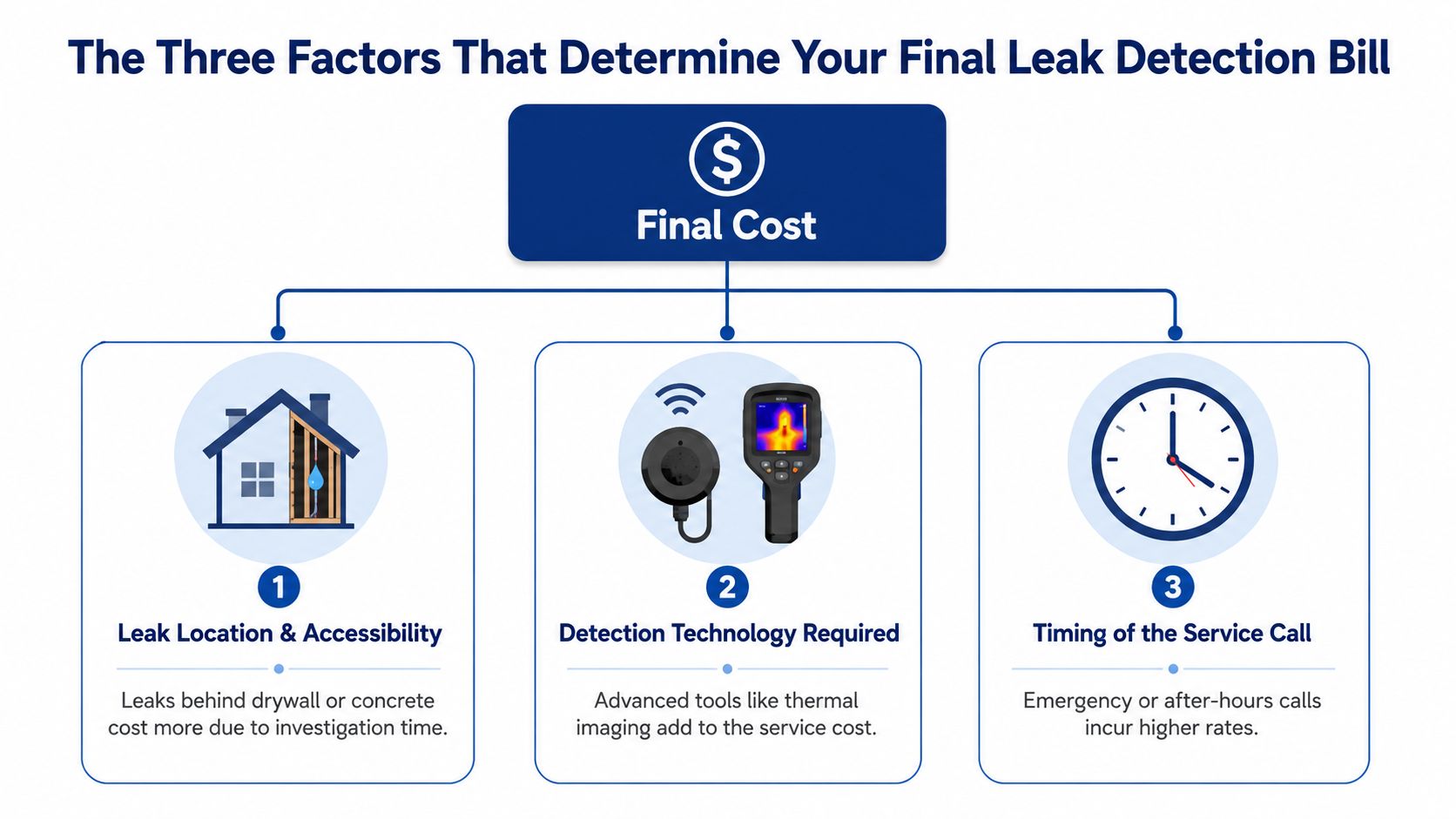
Leak location and accessibility
A leak under a kitchen sink is usually faster to pin down than one inside a wall or under a slab. The difference is access. If a plumber can get eyes and tools on the area quickly, the search stays shorter. Once the leak is buried behind finishes or under concrete, the diagnostic work takes more time and the bill follows.
Older homes tend to add another layer of difficulty. Mixed pipe materials, past repairs, and patched-in sections can make the route harder to trace. A homeowner may only notice one damp spot, while the source sits farther away and keeps feeding the damage.
Detection technology required
The tools have to match the problem. Acoustic listeners help when water movement in a pipe can be heard. Thermal cameras help when moisture changes surface temperature behind a wall or under a floor. Camera inspection is useful when the line itself needs to be checked for breaks, buildup, or intrusion.
The equipment a local plumber uses for a house call is not cheap either. A good thermal camera can run into the low thousands, while quality acoustic gear and pressure-testing tools also add to the cost of doing the job well. That is why a quick visual check is one price and a hidden leak with multiple test methods is another. The Department of Energy's leak detection guide explains the same basic point for larger systems, equipment choice drives cost because different jobs call for different levels of testing DOE leak detection guide.
Timing of the service call
The clock matters. A regular diagnostic visit usually costs less than an after-hours call, and emergency timing can push both the service fee and labor rate higher. One pricing guide says many plumbers use either a flat diagnostic fee or an hourly rate, while emergency calls can add an extra fee and raise the hourly labor charge plumbing charge guide.
That is why the cheapest option is not always to wait. A leak that runs through the night can turn into higher water use, more drywall damage, and a repair that goes beyond the original source. If the water is still moving and the fixture is off, getting it checked during normal hours is usually the better spend. For related service timing and pricing, see Jays Plumbing and Sewer drain cleaning prices.
If you hear water running when everything is off, do not assume it will sort itself out. A timely diagnostic is usually cheaper than an overnight call and a bigger mess.
Average Leak Detection Pricing by Service Type
A leak detection bill usually comes down to how much the plumber has to prove before opening a wall, lifting a floor, or recommending a repair. A visible drip is one thing. A hidden line behind tile, drywall, or concrete takes more testing, more time, and more specialized tools.
| Service Type | Typical Cost Range | What's Included | Best For |
|---|---|---|---|
| Basic non-invasive residential visit | $150–$350 | Acoustic equipment, visual inspection, and basic diagnosis on accessible piping | Visible leaks, active dripping, first-pass checks |
| In-depth diagnostic visit | $350–$900 | Camera inspection, pressure testing, and broader troubleshooting | Hidden leaks, repeat leaks, wall or ceiling stains |
| Slab leak investigation | $500–$1,500 | Specialized methods for hard-to-reach areas under concrete | Homes with warm floor spots, unexplained floor moisture, or recurring slab symptoms |
That spread is normal. The first tier is usually about confirming what you can already suspect, while the higher tiers are about narrowing a problem that is buried somewhere in the system. The more the plumber has to trace, the more the visit tends to cost before any repair begins.
A separate professional leak detection guide places visible or accessible leak detection at $150–$300, wall or ceiling leaks at $250–$450, slab leaks at $350–$650, and underground service-line leaks at $400–$900. That same guide lists a service call or trip fee of $50–$150, and in some cases that fee is credited toward the diagnostic visit.
For homeowners in Fraser, Macomb County, or Oakland County, that means a small kitchen leak, a bathroom plumbing issue, or a basement line problem can fall into very different price bands before the repair work even starts. If you are comparing leak detection with other plumbing work, such as drain cleaning prices, the diagnostic side is often where the cost starts to separate.
The Cost of Waiting: How Leaks Escalate
A small leak rarely stays small. A toilet that runs in the background, a supply line under a sink, or a slow drip inside a wall can keep wasting water long after the first sign shows up. EPA WaterSense guidance says a leaking toilet at just 0.5 gallons per minute can waste 21,600 gallons per month and about $2,100 per year in water cost alone EPA WaterSense leak guidance. That bill arrives before you add floor damage, mold cleanup, or the cost of tearing into finished surfaces.
Household leaks add up even when nobody notices them right away. EPA research also says household leaks can waste about 10,000 gallons per year on average, and a worn toilet flapper can waste up to 200 gallons per day EPA WaterSense leak guidance. For a homeowner, that usually means the choice is plain. Pay for detection now, or keep paying for water that never reaches a faucet, shower, or appliance.
A diagnostic fee gives you a number you can plan around. A hidden leak gives you uncertainty, and uncertainty is where repair costs tend to grow.
That same idea shows up in utility work, just at a larger scale. EPA-funded technical work in Atlanta found that conventional acoustic leak detection produced USD 2.4 million in net benefits over 3 years, with daily costs reported at USD 6,443/day after the first survey and only 2% higher after a second survey. The city project is much larger than a residential job, but the lesson is the same for a homeowner. If a detection visit costs a few hundred dollars, it can stop a leak that would otherwise turn into a much higher water bill, plus drywall, flooring, or subfloor repairs.
For a house, the math is easier to see. A $300 detection visit can be a smart spend if it prevents a $2,100 water bill and $5,000 in subfloor repairs over the next year. Not every leak reaches that level, but the risk is real enough that waiting often costs more than the search itself.
If you want to see how local plumbers organize that kind of work, a leak detection category is a good place to compare the kinds of problems they handle. The pattern is usually the same. Confirm the loss, find the source, and stop the waste before the damage spreads further.
What Happens During a Professional Leak Detection Visit
A good visit starts with confirmation, not guesswork. The technician looks for visible signs, checks the meter, and makes sure the water loss is real before any equipment gets rolled in. That first step keeps the search focused and saves time.
Next comes acoustic work, where specialized listening equipment helps find the sound of water escaping under pressure. Thermal imaging can help when moisture changes the temperature of a wall, floor, or ceiling enough to reveal a pattern. Camera inspection matters when the line itself needs to be viewed directly, especially if the issue may be in a drain or sewer line rather than a supply line.
The work should stay clean, too. Shoe covers, drop cloths, and a tidy finish aren't extras, they're part of the job when a tech is moving through finished spaces. That matters in homes, apartments, retail spaces, and office suites where the leak search may run through carpet, tile, or painted drywall.
Before you schedule, it helps to know how a plumber organizes this kind of visit. If you browse a dedicated leak detection category, you'll usually see the same pattern repeated across good jobs, confirm the loss, isolate the area, then choose the least invasive method that fits the problem.
A straightforward visit won't always need every tool in the truck. A more complicated search might require several methods before the source is confirmed. That's why the estimate is often described as a diagnostic range, not a fixed repair price.
When Detection Costs More Than You Expected
Some bills come in higher because the leak wasn't where it first appeared. Hidden or underground leaks take longer to isolate, and that extra time shows up in labor. The plumber may need to test more than one line, compare readings, or come back after a first pass to finish the job.
Slab leaks are the clearest example. One 2026 cost guide says most slab-leak repairs cost $2,000–$7,500, while major cases involving tunneling or repiping can reach $7,500–$15,000+ slab leak cost guide. The diagnostic side is smaller than the repair side, but the two are connected. If the source is buried under concrete, the search is going to be slower and more specialized than a leak under a sink.
Older homes can be tricky for another reason. A line may have been repaired once already, which changes the sound pattern and sometimes the access path. A property with mixed pipe materials may also need more testing before the source is clear.
A higher diagnostic bill doesn't always mean overcharging. Sometimes it means the plumber spent the time needed to avoid the wrong tear-out.
That's where a leak under a toilet, a wall cavity, or a slab diverges from a simpler issue like a toilet seal. If you're comparing symptoms, the overview at toilet leak between tank and bowl can help you separate a small fixture problem from a hidden plumbing issue.
Making the Smart Decision for Your Property
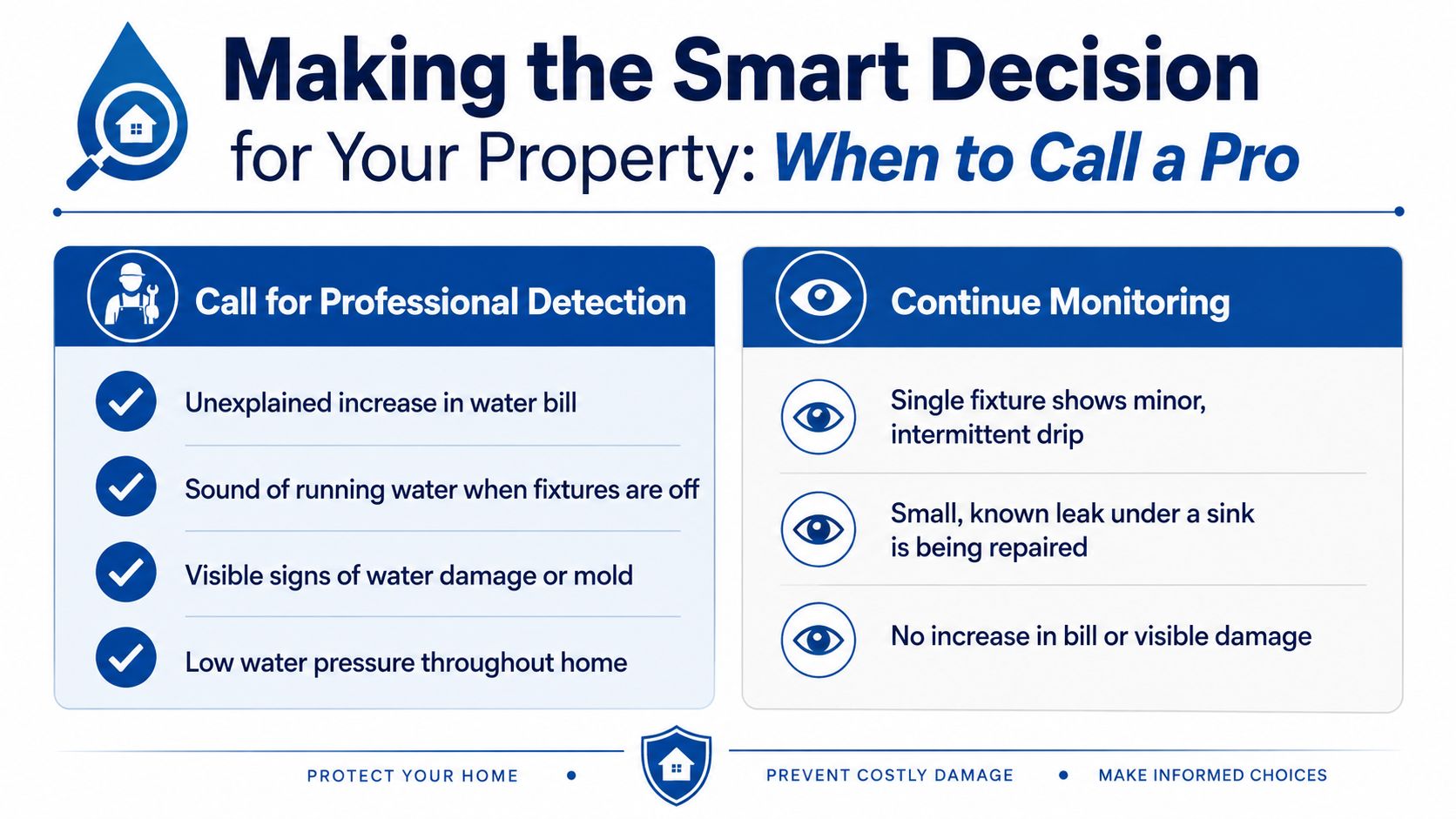
Call for professional leak detection when the water bill jumps for no clear reason, you hear running water when fixtures are off, or you see damp spots, mold, or low pressure across the house. Those signs usually mean the problem is hidden, which is where professional equipment earns its keep.
A minor fixture drip can often wait for a routine repair. A hidden leak can't. If the leak is active, spreading, or tied to a ceiling stain or basement moisture, schedule service instead of watching it for another week.
For homeowners in Fraser, Macomb County, Oakland County, and nearby communities, the smartest move is usually the same. Get the leak confirmed early, compare the diagnostic cost to the likely waste, and choose the least invasive fix that solves the problem. If you need help with leak detection, sewer repair, drain cleaning, bathroom plumbing, kitchen plumbing, or commercial plumbing, Call Jay's Plumbing and sewer Now @ 586-634-3450. You can also visit Jays Plumbing and Sewer to ask about service for residential plumbing, emergency plumber needs, pipe repair, water heater repair, water heater replacement, garbage disposal repair, and sump pump repair.
