

You turn on the kitchen faucet in your Fraser home, and a bang travels through the wall. Maybe the washing machine starts filling and the pipes rattle, or a bathroom valve produces a steady hum. The sound can be startling, but it doesn't automatically mean a pipe is about to burst.
The important clue is when the noise happens and what it sounds like. Pipes make noise when water is turned on for several different reasons, including water hammer, trapped air, thermal expansion, flow restriction, loose supports, and worn valves. The right fix depends on the sound, not just the fact that the plumbing is noisy.
Table of Contents
- Why Your Pipes Make Noise When Water Is Turned On
- Identifying the Exact Type of Pipe Noise
- Safe DIY Fixes for Common Plumbing Sounds
- When to Call a Professional Plumber for Help
- Preventing Future Pipe Noise in Michigan Homes
- Frequently Asked Questions About Noisy Pipes
Why Your Pipes Make Noise When Water Is Turned On
A homeowner in Macomb County may hear a sharp knock when a faucet opens or closes, then notice the same sound when a dishwasher or washing machine changes its flow. In simple terms, moving water has momentum. When a valve changes that movement quickly, pressure shifts through the pipe and can make the pipe, fittings, or supports vibrate.
Water hammer is the main technical explanation for a sharp bang or knock. It happens when water flow changes suddenly, creating a pressure surge that travels along the pipe. The phenomenon has been recognized for roughly 2,000 years, with Vitruvius describing it in Roman water-supply pipes and later engineering work by John Whitehurst, Thomas Young, Johannes von Kries, Nikolay Zhukovsky, and Lorenzo Allievi helping develop the modern understanding (the history and mechanics of hydraulic shock).
Why older plumbing can sound worse
Older homes in Fraser, Sterling Heights, and Clinton Township may have original valves, aging pipe straps, or long pipe runs that aren't secured as firmly as they once were. A pressure change may be modest, but the pipe can still knock if it has room to move inside a wall, basement ceiling, or floor cavity.
Not every sound is water hammer. Trapped air, excessive pressure, turbulence, and structural vibration can all create different noises in a residential or commercial plumbing system (technical discussion of noise sources in piping systems).
Practical rule: Diagnose the sound before buying a part. An arrestor won't tighten a loose pipe, and a new faucet won't correct excessive system pressure.
Identifying the Exact Type of Pipe Noise
Listen for three details: the character of the sound, the point in the water cycle when it occurs, and whether one fixture or the entire property is affected. This quick comparison can narrow the likely cause.
| Sound | When it usually occurs | Likely direction |
|---|---|---|
| Sharp bang or repeated knock | At quick shutoff or sudden flow change | Water hammer or unsecured pipe movement |
| Rhythmic ticking, creaking, or popping | While hot water flows or shortly afterward | Thermal expansion |
| High-pitched whistle | During continuous flow at one fixture | Restriction, worn washer, or failing valve |
| Hum or vibration | While several fixtures or a supply valve runs | Pressure or flow problem |
| Rattle or clank | When water starts, stops, or changes direction | Loose pipe support or connection |
Water hammer is a pressure shockwave created when fast-moving water stops abruptly, commonly at a quickly closing valve. It often produces banging or knocking, unlike a steady hum or rattle (plain-language explanation of water hammer).
Thermal expansion follows a different pattern. Hot water causes pipes to expand and move against framing or supports, producing rhythmic ticking, creaking, or popping rather than one sharp bang (thermal expansion and pipe noise).
A whistle at one faucet can point to a restricted aerator, worn washer, or fixture valve. A whistle heard throughout the property deserves more attention because the main shutoff, pressure regulator, or mineral buildup may be involved.
For hot-water noises that seem to come from the tank rather than the wall, review this hot water heater troubleshooting guide. The source may be water heater operation rather than a supply pipe.
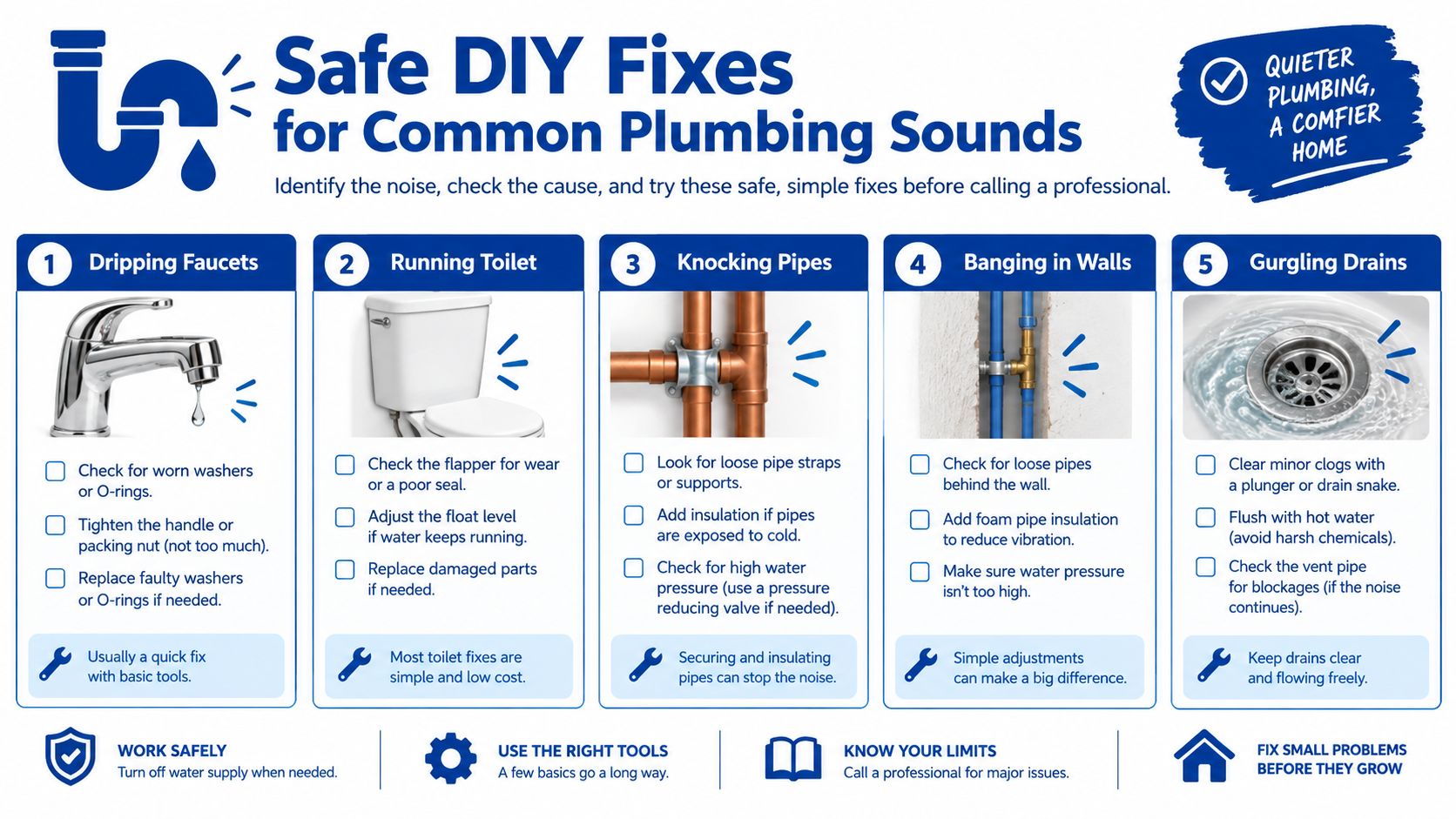
Safe DIY Fixes for Common Plumbing Sounds
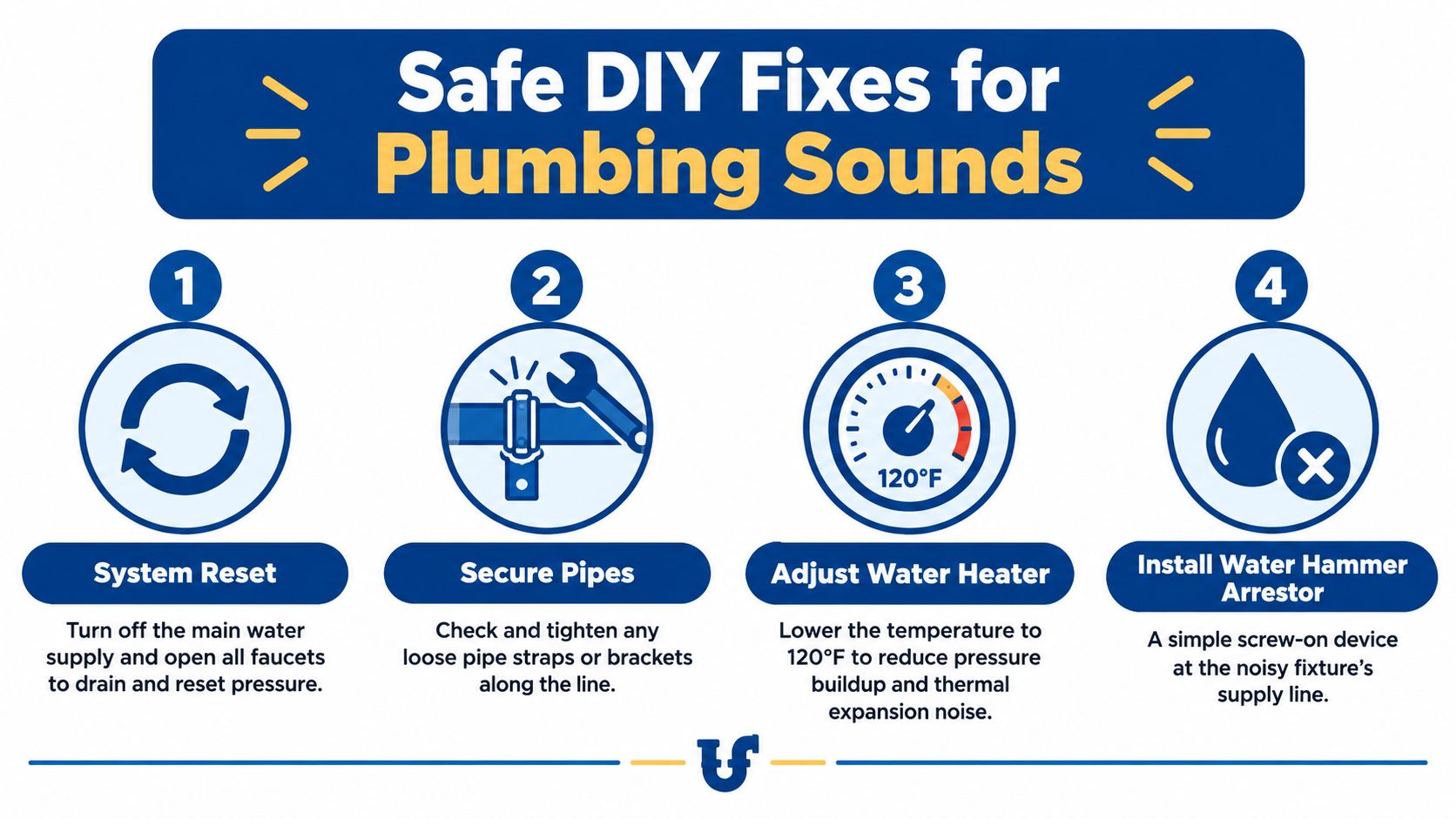
If the noise is occasional and there are no leaks, damp spots, or loss of water service, a basic reset is a reasonable first step. The purpose isn't to “bleed” the plumbing forever. It resets the pressure in the lines and can restore the function of air chambers that help absorb a sudden change in flow.
Reset the water system carefully
Close the main valve. Turn off the home's main water supply. If the valve is stuck, don't force it with a wrench, since an old valve can break or begin leaking.
Open faucets throughout the property. Open the highest and lowest faucets you can access, including a basement faucet if you have one. Let the lines drain, and flush toilets so stored water leaves the system.
Reopen the main slowly. Scottish Water's guidance recommends turning the stop valve back on at about one-quarter turn every 15 seconds (restart guidance and common causes of banging). Close the faucets after water runs steadily and check exposed connections for leaks.
Test the problem fixture. Start with the faucet, toilet, washing machine, or dishwasher that creates the noise. Note whether the sound happens at startup, during flow, or at shutoff.
If the noise is a rattle, inspect accessible basement or utility-room piping. A loose strap or bracket may let the pipe move when water starts or stops. Only tighten hardware you can reach safely, and don't compress plastic pipe or place a fastener through a pipe.
Know what not to adjust
Don't turn a pressure-reducing valve without a pressure gauge and a clear reason. Don't open walls to chase a noise unless there are signs of a leak, and don't work on gas-fired water heater controls as a noise experiment.
A system reset may help when trapped air or a recently disturbed supply is involved. It won't correct a failing valve, hidden leak, severely loose pipe run, or an incorrectly sized pressure-control component.
When to Call a Professional Plumber for Help
A simple reset is useful maintenance. It isn't a complete diagnosis. Call a professional when the banging continues, the noise affects multiple fixtures, the sound is getting louder, or you see moisture around a fitting, ceiling, wall, or water heater.
A plumber compares the easy explanations before recommending a repair. The inspection may include checking accessible pipe supports, testing system pressure, examining the main shutoff and pressure-control equipment, and identifying whether a fixture valve is restricting flow. If the noise is near a drain or sewer connection, a camera inspection can help locate an obstruction or damaged line rather than treating the symptom at the faucet.
DIY maintenance versus professional diagnosis
A homeowner can usually handle:
- Observation: Record which fixture causes the sound and whether it occurs during startup or shutoff.
- System reset: Drain and refill the lines using the controlled sequence above.
- Accessible support checks: Look for loose straps in unfinished basement areas without opening walls.
A professional should handle:
- Pressure testing: A gauge-based assessment is safer than guessing at a regulator adjustment.
- Hidden valve problems: A whistling valve behind a wall may need fixture or supply-line repair.
- Persistent vibration: Repeated movement can stress joints and fittings over time.
- Drain or sewer concerns: Slow drains, gurgling, or backup symptoms may require camera inspection, drain cleaning, or sewer repair.
Jays Plumbing and Sewer provides residential and commercial plumbing service in Southeast Michigan, including diagnostics, water heater repair, leak detection, drain and sewer work, and fixture repairs. For a main valve that won't operate reliably, see the main water shut-off valve replacement service information.
If you need help, call Jay's Plumbing and Sewer at 586-634-3450. A clear diagnosis is more useful than replacing parts at random, and upfront job-based pricing helps you understand the repair before work begins.
Preventing Future Pipe Noise in Michigan Homes
Southeast Michigan weather adds seasonal stress to plumbing. Michigan winters, freezing conditions, and thawing cycles can affect exposed piping, outdoor hose connections, and underground service areas. Heavy spring rain also tests sump pumps, basement drainage, and sewer systems. A new noise after a freeze or a major weather shift deserves attention, especially if water pressure or flow has changed.
Homeowners in Troy, Shelby Township, Macomb, and nearby Oakland County communities can reduce surprises with a practical maintenance routine. The goal isn't to chase every harmless tick. It's to notice changes early and keep the whole system operating properly.
A useful seasonal checklist
- Before winter: Disconnect outdoor hoses, protect exposed lines, and know where the main shutoff is located.
- During cold weather: Watch for reduced flow, condensation, damp spots, or unusual sounds near exterior walls and unheated areas.
- Before heavy spring rain: Test the sump pump and confirm that discharge water can move away from the foundation.
- During routine service: Have a plumber inspect accessible supports, valves, water heater components, and signs of leakage.
- For older properties: Consider a plumbing evaluation before buying, selling, or remodeling, especially when original fixtures and hidden pipe runs are involved.
A water heater can also contribute to hot-water popping or rumbling when sediment collects inside the tank. If the noise is tied to hot water rather than cold-water startup, water heater maintenance may be more appropriate than a pipe arrestor.
For practical cold-weather preparation, review this guide to preventing burst pipes during winter. A maintenance plan also helps property managers and small businesses coordinate commercial plumbing inspections before a noisy fixture becomes a leak or service interruption.
Frequently Asked Questions About Noisy Pipes
Are noisy pipes an emergency?
Usually, an occasional noise without leakage isn't an immediate emergency. Treat it as urgent if you see water damage, lose water service, hear continuous vibration, notice a rapidly worsening sound, or suspect a failed valve. Shut off the local fixture or main supply if water is escaping, then call an emergency plumber.
How long does diagnosis take?
The time depends on access and the cause. A visible loose support or fixture valve can be straightforward to identify, while a noise behind finished walls or one affecting several fixtures may require pressure testing and further inspection. A plumber should explain the findings before recommending an arrestor, valve replacement, pipe repair, or other work.
Can a water softener stop noisy pipes?
A water softener may help with mineral-related flow restrictions in some plumbing systems, but it isn't a universal answer to water hammer, loose supports, thermal expansion, or excessive pressure. If one faucet whistles, inspect that fixture first. If the entire property hums or vibrates, have the system evaluated before purchasing treatment equipment.
Should I call a plumber near me?
Call a local plumber when the reset doesn't help, the noise returns frequently, or you find moisture or pressure symptoms. In Macomb County, Oakland County, and Wayne County, Jay's Plumbing and Sewer serves homeowners, landlords, businesses, real estate professionals, and buyers who need residential plumbing, commercial plumbing, water heater replacement, leak detection, bathroom plumbing, kitchen plumbing, garbage disposal repair, sump pump repair, drain cleaning, or sewer repair. For urgent concerns, call 586-634-3450 to ask about 24/7 emergency response and available estimates.
Call Jay's Plumbing and Sewer at 586-634-3450 for help identifying banging, humming, whistling, or rattling pipes, along with related water heater, drain, sewer, and leak problems. Visit Jays Plumbing and Sewer to schedule service or request information for your Southeast Michigan property.
