
You head downstairs and find dark water spreading from the basement floor drain. The lower-level toilet is bubbling, and someone upstairs says the sink won't drain. Whether you're in a Fraser home or managing a commercial restroom in Troy, the immediate question is the same: what can you safely do right now?
Treat a sewer backup as three separate jobs: making the property safe, restoring flow, and preventing another backup. Getting water to drain again matters, but it doesn't automatically mean the pipe is sound or the affected room is ready to use.
Table of Contents
- Recognize a Sewer Backup and Act Quickly
- Identify Clogs, Tree Roots, and Storm-Related Causes
- Contain Sewage and Use Temporary Relief Safely
- Choose Between Jetting, Camera Inspection, and Repair
- Know When to Call an Emergency Plumber
- Prevent Future Sewer Backups
- Get Local Help Before the Problem Returns
Recognize a Sewer Backup and Act Quickly
Sewage appearing at a low fixture while other drains gurgle can point to a restriction in shared building plumbing or the sewer connection, rather than a stopped sink. That pattern deserves attention, but don't run additional fixtures to test your theory. Record what you've already observed and let the plumber investigate.
Sewer problems aren't limited to individual households. The EPA estimates that sanitary sewer overflows occur 23,000 to 75,000 times annually in the United States, releasing approximately 3 billion to 10 billion gallons of untreated wastewater, and those estimates exclude backups into buildings.
Stop Adding Water and Keep the Area Clear
Follow this first-response sequence without entering the contaminated area:
- Stop water use. Ask everyone to stop flushing toilets, showering, washing dishes, and doing laundry. Pause water-using appliances only if their controls are safely accessible.
- Restrict access. Keep children, pets, customers, and other occupants away. Tell everyone which rooms and fixtures are off-limits.
- Check for electrical concerns from a dry location. Look for water near appliances, cords, outlets, or electrical equipment. Don't walk closer to investigate.
- Document and call. Photograph the water level from a safe position, note affected fixtures, and arrange immediate help if sewage is spreading.
The visual below summarizes the warning signs to report when you call.
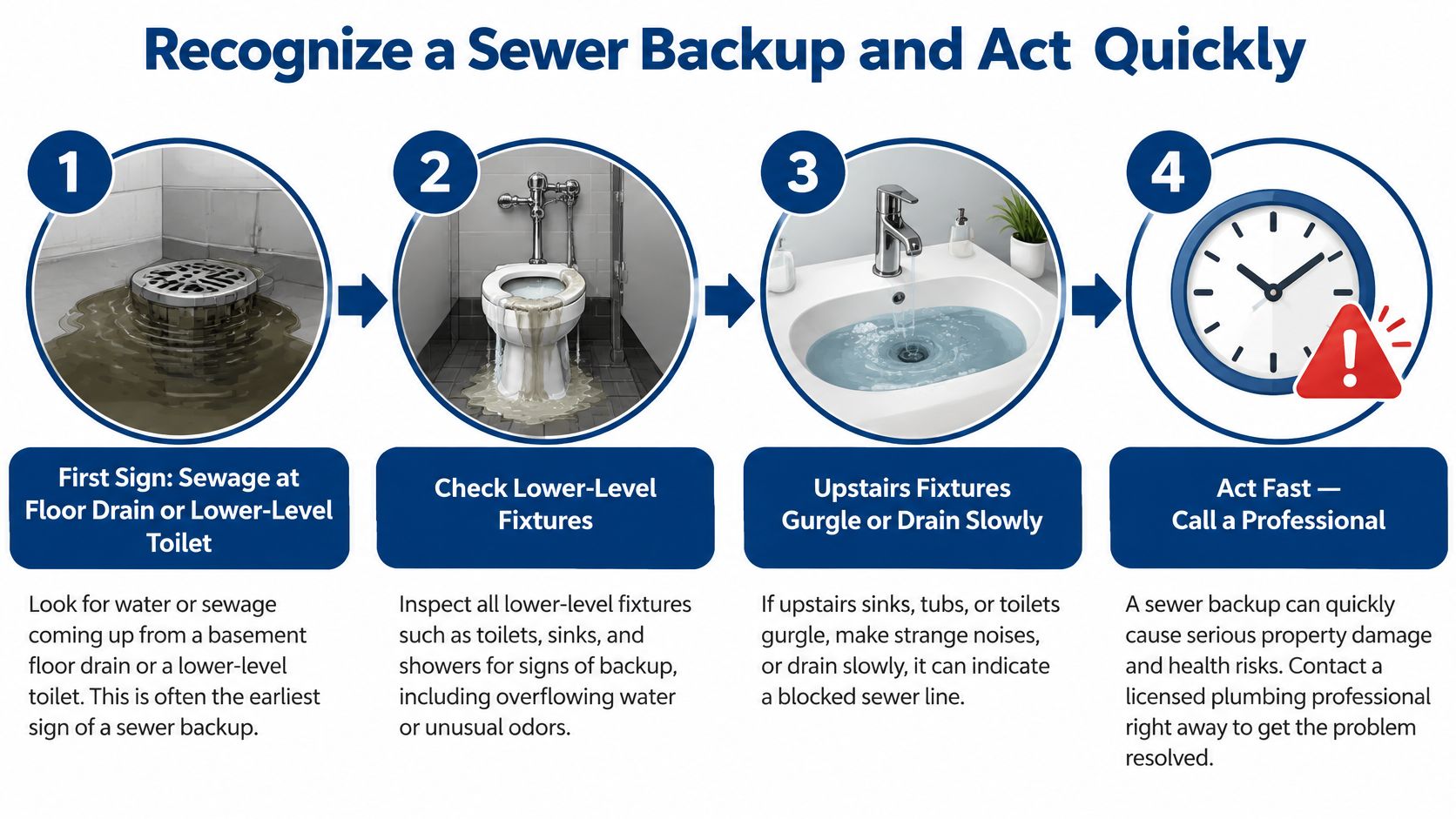
Stopping household water use can limit what your building contributes to the backup. It won't necessarily stop sewage arriving from farther downstream, so continued rising water is important information for the plumber and, when appropriate, the sewer utility.
Don't operate switches, appliances, pumps, or electrical equipment while standing in water. Don't approach a panel through a wet area. If electricity may be involved, leave the area and arrange qualified help to isolate the hazard before anyone enters.
Treat Sewage Differently From an Ordinary Spill
Sewage isn't ordinary household dirt. It can contain bacteria, viruses, protozoa, and other pathogens, and clearing the drain doesn't disinfect flooring or belongings that contacted it. The sewer-backup safety guidance on contamination and cleanup supports keeping vulnerable occupants out and separating plumbing restoration from remediation.
Young children, older adults, pregnant people, and immunocompromised occupants shouldn't participate in cleanup. Don't ask someone to carry contaminated boxes upstairs just because the visible water has stopped rising.
Practical rule: A drain that works again tells you about flow, not whether the room is safe to occupy.
Use these conditions to decide how much help to arrange:
- Small, isolated incident: A limited spill on an accessible, nonporous surface, with no electrical exposure, may allow a more contained cleanup assessment. Don't assume that makes every DIY method appropriate.
- Porous materials affected: Sewage contacting carpet, drywall, insulation, rugs, or upholstered furniture warrants qualified remediation advice.
- Basement-wide or repeated exposure: Extensive contamination, uncertain water sources, or ongoing sewage entry calls for professional containment and cleanup.
- Electrical uncertainty: Stay out until a qualified professional has addressed the hazard.
A plumber handles the line. A remediation professional addresses contaminated materials and the conditions for re-entry. Ask each professional what work remains before reopening the space.
Identify Clogs, Tree Roots, and Storm-Related Causes
The useful question isn't just whether the sewer is clogged. It's where the restriction is and what caused it. A fixture branch, the building drain, the private connection to the public sewer, and the public main require different responses.
After hazards are isolated, a plumber compares affected fixtures, evaluates upstream and downstream flow, and checks available access points. Your notes help narrow the investigation without requiring you to open a cleanout or reproduce the overflow.
Common Sewer Backup Clues
| Observed pattern | Possible contributing factor | Useful information to record |
|---|---|---|
| A fixture drains poorly while others appear normal | A restriction in that fixture's branch | Which fixture is affected and when symptoms started |
| Several fixtures react together | A shared building drain or downstream restriction | Which fixtures gurgled, overflowed, or slowed |
| Trouble follows heavy rain or snowmelt | Wet-weather loading or water entering damaged sewer piping | Weather, timing, and nearby properties with similar symptoms |
| The same line repeatedly needs clearing | Remaining roots, deposits, or a structural defect | Previous reports, videos, and clearing methods |
| Backup coincides with pump or power trouble | Equipment failure or a separate water-management problem | Pump condition and any outage |
These are clues, not diagnoses. For example, rain-related basement flooding doesn't prove the city sewer caused the damage, and a nearby tree doesn't prove roots are blocking your pipe.
Michigan EGLE identifies cracked pipes, improper roof- and footing-drain connections, groundwater infiltration, roots, shifted pipe, sediment, equipment failures, and power failures as contributors to overflows. That's why a backup after heavy rain in Clinton Township or Sterling Heights deserves a broader investigation than another dose of drain treatment.
Use History Without Jumping to Conclusions
Tell the plumber whether symptoms followed heavy rain, snowmelt, freezing ground, or previous maintenance. During Michigan winters, report suspected frozen pipes separately rather than assuming every drainage problem has the same cause.
For recurring root problems, this guide to tree roots in sewer line removal explains the issue to discuss during an evaluation. Removing the obstruction and assessing the opening that allowed roots inside are different decisions.
A camera can help, but it isn't infallible. Image quality, remaining debris, access limitations, and operator interpretation affect what can be identified, so ask which findings are confirmed and which remain uncertain.
Contain Sewage and Use Temporary Relief Safely
Containment means keeping the affected area separate from occupied space, not finding a way to keep using the plumbing. Close off access from a dry location, keep clean footwear out, and leave contaminated belongings in place until they can be assessed safely.
If this happens at a business, take the affected restroom or work area out of service. For a rental property, notify the landlord or property manager promptly and preserve the same photographs and observations you'd provide to the plumber.
Avoid Treatments That Don't Address the Cause
Don't pour bleach, chemical drain openers, or other products into the sewer as an emergency clearing method. They aren't a dependable answer to roots, damaged pipe, or an overloaded downstream system. Tell the responding plumber if anyone has already added a chemical product.
Grease isn't a useful flushing aid either. The EPA identifies fats, oils, grease, and products marketed as flushable, including baby wipes, facial wipes, sanitary pads, and tampons, as materials that can create sewer blockages.
- Don't open an unknown cleanout: Tell the plumber where it is and leave its operation to the technician.
- Don't send rental cable equipment into an unknown line: Equipment and cutting tools should match the pipe and suspected obstruction.
- Don't move sewage through clean rooms: Keep belongings and footwear from spreading contamination.
- Don't restart normal use to see what happens: Wait for the plumber's assessment and controlled flow verification.
Temporary relief should reduce exposure or incoming water, not conceal an unresolved sewer problem.
A professional may recommend temporarily isolating a fixture after assessing the layout. That's different from assuming a single slow toilet explains sewage appearing elsewhere.
When the same temporary treatment keeps failing, stop repeating it without a diagnosis. A recurring backup calls for evidence about the pipe, not just a stronger version of the last clearing attempt.
Choose Between Jetting, Camera Inspection, and Repair
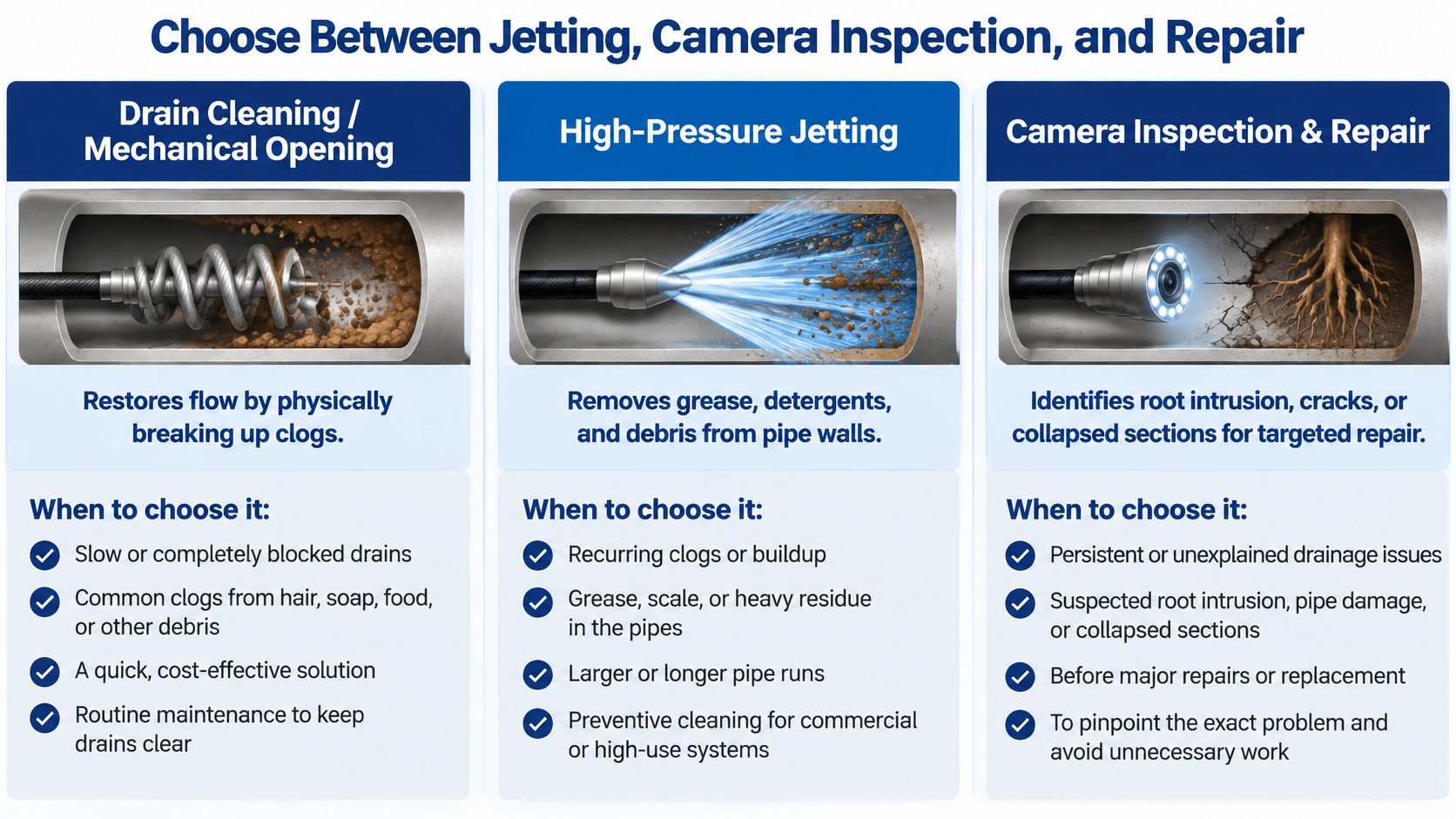
Clearing the line is only one of three jobs. A proper sewer backup response separates making the property safe, restoring flow, and preventing another backup, and each job calls for different tools. Finishing one does not finish the others.
That distinction matters when a plumber recommends a service. A useful recommendation explains which problem each option addresses, what evidence supports it, and what it cannot accomplish.
Match the Method to the Pipe
| Option | Main purpose | Important limitation |
|---|---|---|
| Mechanical drain cleaning | Open a restriction using appropriately sized cable equipment and tools | Restored passage doesn't establish pipe condition |
| High-pressure jetting | Remove suitable deposits when the pipe can tolerate the selected pressure | It doesn't repair broken or displaced pipe |
| Camera inspection | Locate and document visible defects after adequate access and clearing | The camera may not traverse every obstruction |
| Localized sewer repair | Address a confirmed defect in a particular section | The remaining line still needs assessment |
| Broader replacement | Address deterioration that extends beyond a practical localized repair | The scope should follow documented findings |
A defensible process starts with hazard isolation and locating the restriction, then uses appropriate mechanical equipment. Jetting comes after assessing pipe tolerance and removing standing sewage where feasible, followed by post-clearance inspection and location-referenced documentation. The sewer condition-assessment research supports defect-specific decisions while explaining limitations of visual inspection.
Jetting can remove grease, detergents, sand, and mineral deposits when the equipment settings and pipe condition are suitable. It should not be selected just because it sounds more thorough.
Restored flow is a result, not a diagnosis.
Ask for Evidence Before Approving Excavation
A video camera sewer inspection adds value when it produces usable records: the defect type, distance from an access point, pipe location, and remaining concerns. Ask to retain the video and written findings.
Roots, debris, infiltration, offset joints, low spots, or collapsed sections may remain after initial clearing. A localized defect may support targeted pipe repair, while more extensive deterioration may justify replacement. Neither decision should rest on the fact that the drain backed up alone.
For additional viewing alongside the service discussion:
Among local options, Jays Plumbing and Sewer offers drain cleaning, jetting, camera inspection, sewer repair and replacement, excavation when required, and second-opinion assessments before excavation. Compare any proposed scope by asking what was found, what can be cleaned, what requires repair, and how the result will be verified.
Know When to Call an Emergency Plumber
Call an emergency plumber when sewage is actively entering the property, several fixtures are backing up, or the suspected restriction affects the main building drain. A finished basement taking on sewage or a commercial restroom losing service shouldn't be treated like a routine slow sink.
Electrical exposure changes the priority. Stay clear and arrange appropriate emergency or electrical assistance rather than expecting line-clearing equipment to make a wet electrical area safe.
Give the Dispatcher Useful Details
You don't need a diagnosis before calling. Describe what you can observe safely:
- Affected fixtures: Identify the floor drain, toilet, sink, or commercial restroom involved.
- Current conditions: Explain whether water is rising, spreading, or no longer moving.
- Weather and history: Mention rainfall, snowmelt, outages, and previous backups.
- Access and hazards: Report known cleanout locations, standing water, and electrical concerns.
- Property use: Explain whether occupants, tenants, customers, or business operations are affected.
The EPA's analysis of overflow management found that rapid response had the strongest relative association with reduced overflow frequency, followed by scheduled inspection and root removal. That supports prompt attention and defect-specific maintenance, not a promise that any particular service prevents every backup.
Evaluate More Than Availability
Searching “plumber near me” is a starting point, not a complete selection process. Ask how the plumber will protect the work area, choose equipment, explain findings, price the work, and document the diagnosis.
Jay's Plumbing and Sewer provides 24-hour service seven days a week for residential and commercial customers across Macomb and Oakland County, with job-based upfront pricing and satisfaction follow-up, as described on its company website. Its 24/7 emergency plumbing service information provides another starting point for arranging help.
Ask for current availability rather than assuming an arrival time, especially during widespread storm-related problems.
Prevent Future Sewer Backups
A useful prevention plan starts with your property's history, not an automatic cleaning interval. The right approach for a line with recurring roots may differ from one serving a grease-producing business or a property with no previous drainage trouble.
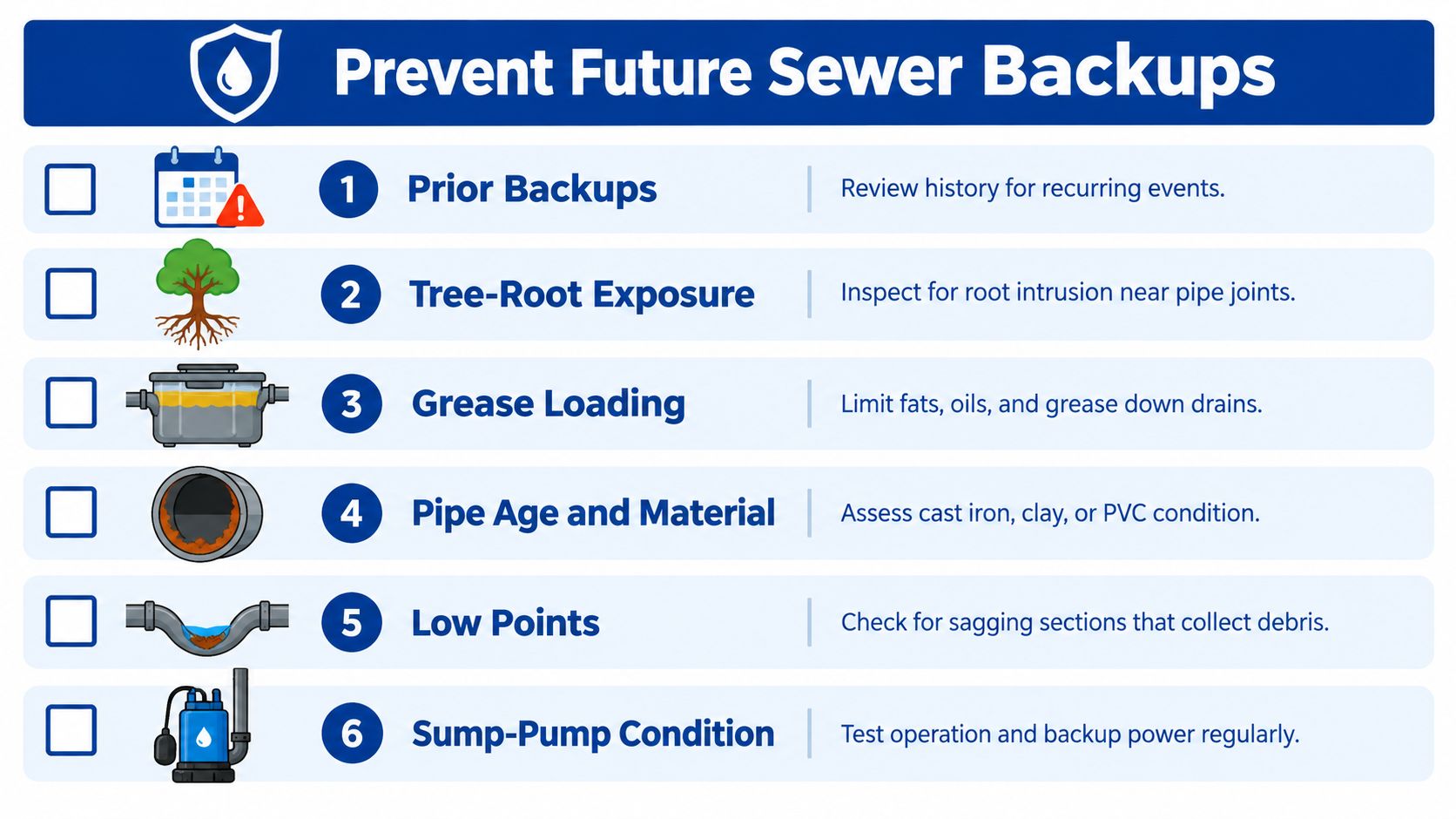
Review the factors below with the plumber after the immediate problem is controlled.
Build Maintenance Around Documented Risks
Keep service dates, camera videos, defect locations, pipe material information, and repair invoices together. For property managers, that record helps the next technician distinguish a recurring obstruction from a new issue.
- Prior backups: Review whether each event occurred at the same location or under similar conditions.
- Roots and deposits: Match removal methods to confirmed findings instead of ordering the same treatment automatically.
- Pipe condition: Discuss unresolved low spots, offsets, deterioration, and infiltration.
- Seasonal exposure: Consider inspection before expected heavy rain, snowmelt, or Michigan freeze-thaw conditions.
- Pump arrangements: Have sump-pump operation, power, and backup arrangements checked safely, and verify drain connections against local requirements.
- Consequences of failure: Give additional attention to lines serving finished basements, occupied rentals, or essential commercial facilities.
Keep grease out of kitchen drains and avoid flushing the blockage-producing products identified earlier. After maintenance, ask how flow was verified and whether another camera review is warranted.
A useful maintenance record says what was found and what remains, not just that the sewer was cleaned.
Preserve Evidence and Check Coverage
Photograph water levels and affected materials before disposal when it's safe. Retain municipal incident information, pump findings, the plumber's diagnosis, camera records, and cleanup invoices. Notify the insurer and any relevant landlord, property manager, or municipality promptly.
Cause matters to coverage. FEMA explains that National Flood Insurance Program coverage may apply when sewer backup accompanies qualifying general flooding, but not an unrelated plumbing or sewer problem, and that building and contents coverage are separate.
Don't assume a homeowners policy, flood policy, or contractor's invoice automatically covers the loss. Ask your insurer which documentation it needs and how the actual cause affects your coverage.
Get Local Help Before the Problem Returns
For homeowners, property managers, and businesses in Fraser, Sterling Heights, Clinton Township, Troy, Macomb, Shelby Township, and nearby communities, the sensible next step depends on what's happening now. Active sewage entry needs urgent attention. Recurring gurgling or repeated clearing needs a documented assessment before another backup.
Jay's Plumbing and Sewer is based in Fraser and serves Macomb County and Oakland County. If you're in Wayne County, describe your location when calling and confirm availability rather than assuming every nearby address falls within the regular service area.
Frequently Asked Questions
Can I use the upstairs bathroom if the backup is downstairs?
Don't assume it drains through a separate route. Keep water use paused until the plumber determines which fixtures share the affected line and confirms what can be used.
Does a cleared sewer mean I don't need repair?
Not necessarily. Ask whether inspection found a sound pipe, a maintenance issue, or a defect that cleaning cannot correct.
Should I mention other plumbing concerns when scheduling?
Yes, but keep the emergency clear. Identify whether you need residential plumbing or commercial plumbing help, then list separate concerns such as bathroom plumbing, kitchen plumbing, leak detection, sump pump repair, garbage disposal repair, water heater repair, or water heater replacement.
For home buyers, sellers, and real estate agents, retain the sewer findings with the property's service records. A clearing receipt alone doesn't explain the remaining pipe condition.
The practical progression is straightforward: protect occupants, limit incoming water, preserve evidence, assess the line, and choose work that addresses the documented cause.
Jays Plumbing and Sewer offers emergency plumbing, drain cleaning, camera inspections, jetting, sewer repair, and replacement for sewer-backup problems. Call Jay's Plumbing and sewer 586-634-3450 to discuss current conditions or request a free estimate, and visit Jays Plumbing and Sewer to learn about available services. We're happy to answer your questions.
