

A sewer backup repair cost can start around $500 for minor cleanup and climb past $10,000 when pipe replacement is involved, while severe whole-house restoration can reach $50,000. The difference depends on whether you're dealing with a simple blockage, contaminated building materials, or a damaged sewer line that needs excavation and replacement.
At 9 p.m., you hear gurgling from the basement drain. A few minutes later, sewage is spreading across the finished floor, and you're carrying towels downstairs while the repair bill begins taking shape. In Michigan, heavy rain, aging sewer laterals, tree roots, shifting soil, and winter conditions can all turn a slow drain into a serious backup.
The first move is simple: stop using water throughout the building. Don't run the washing machine, flush toilets, shower, or start the dishwasher. If sewage has reached flooring, drywall, electrical areas, or stored belongings, keep people and pets away and call for professional help.
Table of Contents
- What a Sewer Backup Really Costs Before You Call Anyone
- The Five Cost Categories Behind Every Sewer Backup
- How Sewer Camera Inspection Changes the Estimate
- Repair or Full Replacement and What Drives the Difference
- Emergency Surcharges and Why Michigan Backups Cost More
- Residential Versus Commercial Sewer Backup Costs
- Insurance Coverage DIY Limits and How to Choose a Plumber
- Preventing the Next Backup and Getting a Real Estimate
What a Sewer Backup Really Costs Before You Call Anyone
At 9 p.m., wastewater rises through the basement floor drain and spreads across the finished floor. The first charge may be a drain clearing, but the final bill depends on what the sewage touched and what the camera finds underground.
A small affected area may need line clearing and limited cleanup. A serious backup can add drying, demolition, sanitizing, inspection, excavation, pipe repair, and restoration. Full sewer line replacement commonly falls between $2,000 and $10,000, according to this sewer backup repair cost guide.
The jump from a $500 to $2,000 job to a $15,000 or more restoration usually comes from several line items arriving together. Saturated drywall, insulation, carpet, cabinets, and flooring may require removal. Hidden moisture can demand drying equipment and follow-up checks. A damaged lateral can then add excavation, surface replacement, and new pipe work. Severe whole-house contamination can reach up to $50,000.
Check these four conditions before treating the backup as a routine clog:
- Contamination severity: Sewage requires different handling from clean water. Porous materials often need removal instead of surface cleaning.
- Pipe damage: Roots, cracks, offset joints, a belly, corrosion, or a collapsed section can turn a blockage into an underground repair.
- Access: A line beneath soil is easier to reach than one under a driveway, concrete, finished basement, or deep frozen ground.
- Timing: Standing sewage can ruin materials that were salvageable earlier. After-hours service can also raise the initial response charge.
Practical rule: Watch the lowest affected fixture. Sewage from a basement floor drain or bathtub usually calls for main-line diagnostics, not repeated household drain opener.
Drain clearing restores flow. It does not remove contaminated materials or confirm that the sewer line will hold. Compare ordinary drain cleaning prices only as a baseline, then ask for separate prices for cleanup, camera inspection, repair, replacement, and emergency response.
In Fraser, Sterling Heights, Warren, Clinton Township, Rochester Hills, Troy, and nearby Macomb or Oakland County communities, choose a plumber who can assess both the wastewater path and the building damage.
The Five Cost Categories Behind Every Sewer Backup
A sewer backup estimate makes more sense when you separate it into five categories. Not every property needs all five, but serious backups often combine several of them.
| Category | Typical Range | What Drives the Cost |
|---|---|---|
| Emergency response and diagnosis | Qualitative only | Timing, access, water shutoff, safety conditions, and diagnostic equipment |
| Drain cleaning or clearing | Qualitative only | Blockage type, line size, roots, grease, and whether snaking or jetting is appropriate |
| Cleanup and sanitization | $500 to $50,000, depending on scope | Contamination, affected square footage, demolition, drying, and restoration |
| Camera inspection and locating | Qualitative only | Access to the cleanout, line condition, depth, and locating requirements |
| Repair or replacement | $50 to $250+ per linear foot for simple replacement | Pipe length, depth, material, excavation, and surface restoration |
The verified cost ranges show why cleanup deserves serious attention. One restoration guide estimates cleanup at $2,000 to $10,000, with underlying plumbing repairs adding $150 to $25,000 or more, depending on severity. That same guidance explains that a backup can combine sanitation, drying, demolition, and pipe repair, so it usually costs much more than ordinary drain clearing. See the detailed sewage cleanup cost ranges when comparing estimates.
The hidden line items are usually not mysterious. They come from work homeowners can't see:
- Moisture behind finishes: Water can travel beneath flooring or into wall cavities.
- Porous materials: Carpet padding, drywall, insulation, and unfinished wood may hold contamination.
- Disposal: Removed materials need proper handling, transportation, and disposal.
- Restoration: Replacing flooring or drywall is separate from cleaning the sewer pipe.
- Access work: A technician may need to expose a cleanout or locate a buried line before repair begins.
A professional estimate should identify which categories apply and which don't. Ask for separate pricing for emergency response, clearing, inspection, cleanup, repair, replacement, and restoration. If a contractor gives you one unexplained total, you can't tell whether the quote covers the actual source of the backup or only the immediate mess.
How Sewer Camera Inspection Changes the Estimate
A sewer camera inspection is the point where a vague backup becomes a documented plumbing problem. The technician feeds a small, waterproof camera through an accessible cleanout or another access point. A flexible push rod carries the camera through the line while the operator watches the pipe interior on a monitor.
The camera can show the pipe material, direction, distance to a defect, and whether wastewater is standing in the line. It may reveal root intrusion, separated joints, cracks, corrosion, grease buildup, a sagging section, or a collapse that a drain snake could pass through without correcting.
What the technician looks for
A clearing tool answers one narrow question, whether wastewater can move past the obstruction. A camera answers the more important questions:
- Is the pipe structurally sound?
- Where is the defect located?
- How deep is the line?
- Is the damage isolated or widespread?
- Will another cleaning likely provide lasting flow?
The inspection also helps determine whether excavation should occur in the yard, beneath a driveway, or close to the foundation. That locating information can prevent unnecessary digging and gives the property owner something concrete to discuss with an insurer, buyer, seller, property manager, or restoration company.
Why skipping the camera is a bad bargain
A snake can punch a path through roots or soft buildup without addressing the damaged pipe around it. If the line has a crack, offset joint, belly, or collapsed section, the backup may return after the apparent fix.
Ask for video before and after cleaning when the situation justifies it. You should be able to see the condition that supports the proposed repair, not just hear that the line was “bad.” A camera inspection can keep a repair estimate honest, even when it confirms that replacement is necessary.
Repair or Full Replacement and What Drives the Difference
A camera inspection should lead to a written choice: repair the failed section or replace more of the sewer lateral. A spot repair fits an isolated defect when the surrounding pipe remains stable. Full replacement makes better financial sense when several sections are failing, the pipe has collapsed, or backups return after cleaning.
The bill has four main parts: access, pipe work, restoration, and cleanup. $50 to $250 or more per linear foot is a common range for simple sewer line replacement, while full replacement averages $2,000 to $10,000, according to sewer line replacement cost guidance. Those figures do not settle the estimate. Excavation, contaminated cleanup, surface repair, permits, and difficult access can push the total far beyond the pipe work itself.
| Factor | Spot Repair | Full Replacement |
|---|---|---|
| Damage pattern | One crack, joint, or limited section | Widespread deterioration or repeated defects |
| Work area | Targeted access near the defect | A substantial portion of the lateral |
| Property disruption | Usually more limited | May involve excavation and surface restoration |
| Long-term outlook | Appropriate when the remaining pipe is sound | Better when the existing line is unreliable |
| Budget effect | Lower initial scope | Higher initial scope, with fewer failing sections left behind |
Pipe material changes the recommendation. Clay and cast iron can develop root intrusion, cracks, separated joints, and corrosion. Orangeburg, where present, may deform or collapse. A newer pipe with one failed connection supports targeted work. An aging line with repeated trouble usually makes another patch poor value.
Access can change the estimate faster than the defect itself. Open soil is simpler than a driveway, patio, concrete slab, or mature landscaping. Trenchless methods can limit surface damage in suitable conditions, but they do not fit every collapsed, offset, or severely deteriorated line.
Request video before and after cleaning for any repair larger than a simple snaking job. The footage should show the defect, its location, and the condition left behind. Review this main sewer line repair guide as a starting point, then require a camera-based written scope that lists restoration and cleanup separately.
Emergency Surcharges and Why Michigan Backups Cost More
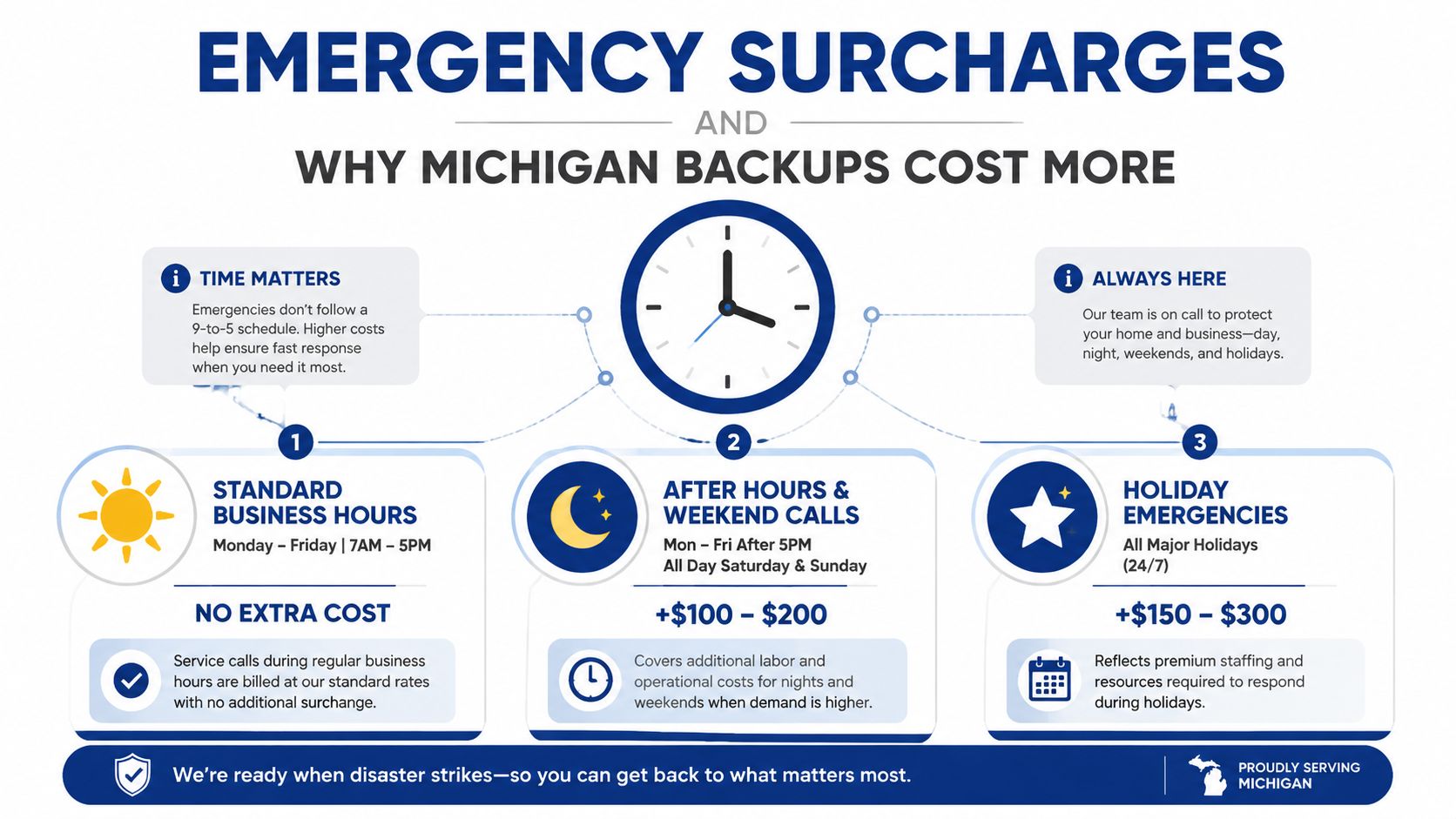
A sewer backup at 9 p.m. on a weekday carries a different bill from scheduled work during regular business hours. Emergency service can include dispatch, water isolation, contaminated-area protection, pumping, specialized cleaning, and temporary measures that keep the property usable. Each item can turn a simple drain clearing into a broader restoration job.
Michigan winter adds another pressure point. Frozen soil slows excavation, limits access, and makes surface protection harder. Hard ground can reduce practical repair options, while freezing conditions complicate equipment use and restoration work.
Watch the estimate for these line items:
- After-hours dispatch: Night, weekend, and holiday calls may carry premium pricing. An infographic detailing emergency service surcharges for sewer repair during after-hours, weekends, and holiday time periods.
- Travel: Rural properties or addresses outside the usual service area may add travel time and expense.
- Pumping: A pump truck or temporary bypass may be required when wastewater must keep moving.
- Disposal: Sewage-contaminated materials need controlled handling and disposal.
- Occupied buildings: Multifamily and commercial properties may need temporary measures while residents, tenants, or customers remain inside.
- Surface protection: Frozen landscaping, concrete, flooring, and finished interiors require careful handling to prevent secondary damage.
Ask two questions before approving emergency work: “What must happen tonight?” and “What can wait for normal hours?” The plumber should stabilize the backup first, then schedule inspection, excavation, repair, or restoration under safer conditions when possible.
If sewage is actively entering the home, stop using water and keep everyone away from contaminated areas. Call for help, and require the emergency plumber to separate urgent stabilization from the planned repair estimate. A $500 clearing can become a $15,000 restoration when cleanup, damaged materials, disposal, and access work are added.
Residential Versus Commercial Sewer Backup Costs
Property type changes the scope more than many owners expect. A single-family home may have one lateral and one affected basement, while a commercial or multifamily property can involve shared stacks, tenant coordination, larger lines, health requirements, and business interruption.
The verified cost guide places minor cleanup and repair at $500 to $2,000, major restoration at $2,000 to $15,000 or more, and severe whole-house restoration as high as $50,000. These figures apply to the combined nature of a backup, not a guaranteed price for every property. A commercial plumbing estimate needs a site inspection because occupancy, access, pipe size, and operational demands change the work.
| Property Type | Typical Cost Range | Common Cost Drivers |
|---|---|---|
| Single-family home | $500 to $50,000, depending on damage | Basement contamination, flooring, drywall, lateral repair, and restoration |
| Multifamily property | Qualitative estimate required | Shared stacks, risers, multiple units, tenant coordination, and access |
| Small commercial property | Qualitative estimate required | Grease, customer areas, food-service requirements, documentation, and downtime |
| Large commercial property | Can be substantially larger in scope | Larger pipe diameters, long laterals, specialized equipment, compliance, and interruption |
Restaurants deserve particular attention because grease and food solids can restrict lines and complicate cleanup. Retail and office owners need to consider customer access, employee safety, odor control, and the effect of a closed restroom or contaminated floor.
Property managers should report the event promptly, document affected areas, and prevent tenants from using fixtures connected to the problem line. Real estate agents and home buyers should request a sewer camera inspection when the property has recurring backups, slow drainage throughout the building, or an older sewer lateral.
A commercial plumbing contractor should provide a scope that identifies inspection, cleaning, temporary flow management, repair, restoration, and documentation separately. That format helps an owner decide whether to restore service immediately or schedule larger sewer repair work around business operations.
Insurance Coverage DIY Limits and How to Choose a Plumber
Insurance questions need a policy-specific answer. Standard homeowners coverage may not cover the sewer pipe or the source of the backup, while a separate sewer backup endorsement may provide limited coverage for resulting damage. Don't assume the endorsement covers every cost, and don't assume pipe replacement is included.
Call your insurance carrier promptly, photograph damage before disposal when safe, keep receipts, and ask what documentation the adjuster needs. Municipal responsibility can also depend on the facts. Municipalities may be responsible for preventable backups in public sewer systems, but they aren't automatically strictly liable. Claims can turn on whether the municipality used ordinary and reasonable care to maintain the system, as explained in this municipal sewer backup liability reference. This is general information, not legal advice.
Where DIY stops being reasonable
A plunger or small hand auger may be reasonable for one slow sink or toilet when no sewage is present elsewhere. It isn't a good plan for sewage coming through a basement floor drain, multiple fixtures backing up, or a recurring problem.
Avoid harsh chemical drain openers in a suspected main-line backup. They can remain in the line, create a hazard for the technician, and fail to address roots, cracks, offsets, or collapse. Never handle raw sewage without appropriate protective equipment, containment, and disposal procedures.
What to ask before approving work
Choose a plumber who can provide:
- Camera evidence: Request footage or a clear explanation of the inspection findings.
- Written scope: Make sure cleanup, clearing, inspection, repair, replacement, and restoration are separated.
- Pricing format: Ask whether the quote is flat-rate or time-and-materials.
- Relevant experience: Request references for comparable residential, multifamily, or commercial work.
- Insurance documentation: Confirm appropriate business coverage before excavation or restoration begins.
- Work-area care: Ask how the crew will protect floors, walls, and finished surfaces.
For homeowners and property managers in Macomb and Oakland County, Jays Plumbing and Sewer offers sewer cleaning, camera inspections, sewer repair, sewer replacement, and emergency plumbing response. The important thing is not choosing a familiar name alone. It's choosing a contractor who can show you what failed and explain why the proposed scope fits the evidence.
Preventing the Next Backup and Getting a Real Estimate
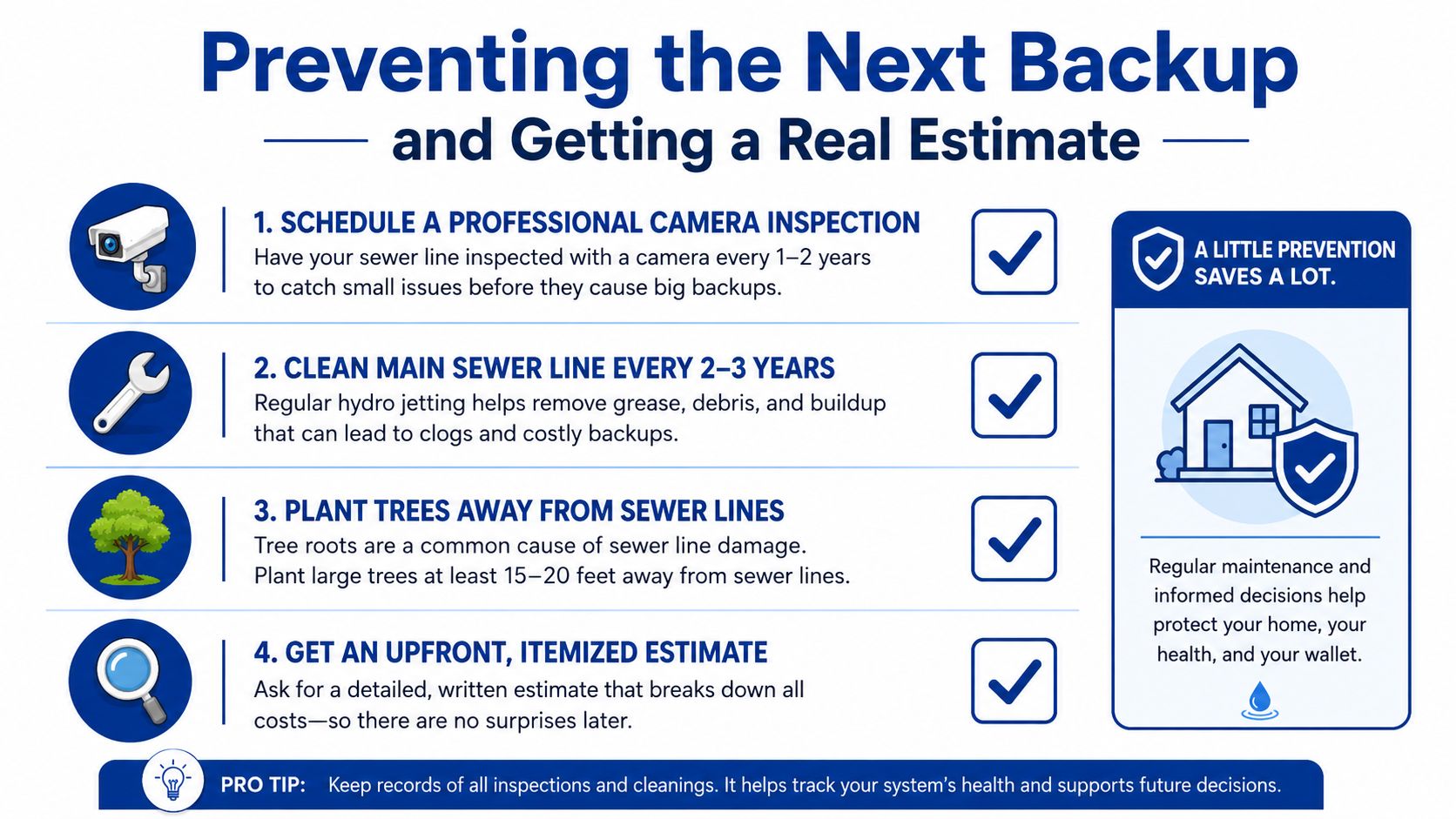
A sewer backup gets expensive when restored flow is mistaken for a completed repair. A drain clearing may reopen the line today, while roots, a damaged joint, corrosion, a belly, or a collapsed section remains underground. Require a camera inspection before approving work beyond an immediate clearing.
Use this prevention checklist:
- Inspect older lines: Arrange a professional camera inspection every two to three years for older clay or Orangeburg lines.
- Keep problem materials out: Keep grease, wipes, paper towels, and feminine hygiene products out of drains and toilets.
- Consider backwater protection: A home with a history of surcharge may need a backwater valve evaluation.
- Act on slow drains: Multiple slow fixtures signal a problem that should be addressed before a full blockage develops.
- Watch mature trees: Trees near the sewer route can require recurring root management and inspection.
- Plan before winter: Michigan winters and frozen ground make emergency excavation more disruptive. Address warning signs during milder conditions.
If sewage is backing up into a tub or basement drain, follow this sewer backup response guide and stop using water until a professional evaluates the line. Do not keep running fixtures just because one drain starts flowing again.
For a real estimate, request an on-site visit, camera inspection, written scope, and itemized pricing. The proposal should separate cleanup, clearing, inspection, repair, replacement, and restoration. Confirm whether pricing is flat-rate or time-and-materials, ask how emergency charges are applied, and identify work that can wait.
The bill can grow through overlooked line items. Cleanup and disposal follow sewage exposure. Locating the line can precede excavation. Concrete, landscaping, drying, and interior restoration may sit outside the sewer repair price. A $500 clearing can become a $15,000 restoration job when contamination and structural damage are involved, so insist on a written scope before the crew expands the work.
The same diagnostic standard applies to drain cleaning, sewer repair, pipe repair, leak detection, sump pump repair, bathroom plumbing, kitchen plumbing, water heater repair, water heater replacement, and commercial plumbing. If you need a plumber in Fraser, Sterling Heights, Warren, Troy, or Rochester Hills, choose a contractor who explains the cause instead of selling a temporary clearing.
Jays Plumbing and Sewer provides emergency sewer cleaning, camera diagnostics, sewer repair, sewer replacement, and written job-based pricing for residential and commercial properties across Macomb and Oakland County. Ask for the line location, inspection findings, proposed scope, and separate restoration estimate before approving excavation.
