

A sump pump usually earns your attention only after it stops working. In Macomb County, that often means a heavy Michigan rain, spring snowmelt, or a high water table has already turned the basement floor wet before anyone notices the problem. If your pump is noisy, difficult to reach, or installed in a cramped older pit, choosing a replacement isn't a matter of buying the cheapest motor.
The practical question is sump pump pedestal vs. submersible. Each design can protect a basement, but they solve different problems. One favors dry, accessible service and a potentially longer motor life. The other generally offers quieter operation, greater capacity, and better performance where water exposure is frequent. Pit size, discharge height, backup planning, and future repairs can matter just as much as horsepower.
Table of Contents
- Why Your Sump Pump Choice Matters More Than You Think
- How Pedestal and Submersible Sump Pumps Work
- Comparing Performance, Noise, and Lifespan
- The Hidden Costs of Pit Geometry and Installation
- Smart Monitoring and Modern Features Changing the Decision
- Which Pump Type Fits Your Specific Situation
- Common Questions Homeowners Ask About Sump Pumps
Why Your Sump Pump Choice Matters More Than You Think
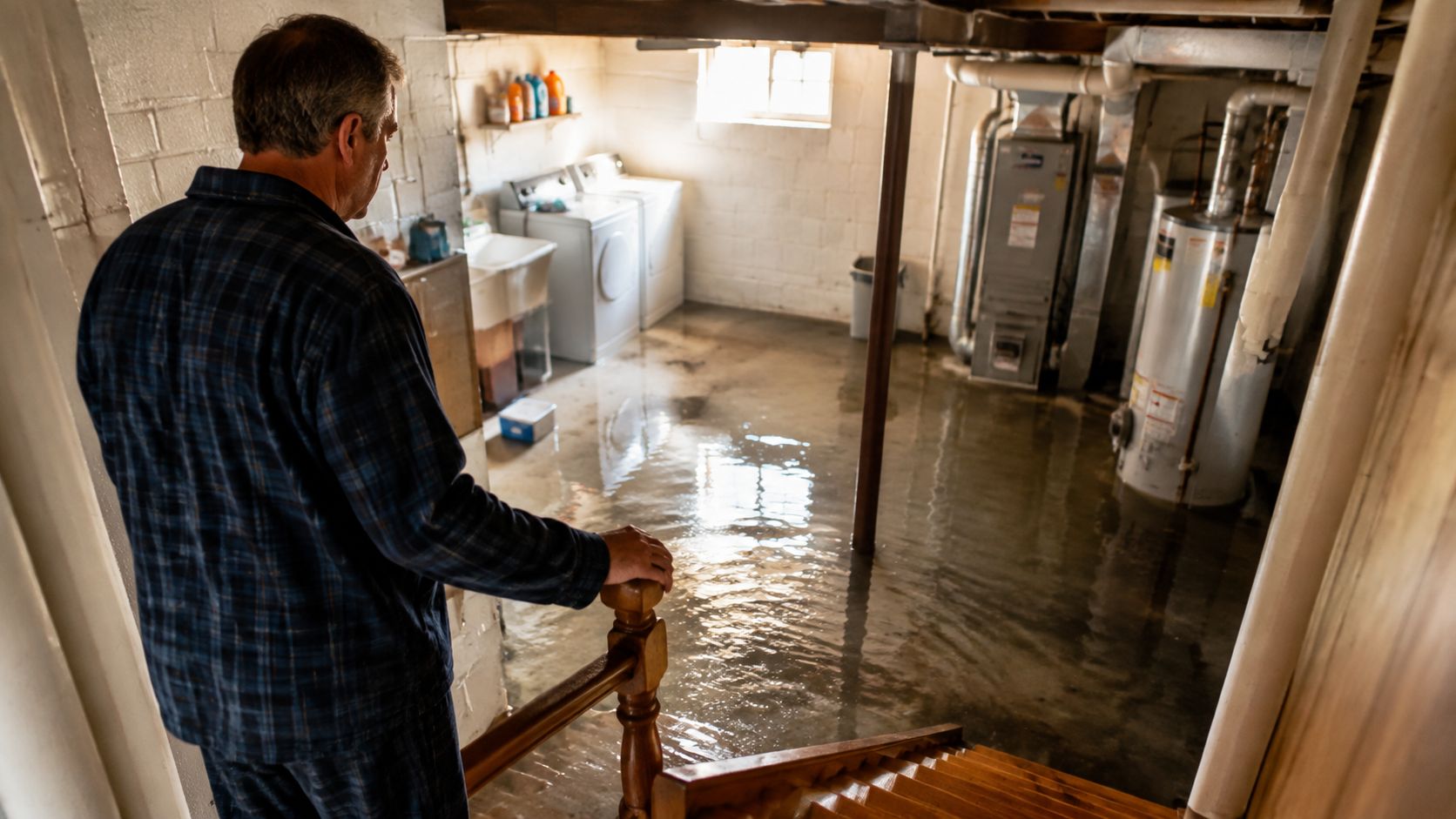
A homeowner in Sterling Heights may hear the sump pump start during a storm and assume everything is fine. A homeowner in Fraser or Warren may hear nothing at all, then discover water near the furnace, stored belongings, or finished flooring. The difference isn't always the pump type. A stuck float, restricted discharge line, undersized basin, or failed check valve can leave either design unable to keep up.
Pedestal pumps place the motor above the pit. Submersible pumps place the sealed motor and pumping assembly inside the basin. That physical difference affects several everyday concerns:
- Noise: A submersible pump is usually the better fit near a finished basement, office, or bedroom.
- Service access: A pedestal motor is visible and easier to reach, while a submersible unit must be lifted from the pit.
- Pit requirements: A submersible design generally needs more room inside the basin.
- Water-handling ability: Submersible models are commonly selected for higher flow and greater lift.
- Long-term planning: A pump that fits today may create a basin replacement problem during the next repair.
A 2024 market report found that submersible pumps held more than half of global sump pump revenue in 2023, and projected the overall market to reach US$74,964.3 million by 2032 at a 17.3% CAGR. That source describes a large commercial flood-control category, not a promise that every Michigan home needs a submersible pump, but it does show why this design has become the common higher-performance choice. Read the market analysis of submersible sump pump demand.
Practical rule: Don't choose a pump until someone checks the pit, discharge route, water conditions, and available backup plan.
If you're unsure whether your existing basin can accept a different design, Call Jay's Plumbing and sewer Now @ 586-634-3450. A proper assessment can prevent a replacement that works on the floor but doesn't fit the pit.
How Pedestal and Submersible Sump Pumps Work
Both pump styles remove groundwater from a sump basin and send it through a discharge pipe away from the foundation. The pump starts when a float or sensor detects rising water, then stops after the level drops. The important difference is where the motor lives and how the pump handles the surrounding environment.
Pedestal pumps keep the motor above water
A pedestal pump resembles a lamp mounted on a stand. Its motor sits above the basin on a vertical column, while the lower pumping portion reaches into the pit. The motor stays dry and remains visible, so a technician can inspect electrical connections, the float, and the motor without lifting the entire assembly out of the basin.
That arrangement can work well in a narrow pit. It also makes routine access straightforward, particularly in older homes where the basin wasn't designed around a large submerged unit. The tradeoff is that the exposed motor can be more noticeable in an unfinished basement and can transmit more operating sound into the room.
Submersible pumps seal the working parts inside the basin
A submersible pump is more like a sealed underwater light. The motor, impeller, and housing sit inside the pit, protected by a waterproof enclosure. Water surrounds the unit during operation, and the pump pushes water into the discharge line through the connected outlet.
The water helps dampen motor noise, while the submerged housing keeps the working assembly out of the open room. This design also tends to be favored where the basin sees heavier inflow or small debris, although the pump still needs a suitable screen, clear pit, and properly maintained discharge system.
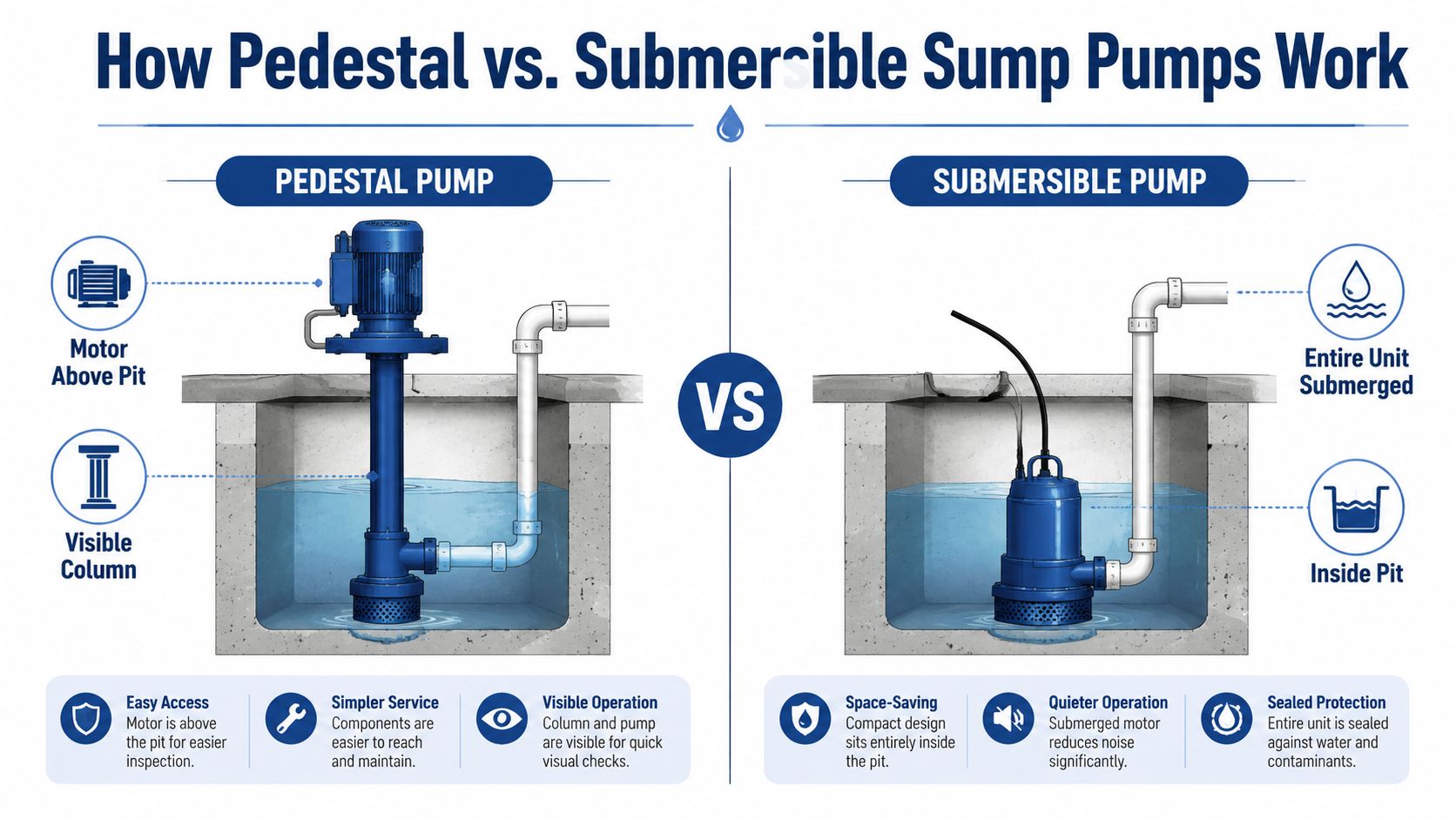
A simple way to remember the distinction is this: pedestal means accessible motor above the water, submersible means sealed pump inside the water. Neither design can compensate for a blocked discharge, a poor basin location, or a power outage.
The float mechanism deserves attention in either setup. A float that catches against the basin wall may fail to start the pump. A tethered float may need more room than a vertical switch. During installation, the technician should confirm that the float moves freely and that the check valve doesn't cause the pump to short-cycle.
Comparing Performance, Noise, and Lifespan
The right comparison depends on the basement and the failure you most need to avoid. A finished basement may favor quieter operation. A low-lying property may need stronger lift. An older rental may place greater value on quick motor access during an emergency call.
The figures below are commonly reported ranges, not guarantees for every model. They also describe pump performance before installation details, such as pipe length, elbows, check-valve condition, and discharge height, affect actual results.
| Feature | Pedestal Pump | Submersible Pump |
|---|---|---|
| Typical operating noise | 58 to 62 dB (pedestal pump noise range, 58 to 62 dB) | 48 to 57 dB |
| Reported service life | 10 to 15 years, or 15 to 20 years in light-duty use | 7 to 10 years in normal residential use |
| Common capacity | 2,000 to 3,500 gallons per hour (pedestal and submersible capacity comparison) | 3,000 to 5,000 gallons per hour |
| Common horsepower range | 1/4 to 1/2 HP | 1/3 to 1 HP |
| Practical lift guidance | About 15 to 20 feet | Up to about 25 feet |
Noise favors the submerged design
Submersible pumps generally operate around 40 to 60 dB, while pedestal pumps are commonly reported around 55 to 75 dB because the pedestal motor runs in open air. Review the design tradeoffs between pedestal and submersible pumps. The ranges overlap. Pump construction, the basin cover, piping, and vibration all change what reaches the room.
A submersible pump usually causes less disruption in a finished basement. A pedestal model can work well beside a furnace in an unfinished utility area, where access for service matters more than sound.
Lifespan favors dry motor access
Pedestal motors often last longer because they remain dry and cooler. One comparison places pedestal service life around 15 to 25 years, compared with roughly 5 to 10 years for many submersible units exposed to sealed-motor heat stress and demanding seal or impeller service.
Those ranges are expectations, not a replacement schedule. Frequent cycling, poor installation, debris, power problems, and a constantly wet basin can shorten either pump's useful life. Easy access may also reduce service time and labor when a pedestal motor needs attention.
Capacity favors submersible performance
The capacity and lift ranges in the table explain why contractors often choose submersible pumps for heavier inflow or a discharge line that rises farther before reaching a suitable outlet. A higher horsepower rating alone does not correct a restricted discharge or an unsuitable pit layout.
Confirm the pipe size, elbows, check valve, and discharge outlet before choosing by horsepower. For inspection points and service planning, follow this sump pump maintenance guide. A pump that moves water quickly can still overwork when it runs against a restricted discharge.
The Hidden Costs of Pit Geometry and Installation
The basin is the part homeowners most often overlook. A submersible pump generally needs a wider pit because the entire sealed unit sits inside it, and servicing usually means lifting that unit out. A pedestal pump can fit a narrower basin because its motor and column occupy less of the pit's usable footprint.
That distinction matters in older Macomb County homes, especially where a concrete basin was installed in a tight corner, beside a foundation wall, or beneath finished shelving. A submersible conversion may require more than swapping motors. The basin may need modification or replacement, the cover may need a different opening, and the discharge connection may need adjustment.
Ask about the next repair, not only today's installation
A low purchase price can become less attractive if the pump is difficult to remove, the float has no room to travel, or the basin must be opened again for future work. Pedestal pumps offer easier motor access, but the column and exposed motor still need clearance. A submersible pump keeps the top of the basement cleaner and quieter, but the technician must be able to lift it safely from the pit.
Ask this before approving a different pump type: “Will this installation force me into a sump-pit replacement later?”
No honest plumber should quote an exact pit-modification cost without seeing the basin, measuring its opening, and checking the discharge arrangement. The hidden cost isn't a universal dollar figure. It depends on concrete, flooring, access, basin dimensions, wiring, piping, and whether the existing setup can be adapted without excavation.
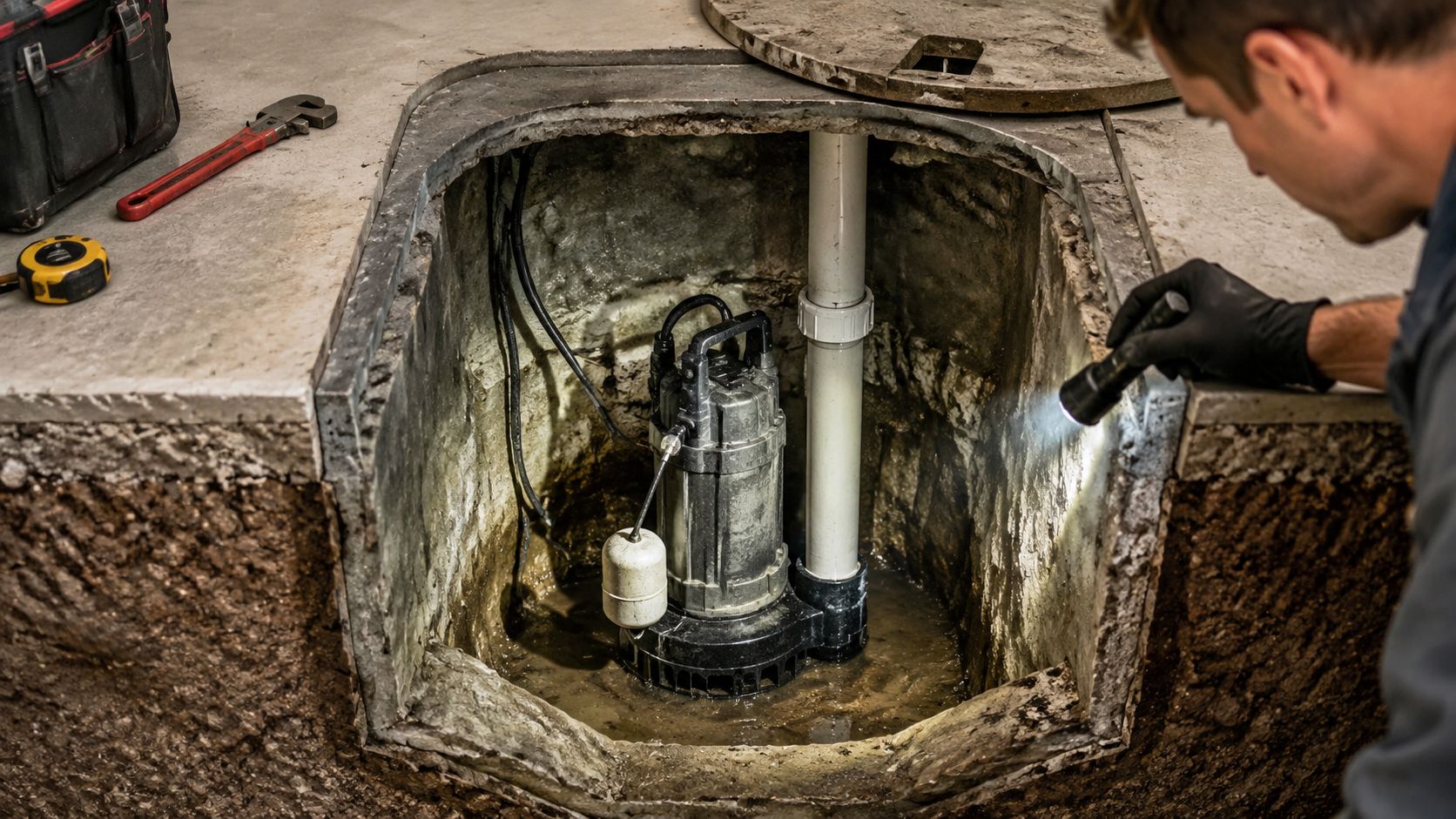
Retrofit questions that deserve a direct answer
Before changing from pedestal to submersible, have the installer check:
- Basin width and depth: The unit must sit without binding against the walls or float.
- Cover and access opening: A sealed cover may need a suitable pump and discharge passage.
- Discharge routing: The pipe must carry water away from the foundation without avoidable restrictions.
- Power and backup space: The setup should leave room for an alarm or backup equipment where appropriate.
- Service clearance: Someone must be able to remove the pump without damaging flooring or surrounding finishes.
For sump, sewage, and backup pump evaluation, homeowners can review sump pump repair and installation service. Call Jay's Plumbing and sewer Now @ 586-634-3450 when you need a professional assessment before cutting concrete or replacing a basin.
Smart Monitoring and Modern Features Changing the Decision
The old comparison asks which pump is quieter, cheaper, or easier to reach. Those questions still matter, but an unattended basement creates another concern: How will you know the pump has failed before water reaches the finished floor?
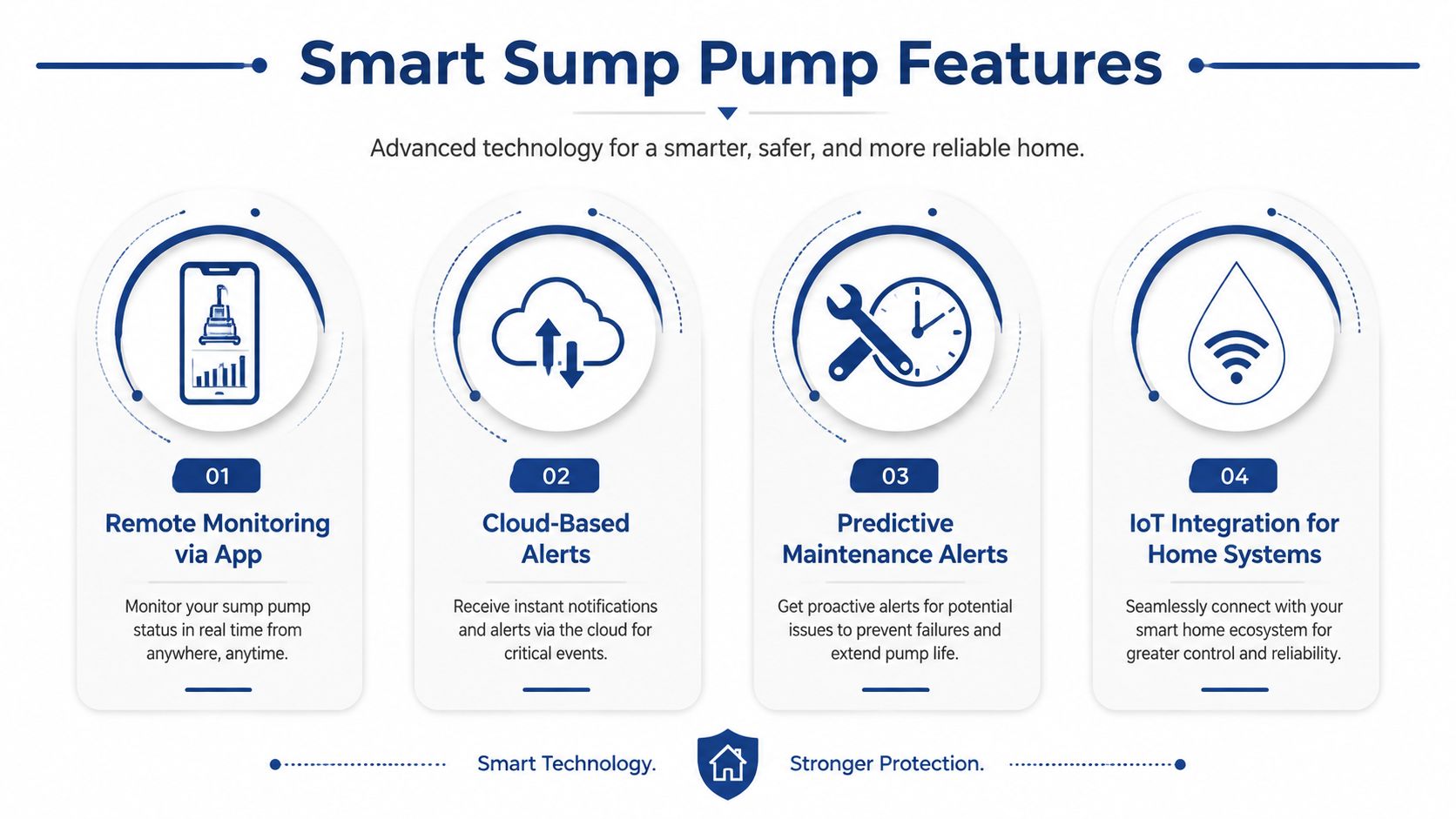
Recent market coverage identifies IoT-enabled sump pumps, predictive maintenance, remote diagnostics, corrosion-resistant materials, and variable-speed systems as notable developments projected for the 2026 market period. Review the smart sump pump market trends. These features don't make one physical pump style automatically superior. They change how owners evaluate risk and service.
Monitoring can matter more than visual access
A pedestal pump is easy to see during a basement walk-through. A smart system may offer value that isn't visible at all, such as:
- Remote alerts: A phone notification can identify a high-water condition while you're away.
- Failure detection: The system may report abnormal operation or a power interruption.
- Backup integration: Monitoring can connect the primary pump, battery backup, and alarm into one plan.
- Maintenance prompts: Alerts can help property managers schedule inspection before a known risk becomes an emergency.
A homeowner who travels, a landlord managing several units, or a real estate agent overseeing a vacant property may value remote status more than the pedestal pump's quick visual inspection. A finished basement with expensive flooring may also justify monitoring because an alarm can shorten the time between failure and response.
Build the system around the actual risk
Smart equipment still needs a correctly sized primary pump, an unobstructed discharge, reliable power, and a basin that allows service. An app won't clear a blocked pipe, repair a failed check valve, or keep a pump running through every outage.
For Michigan properties affected by heavy rain, spring thaw, or recurring groundwater, compare the complete setup. Ask whether the alarm works during an internet interruption, how the backup receives power, and who responds when an alert arrives. The right decision may be a straightforward pedestal pump with a dependable alarm, or a submersible pump paired with backup power and remote notification.
Which Pump Type Fits Your Specific Situation
There isn't one universal winner in the sump pump pedestal vs. submersible decision. The right choice matches the basin, the water load, the room, and the person responsible for responding when something goes wrong.
Choose submersible when quiet, high-capacity operation comes first
A submersible pump is usually the practical fit for:
- Finished basements: Water-dampened motor sound is less disruptive around living areas.
- Frequent groundwater or heavy inflow: The design commonly offers higher capacity and lift.
- Low-lying or flood-prone properties: Greater pumping performance can provide useful operating margin.
- Commercial or rental properties: A covered, quieter installation can be preferable where occupants or tenants share the space.
A submersible still needs a pit wide enough for the unit and future removal. If the basin is too tight, forcing the pump into place creates a service problem from the start.
Choose pedestal when access and basin constraints control the job
A pedestal pump often makes sense for:
- Older homes with narrow pits: The smaller in-pit footprint may avoid basin replacement.
- Unfinished utility basements: Motor noise may be less important than simple access.
- Owners prioritizing serviceability: The motor remains visible and easier to reach.
- Light-duty applications: A pedestal can be appropriate where inflow and lift demands are modest.
Property managers should also consider who will inspect the system and how quickly a technician can reach it. Easy access can reduce disruption during a repair, but it doesn't replace an alarm or backup plan.
Plan for outages before the next storm
Michigan storms can interrupt power when the basin is receiving the most water. A battery backup, water-powered backup where suitable, or monitored alarm should be selected based on the home's drainage conditions and the owner's ability to respond. A backup isn't a substitute for a primary pump that fits the pit or a discharge line that works correctly.
DIY replacement can go wrong when a homeowner overlooks float clearance, discharge slope, check-valve orientation, electrical protection, or the basin's dimensions. Professional installation also gives homeowners a chance to address related concerns, including leak detection, pipe repair, basement flood prevention, and sump pump repair before water damage spreads.
Jays Plumbing and Sewer provides residential and commercial sump pump repair and installation, along with 24/7 emergency response, job-based upfront pricing, and service across Macomb and Oakland County. Call Jay's Plumbing and sewer Now @ 586-634-3450 for help choosing a setup that matches your property instead of just replacing one motor with another.
Common Questions Homeowners Ask About Sump Pumps
Can I replace a pedestal pump with a submersible?
Sometimes. The basin must be wide and deep enough for the submersible unit, its float, and safe removal during future service. A narrow or awkward pit may make a pedestal replacement the more practical option.
How often should I test the pump?
Test it before Michigan's heavy rain seasons and spring snowmelt, then inspect it whenever you notice unusual cycling, noise, vibration, or water near the basin. Use this guide to checking whether a sump pump works for basic observation, but call a plumber if the pump hums without moving water, trips power, or fails to start.
What size pump does my basement need?
Basement size alone doesn't determine pump size. Water inflow, pit volume, discharge height, pipe layout, and local drainage conditions matter more than floor area. A professional should evaluate those factors before recommending a horsepower rating.
Can I handle sump pump maintenance myself?
You can keep the basin clear, confirm that the float moves freely, check that the discharge outlet isn't blocked, and listen for changes in operation. Leave electrical problems, basin changes, discharge repairs, and repeated failures to a qualified plumber.
Jays Plumbing and Sewer handles sump pump repair, replacement, backup pump installation, and service for residential and commercial properties in Macomb and Oakland County. If your pump is noisy, trapped in a cramped pit, or unreliable during Michigan storms, visit Jays Plumbing and Sewer to schedule service or request an estimate.
