
You open the crisper drawer to grab vegetables and find a puddle instead. The food may be wet, the back wall may have a sheet of ice, and water might already be reaching the floor beneath the refrigerator. It's easy to assume the appliance has failed, but refrigerator leaks inside often begin with a blocked drain, excess condensation, or a loose water connection.
Treat the problem as a calm triage exercise. Dry the compartment, identify where fresh moisture returns, and separate a harmless humidity issue from water that's coming through a drain, filter housing, ice maker line, or valve. A small repair may solve the problem, but a slow leak that reaches flooring or cabinetry deserves prompt attention.
Table of Contents
- Why Your Refrigerator Is Leaking Inside
- Common Causes of Internal Fridge Leaks
- How to Diagnose the Real Source of the Leak
- Condensation vs a True Internal Leak
- Hidden Water Damage and Insurance Risks
- Simple Prevention Habits for Homeowners
- When to Call a Licensed Plumber
Why Your Refrigerator Is Leaking Inside
Most internal refrigerator leaks come from a limited group of predictable problems. The defrost drain is a frequent starting point. During a normal defrost cycle, melted frost should travel through a drain opening and into a pan beneath the appliance. Ice or debris can interrupt that path, leaving water under the drawers or along the back wall instead.
Water-fed refrigerators add another possible source. Automatic ice makers and dispensers introduced pressurized plumbing into an appliance that previously had no household water connection. A supply tube, shutoff valve, inlet valve, filter housing, or door connection can seep slowly enough to escape notice.
Practical rule: Find the point where water first appears, not merely the place where it finally collects.
The distinction matters in Macomb County kitchens, especially during humid weather or after repeated door openings. Warm air can create condensation that looks like a plumbing failure, while a genuine supply leak may travel inside the cabinet and show up somewhere else.
A 2023 insurance-related summary reported that refrigerator water line leaks represented 2% of appliance claims, while broader research found that one in every 67 insured homeowners filed a water-damage or freezing claim each year from 2019 through 2023, with an average claim of $15,400. Those figures are reported in this appliance-leak insurance summary. Refrigerator leaks are less common than major plumbing failures, but a low-volume leak can still create serious property damage when it runs unnoticed.
Common Causes of Internal Fridge Leaks
The location and timing of the water usually provide the first useful clue. Start with the simplest causes before assuming a valve, thermostat, or sealed component has failed.
Clogged or frozen defrost drain: This is commonly identified as the leading cause of refrigerator leaks. Food particles, ice, or residue block the drain opening, so meltwater backs up inside the cabinet. Water under the crisper drawers, recurring ice at the rear wall, or puddling after a defrost cycle points in this direction. One repair-focused source reports that a frozen or clogged defrost drain represented roughly 30% to 40% of leak diagnoses in one metro-area service market, as described by Killarney Metals' water-damage discussion.
Damaged water supply line: A cracked tube or loose fitting serving the ice maker or dispenser can produce a steady drip. Moisture near the rear wall, dispenser area, or door hinge side suggests a pressurized water connection rather than condensation.
Filter housing trouble: A filter that isn't fully seated, a damaged cartridge, or a cracked housing can release water during fill cycles. The clue is moisture that appears after dispensing water or making ice.
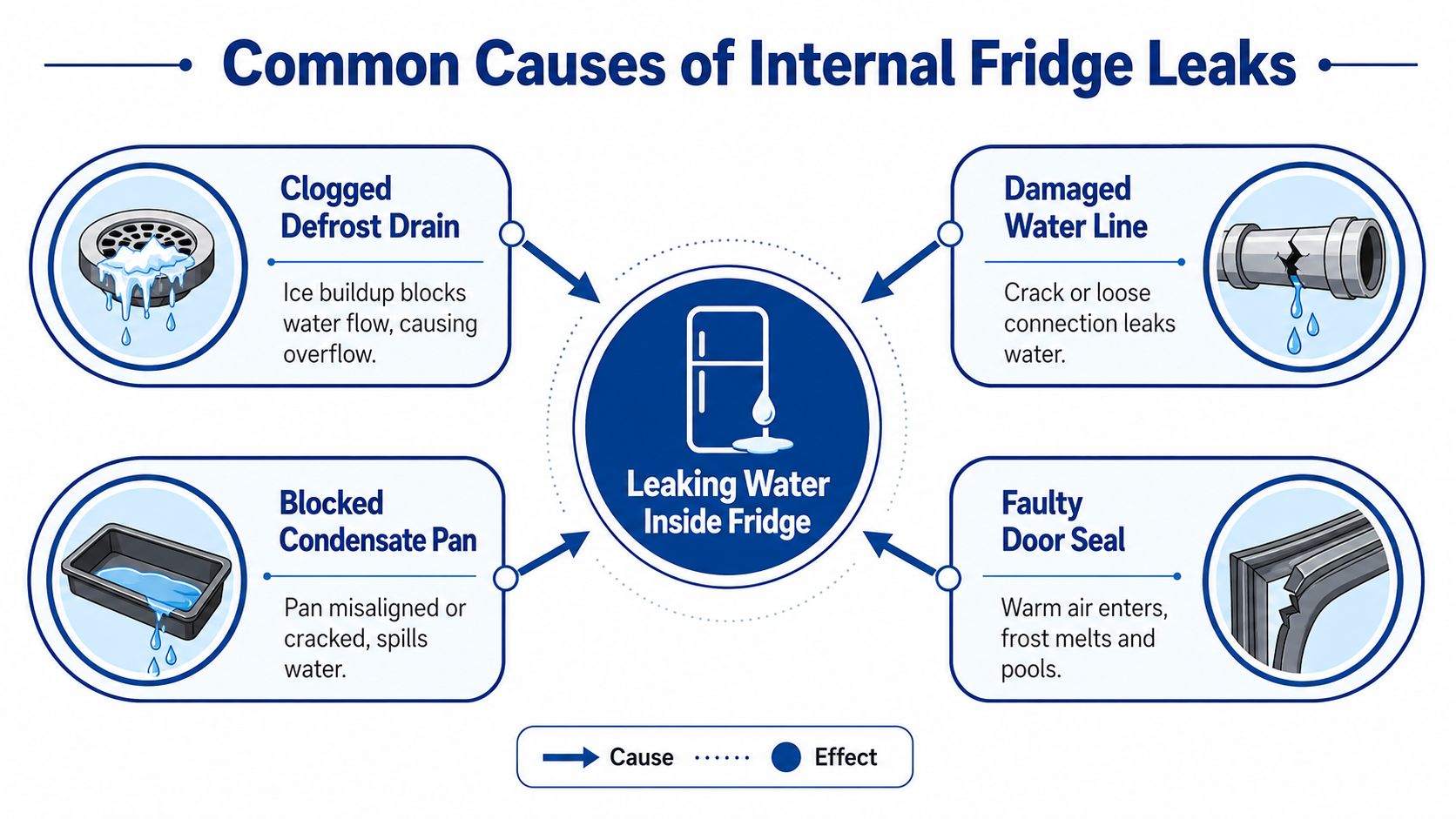
Worn door gasket: A hardened, torn, or poorly seated gasket lets warm humid air enter. That air condenses on cold surfaces and may overwhelm normal drainage. Beading on shelves, frost near the door frame, or moisture after frequent door opening supports this diagnosis.
Drain pan or defrost-control problem: A cracked, shifted, or blocked pan can spill below the appliance. A malfunctioning defrost thermostat or related control can create abnormal frost and repeated overflow. Manufacturer guidance also identifies a clogged or frozen internal drain channel as a cause of water entering the refrigerator or escaping from the bottom, as explained in Samsung's drain-tray guidance.
How to Diagnose the Real Source of the Leak
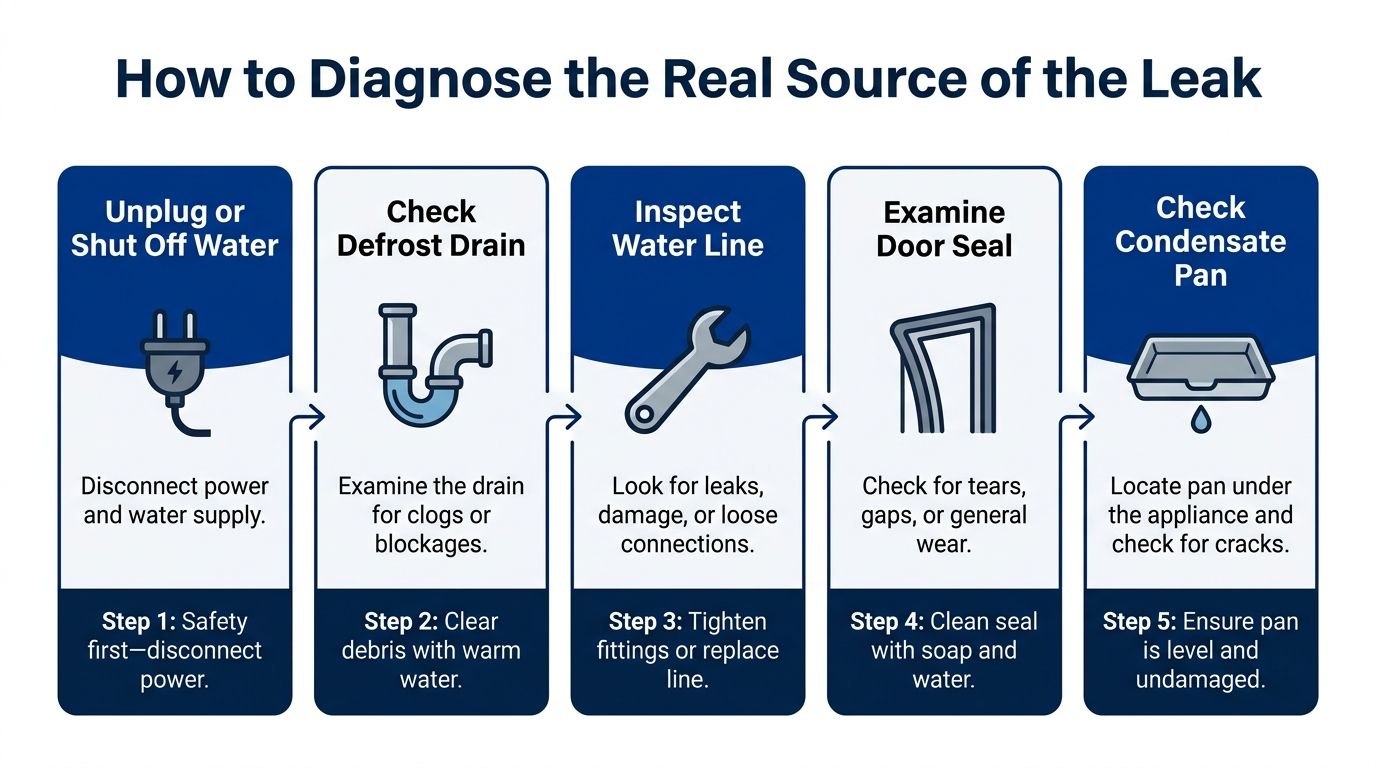
Start safely. Unplug the refrigerator before reaching into drain areas or removing panels. If the unit has an accessible water shutoff, close it as well, particularly when the water is continuous rather than limited to a puddle after defrosting.
Follow the moisture
Remove food, shelves, and drawers so you can see the cabinet clearly. Dry every surface, including the back wall, drawer tracks, filter area, and bottom panel. A dry starting point makes it much easier to identify where moisture returns.
Check the defrost drain opening at the rear of the refrigerator or freezer compartment. Warm water and a turkey baster can help flush a superficial blockage, but don't force tools into a concealed passage or use sharp objects that could puncture tubing. If the drain remains blocked or freezes again, stop and arrange service.
Isolate the water system
Inspect the rear supply line, shutoff connection, inlet valve, and tubing that enters the appliance. Look for kinks, mineral deposits, loose fittings, and cracks. On a dispenser model, dry the filter head and run 2 to 3 gallons of water into a container, then recheck the filter housing, inlet valve, and door tubing for renewed moisture, following Beko's dispenser-leak testing guidance.
Test the gasket by closing the door on a dollar bill at several points. Resistance suggests contact, while a section that releases the bill easily deserves closer inspection. Finally, pull the appliance forward carefully and check the drain pan for cracks, overflow, or improper positioning.
Take photos of the wet area, fittings, and flooring. If the issue involves a clogged kitchen drain or nearby plumbing, this drain-cleaning resource may help you identify when the refrigerator is only part of a larger kitchen plumbing problem.
Condensation vs a True Internal Leak
Not every puddle means a failed refrigerator part. During humid Macomb County summers, every door opening admits moisture. That moisture can bead on the back wall, collect near drawers, and disappear after the appliance completes its cooling cycle.
A true leak behaves differently. It produces standing water, returns after the compartment has been dried, or appears in connection with dispensing water, making ice, or a defrost cycle. The comparison below helps separate monitoring from repair.
| Symptom | Condensation | True Internal Leak |
|---|---|---|
| Light moisture | Beading on walls or shelves, often after frequent door opening | Water returns in a defined area |
| Location | Near cold surfaces, drawers, or the back wall | Around the defrost drain, filter, dispenser, or supply tubing |
| Pattern | Improves when door use and humidity decrease | Reappears even when the refrigerator isn't being opened often |
| Amount | Dampness that dries during normal cycling | Standing water or a recurring puddle |
| Floor impact | Usually limited to the cabinet interior | May reach the drain pan, flooring, toe-kick, or wall |
Check that food packages aren't blocking interior air vents and that the door closes fully. If the moisture is occasional and disappears after drying, monitor it. If water pools repeatedly, isolate the water supply and inspect the drain path rather than assuming the problem is ordinary humidity.
Hidden Water Damage and Insurance Risks
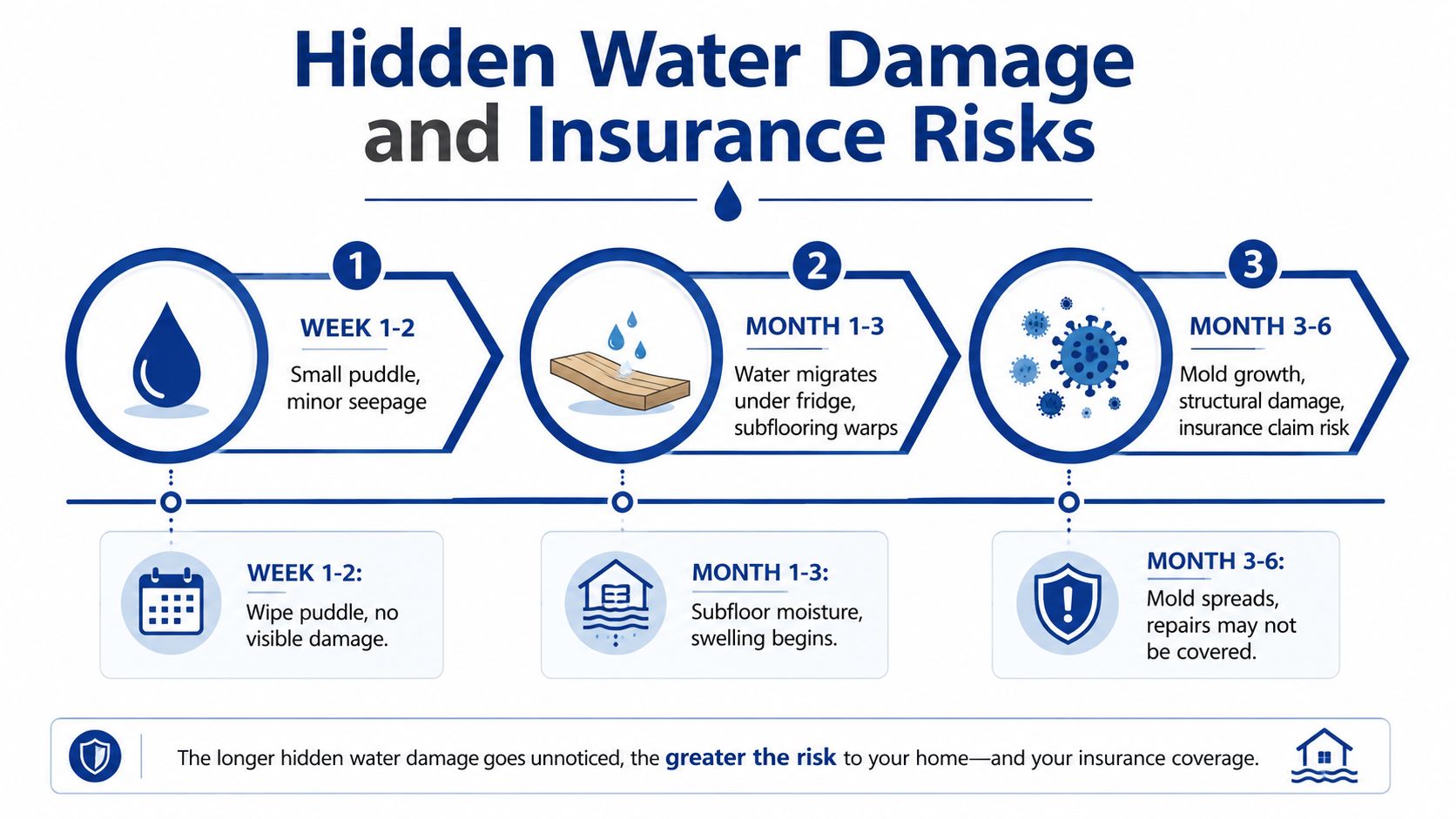
A slow refrigerator leak can look too minor to matter. A homeowner wipes up a small puddle, puts the food back, and continues using the appliance. Meanwhile, water can move beneath the refrigerator, into flooring, behind baseboards, or into cabinetry where the original source becomes difficult to see.
The larger context is significant. One industry summary estimates that household water damage costs up to $20 billion annually in the United States, and another reports an average water-damage insurance claim of $11,098, figures discussed in Killarney Metals' water-damage overview. Those amounts don't predict what your refrigerator leak will cost, but they show why secondary damage can outweigh the appliance repair.
Insurance coverage also depends on timing and cause. Independent insurance guidance generally distinguishes sudden, accidental appliance leaks from gradual seepage, deferred maintenance, and long-term moisture damage. A slow leak that has been recurring and left undocumented may create coverage questions.
Keep a simple record of when you noticed the water, what you dried, whether you shut off the supply, and what a technician finds. Photograph the refrigerator, connections, flooring, swollen trim, and any visible staining. If another fixture is leaking, the same documentation habit applies, and this leaking-faucet guidance explains why a small recurring leak shouldn't be ignored.
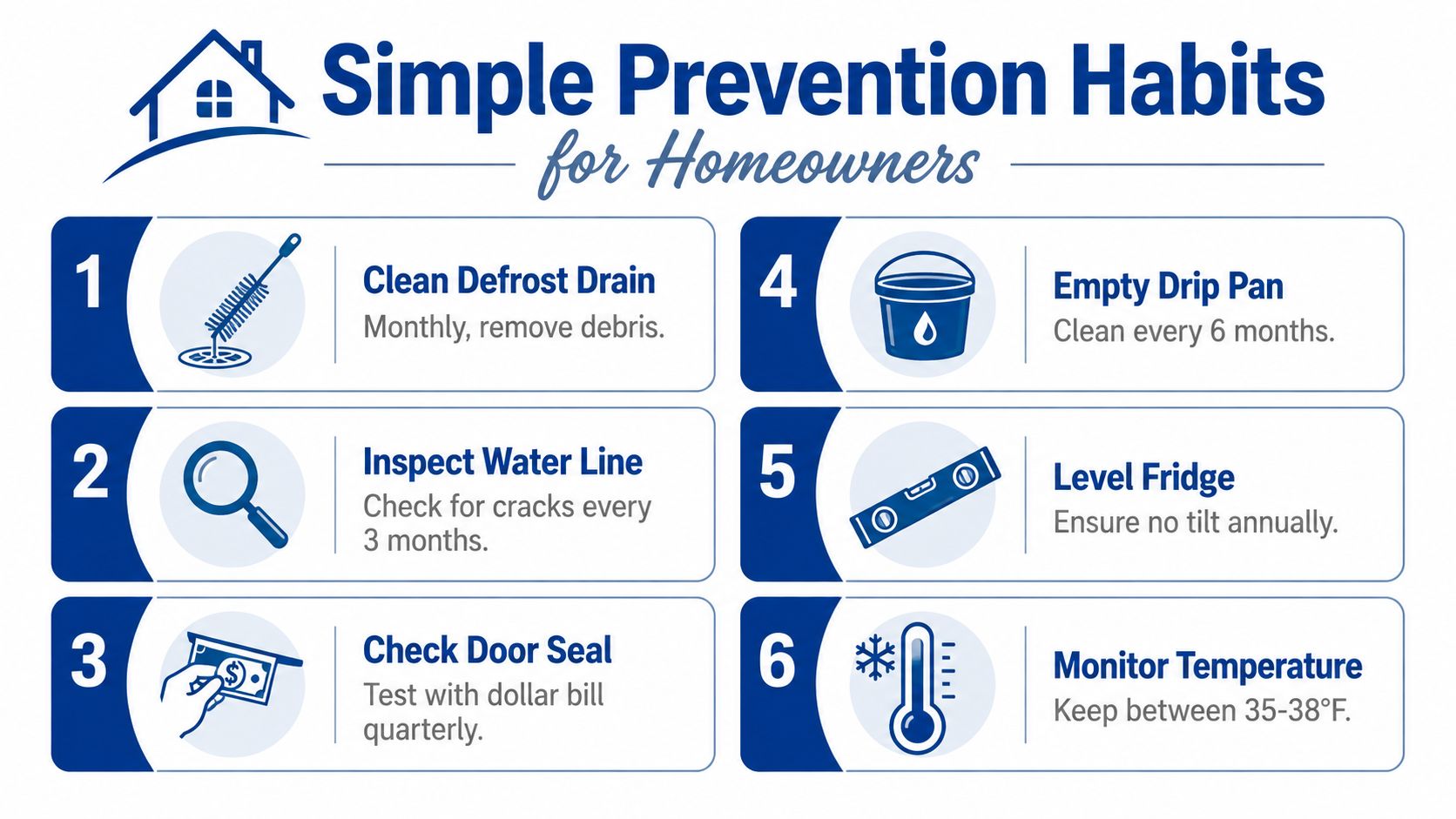
Simple Prevention Habits for Homeowners
A short maintenance routine can catch trouble before it reaches the floor. Use your refrigerator manual for component locations, and avoid forcing parts that aren't designed for homeowner removal.
- Clean the defrost drain: Flush it with warm water and use a flexible brush to remove accessible debris. The supplied maintenance checklist calls for monthly cleaning.
- Inspect the water line: Look for cracks and stressed connections every three months, especially after moving or leveling the appliance.
- Check the door seal: Perform the dollar-bill test quarterly and clean the gasket with mild soapy water.
- Empty the drip pan: Inspect and clean it every six months, checking for cracks and proper seating.
- Level the refrigerator: Check the appliance annually so water can flow toward the drain pan as intended.
- Monitor temperature: The supplied checklist specifies 35 to 38°F for the refrigerator compartment. Verify the setting with the manufacturer's instructions.
Don't overpack shelves or block air vents. Keep produce and containers from touching the rear wall, where moisture and ice are more likely to collect.
When to Call a Licensed Plumber
DIY troubleshooting makes sense when the water stops after you clear an accessible drain, reseat a filter, or correct a gasket problem. Monitor the area afterward, because a temporary improvement isn't the same as a confirmed repair.
Call a licensed plumber when water keeps returning after the basic checks, the supply connection drips continuously, or the source appears to be behind the wall or beneath the floor. A professional can pressure-test the refrigerator supply, inspect shutoff valves and concealed fittings, and determine whether the leak belongs to the appliance or the home's plumbing.
Don't keep investigating if water is near electrical components, wiring, or the compressor. Soft flooring, stained baseboards, or a musty odor also justify prompt service. For a broader explanation of what affects professional leak investigations, review this leak-detection service guide.
Call Jay's Plumbing and sewer Now @ 586-634-3450. Jays Plumbing and Sewer provides residential and commercial leak detection, water-line repair, drain cleaning, and emergency plumbing service across Macomb and Oakland County. Visit Jays Plumbing and Sewer to schedule an inspection before a recurring refrigerator leak reaches your flooring or cabinets.
