

You hear the toilet running after everyone has gone to bed. A few minutes later, you find water around the base, or the tank level is creeping toward the overflow tube. In a Fraser, Warren, Sterling Heights, or other Macomb County home, that sound usually means a small tank component has stopped controlling the refill cycle, not that the toilet has become a mystery flood.
A running tank can still waste water quickly, and a failed supply line, fill valve assembly, toilet flange, or backup can cause substantial property damage. A water-damage study cited by the Connecticut Insurance Department found that toilet-related losses typically cost $2,000 to $10,000 per incident, while 78% were tied to those types of toilet-system failures. If water is spreading across the floor, Call Jay's Plumbing and sewer Now @ 586-634-3450.
Table of Contents
- Why Your Toilet Tank Is Overflowing Right Now
- What to Do Immediately When Water Keeps Running
- The Most Common Reasons a Toilet Tank Overflows
- How to Troubleshoot and Fix an Overfilling Tank
- When an Overflow Means More Than a Tank Problem
- Prevent Future Overflows and Keep Your Bathroom Dry
Why Your Toilet Tank Is Overflowing Right Now
You hear water running, lift the lid, and see the tank level climbing. A true tank overflow usually begins with the fill valve. Its float may be stuck, adjusted too high, or unable to signal the valve to close. Excess water then enters the overflow tube and flows into the bowl. If that route cannot handle the flow, water spills onto the bathroom floor.
The overflow tube is a built-in safety path. It sends extra tank water into the bowl when the fill valve fails. The small refill tube also directs some water through the overflow tube during a normal refill, so water entering the tube is not automatically a defect. Continuous flow after the tank should have shut off is the warning sign.
In Michigan homes, unattended water can create larger problems. Cold weather may affect exposed plumbing, and heavy rain can reveal weaknesses in a drain or sewer system. A bathroom over finished space deserves quick attention because a leak can reach flooring, subfloors, or the ceiling below before anyone hears it.
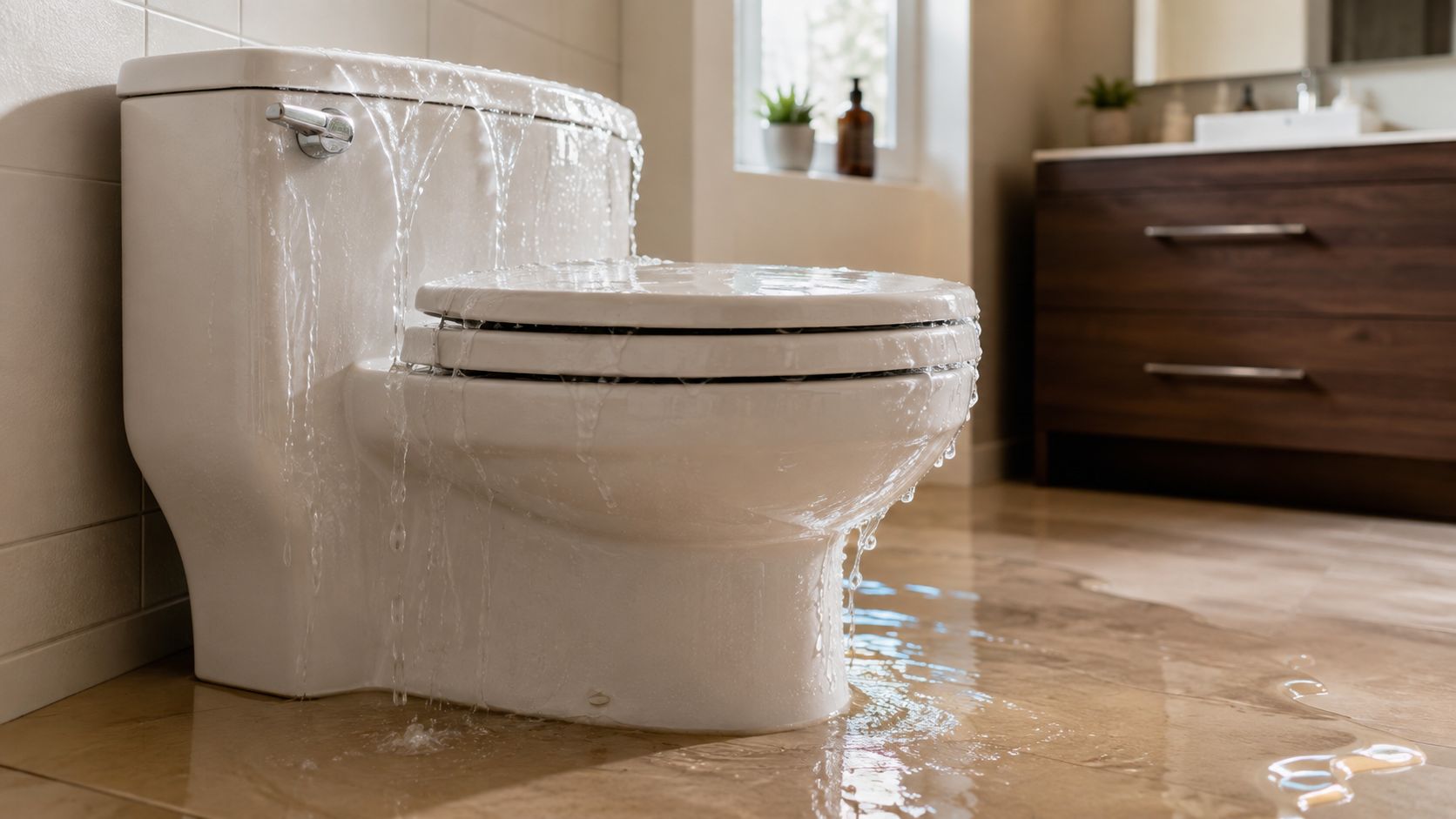
What the water pattern tells you
Trace the water before replacing parts. Water moving steadily from the tank into the bowl points to the fill valve, float, refill tube, or overflow passage. Water rising in the bowl after a flush points more toward a toilet trap, branch drain, or sewer restriction. That distinction matters. A tank adjustment will not clear a blocked drain.
Do not dismiss a running toilet because the sound seems minor. The municipal toilet-water-loss guide reports that a quarter-inch tube can waste 7,200 to 8,640 gallons per day when a float is set too high and water runs down the overflow tube. Stop the supply, contain the water, and then determine whether the failure is confined to the tank or requires drain and sewer inspection.
What to Do Immediately When Water Keeps Running
Start with damage control, not diagnosis. If the bowl or floor is filling, don't flush again. Remove the tank lid carefully and watch the water level without putting your hands near electrical equipment or standing water connected to other fixtures.
If the tank is still filling, raise or steady the float gently. Sometimes a float cup has caught against the tank wall, or an older float arm has shifted. This may stop the valve long enough for you to shut off the supply, but it isn't proof that the underlying part is reliable.
Shut off the supply
Find the small oval or angle-stop valve on the wall or floor behind the toilet. Turn it clockwise until the water stops. Don't force a valve that feels seized, because an old shutoff can leak at the stem or connection. If the valve won't close and water is spreading, call an emergency plumber rather than dismantling the supply connection.
- Protect the floor: Move rugs and nearby items away from the water, then use towels to limit spreading.
- Keep the lid secure: Set the tank lid somewhere stable so it won't crack or fall.
- Avoid repeated flushing: A flush can add more water to a bowl that already has a drain restriction.
- Watch nearby fixtures: Note whether a sink, tub, or floor drain is also slow or backing up.
Practical rule: Shut off the toilet's water before trying to make a permanent adjustment. Stopping the flow protects the room while you figure out what failed.
The overflow tube is helpful, but it isn't permission to ignore a continuously running toilet. For related symptoms, see this guide to a toilet that flushes on its own.
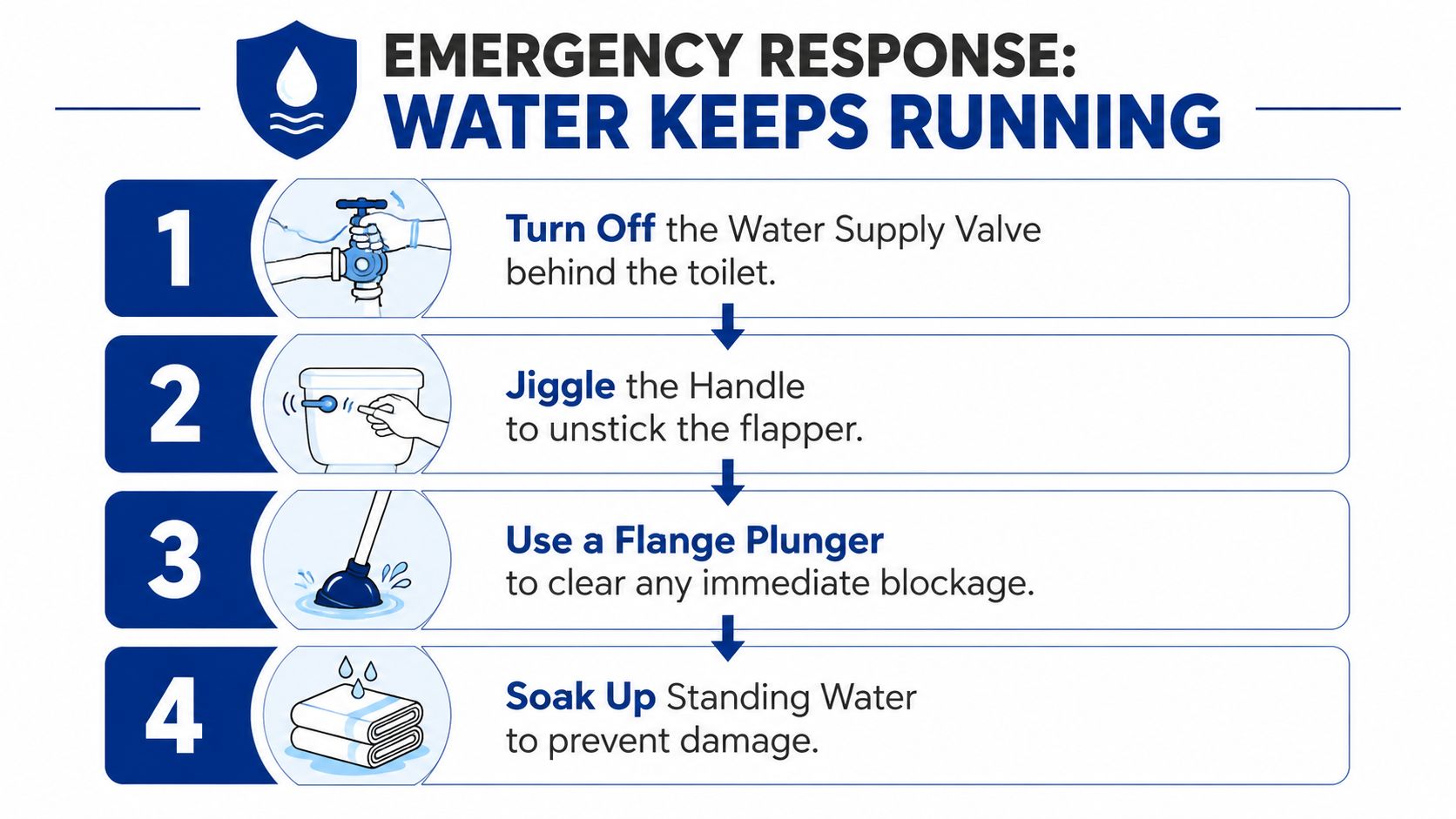
Call Jay's Plumbing and sewer Now @ 586-634-3450 for 24/7 emergency plumbing help if the shutoff won't work, water has reached the floor beneath the toilet, or the toilet continues overflowing after the supply is restored.
The Most Common Reasons a Toilet Tank Overflows
Three internal failures account for most tank-level problems. Each one affects the refill cycle differently, so the sound and water movement can help identify the likely cause before anyone replaces a part.
A float that's too high or stuck
The float rises as the tank fills. When it reaches its set position, it tells the fill valve to shut off. If the float is adjusted too high, rubs against the tank wall, becomes damaged, or fails to move freely, the valve may continue supplying water. You may see water running down the overflow tube even though the toilet hasn't been flushed recently.
A fill valve that doesn't close
A fill valve can hiss, whistle, or run continuously when its internal seal is worn or contaminated. The float may move correctly, but the valve still lets water pass. The mechanical relationship matters: the float and fill valve work together, and a fault in either one can keep the tank filling.
A refill tube or overflow passage problem
The refill tube should be positioned so it sends water into the overflow opening without being pushed too far down into the tube. An incorrectly placed tube can create siphoning or interfere with normal refill behavior. Mineral deposits, debris, or a damaged overflow tube can also restrict the intended path.
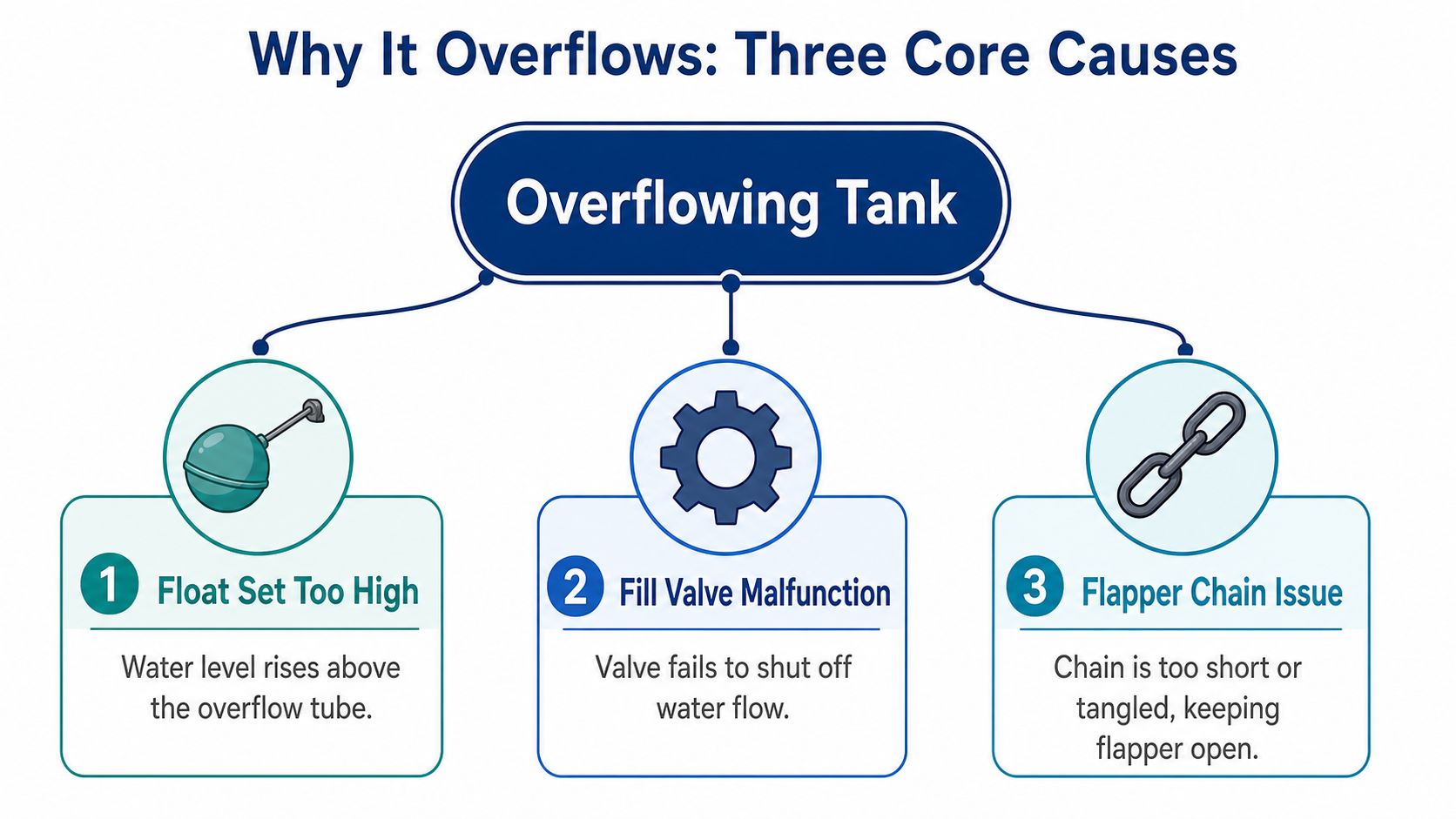
The useful baseline is water level geometry. The tank should stop filling below the top of the overflow tube. If water climbs above that point, the float or fill valve isn't shutting off correctly, and the bowl may receive a constant stream.
A flapper can contribute to a running toilet by allowing tank water to leak into the bowl. That issue commonly causes repeated refilling rather than a tank spilling over the rim, so don't confuse a worn flapper with a failed fill valve. The right repair depends on whether water is escaping from the tank through the bottom or entering the bowl from the overflow path.
How to Troubleshoot and Fix an Overfilling Tank
Once the water is shut off, basic inspection is reasonable if you can work comfortably and avoid forcing old parts. Keep a towel nearby, make adjustments gradually, and restore the supply only long enough to observe a complete fill cycle.
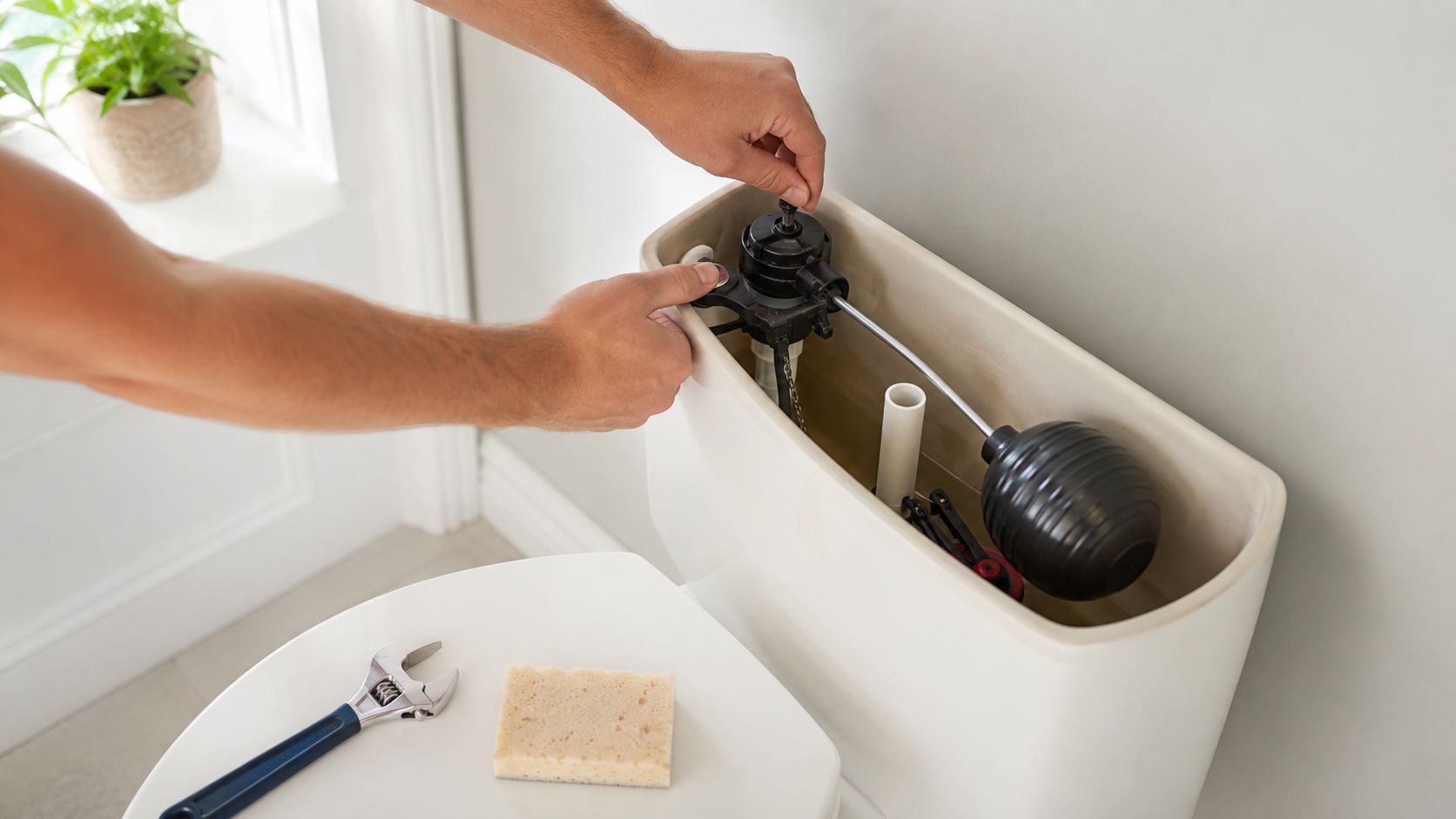
Check the water level and float movement
Turn the supply on slightly and watch the tank. The normal water level should stop about 1 inch below the top of the overflow tube. If the water rises above that point, the float or fill valve isn't shutting off correctly, as explained in this toilet overfilling reference.
Move the float gently through its range. It should rise and fall without catching on the tank wall, valve body, chain, or refill tube. On an adjustable valve, use the built-in screw or clip to lower the shutoff point a little, then run another fill cycle. Don't bend a plastic component or force a corroded adjustment screw.
Inspect the fill valve and refill tube
Listen during the fill cycle. A valve that keeps hissing after the float reaches its position may be worn rather than misadjusted. If cleaning or a small adjustment doesn't produce a firm shutoff, replacement is usually more dependable than repeatedly changing the float setting.
The refill tube should be clipped above the overflow opening, not jammed deep inside it. The overflow must remain open and able to carry excess water into the bowl. A technician also checks that the valve shuts off at operating capacity and that the overflow discharges back through the fixture rather than into an unintended drain connection. These checks align with EPA WaterSense toilet performance criteria, which require tank-type toilets to prevent leakage or water escape through the overflow.
Here is a visual demonstration of the internal mechanism and adjustment process:
Know when adjustment has failed
If the tank still rises after adjustment, the valve may have a worn diaphragm, damaged float, restricted passage, or a supply-side pressure issue. Replacing a flapper won't correct a fill valve that never closes, and lowering the float won't correct a valve that leaks internally.
If the toilet rocks, the supply connection drips, the overflow tube is cracked, or water appears between the tank and bowl, stop experimenting and arrange service. A toilet leak between the tank and bowl requires a different inspection from a simple float adjustment.
When an Overflow Means More Than a Tank Problem
A tank failure usually sends a steady stream into the bowl while the bowl drains normally. A drain or sewer restriction changes the pattern. The bowl rises during or after flushing, drains slowly, gurgles, or pushes water into another fixture.
Heavy rain, tree roots, aging lines, and shifting soil can affect sewer performance in Southeast Michigan. If the toilet overflows when a sink, tub, or washing machine runs, replacing the fill valve may miss the problem. Several slow drains, sewage odor, a backed-up floor drain, or repeated bowl overflows indicate a branch drain or main sewer issue.
Compare the repair paths
| What you observe | More likely direction | Appropriate response |
|---|---|---|
| Water enters the bowl continuously from the tank | Float or fill-valve failure | Shut off the supply, inspect the tank, then adjust or replace the failed mechanism |
| Bowl rises after flushing and drains slowly | Toilet trap or branch blockage | Stop flushing and use appropriate drain service if a basic plunger doesn't restore flow |
| Several fixtures drain slowly or gurgle | Main drain or sewer restriction | Request professional diagnosis, potentially including a camera inspection |
| Water appears around the base or below the bathroom | Fixture seal, supply connection, or hidden leak | Use leak detection and inspect the toilet connection and nearby piping |
Water loss can become expensive before the floor shows damage. As noted in the municipal guide referenced earlier, an average leaky toilet wastes about 200 gallons per day. Slow leaks may waste around 30 gallons per day, medium leaks around 250 gallons per day, and constant-flow failures can reach up to 4,000 gallons per day. A running toilet therefore deserves prompt attention, especially in a rental or vacant property.
The repair path depends on where the water is moving. A tank mechanism failure calls for shutoff, adjustment, or part replacement. A bowl that backs up with other fixtures requires drain testing, and possibly a camera inspection, before anyone assumes the tank is at fault.
Jays Plumbing and Sewer can perform drain cleaning, sewer repair, leak detection, and video camera inspection when symptoms extend beyond the tank. For a suspected main-line problem, review the guidance on main sewer line repair.
Prevent Future Overflows and Keep Your Bathroom Dry
Prevention starts with noticing small changes. A toilet that runs intermittently, refills after nobody has flushed, or stops at a visibly higher level deserves attention before the float or valve fails completely.
Keep the tank level roughly 1 inch below the top of the overflow tube. Guidance varies from about a half-inch to 1 inch, with some service recommendations using approximately three-quarters of an inch. The important point is that the valve must shut off reliably below the overflow opening, as summarized in this toilet adjustment guidance.
A practical Michigan checklist
- Inspect before winter: Check exposed supply piping and shutoff valves before Michigan's freezing weather arrives.
- Watch the basement: During heavy rain, pay attention to floor drains, sump pumps, and any sewage backup warning signs.
- Check the tank: Look for a stuck float, crusted fill-valve components, a loose refill tube, or a water level that keeps climbing.
- Protect vacant properties: Property managers should have toilets checked after vacancies, tenant turnover, and extended cold snaps.
- Escalate recurring failures: If the same toilet needs repeated adjustments, replacing the failed mechanism may be more sensible than temporary resets.
A professional can test the full fill cycle, check the shutoff and supply connection, distinguish tank flow from drain backup, and keep the work area clean with shoe covers and drop cloths. Jays Plumbing and Sewer provides residential and commercial plumbing service across Macomb and Oakland County, including bathroom plumbing, kitchen plumbing, drain cleaning, sewer repair, water heater repair and replacement, pipe repair, leak detection, garbage disposal repair, and sump pump repair. Call Jay's Plumbing and sewer Now @ 586-634-3450 to schedule service or request a free estimate.
For a toilet tank that won't stop filling, Jays Plumbing and Sewer can inspect the tank mechanism, shutoff, fixture connections, and nearby drain system instead of guessing at a part. Visit Jays Plumbing and Sewer to request residential or commercial plumbing service, or call for help before a running toilet becomes floor damage or a larger sewer problem.
