

A Michigan storm can turn a quiet basement into a noisy one. You're making coffee in Fraser, Sterling Heights, or Clinton Township, and the sump pump starts. Then it starts again a few minutes later. During heavy rain, that sound can be completely normal, but a pump that runs constantly, starts too often, or operates when the weather is dry needs a closer look.
So, how often should a sump pump run? There isn't one schedule that fits every home. The right answer depends on how quickly water enters the pit, whether the pump shuts off properly, and whether the discharge line carries water away from the foundation.
Table of Contents
- What Normal Sump Pump Operation Really Looks Like
- How Often Should a Sump Pump Run in Different Conditions
- Factors That Change How Frequently Your Pump Cycles
- Healthy Cycling Versus Warning Signs You Should Not Ignore
- Simple Checks to Do Before You Call a Plumber
- Backup Power and Seasonal Maintenance for Michigan Homes
- Keep Your Basement Dry With Help From Jay's Plumbing and Sewer
What Normal Sump Pump Operation Really Looks Like
After a heavy Michigan rain, a homeowner in Macomb County may hear the sump pump start repeatedly through the evening. During a dry stretch, that same pump may stay quiet for hours or days. Both patterns can be normal because the pump responds to the water level in the pit, not to a preset schedule. A sump pump normally activates when water rises and may stay idle during dry conditions.
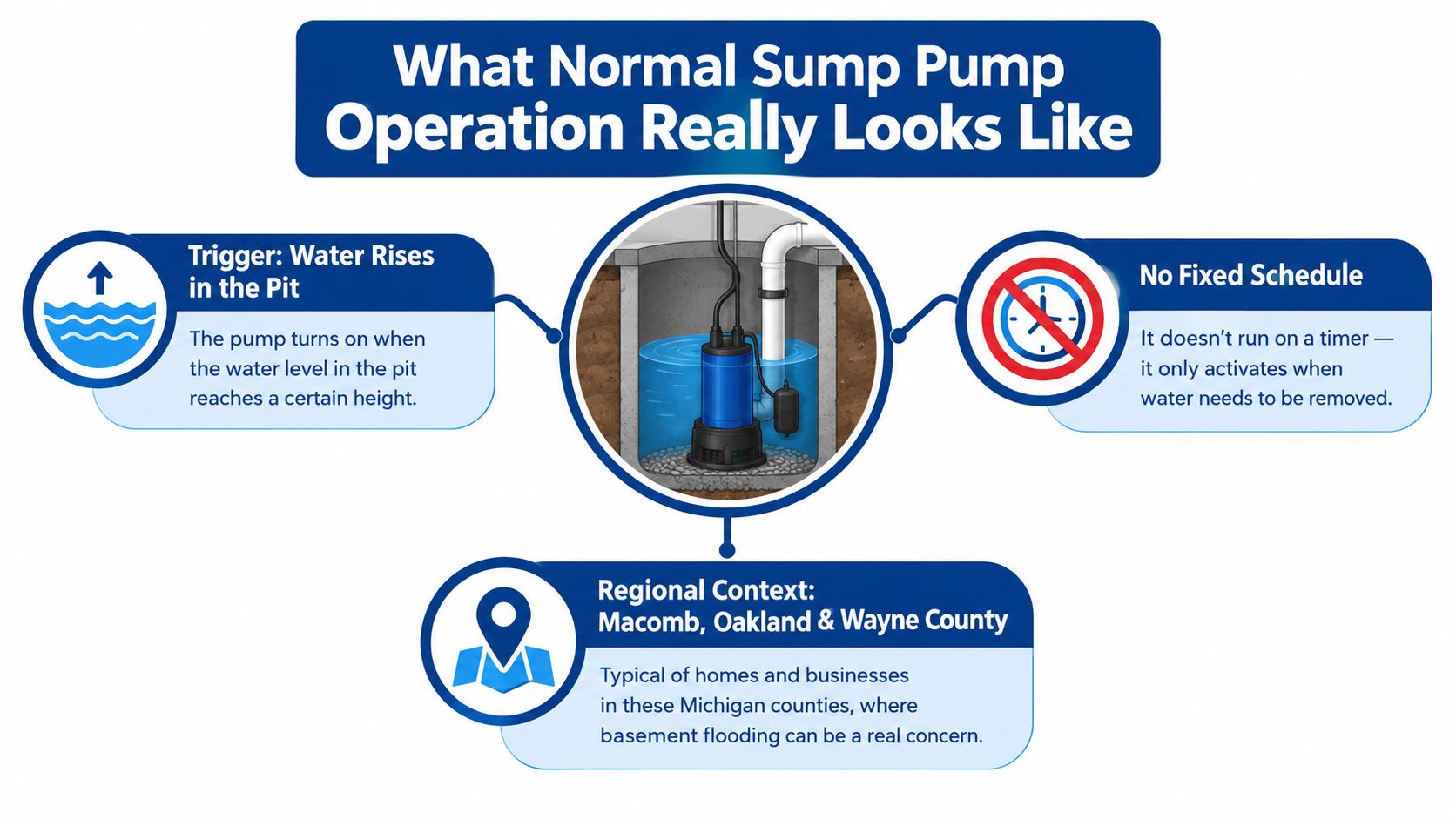
A healthy cycle follows a simple sequence. Water rises, the float or sensor activates the pump, the pump lowers the water, and the motor shuts off. During heavier inflow, healthy run times are often described as roughly 10 to 30 seconds per cycle, although the actual timing depends on the pit, pump capacity, and discharge setup.
Why intermittent operation matters
A sump pump provides intermittent protection. The motor needs an off period to cool before the next activation. One manufacturer recommends at least 1 minute of operation per cycle, followed by at least 5 minutes of rest. The same guidance warns that 15 to 20 starts per hour can overheat the pump and its starting components. Zoeller explains the recommended cycle and rest pattern.
Practical rule: Count the rest periods, not only the starts. A pump that rests at least 5 minutes between cycles remains within that manufacturer's guidance, even during a storm.
Fraser and Shelby Township homes can see different cycle patterns because of heavy rain, spring thaw, saturated ground, clay-heavy soil, older drainage, or finished basements. Nearby homes may have different pits, pumps, and discharge routes, so a neighbor's schedule cannot serve as your benchmark. Track whether your pump lowers the pit and reaches a real off period. That pattern helps separate normal storm response from a drainage problem that may also reduce battery backup endurance during a long Michigan storm.
What homeowners should listen for
A normal cycle has a distinct start and stop. The pump should not grind, rattle, struggle, or switch on and off almost immediately. If the water level drops and the motor stops cleanly, the system is responding as intended.
Constant running needs investigation. Possible causes include a blocked discharge, a weak pump, a stuck float, water returning through the check valve, or unusually high groundwater entering the pit.
How Often Should a Sump Pump Run in Different Conditions
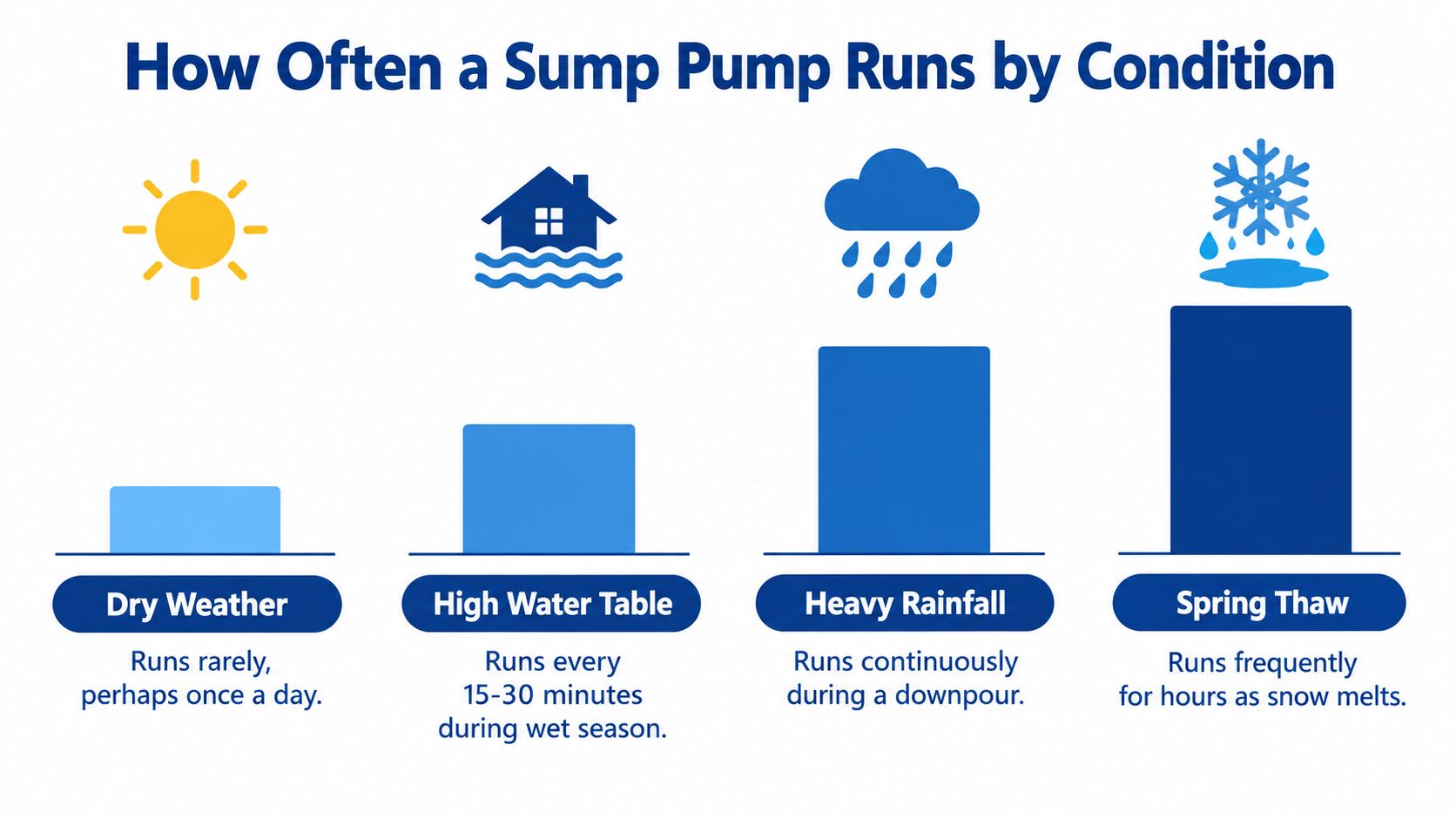
Water inflow sets the schedule. Little water means long rests, while heavy inflow creates shorter rests and more frequent starts.
Dry weather
During a dry stretch, a healthy pump may remain off. An occasional start can still come from groundwater movement, drainage left by an earlier storm, or a water source that is not obvious inside the basement.
Repeated starts under clear skies deserve attention. Check whether the pit level falls and whether the pump gets a genuine break between cycles. A single start has a different meaning from a pattern that continues all day.
A high water table
A naturally high water table can keep a pump active without visible rainfall. One published reference describes cycling every 10 to 30 minutes in these homes, depending on local conditions. That range is presented as a possible pattern rather than a universal target.
Wet seasons can produce the same pattern in Troy, Macomb, and other areas where soil holds water around the foundation. Frequent cycling can still be normal if the pump lowers the pit, shuts off cleanly, and rests before the next inflow.
Heavy rain and spring thaw
Heavy rain or spring thaw can raise inflow quickly. Some homes may see the pump operate every few minutes during the storm, especially while frozen ground limits absorption or melting snow drains toward the foundation.
The duration matters as much as the frequency. Several hours of frequent cycling during a storm may fit the conditions. The same pattern after the ground dries points toward a possible drainage, discharge, float, or pump problem and can shorten battery backup endurance during a long Michigan storm.
Use the off period as your first test
Watch the pump for a short period and count both starts and rest intervals. A cycle lasting about a minute, followed by several minutes of rest, is closer to the manufacturer's recommended operating pattern than repeated starts with almost no pause.
An off period also helps separate normal response from hidden trouble. If the pit level drops and the motor stops, the system is handling incoming water. If the pump keeps starting almost immediately, water may be returning or the discharge may not be clearing properly.
Factors That Change How Frequently Your Pump Cycles
Two homes on the same street can have very different sump pump activity. The basement in Sterling Heights may stay dry while a nearby home in Clinton Township cycles often because the properties have different soil, foundation drainage, pit volume, and discharge layouts.
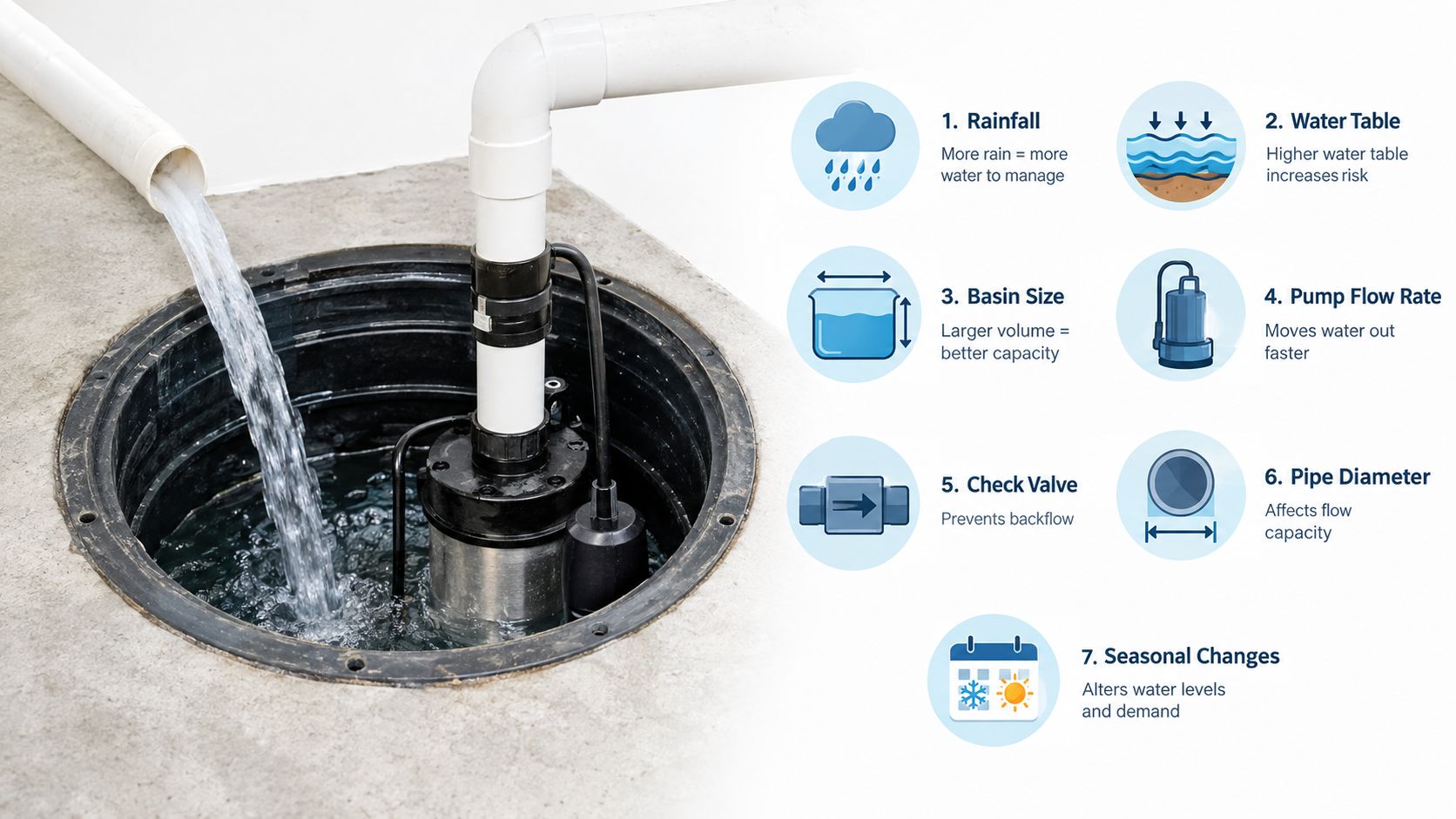
The seven main influences
- Rainfall intensity: A brief shower may have little effect, while sustained heavy rain can quickly raise groundwater around the foundation.
- Groundwater level: A high water table can feed the pit even when the sky is clear.
- Basin size: A larger basin may hold more water before the float activates, while a smaller basin can fill sooner.
- Pump flow rate: A pump that moves water efficiently may empty the pit faster, but capacity must match the actual inflow and discharge conditions.
- Discharge head height: The pump works harder when it must lift water farther or higher before releasing it.
- Soil type: Clay-heavy soil tends to hold water longer than more freely draining soil. That difference matters around foundations in Southeast Michigan.
- Household leaks: A leaking water service, fixture, or drain can add water to the area around the pit or create a misleading pattern. Leak detection can help separate a plumbing leak from groundwater.
Why the discharge path matters
A pump can be electrically sound and still struggle if the discharge pipe is blocked, kinked, disconnected, or allowing water to return. Frozen ground and ice at the outlet can make winter drainage less effective, while poor grading can send discharged water back toward the foundation.
For homeowners comparing equipment, the difference between a pedestal and submersible sump pump can affect access, installation, and maintenance. The pump style matters, but it doesn't replace checking the complete drainage path.
Keep a simple operating log
A short log makes a confusing pattern easier to interpret. Record:
- Weather: Note heavy rain, snowmelt, or dry conditions.
- Starts: Count how often the pump activates.
- Runtime: Estimate how long each cycle lasts.
- Water level: Observe whether the pit drops after pumping.
- Discharge: Check whether water exits away from the home.
- Alarms: Record any backup or high-water alerts.
That record helps a plumber distinguish normal storm response from a stuck float, failed check valve, undersized pump, or persistent drainage issue.
Healthy Cycling Versus Warning Signs You Should Not Ignore
A sump pump may run often during a Michigan downpour and still be working properly. The useful question is whether each cycle removes water, stops cleanly, and leaves enough time for the motor to cool. Frequency becomes a warning sign when it no longer matches the weather or the pump's results.
As noted earlier, manufacturer guidance gives a cycle enough runtime to move water and enough recovery time before starting again. Those figures come from the manufacturer's cycle guidance. A separate practical benchmark recommends staying around 6 to 10 starts per hour to reduce stress on the system. The start-frequency guidance is explained by Urban Plumbing. Use these points as context, not as a substitute for observing the pit and discharge.
Normal Cycling vs Problem Cycling at a Glance
| Observation | Normal Pattern | Possible Problem |
|---|---|---|
| Weather | Activity increases during heavy rain or thaw | Starts continue in dry weather, suggesting groundwater, a leak, or drainage returning to the pit |
| Runtime | The pump runs long enough to lower the pit, then shuts off | The pump runs without lowering the water, which may indicate a blocked discharge, weak pump, or restricted intake |
| Rest period | The motor pauses clearly between cycles | Rapid starts may point to a stuck float, a check valve allowing water to fall back, or a basin that refills too quickly |
| Sound | A steady motor sound ends with a clean stop | Grinding, rattling, humming, or straining can indicate worn parts, an obstruction, or a motor problem |
| Water level | Water drops after activation | Water stays high or rises despite pumping, suggesting limited capacity, blockage, or incoming water beyond the pump's ability |
| Discharge | Water exits away from the foundation | Water returns, backs up, or stops at the outlet, sending the same water back toward the pit |
Every few minutes during a storm can be healthy if the pump shuts off and the pit level falls. The concern grows when frequent cycling continues after the weather clears, or when the pump runs continuously without controlling the water.
Repeated brief starts also reduce the time available for battery backup during a storm. If the primary pump keeps cycling because of a drainage or mechanical fault, a backup system may use its stored power sooner than expected.
Arrange prompt service if the pump will not shut off, the water level keeps rising, the discharge is blocked, or power fails during wet conditions. A plumber can assess the float, check valve, basin, pump capacity, and discharge route as one system instead of replacing parts at random.
Simple Checks to Do Before You Call a Plumber
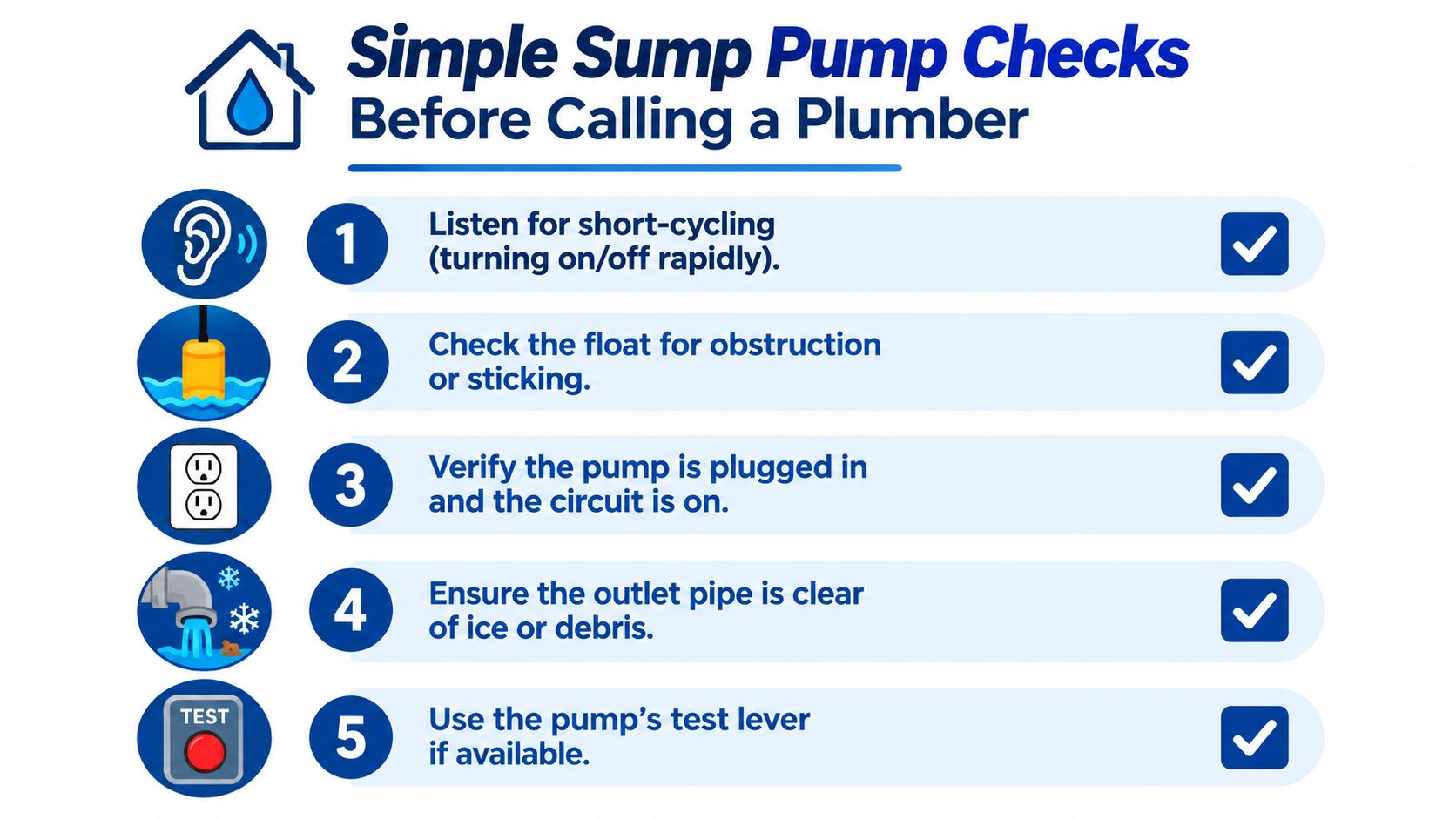
You can gather useful information without opening the motor, cutting pipe, or working on electrical components. These checks are observational and should stop if water is near electrical equipment or if the system appears unsafe.
Listen before touching anything
Stand nearby during a cycle. Note whether the motor starts cleanly, runs long enough to lower the pit, and stops. Repeated rapid starts, a humming sound without pumping, or grinding and rattling are useful details to report.
Check the float's movement
With the pump off and the area safe, look for storage items, cords, sediment, or other obstructions interfering with the float. A float that sticks can prevent the pump from starting or stopping at the proper level. Don't force it, bend it, or reach into moving equipment.
Confirm power without attempting electrical repairs
Check whether the pump is plugged in and whether the circuit appears to be on. If a breaker trips repeatedly, leave the electrical diagnosis to a qualified professional. Water and electricity create a dangerous combination, especially in a basement.
Follow the discharge line
Look for visible ice, debris, disconnection, sharp kinks, or water collecting near the foundation outlet. Don't dismantle the check valve or discharge piping as a first step. A blocked line may make a working pump appear to be failing.
Observe the water level
Watch whether the pit level falls after the pump starts. You can also review how to check whether a sump pump works for a structured inspection approach.
If these observations point to a stuck float, failed check valve, blocked discharge, leak, or weak pump, schedule service. Sump pump repair may solve the issue, but persistent water entry can require leak detection, drainage work, or sewer repair rather than a pump replacement alone.
Backup Power and Seasonal Maintenance for Michigan Homes
A battery backup changes the question from “Is this cycle normal?” to “Can the backup support this workload through the outage?” Frequent starts use more stored power than a quiet system with long rest periods. During heavy rain, one guide estimates that a 4,096 Wh power station may provide about 5 hours of operation, while another guide estimates a 75 to 100 Ah deep-cycle battery may last about 3 to 7 hours, depending on cycle frequency. The power-station estimate is detailed in this sump pump backup guide.
Those are planning estimates, not promises for every installation. Pump size, battery condition, inverter efficiency, water inflow, and the length of the outage all matter. A backup pump should be tested before storm season, and the battery should be inspected rather than assumed to be ready.
A practical maintenance rhythm
- Before heavy rain seasons: Test the primary pump, confirm the float moves freely, and verify that discharge water travels away from the foundation.
- Before Michigan winter: Inspect exposed discharge piping for ice risk, damage, or poor drainage. Frozen pipes and frozen outlets can create basement flooding even when the pump itself runs.
- After major storms: Check for unusual noises, longer runtimes, new starts during dry weather, and sediment in the basin.
- Throughout the year: Keep the pit accessible and record changes in cycle behavior. Commercial property owners and property managers should include pumps in their broader commercial plumbing maintenance records.
A professional inspection can also check the primary pump, backup pump, check valve, discharge routing, and alarm system as one setup. Sump pump maintenance guidance from Jays Plumbing and Sewer can help homeowners organize those tasks.
The same preventive mindset applies to related systems. Drain cleaning, sewer inspections, leak detection, water heater repair, water heater replacement, pipe repair, and kitchen or bathroom plumbing service can all help identify water problems before they affect the basement.
Keep Your Basement Dry With Help From Jay's Plumbing and Sewer
A sump pump should respond to water, not follow a fixed timetable. During dry weather, it may remain idle. During heavy rain or spring thaw, it may cycle every few minutes. The healthy pattern is still the same: the pump starts, lowers the pit, shuts off, and gets time to rest.
Pay closer attention when the pump runs continuously, starts rapidly with almost no pause, operates frequently without rain, or fails to lower the water level. Those signs can involve the float, check valve, discharge pipe, pump capacity, groundwater, or a separate leak. A proper diagnosis looks at the entire system instead of replacing the pump without finding the cause.
For homeowners, landlords, real estate agents, and small businesses in Fraser MI, Sterling Hts MI, Clinton Twp MI, Troy MI, Macomb MI, and Shelby Twp MI, local service can make it easier to address a problem before the next storm. Jay's Plumbing and Sewer provides sump pump repair, maintenance, installation, and backup-pump service for residential and commercial properties, along with broader plumbing, drain, sewer, and water heater work. The company also offers 24/7 emergency response for urgent plumbing needs.
If you're searching for a plumber near me, an emergency plumber, or help with sump pump repair, describe the pump's cycle pattern, the recent weather, and any noises or water-level changes. That information gives the technician a useful starting point and helps focus the visit on a lasting solution.
Call Jay's Plumbing and Sewer at 586-634-3450 for sump pump repair, maintenance, installation, or backup-pump service when your system cycles too often or won't shut off. For local residential or commercial plumbing help in Macomb, Oakland, and Wayne County, visit Jays Plumbing and Sewer to schedule service or request a free estimate.
