If your toilet won't drain, you're usually dealing with one of two problems, a clog in the toilet itself or a deeper issue in the drain system. In homes across Fraser, Sterling Heights, Warren, and the rest of Macomb County, that difference matters a lot, because the fix for a simple trapway clog is nothing like the fix for a main sewer line problem.
A toilet that fills up, sits there, and won't clear is stressful, but it's also a common plumbing call. Toilets are the largest indoor water user in U.S. homes, and they account for nearly 30% of average indoor residential water consumption, so when one acts up, you're often looking at both a drainage issue and a fixture-efficiency issue at the same time U.S. EPA residential toilets. In practical terms, the goal is simple. Figure out whether you can clear it safely yourself, or whether the problem points to the main drain, sewer line, or venting.
Table of Contents
- That Sinking Feeling When Your Toilet Won't Drain
- Your First Line of Defense The Plunger
- Using a Toilet Auger for Stubborn Clogs
- Is It the Toilet or Your Main Sewer Line
- When to Stop and Call a Professional Plumber
- Frequently Asked Questions About Toilet Drains
That Sinking Feeling When Your Toilet Won't Drain
The first thing most homeowners notice is the bowl rising instead of clearing. That moment gets your attention fast, especially if it happens before work, during a family gathering, or late at night when you'd rather not be dealing with bathroom plumbing at all. Around here, I hear the same concern from homes in Fraser, Clinton Township, and Sterling Heights, and the pattern is usually the same, people want to know whether they're looking at a small clog or a bigger system problem.
Start with the bowl, then watch the rest of the house
If the bowl fills with water but drains slowly or not at all, the problem is often in the toilet's internal S-trap. If the issue goes beyond the toilet or other fixtures act up too, the blockage may be deeper in the branch drain or main sewer line Mr. Rooter on a toilet that won't drain. That's the first split I look for on a service call, because it tells you whether to stay local to the fixture or start thinking about the building's drainage system.
A lot of people assume a slow toilet always means a bad habit or a simple paper clog. Sometimes that's true, but not always. A toilet can also slow down because of low tank water, a blocked vent, or mineral buildup that weakens the flush, so the symptom matters just as much as the cause.
Practical rule: if only the toilet is acting up, start with the fixture. If other drains join the problem, think broader.
That's the mindset that saves time and avoids repeated plunging. It also keeps you from treating a main line issue like a bowl clog. In Macomb and Oakland County, especially in older homes, that distinction can mean the difference between a quick cleanup and a much larger repair.
Your First Line of Defense The Plunger
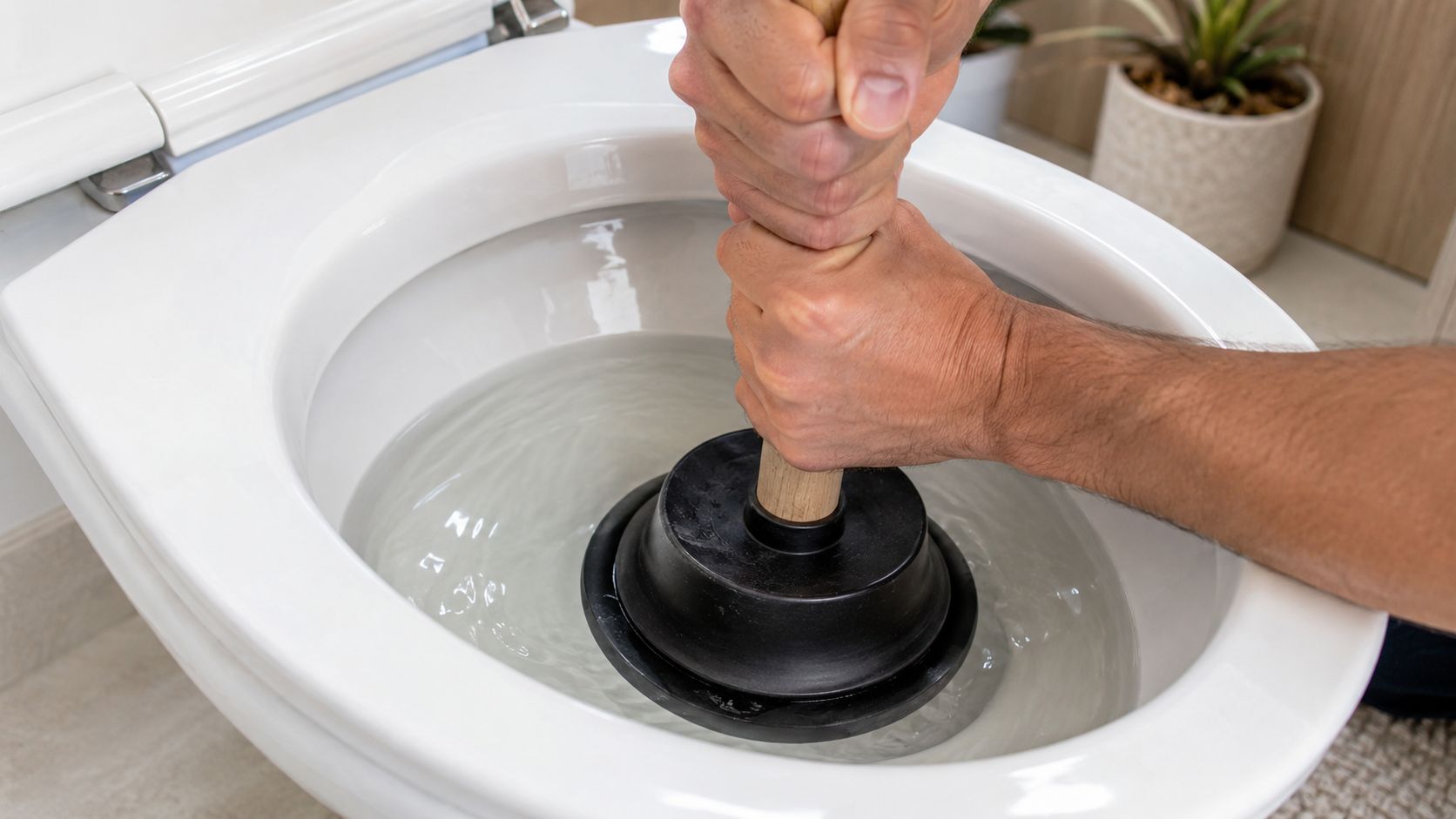
A toilet plunger works only when it seals well enough to move water, not air. That's why the right tool matters. A flange plunger is made for toilets, and the extra rubber flap helps it seat in the outlet of the bowl more effectively than a flat sink plunger.
Use pressure, not panic
Start with enough water in the bowl to cover the plunger cup. If the bowl is nearly empty, add water carefully so the plunger can create pressure instead of just splashing around. Begin with a gentle push to expel air, then use steady plunges, because the force needs to travel through water to help break the blockage apart.
The mistake I see most often is overdoing it. People jab hard and fast, which breaks the seal and sends water in the wrong direction. A few controlled strokes usually do more than a frantic set of hard thrusts.
Toilet clogs are common enough that they're part of normal home maintenance, not a rare breakdown. One survey reported that 270 out of 1,000 adults experience a toilet clog each month, which is roughly 27% monthly, and that was widely summarized as about 28 million U.S. toilet clogs per month PM Magazine on the Kohler survey. Everyday paper overuse is a common reason, which is why some clogs respond immediately to a plunger and others don't.
If a few solid attempts don't move the water, stop before you make a bigger mess. For persistent issues, Call Jay's Plumbing and sewer Now @ 586-634-3450.
Using a Toilet Auger for Stubborn Clogs
When the plunger can't clear a stubborn blockage, the next tool is a toilet auger, sometimes called a closet snake. It's built for porcelain, which is why it has a protective boot that helps keep the bowl from getting scratched while you work through the trap.
What the auger is actually doing
A toilet auger reaches into the toilet's trapway and either breaks up the obstruction or hooks it so you can pull it back. That makes it a better fit for blockages that sit inside the fixture, such as compacted paper, a child's toy, or a wad of wipes that shouldn't have been flushed in the first place. It's the right tool when the problem is still local to the toilet.
The basic motion is simple. Feed the cable into the bowl, turn the handle to advance through the trap, then retract it slowly. The point isn't force, it's control. If the cable binds hard or won't advance, that's a sign the blockage may be beyond the toilet itself.
Here's the value of the auger over a standard snake. It's shaped to follow the toilet's curve, so you're not fighting the porcelain or digging blindly. That matters in older bathrooms and rental units where repeated DIY attempts can leave the bowl scratched or the clog pushed farther down the line.
If you want a broader look at drain-cleaning options and where mechanical clearing fits into the job, this related guide on drains clogged and needing water jetting is useful background.
If the auger brings up debris and the bowl starts clearing normally, you're probably dealing with a localized fixture clog. If it doesn't, the problem may be deeper in the system.
That's the point where diagnosis matters more than more force. A toilet auger is for the toilet. It isn't a fix for a sewer line that's blocked, damaged, or overwhelmed.
Is It the Toilet or Your Main Sewer Line
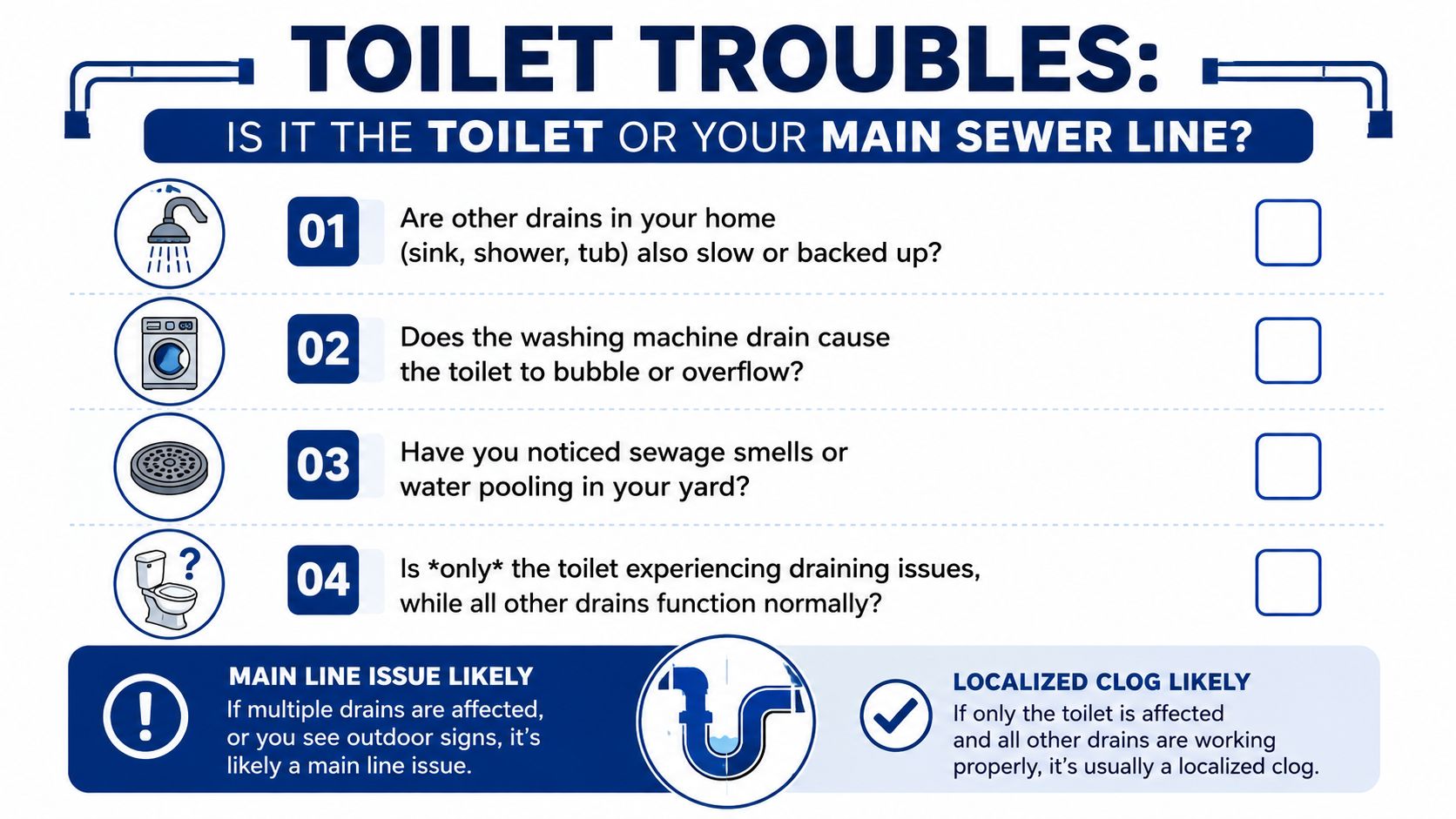
This is the question that separates a simple service call from a much bigger one. A toilet can look guilty when the underlying issue is farther down the plumbing run, and that's especially true in older Macomb County and Oakland County homes where tree roots and aging pipe materials can become part of the picture. If you live in a neighborhood with mature trees, that detail matters.
Use the rest of the house as your clue
If another fixture drains slowly at the same time, the problem is probably not just the toilet. If the shower, tub, or kitchen sink starts acting up too, that points toward a broader drainage issue. A toilet flush that makes the washing machine line bubble or the bowl surge is another sign the system is fighting a downstream blockage.
A simple diagnostic rule helps here. If the bowl fills but drains slowly, the trap is likely blocked. If the issue keeps going past the toilet or other fixtures are affected, the cause can be deeper in the drain lines, a blocked vent, or the main sewer line iFixit toilet troubleshooting. That's why professionals don't guess. They test the whole system.
Watch for outdoor clues too
Basement floor drains deserve attention, especially after heavy Michigan rain. If sewage backs up there, or you notice odors or pooling outside, that shifts suspicion away from a simple bowl clog and toward a main line issue. Older pipes, root intrusion, and drainage sag can all create the same symptom, a toilet that won't behave even though the bowl itself doesn't look blocked.
If you're seeing those signs, it's time to stop treating it like a fixture-only job. For sewer-line evaluation and drain cleaning, check the details in main sewer line repair.
When to Stop and Call a Professional Plumber
You've already tried the plunger and the auger, and the toilet still won't drain the way it should. At that point, the job shifts from clearing a simple clog to figuring out whether the problem sits in the toilet itself or farther down the line. That distinction matters in a Macomb County home, especially in older neighborhoods where pipe wear, tree roots, and settling soil can turn a small stoppage into a bigger sewer issue.
Red flags that point beyond the toilet
A clog that keeps returning is a warning sign. If the same toilet blocks up again after you clear it, there may be scale buildup, roots, or a partial line collapse that a camera inspection can reveal. When more than one fixture acts up, or when sinks, tubs, and floor drains slow down together, the problem is usually outside the toilet and deeper in the drainage system.
Odors and water at the base give you more clues. A sewer smell around the toilet or in the basement can point to venting trouble or a sewer line problem, while pooling water at the toilet base can mean a seal issue or a larger drainage fault. In either case, the pattern matters more than the single symptom.
Professionals do not just keep plunging harder. If the clog comes back, they move to sewer camera inspection because that is how roots, scale, and damaged pipe sections show up clearly Benjamin Franklin Plumbing on stubborn toilet clogs. That kind of inspection helps keep a minor warning from turning into a repair that needs excavation.
Why the right tools matter
A camera shows what is inside the pipe, and high-pressure cleaning can clear buildup that sits beyond the reach of a plunger or auger. That combination often separates a short-lived fix from a repair that lasts, especially when the line has grease, scale, or root growth farther downstream. If you are trying to decide whether to call for help, it also helps to understand the likely scope of the work and the possible cost. You can review drain cleaning prices before you commit to a service call.
Chemical drain cleaners are a poor match for a toilet that will not drain. They can damage seals, create a mess in the bowl, and leave the physical blockage untouched. Mechanical clearing and proper inspection are the safer route when the problem is in the toilet or the main line.
For a definitive diagnosis and safe, effective drain cleaning, Call Jay's Plumbing and sewer Now @ 586-634-3450.
Frequently Asked Questions About Toilet Drains
Are chemical drain cleaners safe for my toilet
Generally, no. They can damage seals, create a mess in the bowl, and still leave a physical blockage behind. Mechanical clearing is the safer path when the clog is in the toilet or trapway.
Why does my toilet flush so slowly even when it's not clogged
That can come from a low tank water level, clogged rim jets, or a blocked vent. A blocked vent can interrupt the siphon effect that helps move waste, and obstructions like leaves, bird nests, or snow in the vent pipe can weaken the flush Drano on slow-running toilets. In Michigan, that vent problem can show up after storms or winter weather.
How can I prevent toilet clogs in the future
Flush only human waste and toilet paper, and keep an eye on what children may be trying to flush. If you own an older home in Macomb or Oakland County, a sewer line inspection can be a smart preventive step, especially if slow drains keep coming back. That's the cleanest way to catch trouble before it becomes an emergency.
If your toilet won't drain and you want a real diagnosis instead of guesswork, reach out to Jays Plumbing and Sewer. We handle toilet repair, drain cleaning, sewer repair, and emergency plumbing across Fraser, Macomb County, and nearby Oakland County communities, and we'll help you figure out whether the problem is local to the toilet or deeper in the line.
