
You flip the switch, hear nothing, and stand there staring at the sink, wondering if the disposal finally gave up. In a lot of Macomb County kitchens, that moment turns out to be a simple power issue or a jam, not a dead unit. The safest move is to work the problem in order, from the plug and reset button to the breaker, then the flywheel and wiring if needed.
Table of Contents
- What It Means When Your Garbage Disposal Won't Turn On
- Confirm Power Before Anything Else
- Clear a Jam the Safe Way
- Electrical Issues Beyond the Reset Button
- Repair or Replace and What It Really Costs
- Preventing the Next No-Start and When to Call a Pro
What It Means When Your Garbage Disposal Won't Turn On
A silent disposal is one of those calls that looks worse than it is. You hit the switch, nothing happens, and the first thought is usually, “That's done.” In actual kitchen calls across Fraser, Sterling Heights, Warren, and the rest of Macomb County, that symptom usually points to power loss, overload protection, or a jammed flywheel, not instant motor failure.
The pattern matters. If the unit is completely quiet, the problem often starts with the supply side. If it hums, the motor is getting power but the impeller is locked. That distinction saves time and keeps you from jumping straight to replacement.
A lot of homeowner guides stop at the reset button and breaker, but that's only part of the story. After the basics, the next question is whether the disposal is plug-in or hardwired, and whether the wall switch, outlet, or cord has failed. AppliancePartsPros lays out that deeper electrical path and notes that a multimeter is the right tool for testing outlet voltage and switch continuity when the simple checks don't solve it (AppliancePartsPros garbage disposal repair help).
Practical rule: if the disposal is silent, start with power. If it hums, think jam. If it keeps tripping or resetting, think overload or wear.
That sequence works in older bungalows in Roseville, newer homes in Macomb Township, and small commercial kitchens that use the unit hard every day. It's the fastest path to finding out whether you need a quick fix, a parts replacement, or a plumber who handles garbage disposal repair and kitchen plumbing.
Confirm Power Before Anything Else
Start under the sink, not inside the unit. A surprising number of “dead” disposals are just unplugged, and the cord can get nudged loose during cleaning or after a leak check. If the plug is secure, move to the wall switch and the outlet feeding the disposal.
Work the electrical checks in order
Check the plug under the sink. Make sure the cord is fully seated in the outlet. If it's loose, that's your answer right there, and no further teardown is needed.
Test the switch and outlet. Plug a lamp or charger into the same outlet, or use a known-good device to see whether the circuit is alive. If that outlet won't power anything, the issue is upstream, not in the disposal itself.
Look at the breaker panel. Kitchen circuits can trip without being obvious. A breaker that's off or sitting in the middle needs to be reset before you try the disposal again.
Press the red reset button on the underside. Push it until it clicks. That button is a built-in overload protector, and a popped reset usually means the unit overheated or locked up.
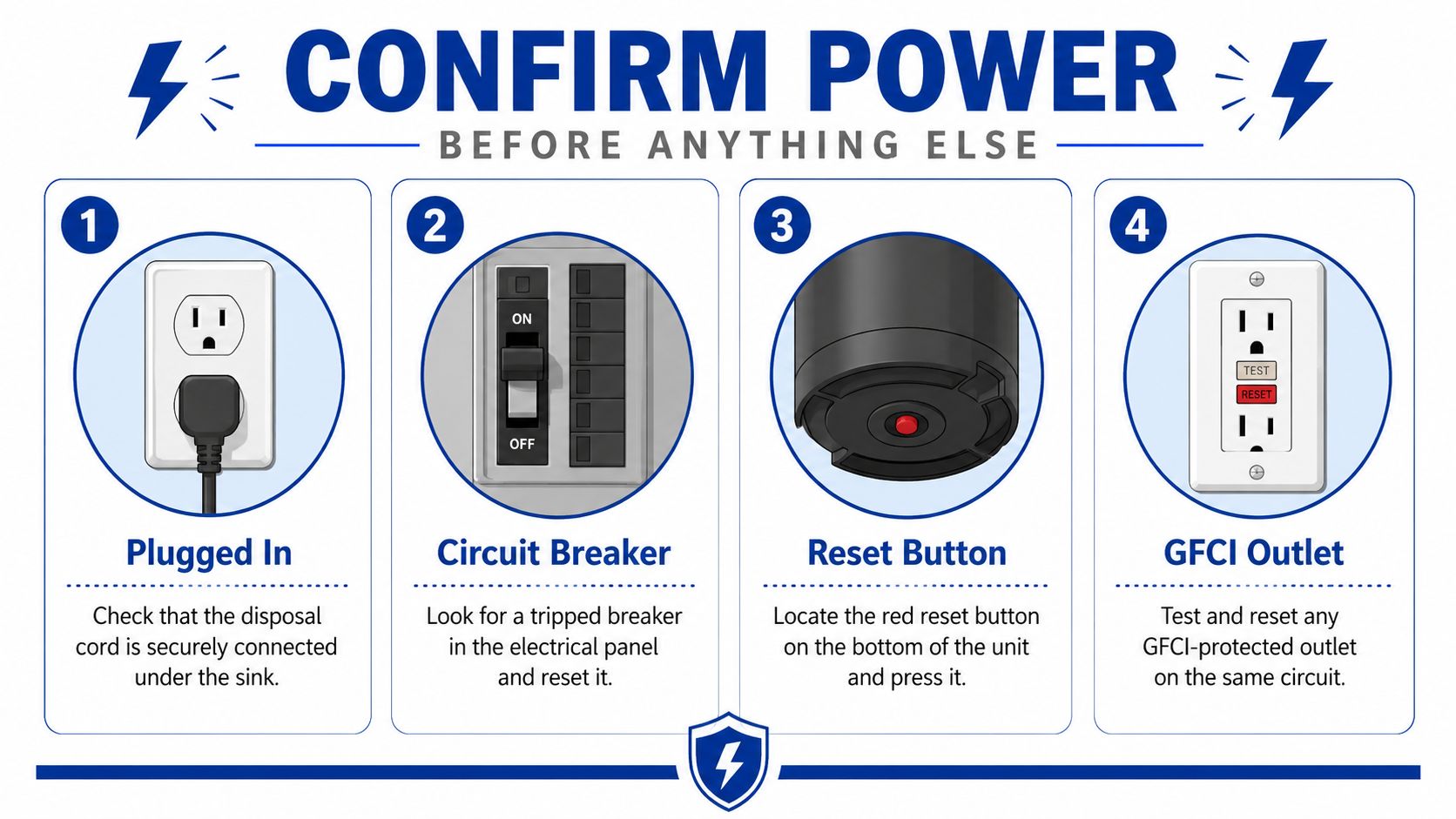
The order matters because each step separates one kind of failure from another. If the plug was loose, you found a supply problem. If the reset button was popped and the unit comes back after you click it in, you likely had an overload. If the breaker trips again, stop forcing it and pay attention to what that circuit is telling you.
A troubleshooting handout used for disposal problems puts the checks in the same sequence, plug, switch or outlet, reset button, then breaker, before any mechanical work begins (garbage disposal troubleshooting guide PDF). That's the same order I'd use in a Macomb County kitchen call because it keeps the diagnosis simple and safe.
Clear a Jam the Safe Way
If the disposal has power but still won't start, or it only gives you a hum, the flywheel is probably jammed. That's common after a hard object slips in, like a bone, bottle cap, or piece of silverware. Don't keep flipping the switch and hoping it frees itself, that just adds heat and stress.
Use the jam-clear method the right way
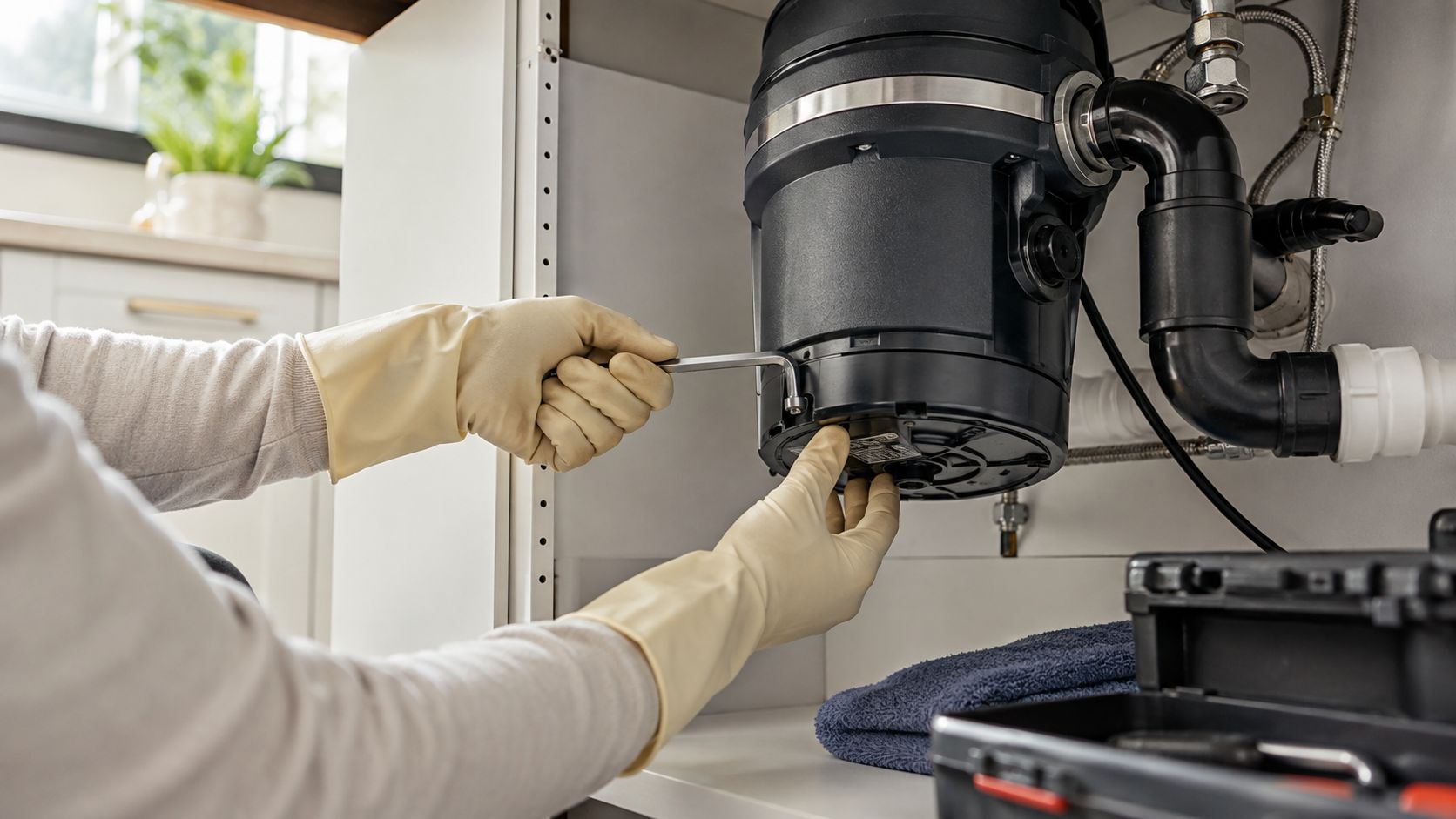
First, shut off power at the wall and breaker. Then grab a flashlight and look into the drain opening for anything obvious sitting in the chamber. Keep your hands out of the disposal. Pliers or tongs can remove visible debris, but bare fingers don't belong near the grinding chamber.
Next comes the manual release. The standard field method is to insert a 1/4-inch Allen wrench or disposal key into the hex socket on the bottom and work it back and forth until the flywheel moves freely. That's the same repair move many manufacturers and service techs use when the impeller has locked up, and it's the quickest way to break a light jam without replacing the unit.
Once it turns freely, restore power, run cold water, and test the reset button again. If the disposal starts and sounds normal, you're back in business. If it still hums or goes dead again right away, stop there.
An important detail from real service calls, a jam that won't release cleanly, a burning smell, or water leaking from the bottom usually means the problem has moved beyond a simple blockage. At that point, more use can make the unit worse, not better.
If you need a quick reference for the right hand tools before you open the cabinet, this local tools guide is useful: Jay's plumbing tools reference. For a hands-on look at what a freed flywheel action should feel like, the wrench method is also shown in repair videos like this one, where the unit is turned from the bottom socket after power is cut.
Electrical Issues Beyond the Reset Button
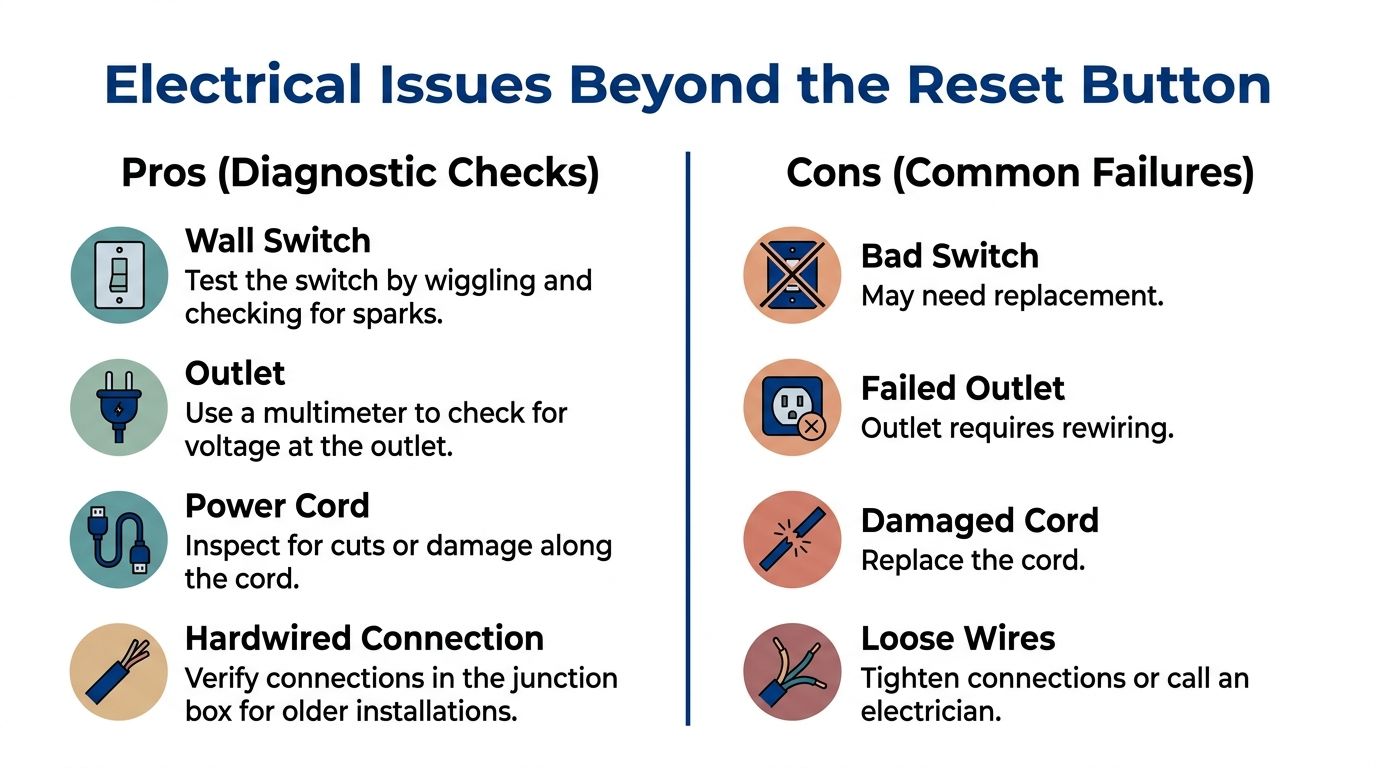
A lot of homeowners assume a disposal problem ends after the reset button. It doesn't. A silent unit can also come from a bad wall switch, a dead outlet, a damaged cord, or loose wiring in an older hardwired setup. That's the part most online guides skip, and it's where the diagnosis stops being a simple homeowner check.
Know whether you have a plug-in or hardwired unit
A plug-in disposal has a cord under the sink and plugs into an outlet. A hardwired disposal connects directly to a junction box. That difference changes what you should look at next.
A plug-in unit that won't start can have a loose cord, a failed outlet, or a switch that no longer sends power. A hardwired unit can hide a loose wire connection inside the electrical cover, and that's not something I'd tell a homeowner to open unless they're already qualified to work on electrical systems.
Watch for the symptoms that point past the basics
- Loose-feeling switch: The wall switch clicks, but nothing changes at the sink.
- Dead outlet: The disposal outlet won't power a lamp or charger.
- Damaged cord: The cord looks cut, crushed, or heat-marked.
- Hardwired trouble: You see scorch marks, loose connections, or a cover that's been disturbed.
Stop here if the issue looks electrical and not mechanical. Multimeter testing, hardwired troubleshooting, and wire repairs belong with a licensed plumber or electrician.
That's not an overreaction, it's the safe line. A silent disposal in a hardwired kitchen, especially in older Macomb and Oakland County homes, can be a wiring issue that looks a lot like a dead appliance. If you've already confirmed power, reset, and jam clearance, the next move is professional diagnosis, not guesswork.
Repair or Replace and What It Really Costs
Once the basic checks are done, the decision usually comes down to whether the disposal is worth saving. A simple jam-clearance visit is often the cheapest path, while a full replacement costs more but gives you a fresh start if the unit is worn out or leaking. The question is not just what fixes it today, but what keeps the sink working next month.
| Garbage Disposal Service Costs at a Glance | Typical Cost | When It Makes Sense |
|---|---|---|
| Basic jam-clearance visit | $100 to $175 | The unit hums, the flywheel is stuck, and the disposal is otherwise in decent shape |
| Typical disposal service call | $150 to $350 | You need diagnosis and repair beyond a quick reset or simple jam clear |
| Full replacement installed | $350 to $500 | The disposal is worn out, leaking, or no longer reliable after troubleshooting |
Those figures line up with an issue guide that also warns how fast a disposal problem can spread into under-sink damage. It estimates standing water backup and under-sink mold growth within 48 to 72 hours, with $500 to $3,000 in water-damage remediation if the problem is ignored (HomeFixx issue guide). That's why a small repair can be the smarter move on day one.
Signs replacement makes more sense
- Repeated resets: If you have to keep pressing the button, the unit is telling you it's overloaded or worn.
- Visible rust or corrosion: Metal fatigue and moisture damage usually don't get better.
- Leak from the body: Bottom leaks are a serious sign the housing or internal seal has failed.
- Old, tired motor: A hum that never turns into spinning after a proper jam clear points toward replacement.
The age of the unit matters too, especially in busy family kitchens around Clinton Township, Shelby Township, and Rochester Hills where heavy cooking and high use shorten the life of appliances. If the disposal is acting up along with other kitchen plumbing issues, it can make sense to fold the repair into a broader visit that also covers drain cleaning or other kitchen plumbing work. For a closer look at drain service pricing and how it affects the total visit, see Jay's drain cleaning pricing guide.
Jays Plumbing and Sewer also handles kitchen and bathroom plumbing repairs, so a disposal problem can be evaluated alongside leaks, drain issues, or fixture problems on the same service call. In many homes, that saves a second appointment and gives a clearer answer on whether repair or replacement is the better value.
Preventing the Next No-Start and When to Call a Pro
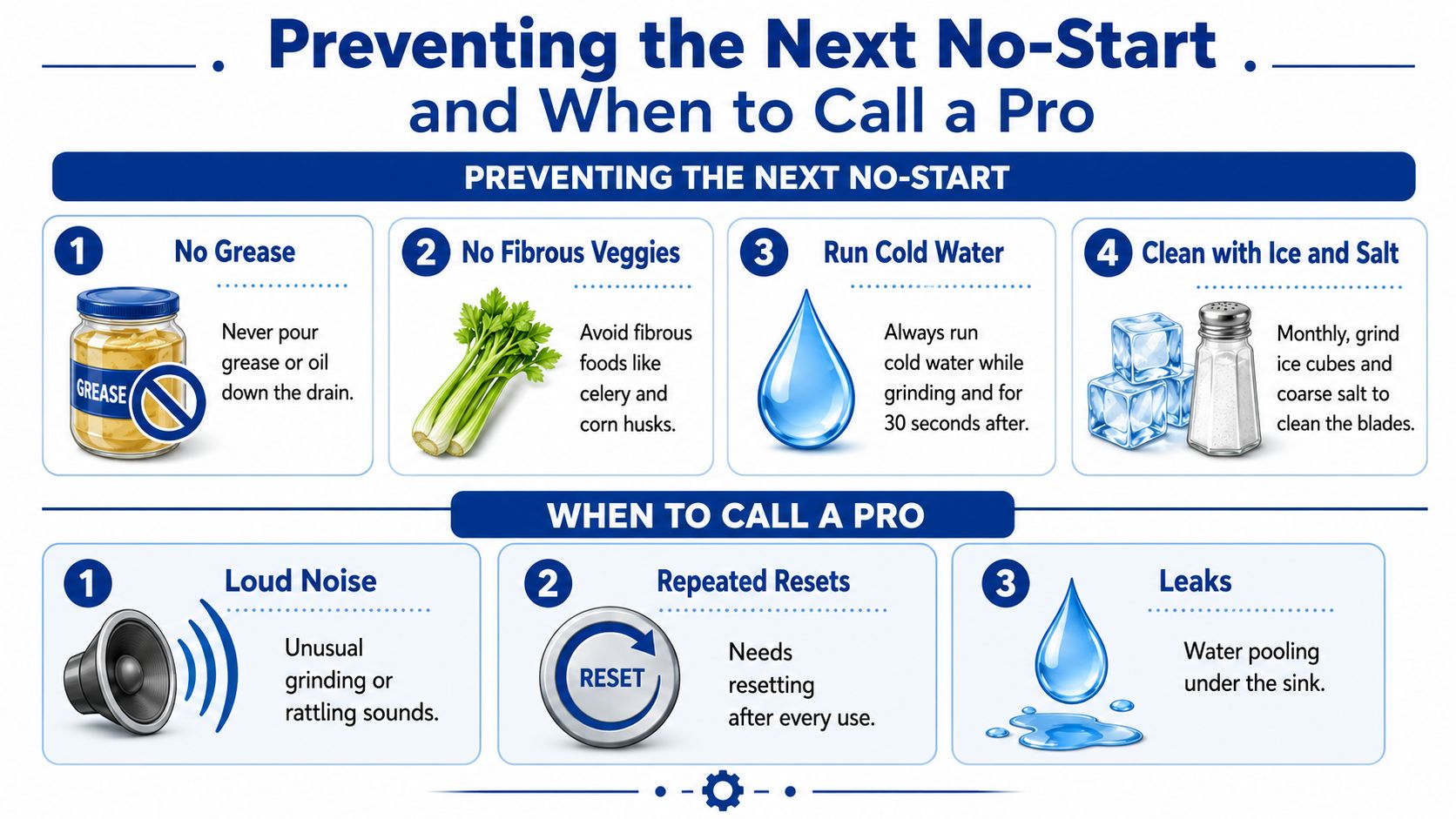
A dead disposal usually starts with what goes down the drain. Keep grease out of the sink, skip fibrous vegetables, don't feed it large amounts of coffee grounds, and don't send expandable starches through it. Run cold water before and after use so the unit carries debris through the chamber instead of letting it settle inside.
Michigan kitchens take a beating during holiday cooking, and the problem gets worse after long cold stretches when a disposal sits idle. In those homes, the first heavy load can expose a weak motor, a sticky impeller, or corrosion that was already waiting under the sink.
Call a pro when you see these signs
- The reset button trips more than once a week: That points to a recurring overload, and routine prevention habits won't fix an underlying electrical or motor issue.
- Loud grinding or rattling: The chamber is likely damaged or jammed deeper than a basic clear.
- Water pooling under the sink: A leak is no longer just a nuisance, it's a plumbing problem.
If the disposal still will not start after the plug, reset, breaker, and jam check, stop troubleshooting and bring in a licensed plumber. That matters even more on hardwired units, where a bad switch, a dead outlet, or a wiring problem can hide behind a disposal that looks fine from the sink side.
Jays Plumbing and Sewer handles kitchen and bathroom plumbing repairs, and you can see the service range on their kitchen and bathroom plumbing repair page. For Macomb County homes, that gives you one visit to check the disposal, look for sink-side leaks, and decide whether the unit needs repair or replacement.
If you're in Fraser, Sterling Heights, Warren, Troy, Rochester, or anywhere in Macomb and Oakland County, call Jay's Plumbing and Sewer for residential or commercial help with garbage disposal repair, drain cleaning, sewer repair, leak detection, sump pump repair, bathroom plumbing, kitchen plumbing, and emergency plumber service. Call Jay's Plumbing and sewer Now @ 586-634-3450
Jay's Plumbing and Sewer helps homeowners, landlords, and small businesses figure out whether a silent disposal needs a reset, a jam clear, electrical troubleshooting, or replacement. If your garbage disposal won't turn on and you want a local plumber near me who can check the sink, the wiring, and the drain line in one visit, visit Jays Plumbing and Sewer and schedule service today. Call Jay's Plumbing and sewer Now @ 586-634-3450
