2,000 to 4,000 PSI water jetting can clear the kind of buildup that keeps coming back after snaking, and professional systems may run as high as 8,000 PSI depending on the line and the blockage. If your drains keep clogging, hydro jetting is usually the long-term fix because it cleans the whole pipe circumference, not just the center.
That's the difference homeowners in Macomb and Oakland County run into all the time. A sink starts slowing down, someone snakes it, and the water moves again for a while. Then grease, scale, and soap residue catch the next wave of debris, and the same drain is back to acting up.
Table of Contents
- When Snaking Is Not Enough
- What Hydro Jetting Actually Does Inside Your Pipes
- The Professional Hydro Jetting Workflow Step by Step
- Hydro Jetting vs Drain Snaking Side by Side
- Michigan Seasonal Drain Care and Prevention
- When to Call a Licensed Plumber
When Snaking Is Not Enough
The call usually sounds familiar. A kitchen sink in Sterling Heights is slow again, or a bathroom drain in Warren backs up, and somebody already ran a basic auger through it. The water moved, but only for a short time, which tells me the clog wasn't the whole problem.
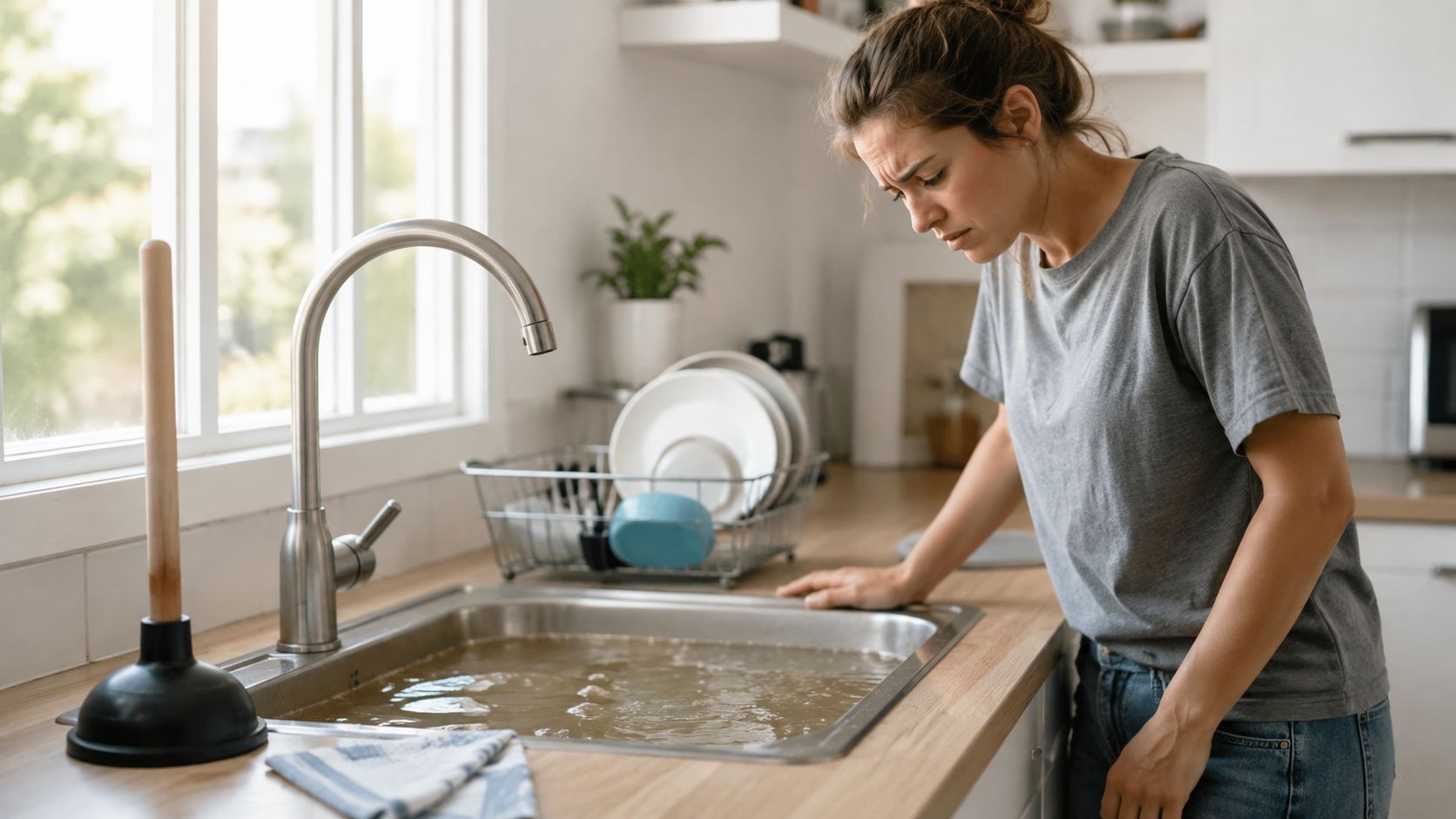
Why the clog comes back
Snaking is useful when the blockage is simple, but it usually punches a path through the middle of the buildup instead of cleaning the pipe wall. That leaves behind grease, mineral scale, and soap scum stuck where the next layer of debris can grab on. The pipe still has rough, dirty surfaces inside, so the restriction returns.
A drain that clears and then re-clogs quickly is usually telling you the line still has residue on the walls.
That's why drain cleaning has to be matched to the actual condition of the pipe. In many homes around Fraser, Clinton Township, Troy, and nearby neighborhoods, the fixture isn't the problem, the inside of the line is. If the same drain keeps acting up after a snake, it's time to look at a deeper clean rather than repeating the same short-term fix. For a straightforward assessment, Jays Plumbing and Sewer's drain cleaning services are one way to have the line checked with the right equipment.
Why this matters in real homes
That leftover residue is what makes hydro jetting different. It doesn't just open a hole for water to pass through, it removes the material the clog keeps building on. For homeowners, property managers, and small businesses, that means fewer repeat calls and fewer surprises when a slow drain turns into a backup.
Call Jay's Plumbing and sewer Now @ 586-634-3450 if your drain keeps clogging after snaking and you want a direct answer instead of another temporary fix.
What Hydro Jetting Actually Does Inside Your Pipes
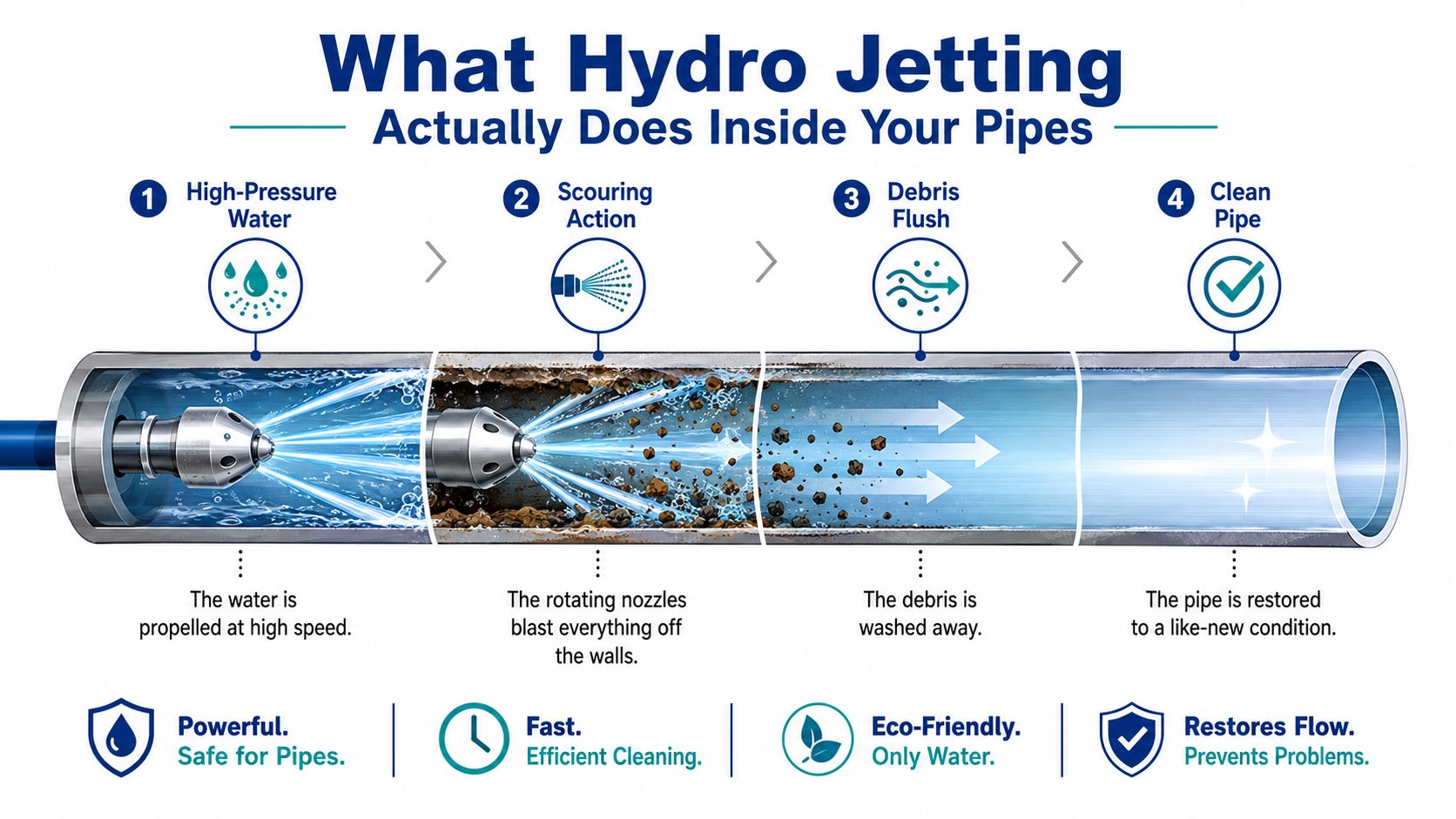
Hydro jetting is a specialized high-pressure water cleaning method that sends a hose and nozzle through the line, with jets aimed forward and backward. The forward spray helps break through buildup, while the rear spray scours the pipe walls and moves debris out of the way. That dual action is why it can do what a snake usually can't.
The pressure difference is the point
Industry guidance commonly places hydro jetting at about 2,000 to 4,000 PSI for residential drain work, with heavier-duty sewer applications reaching up to 8,000 PSI in some cases, far above household hose pressure. That pressure helps remove grease, mineral scale, food debris, sand, silt, and sometimes tree roots. It's not a forceful rinse, it's a cleaning process designed to restore the pipe.
Here's the practical takeaway. A snake makes a path. Hydro jetting cleans the pipe. For kitchens, bathrooms, floor drains, and main sewer lines that keep collecting residue, that difference is what changes the long-term result.
What it can and can't do
Hydro jetting is well suited to grease-heavy lines, mineral deposits, and recurring sludge. It's also why the method is used for preventive maintenance rather than only after a total shutdown. The service often makes sense when the same drain keeps acting up because the pipe walls were never cleaned.
For outdoor lines, downspouts, and some French drain situations, the debris can be different. Loose sediment and sand may flush differently than grease or roots, which is why a professional has to match the tool to the problem instead of treating every blockage the same way.
The Professional Hydro Jetting Workflow Step by Step
A proper jetting job starts with information, not pressure. That matters because an older clay line in an older part of Oak Park isn't treated the same way as a newer PVC line in a newer subdivision. A licensed plumber has to know what the pipe can handle before water is ever sent through it.
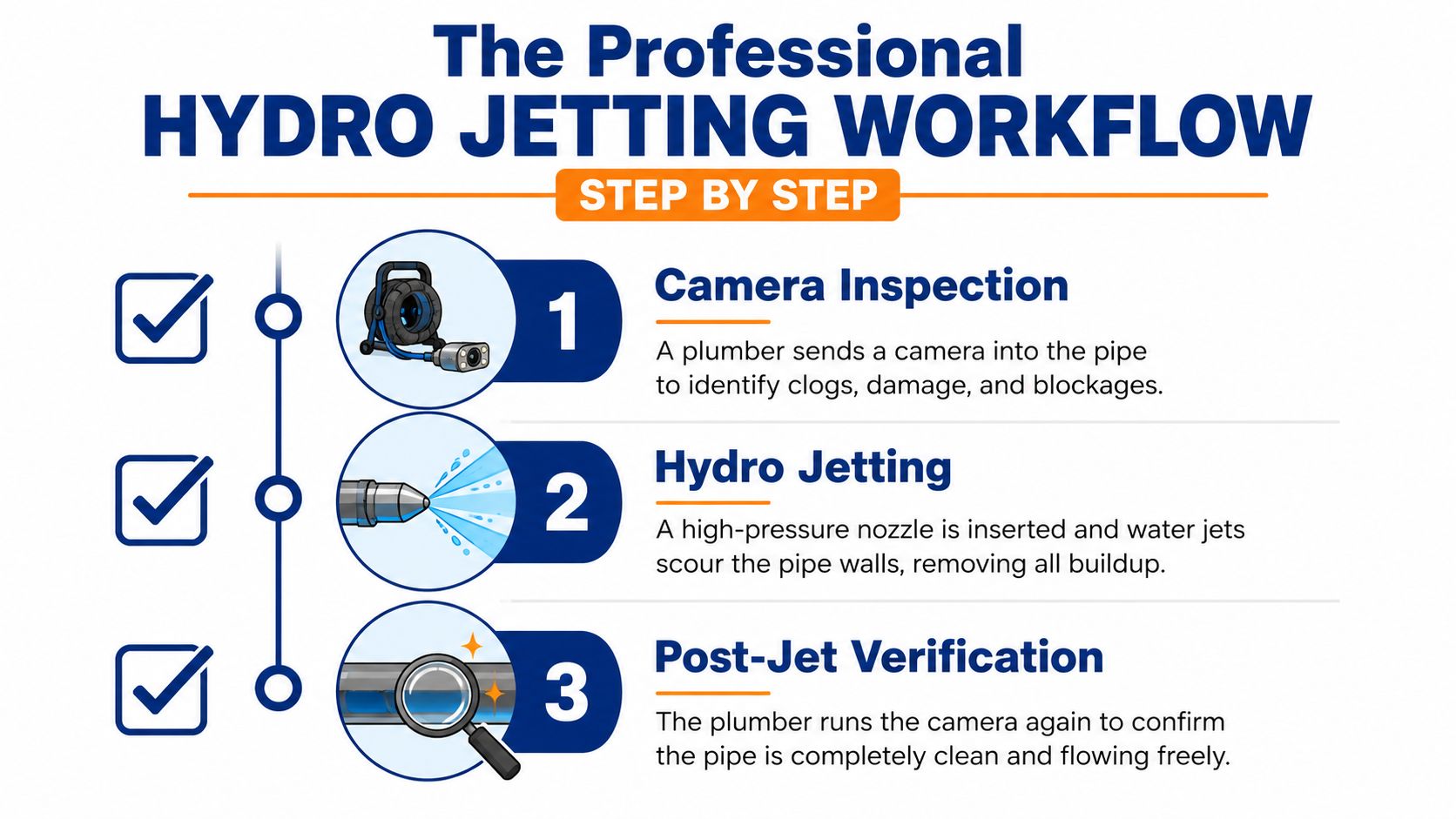
First comes the camera
A sewer camera inspection locates the clog and checks the condition of the pipe. If the line is cracked, collapsed, or badly weakened, the cleaning approach changes. That's the protection that keeps a strong tool from being used the wrong way.
Then comes the cleaning
The plumber chooses the nozzle and pressure based on the blockage type and pipe condition. A forward-jet nozzle can help bore into tougher material, while rear jets wash the pipe wall and move debris back through the line. The hose has to be fed slowly and kept moving so it doesn't bind or stick in the pipe.
Practical rule: if the hose is forced, the work is wrong. A controlled feed tells you the plumber is respecting the line, not trying to bully it open.
Then comes verification
A second camera pass confirms the line is clear and shows whether the cleaning exposed any hidden pipe defects. That final check matters because a drain that looks open from the fixture can still have a deeper problem in the main line. In real service work, this is the step that turns a cleaning call into a useful diagnosis.
Main sewer line repair information is worth reviewing when the camera shows more than simple buildup, because some clogs point to repair, not cleaning.
Hydro Jetting vs Drain Snaking Side by Side
People often ask whether hydro jetting is just a stronger snake. It isn't. Snaking is faster and cheaper for a simple, one-time clog, but jetting cleans the full pipe surface. That's why the same drain may stay clear longer after jetting.
| Method | Typical Cost Range | Best For | Longevity |
|---|---|---|---|
| Drain snaking | Usually lower than jetting | Single, simple fixture clogs | Shorter, especially if residue stays on the walls |
| Hydro jetting | Average around $475, typically $350 to $600, with harder cases reaching $1,000 to $2,000 | Recurring clogs, grease, scale, main line buildup | Longer-lasting because the walls are cleaned |
Those hydro jetting pricing figures come from recent 2025 to 2026 guides, and they explain why the service is usually reserved for tougher blockages or preventive maintenance. A kitchen sink cleaning may average about $110 to $215, while main sewer line cleaning can run $200 to $800 and often takes 1 to 4 hours. For a pricing reference tied to drain work, the 2026 drain cleaning prices guide gives a local context for homeowners and property managers.
When each method fits
- Snaking: a single drain, a simple blockage, or a fixture that has never given trouble before.
- Hydro jetting: recurring clogs, grease-heavy kitchen lines, main sewer buildup, or preventive cleaning in a property that sees repeated use.
- Camera first: any older line, any sewer smell, or any backup that seems bigger than one fixture.
Hydro jetting is usually the better choice when the goal is to keep the clog from coming back. Snaking is still a useful tool, but it's not built to scrape the pipe walls clean.
Michigan Seasonal Drain Care and Prevention
Michigan weather changes what lives inside a drain. Winter freeze-thaw cycles shift soil around underground lines, and that movement can open the door for root intrusion or worsen weak spots in older piping. Spring rains then stress every marginal line in Macomb and Oakland County, especially basement drains and older sewer laterals.
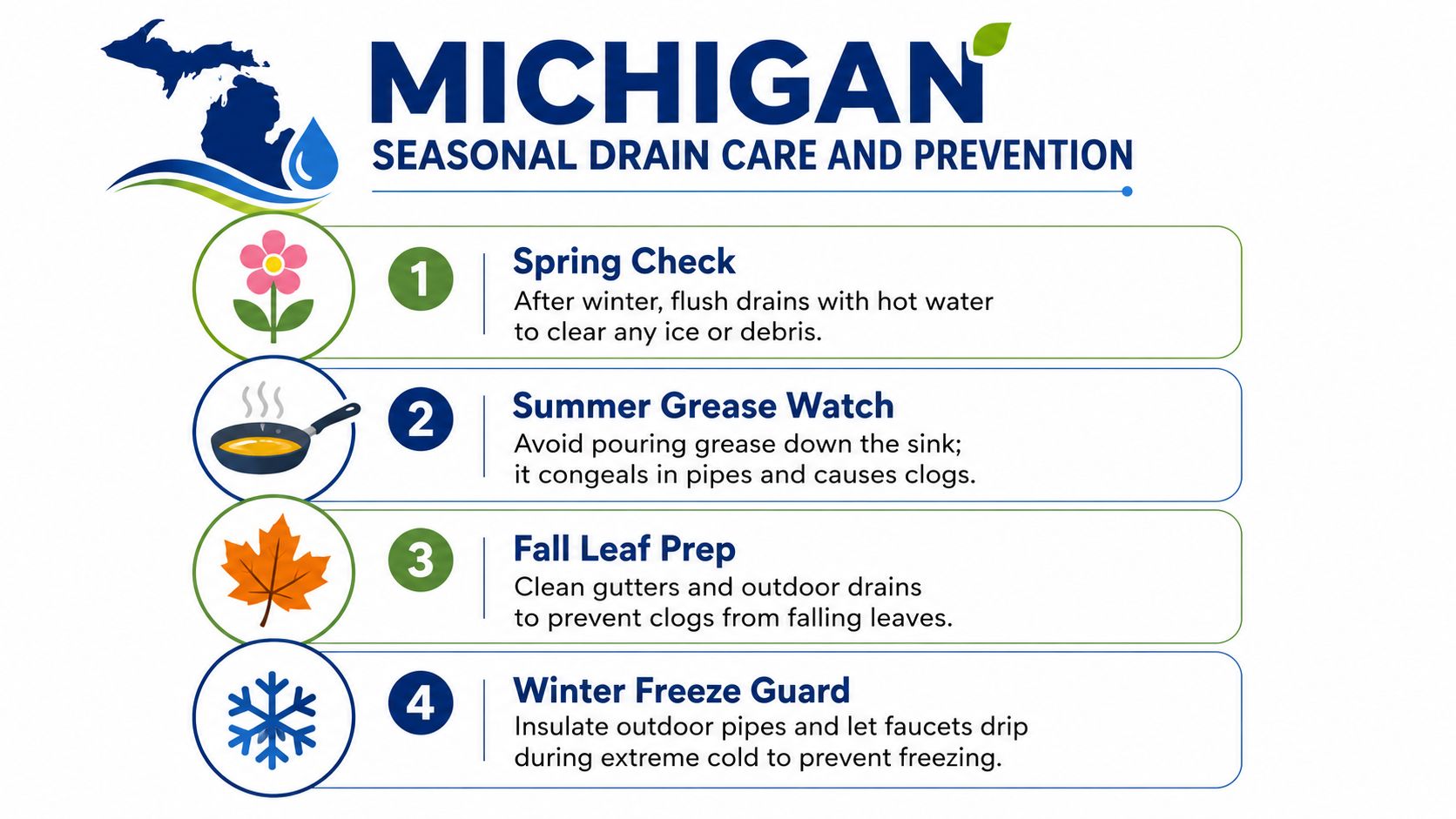
Why preventive jetting helps here
Hydro jetting is often used on a maintenance schedule of about every 12 to 24 months for grease-prone or root-prone systems. That fits what I see in the field. The goal is to clear the pipe walls before residue hardens into the kind of layer that slows flow and gives the next clog something to grab onto.
That matters in Southeast Michigan because a planned cleaning is easier to schedule than an emergency call after a basement backup. Restaurants, apartment buildings, and older homes all benefit from the same basic truth, a pipe that gets cleaned before buildup becomes heavy stays easier to keep open. If an older line keeps backing up, main sewer line repair) may be part of the answer, especially when the problem is no longer just debris.
Seasonal habits that help
- Spring: check floor drains, basement drains, and any line that took winter stress.
- Summer: keep grease out of kitchen plumbing because it hardens inside the line.
- Fall: clear leaves from outside drainage points before they wash deeper into the system.
- Winter: watch for frozen pipes and protect vulnerable areas during hard cold snaps.
Outdoor drains, downspout lines, and French drains do not fail for the same reason. Loose sediment behaves differently from grease and roots, so the fix has to match the debris. A professional inspection helps when a line keeps clogging in the same season every year, because that pattern usually points to buildup, root intrusion, or a weak section that snaking alone will not solve.
When to Call a Licensed Plumber
A drain that keeps slowing down after a snake passes through usually has more going on than a simple blockage. The pipe walls may still be coated with grease, soap residue, scale, or root slime, and that residue gives the next clog a place to catch. In older lines across Macomb and Oakland County, that pattern shows up a lot, especially when winter freeze-thaw cycles put extra stress on already restricted pipes.
Some slow drains can wait. A repeat clog within a few weeks of snaking, multiple fixtures backing up at the same time, or sewage odor around the drains usually points to a problem deeper in the line. Clay and cast-iron laterals deserve extra caution because age changes how safely a line can be cleaned, and a camera inspection often makes more sense before anyone pushes harder on the system.
Call Jay's Plumbing and Sewer Now @ 586-634-3450 if you're dealing with recurring backups, a sewer odor, or a line that needs camera inspection before it's cleaned. Jay's Plumbing and Sewer in Fraser provides 24-hour emergency response seven days a week, 365 days a year, serves residential and commercial customers, and uses shoe covers, drop cloths, and cleanup after the job. The company also uses high-pressure jetting equipment and sewer cameras, offers job-based upfront pricing, and notes senior citizen and military discounts.
For homeowners who want a plumber near me in Fraser, Warren, Madison Heights, Troy, or nearby communities, the key question is whether the pipe is blocked or still coated with the residue that keeps rebuilding the clog. Snaking can open a path, but it often leaves the wall buildup behind. Hydro jetting clears that film much more thoroughly, which is why it holds up better on lines that keep failing in the same spots. If the line is older or shows signs of damage, review our main sewer line repair guide to see when cleaning is no longer enough.
