
You step into the shower on a cold Michigan morning and get hit with water that never warms up. In Fraser, Sterling Heights, Clinton Township, and the rest of Macomb and Oakland County, that usually leads to the same three questions, is the heater broken, did something simple change, and is this safe to check myself?
A gas water heater not heating water can be a real failure, or it can be a recovery delay, a closed valve, a pilot issue, or sediment slowing everything down. The trick is to move in the right order, start with the safe checks, and know when the problem has crossed into licensed-plumber territory.
Table of Contents
- Standing in a Cold Shower and Wondering What Went Wrong
- Safety First Before You Touch Anything
- Checking the Pilot Light and Thermocouple
- Thermostat Setting, Gas Valve, and Burner Condition
- Sediment Buildup and Recovery Time Problems
- When to Stop Troubleshooting and Call a Licensed Plumber
- Preventing the Next Cold Shower
Standing in a Cold Shower and Wondering What Went Wrong
A lot of service calls start the same way. The family has a basement-installed tank in Rochester Hills, Warren, Troy, or Shelby Township, somebody gets in the shower first, and the water never comes around. In a Michigan winter, that feels urgent fast because the house is already colder, the basement unit is working harder, and nobody wants to guess wrong around a gas appliance.
The first question is whether the unit is failing or just not recovering yet. A standard 40-gallon gas water heater typically reheats a full tank in about 30 to 40 minutes, while a comparable electric unit often needs 60 to 80 minutes or more. That matters because if the tank has just been used, cold water can be a timing issue, not a burner failure. The U.S. Energy Information Administration reports 59.33 million total U.S. households in 2020, which shows how large the water-heating load really is across the market, and why normal recovery time matters so much in day-to-day troubleshooting (EIA residential data).
The next question is whether the homeowner caused the issue by changing a setting, closing a valve, or letting the pilot go out. The third question is whether it's safe to look at the heater at all. Those three questions are the whole decision tree at the start.
Practical rule: if the tank is still within its normal recovery window, don't panic. If it stays cold long past that window, start looking for ignition, gas-supply, thermocouple, or sediment issues.
If the easy checks don't clear it up, that's the point to call Call Jay's Plumbing and sewer Now @ 586-634-3450 before the problem turns into a longer day without hot water.
Safety First Before You Touch Anything
Before any troubleshooting, the safest move is to treat the heater like a gas appliance first and a plumbing fixture second. A gas water heater in a basement can be perfectly ordinary, but the gas supply, venting, and ignition parts still deserve respect. If anything smells off, stop.
If you smell gas, leave the house immediately, don't flip switches, don't light anything, and call the gas utility from outside. If the pilot has gone out repeatedly, don't keep trying to force the issue. And even though the unit runs on gas, it may still be connected to household power through controls or ignition components, so don't assume it's dead just because the burner is off.
The valves matter too. In a typical basement setup, the cold-water shutoff is on the supply line feeding the heater, and the gas shutoff valve is on the gas line leading to the unit. Knowing where both are located makes it easier to stop a leak or isolate the heater if a tech tells you to do so.
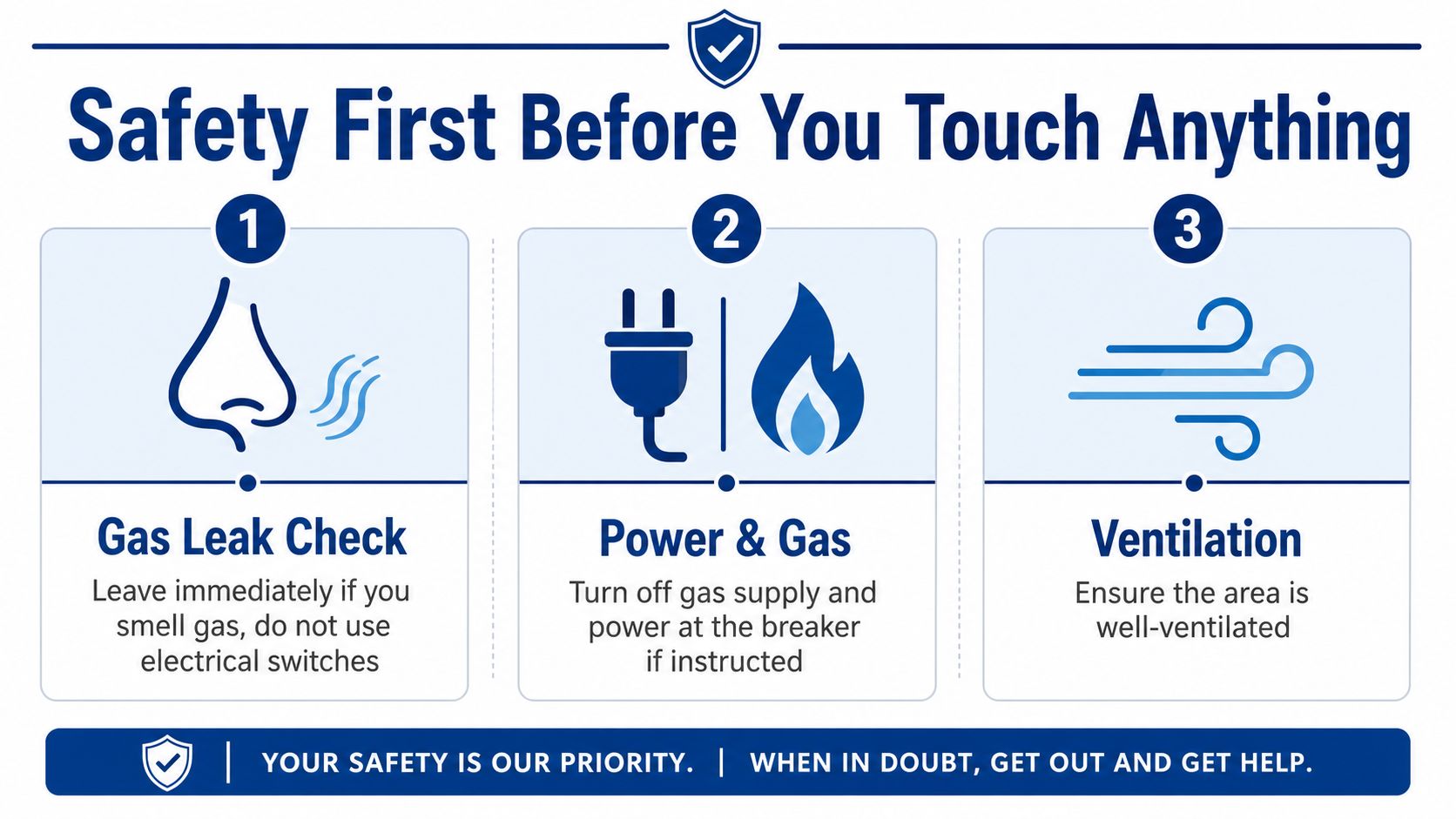
A quick safety checklist helps before you look any closer:
- Check for odor first: If you smell gas, get out and call the gas utility.
- Find the shutoffs: Know which valve controls gas and which one controls cold water.
- Keep hands off repeated relights: Let the label instructions and a licensed tech guide anything beyond a basic inspection.
- Open the area up: A basement mechanical room should have decent airflow before anyone starts looking around.
A good local plumber can also verify whether the issue is really the heater or the gas supply. If the unit looks damaged, smells unusual, or the room feels unsafe, call Call Jay's Plumbing and sewer Now @ 586-634-3450 and skip the guessing. If gas piping may be involved, use this local resource as well, gas line repair information.
Checking the Pilot Light and Thermocouple
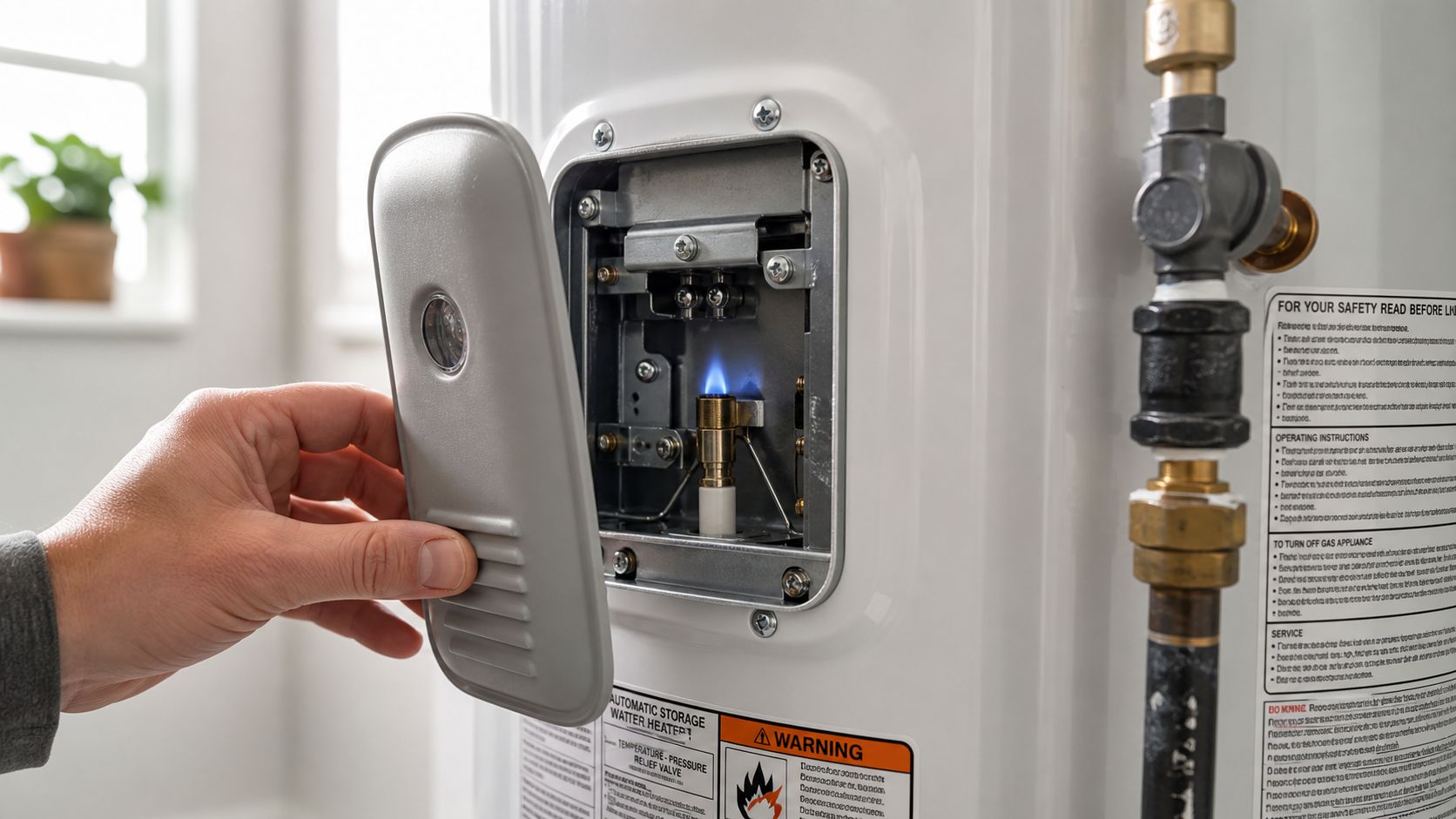
The pilot light is usually the first real clue on a gas storage heater. If the pilot flame is out, the burner can't light, so the tank won't heat. If it's lit but keeps dying, the problem often moves to the thermocouple or, on some units, the thermopile and gas control assembly.
The thermocouple is a small safety sensor, but it does a big job. It tells the gas valve whether the pilot flame is present, and if it doesn't see a healthy flame signal, it shuts the gas down. One industry troubleshooting guide says thermocouples account for roughly 35% to 40% of no-heat service calls, and they commonly fail after 8 to 12 years of heat cycling. Homes on well water or unsoftened municipal supply can see related underperformance in as little as 3 to 5 years because sediment and minerals interfere with burner performance (HomeFixx issue guide).
A homeowner can do a visual read without dismantling the heater. Look through the sight glass, confirm whether the pilot is burning, and listen for whether the burner tries to stay on. If you relight once using the label on the heater and the flame still won't hold, that's the signal to stop. A passing flame that won't remain steady usually points to a worn sensor or valve issue, not a random bad day.
A pilot that lights but won't stay on is not a mystery problem. It's a clue that the safety circuit isn't satisfied.
When the pilot keeps failing, a licensed tech can test the thermocouple voltage and decide whether the sensor or the control valve is the issue. That avoids replacing parts that still work and gets the heater back on the right path. If the flame won't stay lit in your Macomb County basement, call Call Jay's Plumbing and sewer Now @ 586-634-3450 and have it tested correctly.
Thermostat Setting, Gas Valve, and Burner Condition
Sometimes the answer is sitting right there on the front of the heater. Start with the thermostat dial. A water heater set below 90°F is described as not producing usable hot water, while a common recommended setting is 125°F. For most homes, 120°F is the practical baseline to verify before assuming the tank has failed (Lennox hot water heater guidance).
Next, check the gas shutoff valve. The handle should be parallel to the gas line when it's fully open. If it's turned perpendicular, the heater may not be getting fuel at all. That's one of the simplest causes to rule out, especially in a finished basement where someone may have shut it off during other work.
The burner condition gives a little more context. A clean burner usually shows a steady blue flame. A dirty, corroded, or lazy flame points toward contamination or a venting issue. I'd rather see a homeowner notice that and stop than keep running the unit while it's struggling.
| What you see | What it usually means |
|---|---|
| Steady blue flame | Normal combustion |
| Yellow or lazy flame | Burner contamination or venting concern |
| No flame | Fuel, ignition, or control problem |
A burner that looks wrong isn't a cosmetic issue. It means heat transfer and combustion may already be compromised, and that can shorten component life or leave the tank lukewarm even when it technically fires. For that kind of problem, scheduling service is smarter than poking at the access panel. If the dial, valve, and flame all look wrong, Call Jay's Plumbing and sewer Now @ 586-634-3450 and let a licensed plumber sort out the gas side safely.
Sediment Buildup and Recovery Time Problems
A heater can be running and still leave you in a cold shower. That usually points to sediment or tank capacity. In Michigan, hard water leaves mineral buildup at the bottom of the tank, and that layer can block heat transfer, slow recovery, and make the burner work harder than it should.
When the tank is slower than it should be
Recovery time tells you a lot. A standard 40-gallon gas water heater should usually reheat a full tank in about 30 to 40 minutes. If yours takes longer, or the hot water runs out fast after one shower and a sink load, the problem goes beyond the pilot or gas valve.
Sediment flushing is one of the maintenance steps that keeps coming up for a reason. One troubleshooting guide recommends shutting off gas and cold water, attaching a hose to the drain valve, opening a hot tap to break vacuum, and flushing until the discharge runs clear. If the tank has heavy buildup, repeating the refill-and-drain cycle 2 to 3 times can help. Cloudy water at first is normal, and stopping too early leaves scale behind (The Spruce water heater guide).
If you want a broader list of warning signs before the tank quits entirely, this warning-sign guide is a solid place to compare what you're seeing.
When the tank is undersized
Some no-hot-water complaints are really demand problems. Large families, multifamily properties, homes with soaking tubs, and houses with multiple showers can outrun a small heater even when the burner is fine. A home-service guide points readers toward upsizing the tank when demand exceeds household use (HomeRight hot water guide).
That comes up a lot in Macomb and Oakland County homes with finished basements, long plumbing runs, and hard-water sediment in the tank. A homeowner does not need a guess here. If the recovery issue keeps coming back, a plumber can tell whether the unit needs flushing, repair, or replacement, and whether the tank size fits the way the house uses hot water.
When to Stop Troubleshooting and Call a Licensed Plumber
There's a point where further DIY checking stops being useful. If you smell gas, stop. If the pilot won't stay lit after one proper relight, stop. If the burner won't ignite at all, stop. Those are all signs the problem is no longer a simple visual check.
Other stop signs are less urgent but still matter. Visible leaks around the tank, discolored water, a metallic smell, or strange popping and rumbling sounds all deserve a licensed look. So does age. A unit near the 10- to 12-year mark is already moving into the part of its life where no-heat complaints become more likely, especially if the water has been hard or the tank has not been flushed regularly.
The cost frame helps make the decision easier. Thermocouple replacement is typically about $150 to $250 including labor, gas control valve replacement runs about $300 to $500, and a standalone sediment flush is often $100 to $200 (HomeFixx issue guide). Those ranges don't cover every situation, but they do show why a plumber's diagnosis matters before replacing parts at random.
If the heater in your Fraser, Madison Heights, or Royal Oak property is showing any of those signs, call for help instead of stretching the day out. For a direct troubleshooting overview, hot water heater troubleshooting is worth a look, and if the situation is active, Call Jay's Plumbing and sewer Now @ 586-634-3450.
Preventing the Next Cold Shower
The best time to deal with a gas water heater problem is before it becomes a cold morning surprise. A simple yearly habit goes a long way. Flush sediment, check the flame color, confirm the thermostat setting, and write down the install date so you know when the heater is getting older. That's especially useful in Michigan homes where the basement never stays perfectly dry and winter puts extra stress on mechanical equipment.
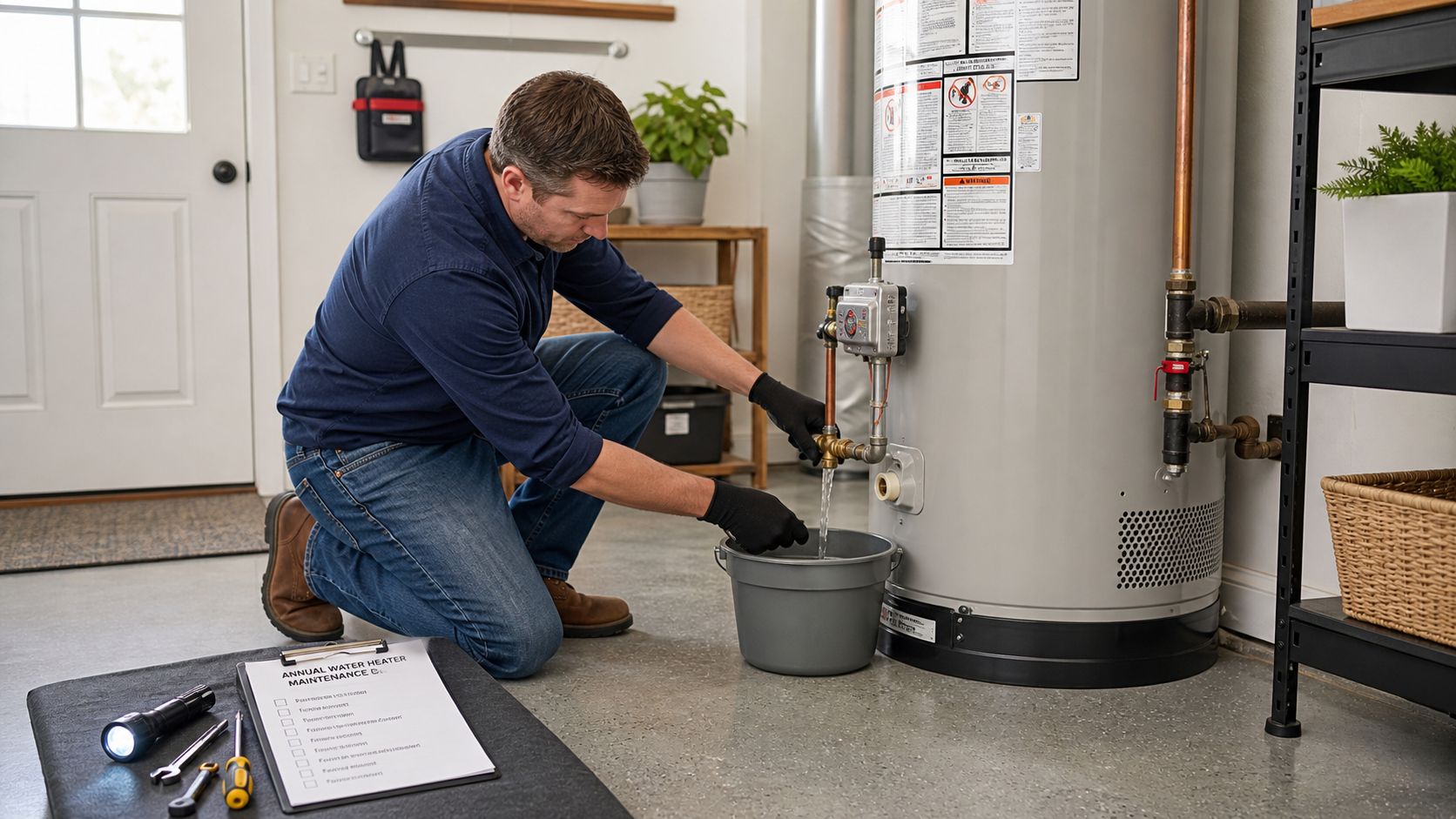
There are also a few local habits that help. Keep the vent and intake area clear during heavy snow. Watch for basement moisture around the base of the tank. Insulate the first few feet of hot-water pipe so the water reaches fixtures faster and the heater doesn't have to work as hard to satisfy the call for hot water.
A water heater rarely fails all at once without warning. Most give off small clues first, like slower recovery, noisy operation, or a pilot that starts acting up.
If you manage rental units, small commercial spaces, or a busy household in Macomb or Oakland County, a yearly check is cheaper than waiting for an emergency call. And if the heater has already started showing symptoms, a trained plumber can tell you whether it needs repair, replacement, or just maintenance. Call Jay's Plumbing and sewer Now @ 586-634-3450 to schedule service, ask about a free estimate, or get 24-hour help when the hot water goes out.
If your gas water heater is still leaving you with cold water, don't wait for the next shower to confirm it. Visit Jays Plumbing and Sewer to schedule water heater repair, water heater replacement, or a full plumbing check from a local crew that works in Macomb and Oakland County every day.
