

You see a few tiny flies lift off every time you reach for the kitchen faucet. The counters are clean, the fruit bowl looks fine, and yet the insects keep returning around the sink. Before treating the entire kitchen like a pest problem, check the drain.
Fruit flies in a drain often point to moist organic residue inside plumbing. Drain walls, P-traps, garbage disposal splash guards, floor drains, and seldom-used fixtures can hold the film that supports eggs and larvae. Spraying the adults may make the sink look better briefly, but it won't remove the source.
The practical approach is straightforward. Identify the fly, locate the damp organic buildup, physically clean it, and look for a plumbing defect if the activity continues. That approach applies whether you're in Fraser, Warren, Sterling Heights, Rochester, or elsewhere in Macomb and Oakland County.
Table of Contents
- What Those Flies in Your Drain Actually Mean
- Fruit Flies vs Drain Flies and Why the Difference Matters
- How to Clean the Drain the Right Way
- Quick DIY Fixes Homeowners Try First
- When the Flies Keep Coming Back
- Preventing Flies in Drains Around Your Home
- Your Action Plan and Common Questions
What Those Flies in Your Drain Actually Mean
A clean countertop doesn't rule out a dirty drain interior. Fruit flies can reproduce wherever fermenting organic material stays wet, and slow-moving or seldom-used drains can develop a slime layer above the water line. Iowa State University Extension identifies these drains as likely breeding sites.
The P-trap and the inner walls of a drain can collect grease, food particles, soap residue, bacteria, and other organic sludge. A garbage disposal may add another hiding place, especially beneath its rubber splash guard, where scraps remain damp after the sink appears clean. The source might also be a dishwasher connection, laundry sink, basement floor drain, trash container, or another wet collection point.
Watch the pattern before reaching for chemicals:
- Activity after running water: Flies emerging near a particular drain suggest a plumbing source.
- Flies around produce or recycling: Ripening fruit, sugary spills, empty bottles, and cans can support true fruit flies.
- Flies near a basement fixture: An unused floor drain or dry trap may deserve attention.
- Flies around several fixtures: Multiple breeding points or a deeper drain-line condition may be involved.
Practical rule: Killing visible adults is cleanup of the symptom. Removing the slime inside the plumbing addresses the breeding site.
University guidance consistently emphasizes removing the larval food source. The University of Kentucky's drain-fly guidance explains why locating and eliminating the breeding site matters more than treating the air around the sink. If accessible drains and food sources are clean but flies remain, the source may be deeper in the plumbing or hidden elsewhere.
Fruit Flies vs Drain Flies and Why the Difference Matters
Correct identification saves time. True fruit flies are commonly associated with ripening produce, fermented liquids, sugary residue, compost, trash, mops, and cleaning rags. Iowa State's fruit-fly guidance also notes that drains can support them when a moist film of fermenting material is present.
Drain flies, sometimes called moth flies, look different. They're usually dark, fuzzy, and rounded, with wings that resemble tiny moth wings. They tend to rest on sink walls, shower tile, or nearby surfaces and make short, weak flights when disturbed. Their larvae develop in gelatinous film containing bacteria, fungi, grease, soap residue, and organic debris.
The treatment changes with the identification:
| What you notice | More likely source | Useful response |
|---|---|---|
| Small tan or brown flies around produce | Fermenting food or liquid | Remove the food source, clean spills, and wash containers |
| Dark, fuzzy flies resting near a drain | Drain biofilm | Scrub the drain interior and inspect connected fixtures |
| Flies near a disposal | Trapped food residue | Clean the splash guard and accessible disposal area |
| Flies near a bathroom or floor drain | Stagnant moisture or buildup | Clean the fixture and check the trap and line |
The University of Arkansas Extension explanation of drain flies connects these insects with slimy biofilm, soap scum, bacteria, fungi, and organic sludge inside plumbing. That's why pouring a cleaner down the opening may feel productive while leaving the main breeding layer untouched.
If the insects are moth-like and remain after careful cleaning, don't assume the first drain you checked is the only source. Overflow passages, tub drains, shower pans, floor drains, and inaccessible branch lines can all deserve inspection.
How to Clean the Drain the Right Way
The fix is mechanical removal. You want to take away the material where larvae feed, not just make the drain smell cleaner.
Start at the opening
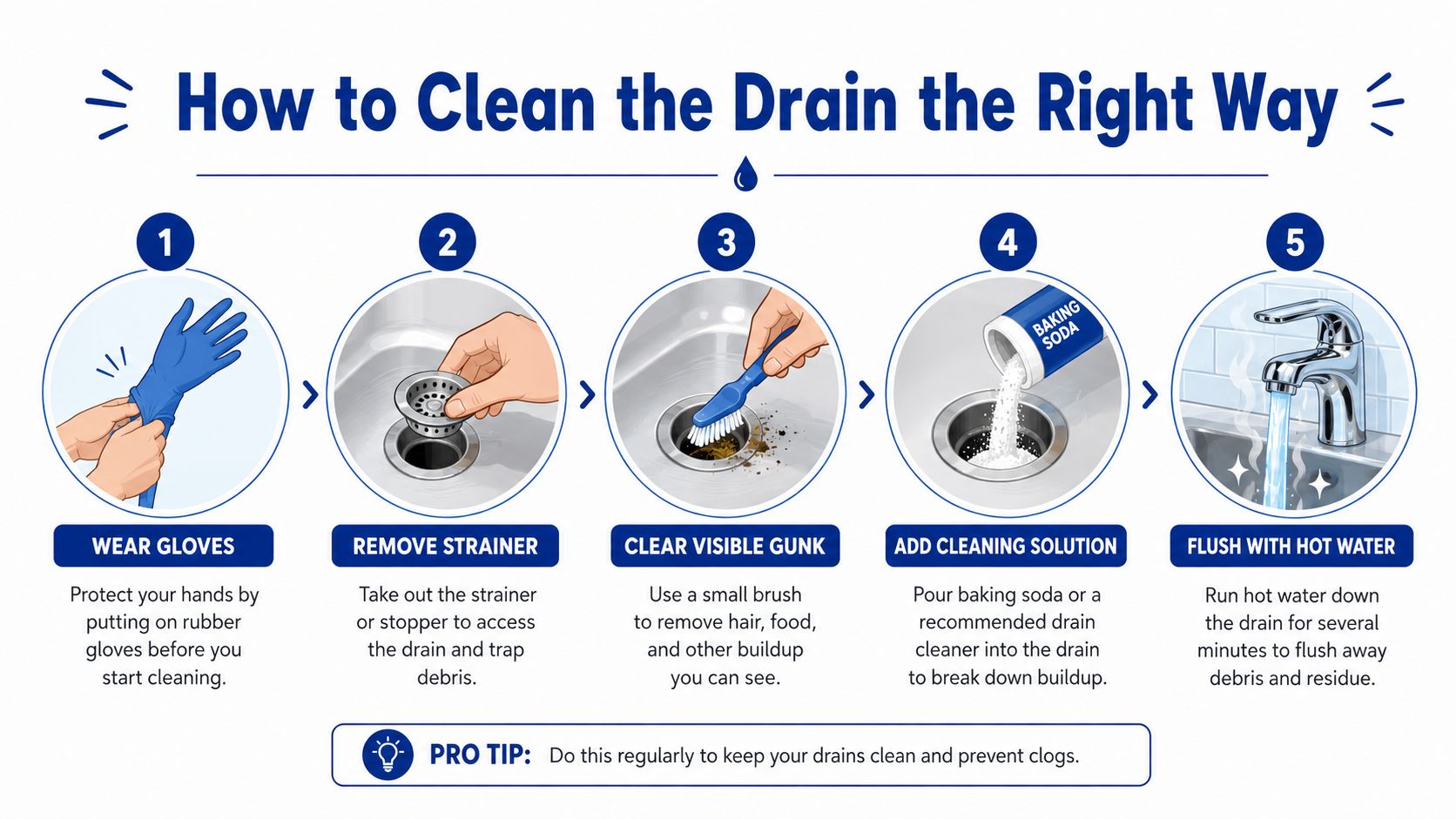
Put on gloves and remove the sink strainer, stopper, or other removable cover. Clear food from the basin, then use a stiff nylon brush, an old toothbrush, or a flexible drain brush to scrub the stopper, flange, drain opening, and reachable pipe wall.
Add a small amount of dish detergent to the brush. It helps loosen greasy film without relying on aggressive drain chemicals. Work beneath the stopper and around the flange, because residue often remains in places you can't see from above.
Clean the garbage disposal splash guard one section at a time. Food particles can remain under the rubber folds and continue supporting flies even after the sink opening looks clear.
Flush carefully
Run plenty of hot water after scrubbing. Avoid using boiling water repeatedly, particularly when the drain includes PVC piping or older seals that may not tolerate unnecessary heat. Confirm that the sink drains normally and that the disposal operates without holding water or debris.
Never mix bleach with vinegar, ammonia, or another cleaner. Don't mix drain chemicals with each other, either. If you're unsure what product is already in the line, stop adding chemicals and call a plumber.
Finish the surrounding cleanup
Wipe the basin and nearby counter, empty the trash, and wash removable strainers or disposal parts. Repeat the physical scrubbing after several days if activity continues, since hidden residue may remain after the first pass.
A clean, fast-draining fixture is a better measure of progress than the number of adults you see on one day. For basement and utility fixtures, this guide to cleaning floor drains covers an area homeowners often overlook.
A short visual walkthrough can help you see the difference between rinsing a drain opening and cleaning the surfaces where buildup collects.
Quick DIY Fixes Homeowners Try First
Homeowners usually start with whatever is already under the sink. Some remedies provide limited relief, but their limits matter.
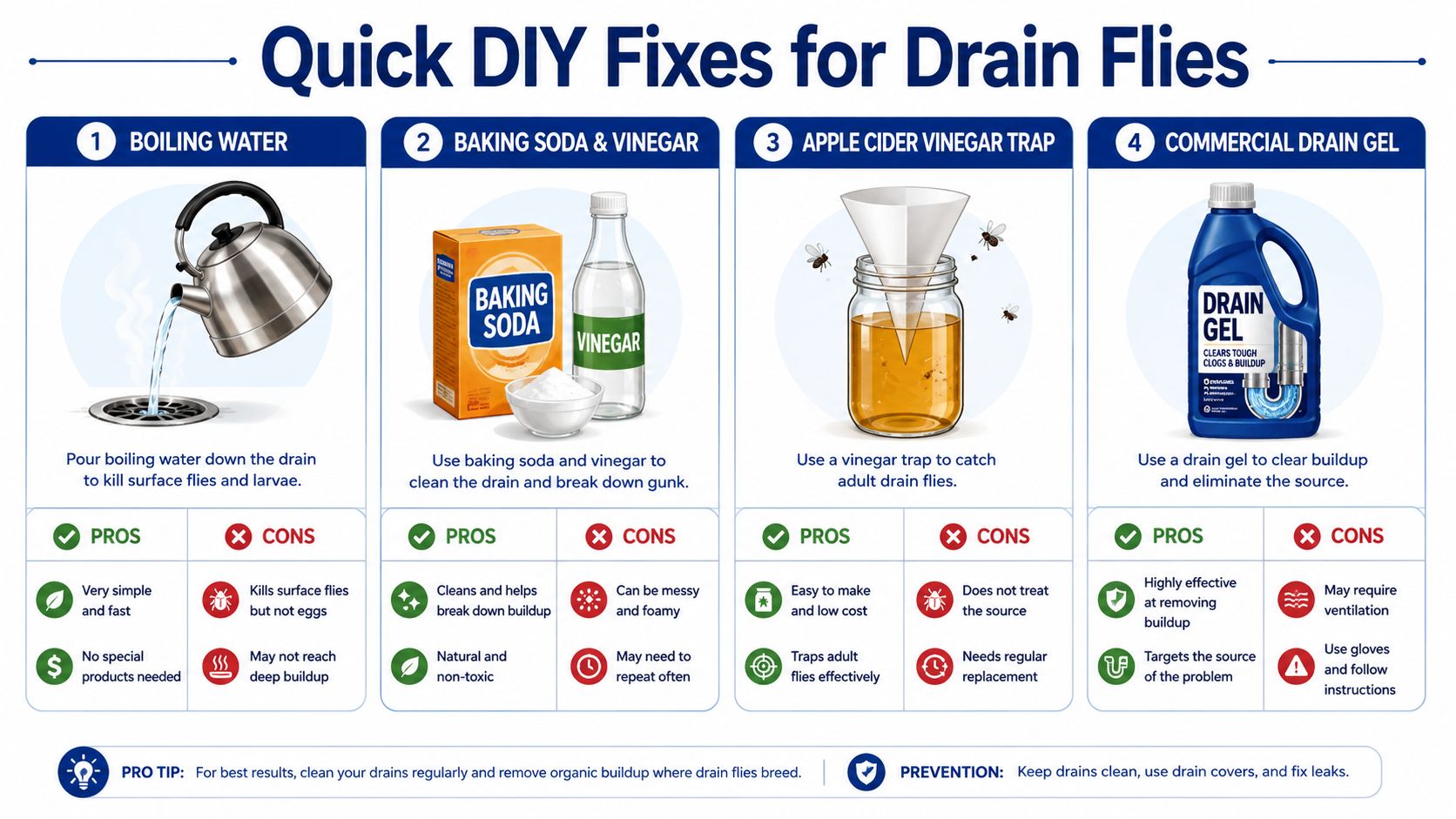
Boiling water can loosen surface residue and kill insects it contacts. It rarely reaches every section of the P-trap or branch line, and repeated heat can be unsuitable for some piping and seals.
Baking soda and vinegar create a visible fizz and may freshen the drain rim. The reaction doesn't guarantee removal of the film coating the inside of the pipe, which is where the problem often continues.
Apple cider vinegar traps can catch adult fruit flies. They don't reach eggs or larvae below the water line, so they're useful for reducing visible adults, not for correcting a drain-fly breeding site.
Commercial drain gels may break down some organic matter, but chemical products require careful label compliance, ventilation, and compatibility with the plumbing. Older homes in Macomb County may contain aging piping or seals that deserve a cautious approach. Mechanical cleaning is easier to evaluate because you can see the material being removed.
A drain cleaner also can't correct a cracked line, dry trap, leaking shower pan, or sewer defect. If the disposal is part of the problem, start with safe cleaning and use this troubleshooting guide for a garbage disposal that won't turn on before putting hands near the unit.
The trade-off is simple. DIY methods may reduce odor or visible flies, but scrubbing reaches the breeding material more directly. If you can't reach the buildup safely, stop experimenting with combinations of products.
When the Flies Keep Coming Back
You cleaned the sink, swatted the adults, and still see flies shortly afterward. That pattern changes the diagnosis. Persistent activity usually means the source is deeper, different from the fixture you cleaned, or connected to a plumbing condition that keeps the area wet.
A cracked or disconnected drain line behind a wall can hold organic residue where a brush can't reach. A dry P-trap in an unused basement floor drain or utility fixture can allow odors and insects from the drainage system into the room. A low section, sometimes called a belly, can retain sludge and create a recurring habitat.
Look for clues rather than blaming household cleanliness:
- Gurgling: Air movement through a partially obstructed drain can point to a flow or venting concern.
- Several slow fixtures: A problem affecting more than one fixture may involve a branch or main line.
- Sewer odor: Persistent odor near a drain deserves plumbing attention.
- Basement concentration: Flies around a floor drain can indicate an unused, dry, or buildup-filled trap.
- Ceiling moisture: A stain below a bathroom may indicate a leaking drain or supply connection.
Southeast Michigan homes also face seasonal stress from heavy rain, snowmelt, shifting soil, and winter conditions. Those factors don't automatically cause drain flies, but they can expose drainage, sewer, sump, and leak problems that keep organic material wet.
Repeated chemical treatment treats what you can see. A camera inspection helps determine what's holding moisture and residue out of sight.
At this point, repeated flushing can cost more time than a professional assessment. A plumber may use a drain machine, high-pressure water jetting, or a sewer camera depending on the symptoms. Learn when hydro jetting may be appropriate for a clogged drain before assuming a bottle of cleaner is enough.
Call Jay's Plumbing and sewer Now @ 586-634-3450 if recurring flies come with slow drainage, sewer odor, water stains, or basement moisture. That's a plumbing investigation, not a hygiene failure.
Preventing Flies in Drains Around Your Home
Prevention in a Southeast Michigan home starts with fixtures that sit unused. Basement floor drains, laundry sinks, utility sinks, and guest-bathroom fixtures may receive little attention during Michigan winters, allowing traps and drain surfaces to become stagnant.
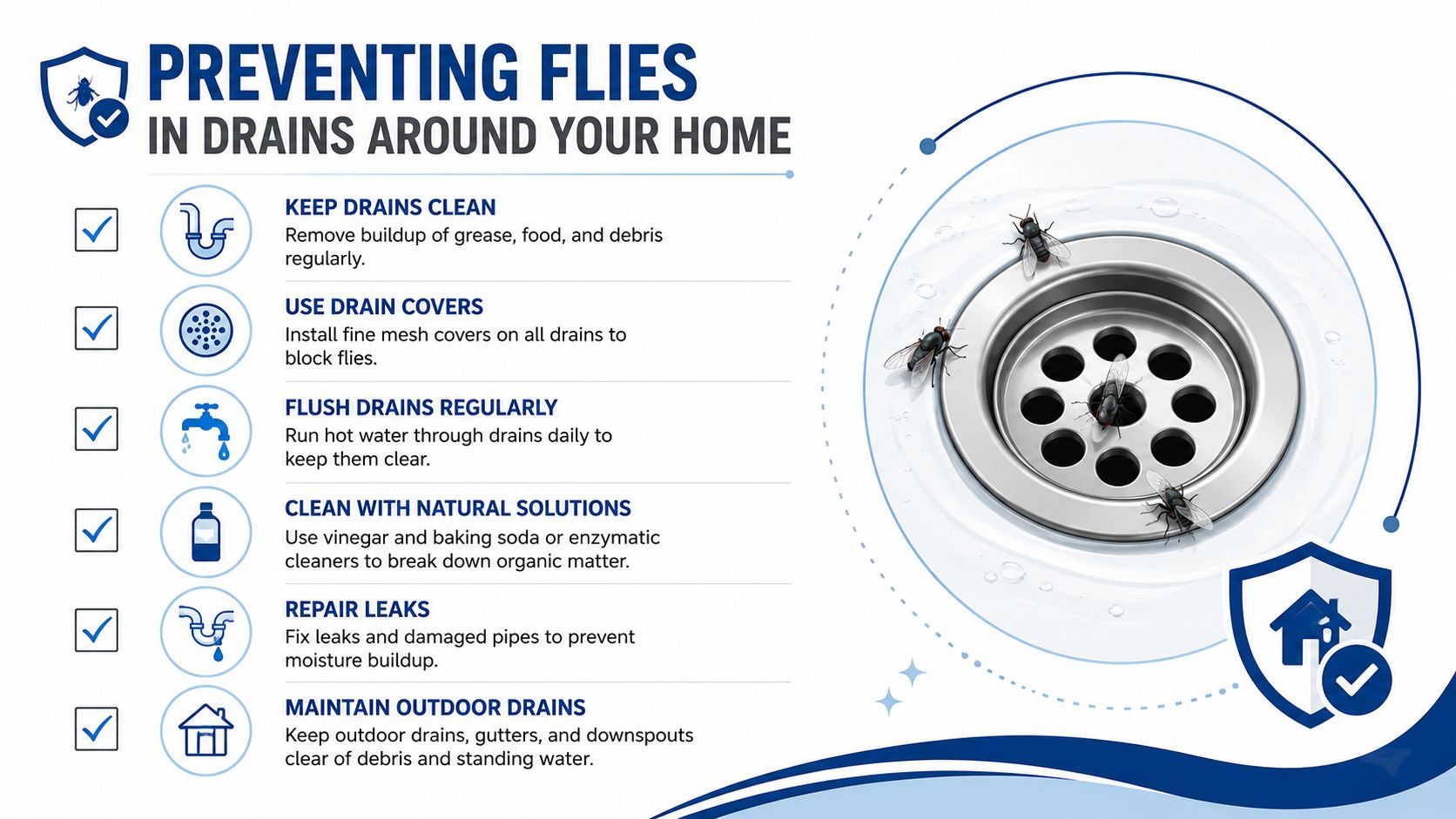
Run hot water through every seldom-used fixture weekly for about 30 seconds, a routine recommended in this context to keep the trap supplied and the drain surface wet. Don't forget floor drains and laundry sinks. If a fixture has a trap primer or another maintenance setup, follow its existing instructions rather than adding chemicals blindly.
A practical maintenance rhythm
- Every week: Brush sink stoppers, tub drains, and bathroom overflow openings. Hair and soap residue can form the same damp organic environment that supports buildup.
- Every month: Consider an enzyme-based drain maintenance product that matches the plumbing and label directions. It's a maintenance option, not a substitute for removing an established obstruction.
- Before winter: Check and clean the basement floor-drain trap, especially if the drain rarely receives water.
- After spring snowmelt: Inspect basement floor drains and nearby walls for dampness, odor, or slow drainage.
- Every season: Keep coffee grounds, grease, and heavy food residue out of the kitchen drain. They coat pipe walls and make later cleaning harder.
Property managers and small businesses should add floor drains, mop sinks, grease-handling areas, and seldom-used bathrooms to their maintenance checklist. Restaurants need extra attention around disposals and grease traps because organic residue can remain even when customer-facing areas look spotless.
Your Action Plan and Common Questions
Use a simple decision path:
- Identify the fly. Check whether it's a produce-attracted fruit fly or a dark, fuzzy drain fly.
- Find the damp residue. Inspect the sink, stopper, disposal guard, overflow, floor drain, and nearby trash.
- Scrub the biofilm. Remove the material from the opening and reachable pipe surfaces, then flush safely.
- Escalate when needed. If activity continues for about two weeks, or returns with odor, slow drainage, or moisture, schedule a plumbing inspection.
Common questions
Can drain flies make people sick? They're generally treated as a nuisance rather than a direct health threat, but flies from polluted breeding areas can contaminate surfaces where they land. Keep them away from food-contact surfaces and clean those surfaces normally.
How quickly can eggs hatch? Conditions matter. Texas A&M reports that eggs can hatch in 32 to 48 hours at 70°F, and that the life cycle may complete in 1 to 3 weeks under favorable conditions. See the Texas A&M indoor-fly guidance for the biological explanation.
Will bleach alone solve it? Usually not. Bleach may contact part of the opening, but it doesn't reliably remove the entire protected film. Scrubbing and source removal remain the durable steps.
Do fruit flies live in pipes? They can breed in wet fermenting residue inside drains, although produce, compost, trash, and containers may be the actual source. Drain flies are more strongly associated with gelatinous film inside stagnant plumbing.
What should Michigan homeowners do with floor drains? Keep traps from drying out, inspect them before winter and after snowmelt, and call for help when odor, insects, or slow drainage persists.
For a plumber near me search in Macomb or Oakland County, choose a company that treats recurring flies as a possible drain, sewer, leak, or trap problem. Call Jay's Plumbing and sewer Now @ 586-634-3450 for drain cleaning, sewer camera inspection, floor-drain service, leak detection, or related residential and commercial plumbing help.
Call Jay's Plumbing and sewer Now @ 586-634-3450
If the flies keep returning, Jays Plumbing and Sewer can inspect drains, clean buildup, evaluate floor drains and traps, and use sewer camera diagnostics when the source isn't visible. Visit Jays Plumbing and Sewer to schedule service or request an estimate for your home or business.
