
Monday morning can go from normal to irritating fast. You turn on the shower in a house in Macomb County, wait for the steam, and get a cold burst instead. That's usually the moment homeowners start searching hot water heater troubleshooting, and the smartest move is to slow down, identify the symptom, and match it to the right system before touching anything.
A water heater problem is rarely random. Electric, gas, and tankless units fail in different ways, and the fix that makes sense for one can waste time on another. Around Fraser, Sterling Heights, Warren, Rochester, Troy, and the rest of Macomb and Oakland County, I've seen plenty of calls where the issue turned out to be a reset, a pilot problem, sediment, or a sizing mismatch, not a full tank replacement.
Table of Contents
- When Your Hot Water Suddenly Goes Cold
- Safety First Before You Touch Anything
- Matching the Symptom to the Likely Cause
- Safe DIY Checks for Electric and Gas Heaters
- Flushing Sediment the Right Way
- When Troubleshooting Should Stop and a Plumber Should Start
- Your Troubleshooting Checklist and Local Next Steps
When Your Hot Water Suddenly Goes Cold
A homeowner in Macomb County usually doesn't notice a water heater until the morning routine falls apart. The shower runs cold, the dishwasher cycles weakly, and somebody asks if the furnace is acting up too. The instinct is to grab tools, but the better first move is to read the symptom pattern, because no hot water, lukewarm water, noise, and leaks point in different directions.
Practical rule: start with the complaint, not the parts. The symptom usually tells you whether you're dealing with power, ignition, sediment, capacity, or a failing tank.
That matters because the checklist changes with the fuel type. An electric tank usually sends you toward the breaker, thermostat, reset button, or heating elements. A gas unit puts the pilot, gas control, and burner path in the spotlight. A tankless system adds flow rate, ignition, and control-board issues, which means the same “no hot water” call can have a very different root cause depending on what's mounted in the utility room.
Homeowners in Oakland County often ask whether they should call right away or wait and see. If the water heater is only acting up once, a quick triage may help. If it's older, repeatedly tripping, leaking, or making new sounds, the problem is usually bigger than a simple adjustment, and that's where a licensed plumber can save time and avoid guesswork. warning signs of a failing water heater
Safety First Before You Touch Anything
Before any hot water heater troubleshooting, shut the system down the right way. For an electric unit, turn off the double-pole breaker. For a gas unit, shut the gas control valve to the off position. Then close the cold-water supply valve so you're not working with a live, pressurized tank.
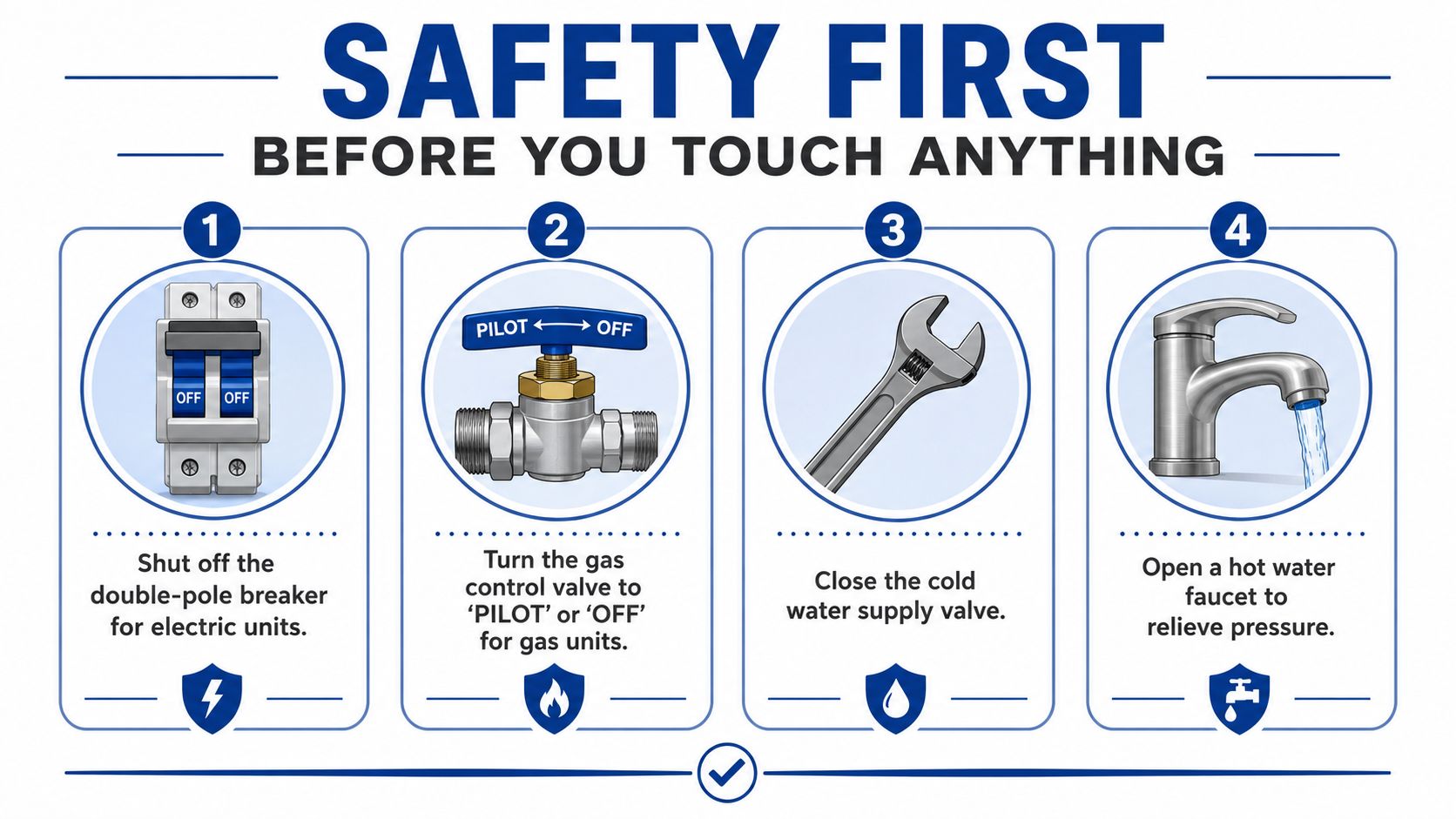
A non-contact voltage tester is cheap insurance on an electric heater. If the panel is still energized, don't open access covers or touch terminals. The same caution applies when the floor is wet, because standing water near wiring changes a simple inspection into a hazard.
If you smell gas, stop and leave the area. Don't try to diagnose a gas leak by yourself.
There are also signs that the troubleshooting should end immediately. Active leaking around electrical components, visible scorching on wires, or water pooling near the base are all reasons to step back and call for help. The same goes for a heater that won't hold pressure safely or shows signs of a gas line issue. If you suspect the gas supply side is involved, gas line repair is not a homeowner project.
Matching the Symptom to the Likely Cause
The fastest way to avoid the wrong repair is to match the complaint to the most likely cause. A tank that goes cold, runs lukewarm, rattles, or leaks is not saying the same thing, even if the caller describes all of it as “the water heater is bad.”
| Symptom | Most Likely Cause | Quick Check | DIY or Call Pro |
|---|---|---|---|
| No hot water at all | Power loss, tripped breaker, failed element, pilot outage | Check the breaker or pilot first | DIY first, then call if it returns again |
| Lukewarm or short-duration hot water | Sediment, thermostat drift, undersized tank, dip tube issue | Compare tank age, usage, and recovery time | DIY check if electric or gas settings are accessible |
| Popping or rumbling noises | Sediment buildup on the tank bottom | Listen during heating, then inspect for flushing need | DIY flush if the tank is in good shape |
| Leaking at the base or fittings | Valve issue, loose connection, corrosion, or tank failure | Look for the leak source and rust staining | Call a pro if water is coming from the tank body |
That last row is where homeowners get misled. A dripping temperature-and-pressure valve can be caused by thermal expansion in a closed plumbing system, especially when a backflow preventer or check valve keeps expanded water from moving back into the supply main. That's a pressure issue, not automatically a bad valve.
Low hot-water volume can also be a sizing issue instead of a broken heater. A tank that's too small, a failing dip tube, or a house with high demand can all feel like the same complaint. A plumber's job is to separate those causes before anyone starts buying parts that won't solve the problem. A good second opinion can be the difference between a simple correction and a needless replacement.
Safe DIY Checks for Electric and Gas Heaters
For an electric water heater, the most useful sequence is simple. First, confirm the breaker is on and hasn't tripped. Next, check the red high-limit reset button under the upper thermostat access panel. If it clicks, the heater overheated and tripped a safety switch, which can explain a sudden loss of hot water.
After that, inspect the thermostat and elements only if the power is off. The important part is the order. Don't open access panels or touch terminals before verifying de-energization with a tester, because that's where homeowners get hurt. If the reset restores hot water for a day or two and then the problem returns, the heater is telling you the fault is deeper than a simple reset.
For a gas water heater, start with the pilot flame, thermostat setting, and visible signs of soot, leaks, or corrosion. Most residential heaters operate around 120°F, and that setpoint is a practical target for normal use. If the pilot won't stay lit after following the manufacturer's sequence, the problem may be with the thermocouple, the gas control valve, or another combustion component.
A quick homeowner checklist can look like this:
- Electric breaker: verify power is on and reset only if it clearly tripped.
- High-limit reset: press the red button once, then wait to see if the heater recovers.
- Pilot flame: confirm it's present and stable on gas units.
- Thermostat setting: keep it around 120°F for ordinary residential use.
- Visible condition: note rust, scorch marks, leaks, or repeated shutdowns.
If those checks don't restore normal operation, stop there. A recurring ignition issue, wiring problem, or thermocouple failure is where a trained technician earns the call. Jay's Plumbing and Sewer handles electric, gas, and tankless diagnostics for homeowners and property managers who want a clear answer instead of a guess.
Flushing Sediment the Right Way
A heater that rumbles, pops, or sounds like gravel moving around often has sediment sitting in the bottom of the tank. Cold water enters, minerals settle, and that layer makes the burner or element work through insulation it should not have to fight. The unit may still run, but recovery gets slower and the tank starts sounding rough.
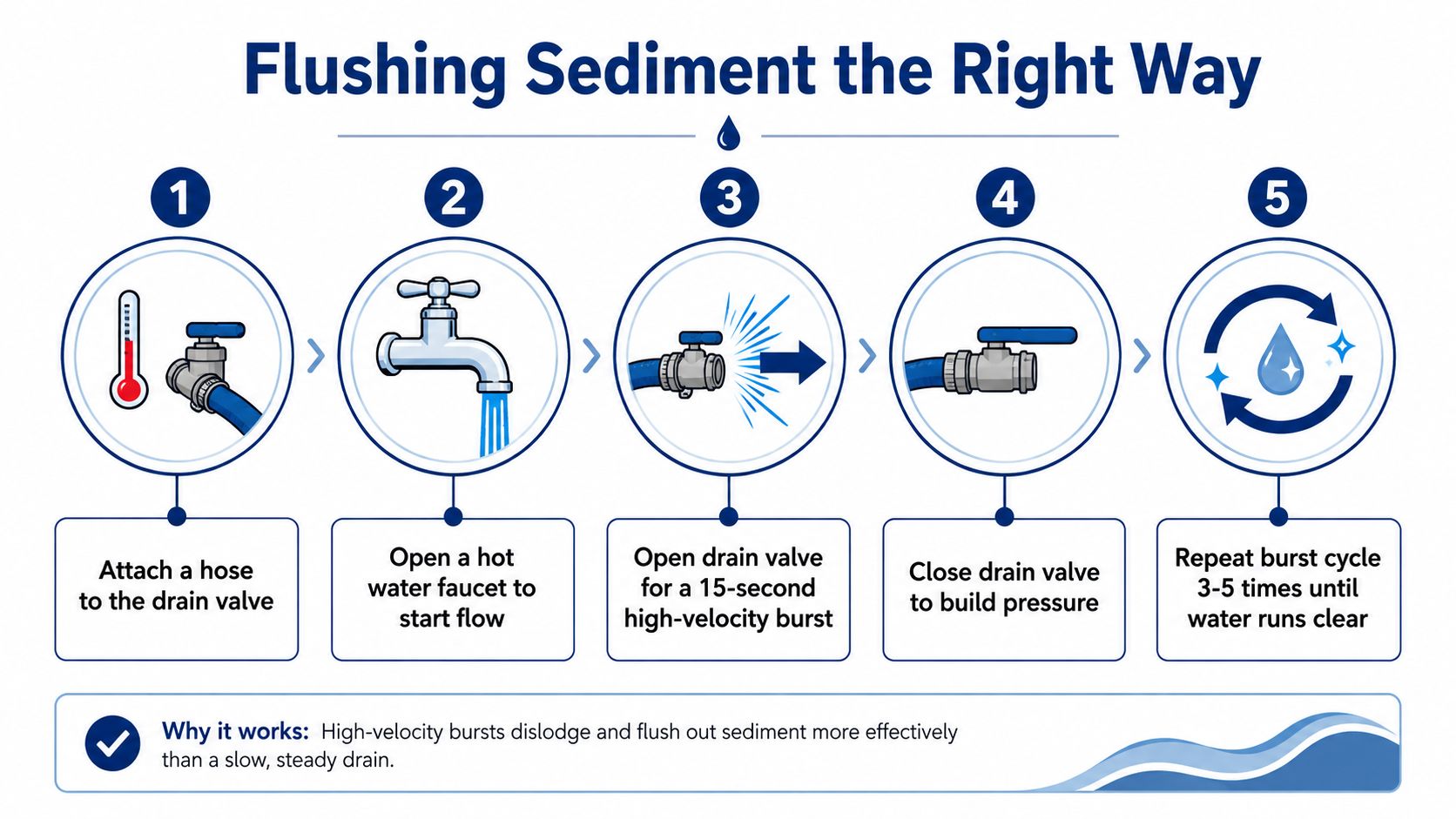
A flush only helps if it moves the debris out. One service guide recommends attaching a garden hose to the drain valve, then using a 15 to 20 second high-velocity burst by opening the cold-water supply, closing it, and repeating that cycle 4 to 5 times until the discharge runs clear. That burst breaks loose heavier scale from the bottom and carries it out instead of letting it settle back down.
Clear water at the drain matters more than the clock. If the tank keeps spitting grit, the heater is still shedding scale.
Maintenance and efficiency meet at this step. One industry roundup says sediment buildup can reduce heating efficiency by up to 15% in the right conditions, which is why annual flushing makes sense in homes with hard water and older tanks. If the drain water never clears, the tank may be too scaled, the drain valve may be restricted, or the tank itself may be near the end of service life.
If you want a visual walk-through, use this instructional infographic on safe sediment flushing alongside the steps above.
When Troubleshooting Should Stop and a Plumber Should Start
Some problems are worth a homeowner's attention. Others are a sign to put the tools down. If the breaker keeps tripping, a gas heater won't stay lit, the tank is sweating at the base, or rusty water is coming from the taps, the heater needs a licensed diagnosis rather than another reset.
A heater that's 10 to 15 years old is also in the range where repair conversations often shift toward replacement planning. That doesn't mean every older tank is doomed, but it does mean the odds of repeated failures climb as the unit ages. A visible leak around the tank body is a different category altogether, because that usually points to internal corrosion and a tank that's reaching the end of service life.
A reset is not a repair when the same safety device keeps tripping.
That's where local service matters. In Macomb and Oakland County, homeowners often need someone who can inspect the heater, explain whether it's a repair, a replacement, or a system issue, and then act without a sales pitch. emergency plumbing service is the right path when the heater is leaking, unsafe, or completely out of commission.
If the issue is beyond a simple check, Jay's Plumbing and Sewer can diagnose the unit, quote the work, and often replace the heater the same day with 24-hour availability. That kind of response matters on a winter morning in Michigan, especially when hot water is tied to the whole house running smoothly.
Your Troubleshooting Checklist and Local Next Steps
A good water heater routine is boring in the best way. Keep the thermostat at 120°F, flush sediment on a regular schedule, and glance at the heater for leaks or rust before a problem gets loud. If you own the place, note the heater's age somewhere visible, because replacement planning gets easier when you're not guessing.
For a quick utility-closet checklist, keep this short list handy:
- Flush sediment annually: especially if the tank starts popping, rumbling, or recovering slowly.
- Set the thermostat to 120°F: that's the practical residential target used in most homes.
- Check for leaks monthly: look at the base, fittings, and nearby piping.
- Test the pressure relief valve annually: make sure it moves and discharges properly.
- Check the pilot light and gas connections: if you have a gas unit, keep an eye on ignition issues.
- Keep a log of unusual noises: a repeated sound pattern usually tells you more than a one-time rattle.
If you're in Fraser, Sterling Heights, Warren, Troy, Rochester, Clinton Township, or anywhere else in Macomb or Oakland County and the problem doesn't fit a simple reset, call Jay's Plumbing and Sewer Now @ 586-634-3450. That's the right move when you want a straightforward answer on water heater repair, water heater replacement, leak detection, or a broader plumbing issue tied to drains, sewer repair, pipe repair, or bathroom and kitchen plumbing.
Three quick questions come up often. During a Michigan winter freeze, keep the heater area warm and don't ignore no-hot-water complaints that follow a cold snap, because frozen plumbing can create other failures. Tankless systems need different checks, especially flow and error codes, so don't use a tank checklist on a tankless unit. A thermal expansion issue usually shows up as pressure-related valve dripping, while a bad valve is more likely when the valve itself is worn, corroded, or stuck.
If your hot water problem is getting worse, don't wait for it to turn into a larger repair. Jays Plumbing and Sewer helps homeowners, property managers, and local businesses across Macomb and Oakland County with honest water heater troubleshooting, repair, and replacement options. Call when you want a clear diagnosis and a practical next step, not a guess.
