

A toilet that leaves water on the bathroom floor is frustrating, but a toilet leak between tank and bowl is usually a fixable problem, not a mystery. In a lot of Macomb County and Oakland County homes, especially older bathrooms that have seen years of daily use, the leak comes down to a tired gasket, loose tank bolts, or washers that no longer hold compression the way they should.
What homeowners often see first is a little water near the base, a damp seam between the tank and bowl, or a toilet that seems to refill too often. That's the point where the wrong guess can waste time, so the first job is to identify the source before touching a wrench.
Table of Contents
- What a Tank-to-Bowl Leak Looks Like in a Real Bathroom
- Why the Tank-to-Bowl Connection Fails
- Pinpointing the Leak Before You Touch a Wrench
- Replacing the Gasket and Tank Bolts Step by Step
- When the Leak Means Replacement Instead of Repair
- Preventing the Next Leak and Knowing When to Call
What a Tank-to-Bowl Leak Looks Like in a Real Bathroom
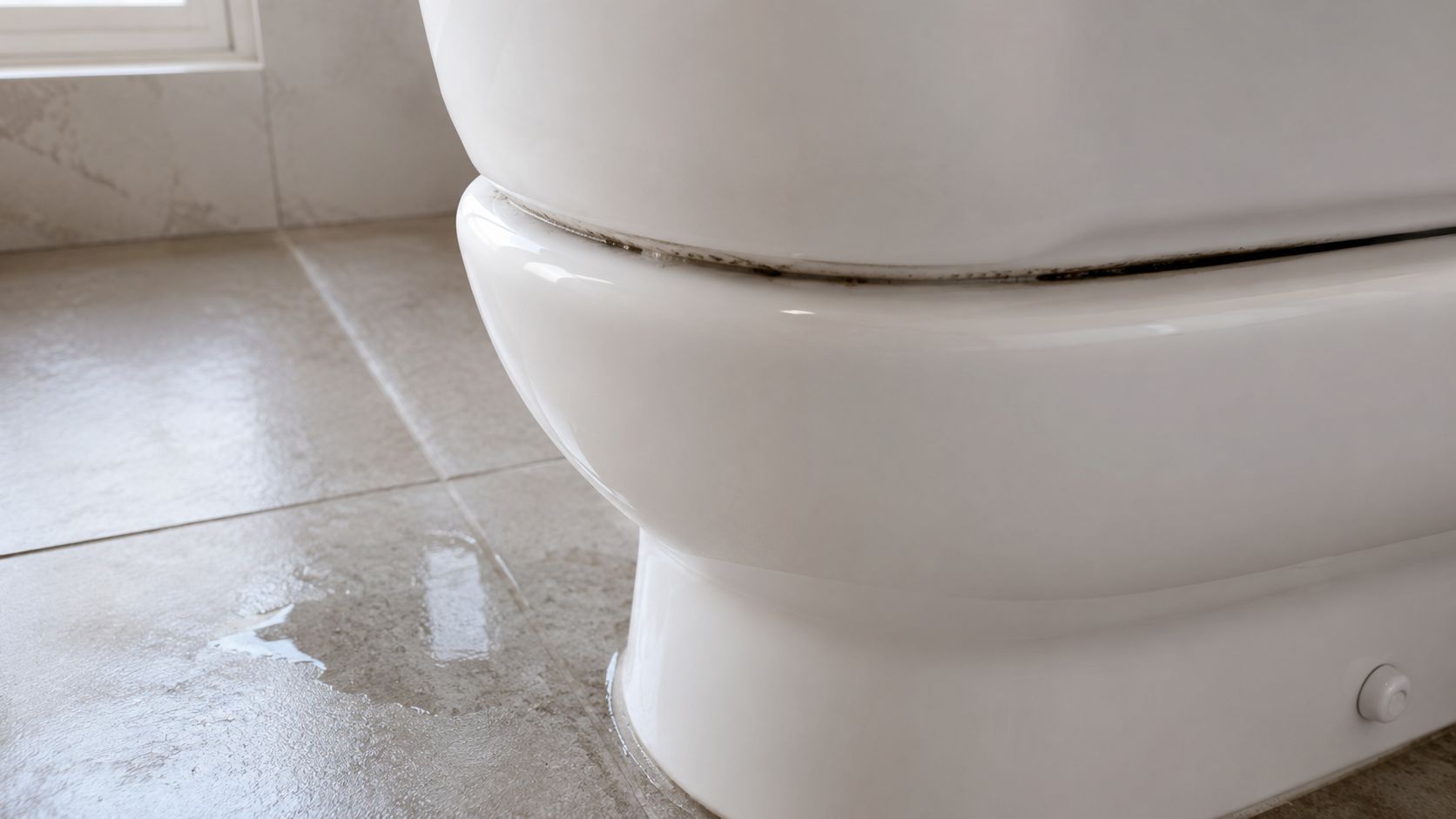
A homeowner usually spots this problem after walking into the bathroom and finding a small puddle, a damp ring, or water that comes back after every flush. That kind of leak often makes people worry right away, but the path is usually narrow and easy to trace. Water does not always pour out in a dramatic stream, it can creep along the porcelain and show up right where the tank meets the bowl.
The three signs I look for first
The first clue is moisture at the seam between the tank and bowl. The second is water on the floor that starts after flushing, not before. The third is a toilet that sounds like it keeps filling when nobody is using it.
Practical rule: if the wettest spot is at the tank bolts or the seam itself, start there before blaming the supply line or the wax ring.
A tank-to-bowl leak shows up so often because the toilet is one of the hardest-working fixtures in the house. Public guidance puts toilets at 45% of indoor water use in one typical-residence leaflet, and 27% of monthly water use in another family-budget guide, which is why a toilet problem can show up fast on a bill or on the floor. The same guidance notes that about 20% of toilets leak, with some summaries putting the range at 20% to 35% of residential toilets leaking to some degree (American Standard's water usage statistics).
That is why I do not treat a seam leak like a minor nuisance. In a bathroom that already gets daily use, especially through Michigan winters when materials contract and old parts get stressed, the smart move is to find the failure early and fix the joint itself, not just wipe up the symptom.
Why the Tank-to-Bowl Connection Fails
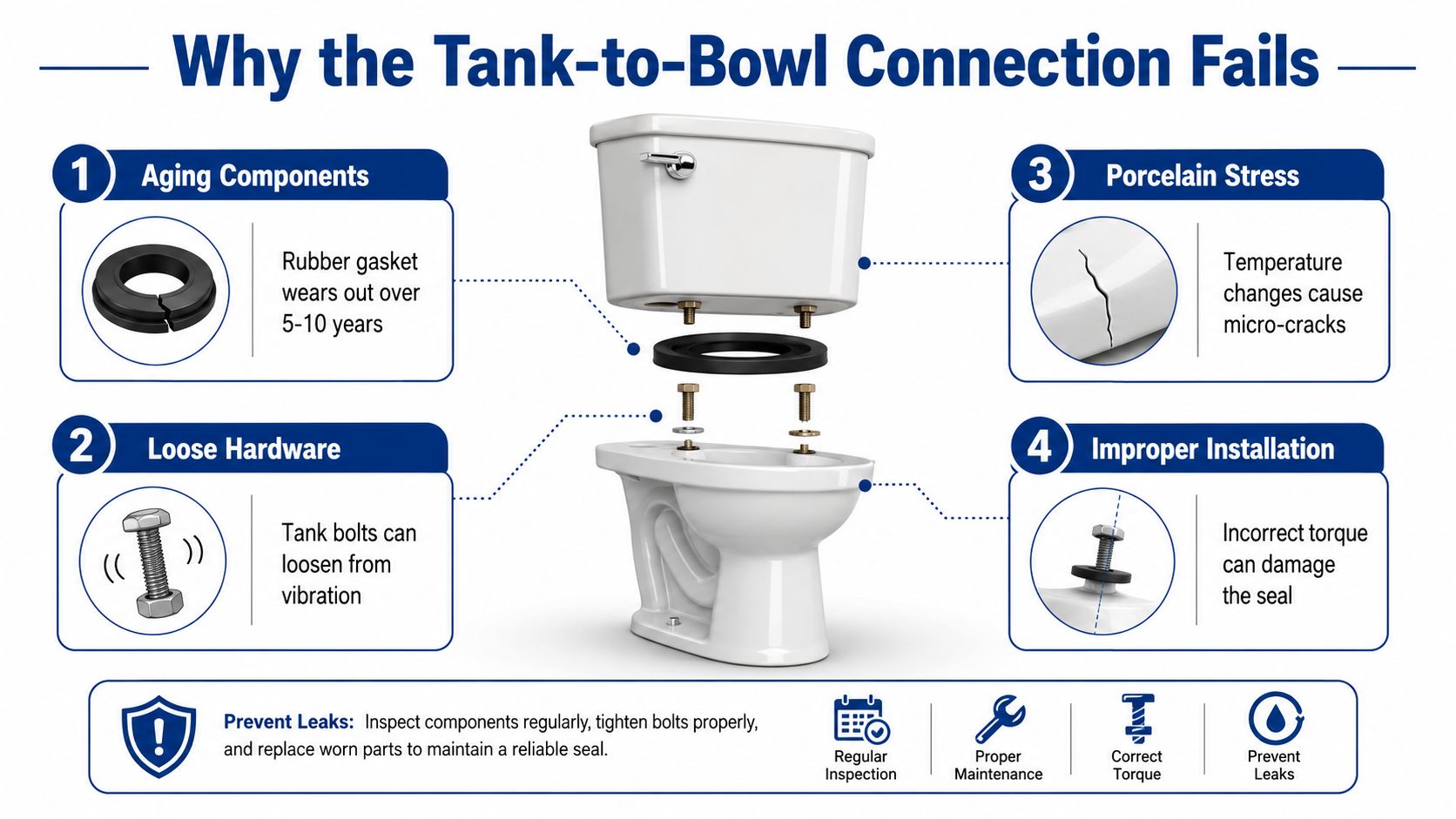
A toilet tank and bowl are separate porcelain pieces, and the joint depends on a small set of parts doing a lot of work. The rubber gasket seals the opening, the bolts hold the tank in place, and the washers spread pressure so the porcelain is not stressed in one spot. When one of those parts ages faster than the others, the seal can start to weep even though the toilet still flushes normally.
The parts wear out at different speeds
Rubber dries out and loses flexibility. Metal hardware can corrode. Washers compress unevenly, especially after the tank has been nudged, cleaned hard, or overtightened in the past. In older Southeast Michigan homes, that mismatch shows up more clearly because the original toilet may have been in service for years before anyone notices the first seep.
The water loss can be far bigger than the wet spot suggests. Public utility materials make that plain. One guide says a toilet can leak 1 gallon per minute, or 1,440 gallons per day. Another says a leaky toilet can waste up to 5 gallons per minute, or 7,200 gallons per day. New York City guidance also says an open fill valve can waste 3 to 5 gallons per minute, up to 4,000 gallons per day (Fargo Municipal High Water Bill Guide).
That is why toilet leak detection gets so much attention from utilities. The EPA says household leaks waste nearly 1 trillion gallons annually nationwide, and the average household's leaks can exceed 9,300 gallons per year (Fargo Municipal High Water Bill Guide). A tank-to-bowl leak sits right in that category of silent waste. It can run all day without making much noise, then show up only after a bill spike or a swollen floor.
A small leak at the tank seam is rarely “just a drip.” It usually means one of the sealing parts has stopped compressing the way it should.
Pinpointing the Leak Before You Touch a Wrench
Before anyone loosens a bolt, the source has to be confirmed. A lot of homeowners chase the wrong fix because water travels, and a drip from the tank can make the floor look like the wax ring failed or the supply line is dripping. On a service call, the fastest reliable test is still the simplest one.
The paper towel test that tells the truth
Shut off the stop valve. Flush the toilet. Dry the outside porcelain completely, especially around the bolt heads and the seam where the tank meets the bowl. Then place dry paper towels or tissue around those spots and watch what wets first.
If the towel gets wet at the bolt heads or seam, the problem is usually the tank-to-bowl gasket or the bolt washers, not the floor seal. If the first moisture shows up lower, near the supply line, the source is different. If you want a deeper breakdown of leak location and related fixture problems, this leak detection resource is a good place to compare symptoms.
A couple of false alarms come up often. Summer condensation can make a tank feel damp. A shaky toilet can splash water in a way that looks like a leak. A tiny supply-line drip can run along the porcelain and fool you from a standing distance.
What not to guess at
Don't assume the wax ring failed just because water is on the floor. Don't keep tightening bolts before you know where the water is starting. And don't confuse a fill-area leak with a seam leak, because the repair parts are different.
If dry paper towels stay dry at the seam and wet somewhere else first, stop and re-check the source. The repair only works when the diagnosis is right.
Replacing the Gasket and Tank Bolts Step by Step
Once the leak shows up at the tank seam, the repair usually starts with the tank-to-bowl gasket, and in many cases the tank bolts and washers need to be replaced at the same time. That order matters because worn hardware can keep a new gasket from seating evenly. I've seen toilets stop leaking after the bolts were brought down to the right tension, and I've also seen the leak return when someone reused bolts that were already rusted or washers that had gone flat.
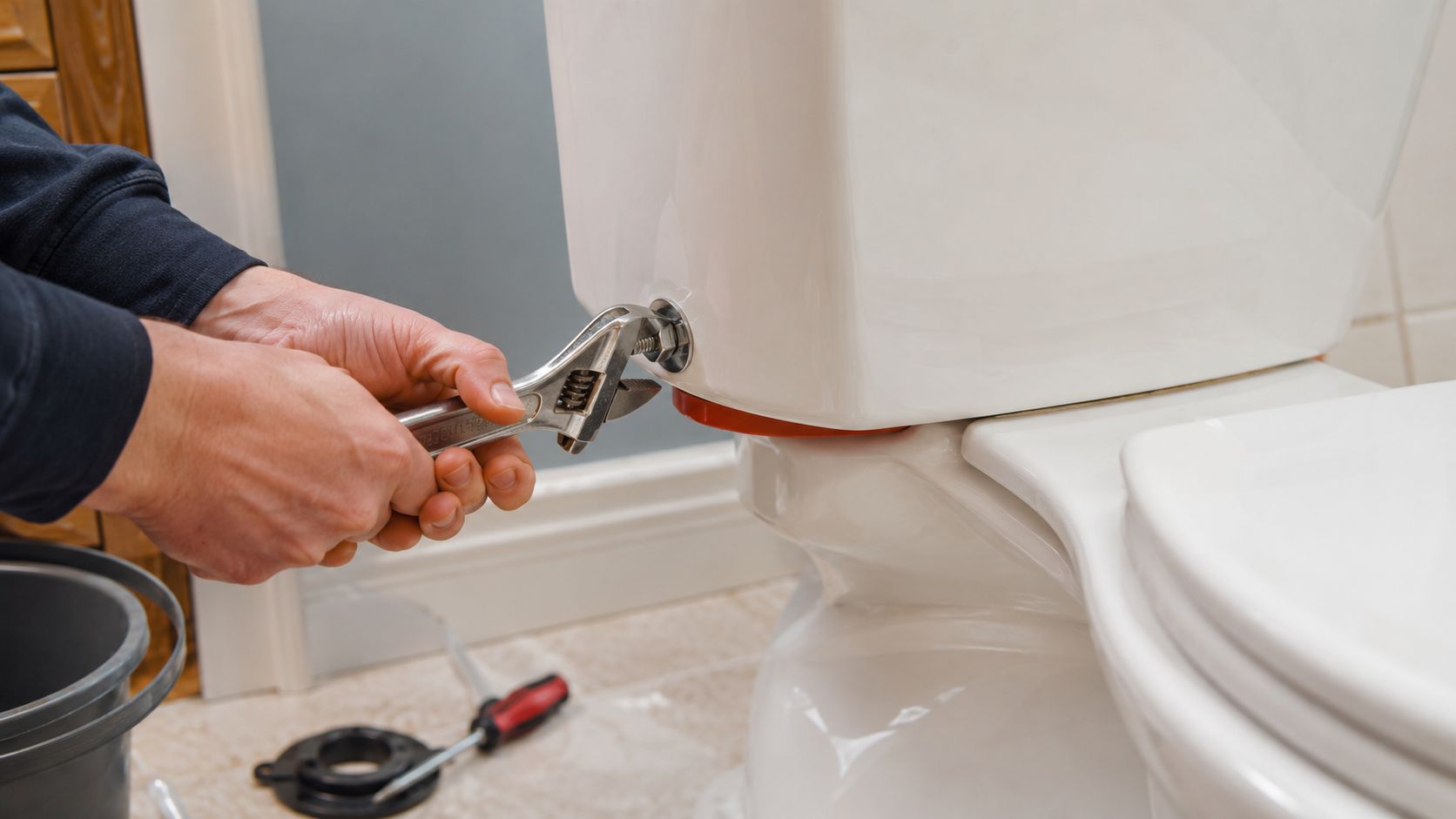
Start by shutting off the water, draining the tank, and disconnecting the supply line. Once the tank is empty, lift it off the bowl, remove the old gasket, and seat the new gasket squarely on the tank outlet. If the old bolts are corroded or the rubber washers are flattened, replace them too. A repair that reuses tired hardware often looks fine for a day and starts seeping again once the tank is filled and put back under pressure.
Reassembly comes down to even pressure. Tighten the bolts in alternating turns, a little at a time, so the tank settles flat on the bowl. You want the tank snug and stable, not forced down hard against the porcelain.
The mistake that cracks tanks
Overtightening causes a lot of trouble here. Too little compression leaves seepage. Too much can crack the tank or distort the gasket, and once the porcelain is cracked, more tightening only makes the failure worse.
Practical rule: stop as soon as the tank no longer rocks and the seal feels even. If you keep cranking because it still feels loose, you are usually moving toward damage, not toward a better seal.
After the tank is back together, reconnect the supply line, refill the tank, and flush several times while watching the joint closely. If the seepage continues after a correct gasket replacement and even tightening, look at the fit of the kit, the condition of the tank base, and any sign of a hairline crack in the porcelain. For homeowners matching parts, the Jays Plumbing toilet parts category is a better place to compare the right hardware than a generic universal pack.
For homeowners who want the right fit without guessing, Jays Plumbing and Sewer also handles bathroom plumbing, residential plumbing, and commercial restrooms, including toilet repair and related fixture work. A straightforward toilet seal problem is often faster to fix than people expect, as long as the diagnosis is clean and the parts match the toilet.
When the Leak Means Replacement Instead of Repair
A tank-to-bowl leak that returns after a correct gasket replacement typically signals a problem larger than the seal itself. If the new gasket is properly seated, the bolts are snug but not overtightened, and water still appears at the seam, the toilet may have a warped tank base, a hairline crack in the porcelain, or hardware that does not match the fixture well enough to hold.
When a rebuild stops making sense
Older toilets deserve a hard look in that situation. If the toilet has already gone through repeat leak repairs and you keep ending up back at the same seam, replacing one more internal part may only buy a little time. I see that most often on fixtures that have been worked on several times, because the weak point is no longer just the gasket, it is the way the tank and bowl meet.
A matched replacement set can make more sense than chasing individual parts. A toilet that keeps leaking at the bolts or seal is often showing you worn mating surfaces, and once the porcelain base is compromised, more torque will not recreate a clean seal. At that point, the repair decision starts to look less like maintenance and more like delaying a fixture swap.
A simple decision filter
- Repair makes sense when the toilet is otherwise solid, the leak is isolated, and the hardware is still in decent shape.
- Replace parts, not the whole toilet when the seal failed but the tank and bowl are sound.
- Consider replacement when the toilet keeps leaking after proper gasket work, especially if the parts do not sit evenly anymore.
That filter holds up well in the field because it keeps the focus on the condition of the fixture, not just the symptom. If the toilet still sits stable, the porcelain is clean, and the leak responds to a proper rebuild, the fix is straightforward. If the tank rocks, the surfaces do not line up, or the leak returns after careful work, the toilet is telling you the repair has run out of room.
For homeowners comparing a repair against a replacement, a local kitchen and bathroom plumbing repair and install service can help sort out whether the fixture is still worth rebuilding or whether the smarter move is to replace the problem parts.
Preventing the Next Leak and Knowing When to Call
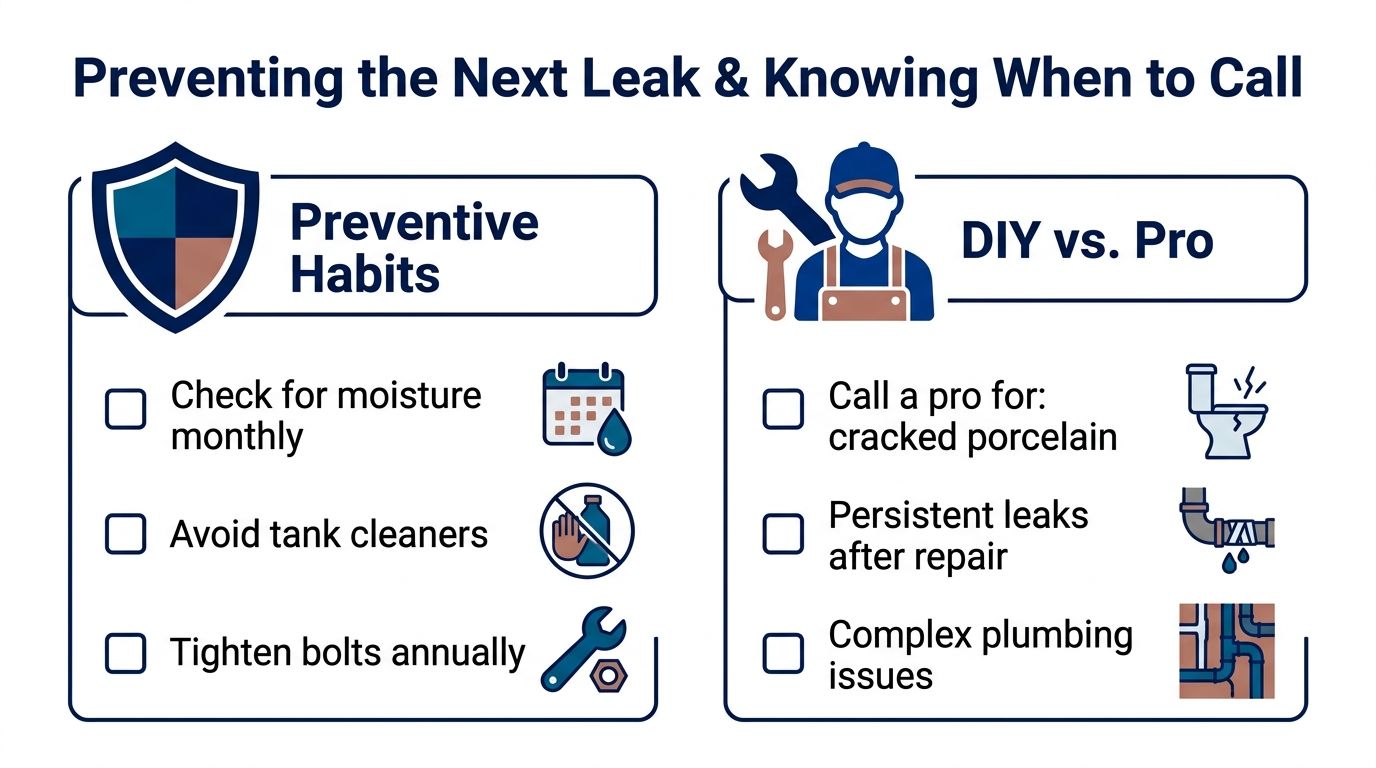
Keeping a tank-to-bowl seal alive is mostly about not stressing it. Don't lean on the tank lid or use it as storage. Don't drop harsh cleaners into the tank if they're hard on rubber parts. And if the toilet gets bumped during a flooring repair or bathroom remodel, check that the tank still sits level afterward.
What to watch during routine maintenance
A quick visual check during seasonal home maintenance goes a long way. Look for moisture at the bolts, wobble at the tank, and any new discoloration around the seam. If you're already thinking about other home fixes like drain cleaning, sewer repair, water heater repair, water heater replacement, pipe repair, garbage disposal repair, sump pump repair, or commercial plumbing service, it makes sense to add the toilet to the list instead of waiting for a second problem.
If the leak comes back after a proper gasket swap, the toilet is telling you the repair is no longer simple.
Call a licensed plumber when you see cracked porcelain, water damage under the bathroom, or repeated leaking after a correct repair. The same goes for any leak that seems to migrate below the floor or show up with other fixture issues. In those cases, you're past the clean DIY lane and into a repair that needs the right parts, the right diagnosis, and a stable finish.
Call Jay's Plumbing and sewer Now @ 586-634-3450
If you're dealing with a toilet leak between tank and bowl in Macomb County or Oakland County, Jays Plumbing and Sewer handles the diagnosis, the parts, and the repair with straightforward pricing and 24-hour emergency response when you need it. Visit Jays Plumbing and Sewer to schedule service for toilet repair, leak detection, or other plumbing work before a small seam leak turns into a bigger mess.
