
Standard residential drain cleaning usually lands around $242 to $246 nationally, but the final bill can move a lot depending on whether the clog is in a branch drain or the main sewer line, and whether a snake or hydro jetting is needed. In practical terms, that's why one homeowner in Fraser might get a quick kitchen sink fix, while another in Sterling Heights sees a much higher quote for a basement backup.
Table of Contents
- What a Typical Drain Cleaning Bill Looks Like
- Average Drain Cleaning Prices by Fixture and Line Type
- Snaking vs Hydro Jetting and Why the Price Gap Exists
- What Moves Your Drain Cleaning Quote Up or Down
- When a Sewer Camera Inspection Is Worth the Added Cost
- Why Calling Early Usually Costs Less Than Waiting
- How to Evaluate a Drain Cleaning Quote Before You Say Yes
What a Typical Drain Cleaning Bill Looks Like
A slow kitchen sink or a backed-up floor drain usually starts the same way. You notice water lingering, the drain gurgles, and you call a plumber near me because you want a real answer before it turns into a bigger mess.
For a straightforward residential clog, a typical drain cleaning bill often sits near the national average of $242 to $246 (Angi). That baseline fits the kind of call where the plumber can access the line, clear the blockage with a standard snake, and get the fixture flowing again without extra diagnostics.
What you are paying for on a normal service call
The first part of the visit is usually inspection and diagnosis. The plumber checks whether the issue is isolated to one fixture, whether the cleanout is easy to reach, and whether the blockage feels like hair, grease, or something deeper in the system.
Practical rule: if the clog clears with standard snaking and there's no sign of a larger line problem, you're usually paying for time, equipment, and a cleanout that restores flow.
A reasonable bill at this level is not just “someone poked the drain.” It reflects the trip, the labor, and the tooling needed to open the line safely and test the result. That's why drain cleaning prices are best thought of as a service range, not a flat menu item.
For homeowners in Macomb County and Oakland County, the fair question isn't only “What does drain cleaning cost?” It's “What problem am I paying to solve?” A kitchen sink clog on the first floor and a floor drain backing up in the basement may look similar from the outside, but the work behind them is often very different. For more cost context, see our plumbing costs guide.
Average Drain Cleaning Prices by Fixture and Line Type
Drain cleaning prices make the most sense when you look at the fixture and the line type together. A bathroom sink, a tub, a kitchen line, and a main sewer backup do not fall into the same price band because they do not call for the same access, time, or equipment.
Typical job types and price bands
| Job Type | Typical Method | Price Range |
|---|---|---|
| Bathroom sink or tub clog | Standard snaking | $100 to $275 |
| Kitchen sink clog | Standard snaking or auger | $100 to $275 |
| Laundry drain clog | Standard snaking or auger | $150 to $250 |
| Main sewer line cleaning | Snaking or hydro jetting | $250 to $800+ |
| Severe main sewer blockage | Hydro jetting | $300 to $1,500 in complex cases |
Those ranges line up with consumer pricing guides that place routine drain cleaning around the mid-$200s, while main sewer work sits much higher because it takes more time and usually needs more equipment (HomeAdvisor). A standard branch drain can often be handled as a localized service call, while a main line problem may need a longer cable, a cleanout, and sometimes a camera before the plumber knows what is really going on. One pricing guide also puts drain cleaning costs in a similar range for that same reason, with the bill rising when access is harder and the clog is deeper in the system (Fix A Pros).
Why the same symptom can price out differently
A slow sink drain in a finished kitchen is usually more contained than a floor drain tied into the building sewer. That difference matters because the plumber may need to work deeper into the system, not just at the fixture opening.
House layout also changes the quote. A home with an easy basement cleanout usually gives the plumber better access than a slab home where the line is harder to reach. That is one reason two similar houses in the same neighborhood can still get different estimates.
If you are comparing quotes for residential plumbing or commercial plumbing, ask which part of the system the company expects to clear. That one detail usually explains most of the price spread.
Snaking vs Hydro Jetting and Why the Price Gap Exists
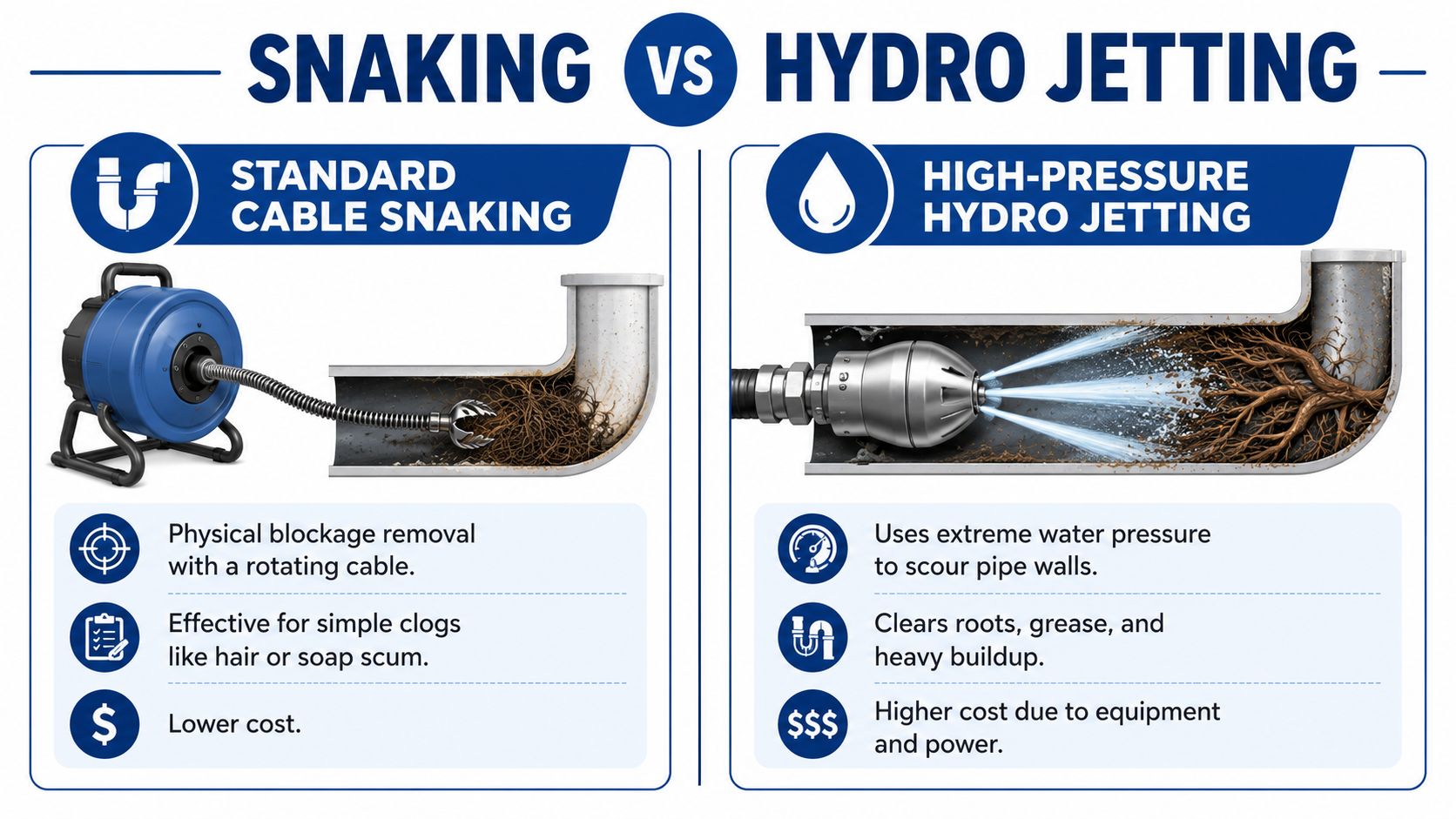
A homeowner looking at a slow drain usually gets two very different service options. Snaking is the lighter, lower-cost approach. Hydro jetting is a more intensive cleaning method, and that extra work is why the price climbs.
What each method does
A drain snake cuts a path through the blockage. It works well for localized clogs, especially hair, soap scum, and other soft buildup. One trade guide puts standard snaking around $100 to $250 (Cottrell Plumbing, Heating and Air).
Hydro jetting uses high-pressure water to scour the pipe walls. Plumbers use it for heavier buildup like grease, mineral scale, and root intrusion, and that added force is why pricing commonly lands higher, often around $250 to $800 or more depending on the line and severity (Call Home Rangers).
A snake can restore flow. A jetter can clean the pipe more thoroughly.
That difference is the main reason the price gap exists. Hydro jetting takes stronger equipment, more setup, and more time. It also makes more sense on a main line or on a clog that keeps returning, where simple snaking may only provide a short-term fix.
When the higher-cost option makes sense
A good plumber will not push jetting for every slow drain. If the line has grease, roots, or repeated buildup, the cheaper option may not hold. That is especially true on main sewer line work, where the goal is not just to open the pipe, but to remove enough buildup from the pipe wall that the problem does not come right back.
If a drain cleaning quote feels high, check the method first. A $200 snake and a $600 jetting service are usually solving different jobs, not charging different prices for the same one.
What Moves Your Drain Cleaning Quote Up or Down
A drain cleaning quote usually rises or falls based on access, severity, and location. A sink that clears from a nearby cleanout is a very different job from a backup buried deeper in the system.
The on-site factors plumbers look at
- Fixture location: A sink or tub is usually faster to clear than a main sewer line, which often takes longer tooling and more labor.
- Access points: An easy basement cleanout keeps the job simpler than a line hidden behind walls, under a slab, or in a tight crawlspace.
- Blockage severity: A partial clog is easier to manage than a full backup that needs multiple passes or a different method.
- Pipe condition: Older pipe materials may hold buildup, crack, or collapse, which changes the job from cleaning into diagnosis or repair planning.
- Tree roots: If roots have entered the sewer, the work often gets more involved because the obstruction may keep returning.
- Local weather: Michigan winters, frozen ground, and heavy spring rain can all complicate sewer behavior in older Macomb County and Oakland County homes.
A homeowner often feels the price jump long before the plumber starts work. The quote changes because the job changes, not because the same fix is being priced two different ways.
Why the quote can change after the plumber arrives
A phone estimate only goes so far. Once the plumber sees the cleanout, checks the line path, and tests the drain, the full scope becomes clearer. That is why an upfront quote should still leave room for a better diagnosis if the clog turns out to be deeper than expected.
Good quote, good communication: the plumber should explain what they found, what they are doing next, and why the price changed if it did.
That conversation should be plain and direct. A homeowner should be able to tell whether the bill covers a simple branch line clearing, a more involved sewer line service, or a bundled diagnostic step tied to sewer cleaning. If those details are missing, the number on the page does not tell you much.
When a Sewer Camera Inspection Is Worth the Added Cost
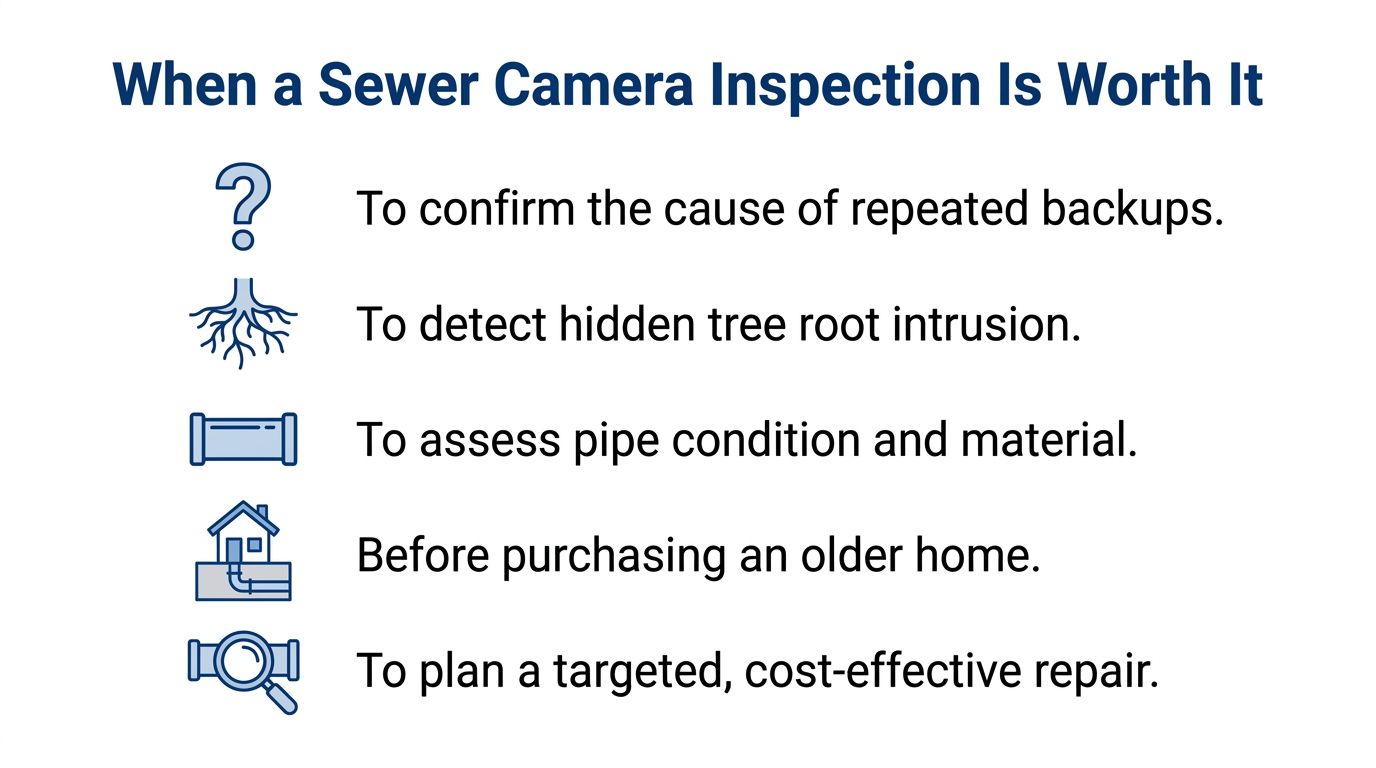
A sewer camera inspection is a separate diagnostic step, and it starts to make sense when the same drain keeps acting up, the sewer line may have hidden damage, or the repair decision depends on seeing inside the pipe. The added charge is paying for information, not just labor, because a camera can show whether the line still needs cleaning, needs repair planning, or is dealing with a deeper structural problem. For homeowners who want a closer look at sewer service options, the sewer cleaning resource page is a useful place to start.
When the camera earns its keep
A camera helps identify root intrusion, offset joints, heavy scale, or a collapsed section before anyone starts talking about digging. It is especially useful for repeated backups, older homes, and pre-purchase inspections where the buyer wants to know whether the sewer line is healthy.
For recurring problems, the camera can save money by cutting out guesswork. Instead of paying for another cleaning that only clears the symptom for a short time, the plumber can see whether the line needs more targeted service or whether repair planning makes more sense. That is the point where the inspection stops being an extra and starts protecting the rest of the budget.
When it may be unnecessary
A first-time clog in a branch drain with an obvious cause does not always need a camera. If the line clears cleanly and the fixture behaves normally afterward, the diagnostic step may not add much value.
A practical way to judge it is simple. If the problem looks isolated, the camera may be optional. If the same drain keeps failing, or the whole house starts showing symptoms, the camera is often the smarter purchase.
I have also seen homeowners ask for the camera only after a second or third visit. That usually costs more in the long run than approving the inspection early, especially on older sewer lines in Southeast Michigan.
Why Calling Early Usually Costs Less Than Waiting
A slow drain is usually cheaper to handle before it turns into a main line issue. That is the part many homeowners do not want to hear, but it is also the part that keeps the bill from climbing.
The usual cost path
A simple branch-line cleaning can stay near the low end of the range. If the clog is deeper or tougher, the job may move to jetting, and main sewer line work can rise much higher because of access, diagnostics, and equipment. The local quote changes fast once the plumber has to spend time finding the problem instead of just clearing it.
That tells you something useful. Drain cleaning is still a relatively steady service category, but the bill grows when you wait for the problem to spread. A homeowner who calls early is usually paying for a straightforward cleanup. A homeowner who waits may end up paying for the cleanup, the diagnosis, and the extra labor that comes with a more stubborn blockage.
Why Southeast Michigan homes are different
In Macomb County and Oakland County, freeze-thaw cycles can stress older clay and cast-iron lines. Heavy spring rain can also expose weak spots in laterals that were already compromised. Once tree roots find a small opening, they keep exploiting it.
That is why timing matters so much here. A slow drain with no other symptoms usually deserves a scheduled service call. Multiple drains backing up, sewage odors, or a floor drain that keeps acting up points to a larger issue that should be checked before it gets more expensive.
The key decision is not just whether to clear the clog, it is how far the plumber has to go to clear it. If the problem stays close to one fixture, the work may be simple and local. If the line keeps failing, the quote can move toward a main sewer repair conversation, and that is where the price gap gets wide.
If you want a local drain cleaning estimate in Macomb or Oakland County, drain cleaning services from Jays Plumbing and Sewer can help you compare a simple cleanup with a bigger line problem before the next backup happens.
How to Evaluate a Drain Cleaning Quote Before You Say Yes
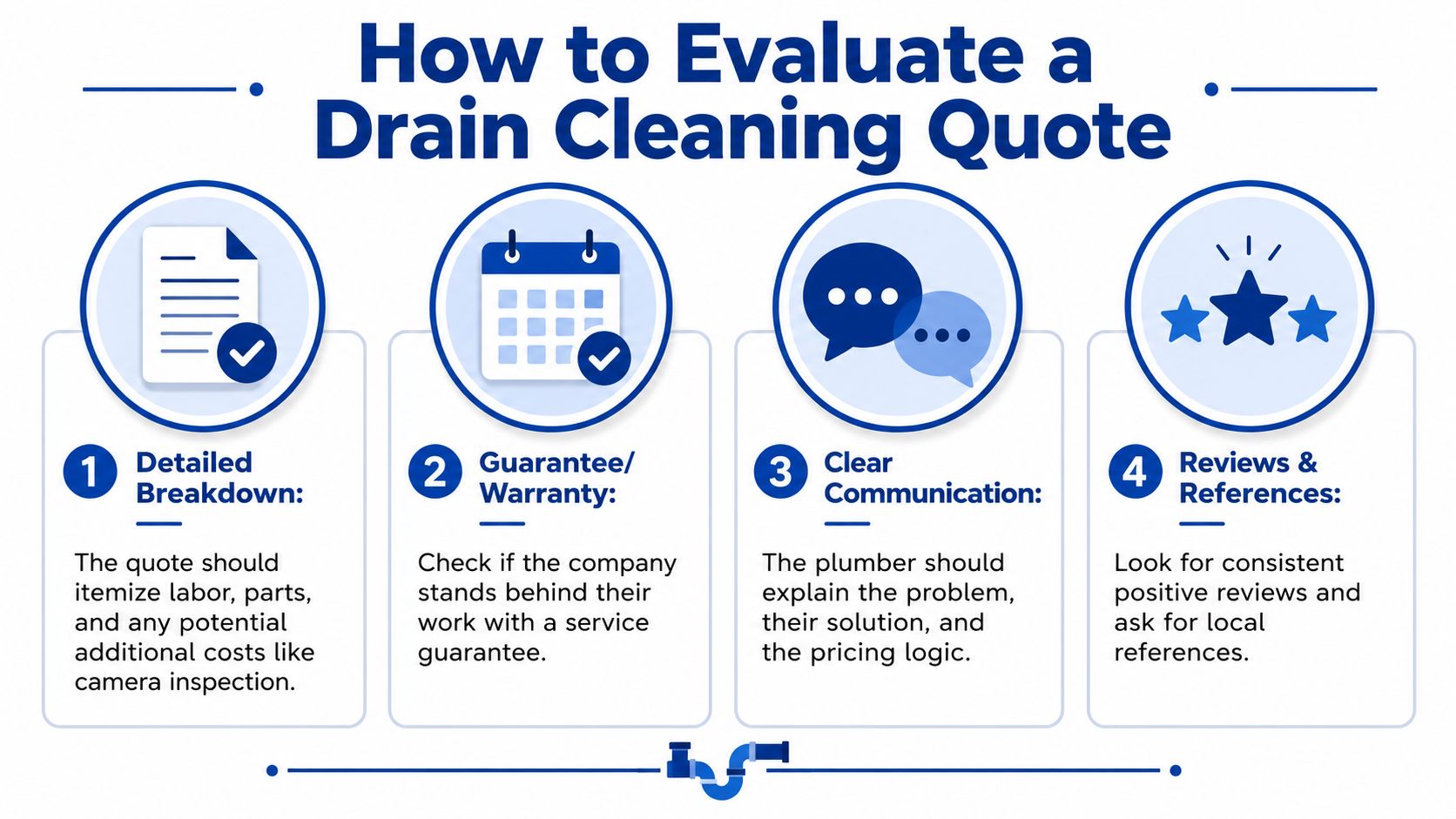
A good quote should tell you what work is included, what method will be used, and what could change the price. If those basics are missing, the number doesn't mean much.
Questions worth asking
- What fixture or line are you clearing? A sink clog and a main sewer line issue are not the same job.
- What method are you using? Snaking and hydro jetting solve different problems.
- Is camera inspection included or separate? That line item should be clear before work starts.
- What happens if the clog is deeper than expected? You want to know the next step before the line is opened.
- Is the price itemized? A clean quote should separate labor, diagnostics, and any likely add-ons.
Red flags to watch for
- Vague phone pricing: If a company refuses to discuss access, severity, or line type, the quote is probably too loose to trust.
- Too-good-to-be-true pricing: A very low number can mean the plumber plans to upcharge once on site.
- Pressure to approve immediately: A professional should explain the scope first, then let you decide.
If you want a local drain cleaning estimate in Macomb or Oakland County, Jays Plumbing and Sewer handles clogged drains, sewer cleaning, camera inspections, and related plumbing work for residential and commercial properties. You can also review their drain cleaning services and ask for a straightforward quote before any work starts.
If you're dealing with a slow drain, a basement backup, or a sewer line that keeps acting up, Jays Plumbing and Sewer can help you sort out the cause and the cost before the problem gets bigger. Reach out for an honest estimate in Macomb County or Oakland County, and get clear answers about whether you need simple drain cleaning, hydro jetting, or camera inspection.
